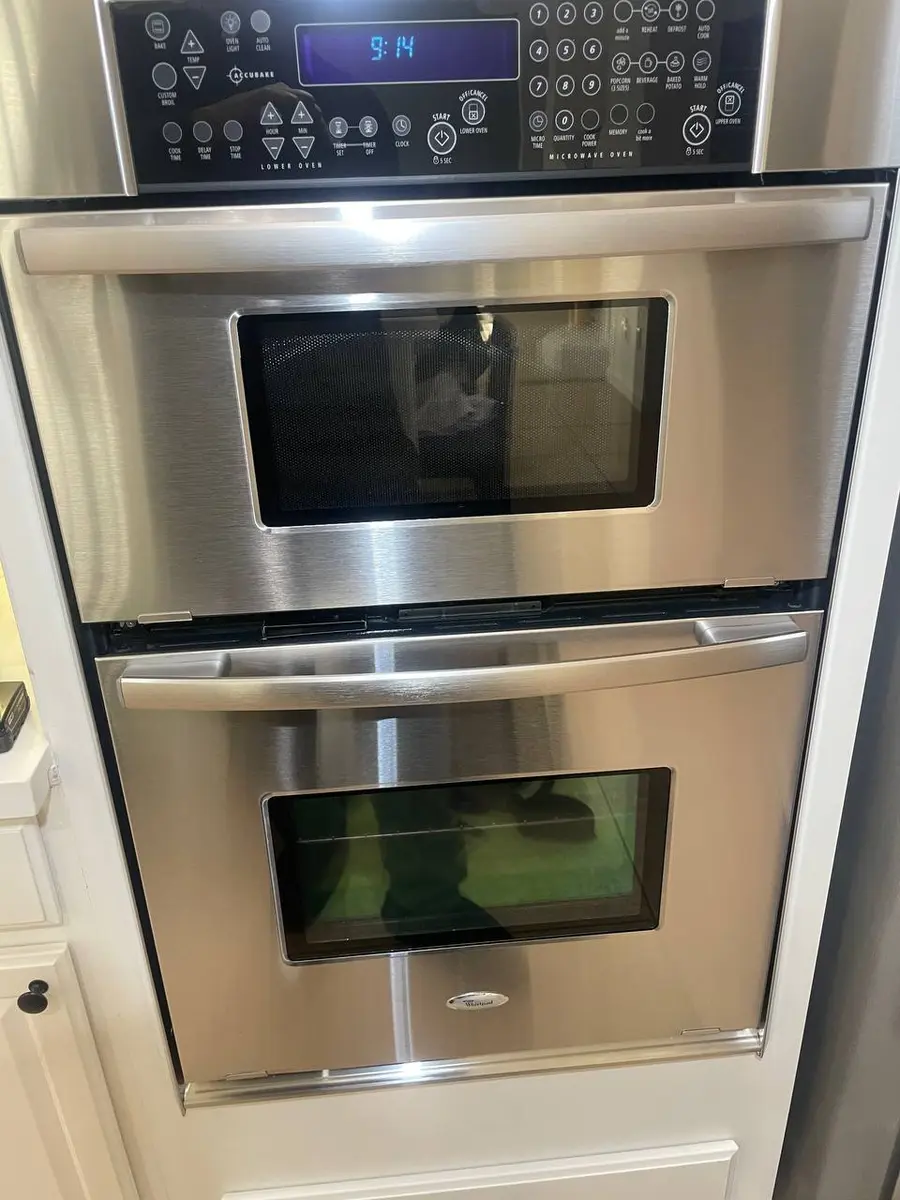
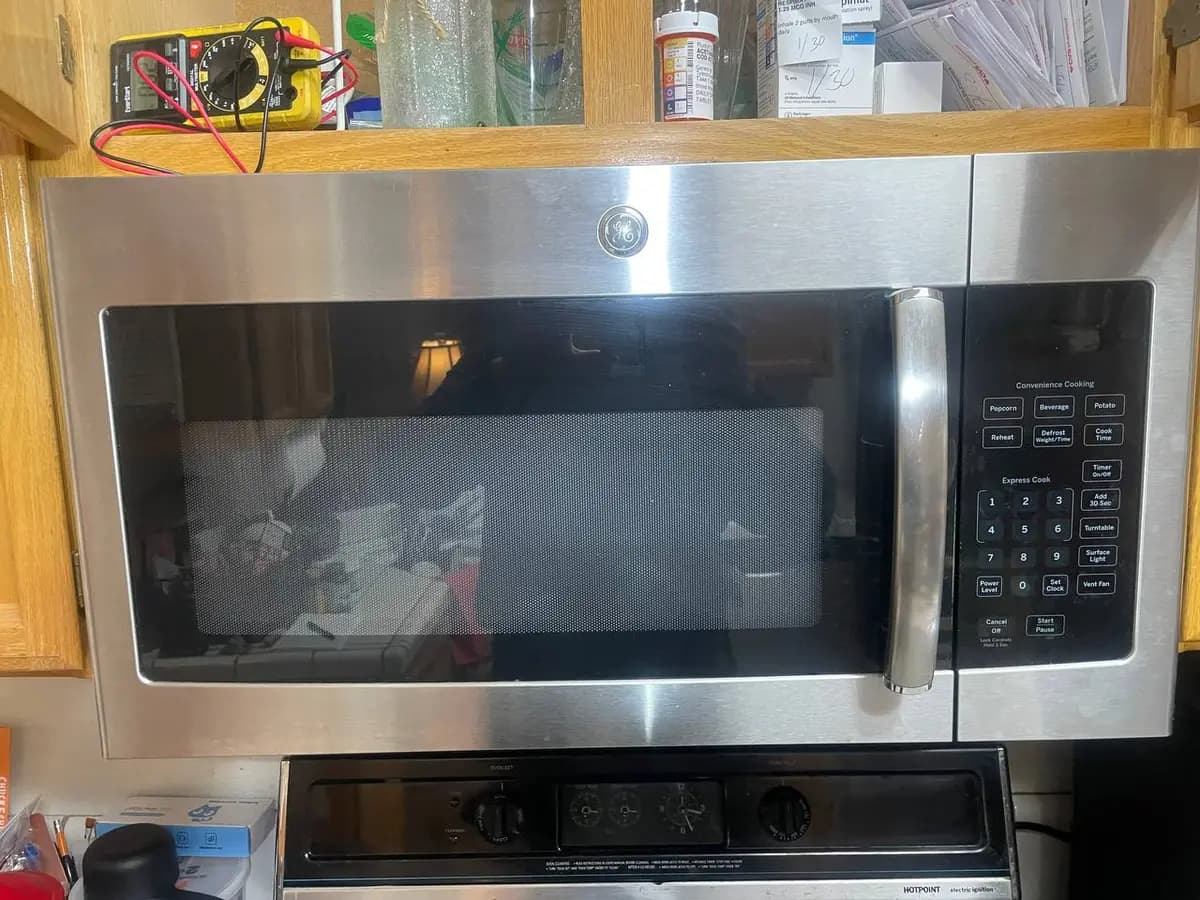
Whether to fix a microwave comes down to one question most guides skip: is it a countertop unit or a built-in? A countertop microwave is so cheap to replace that almost no repair is worth it past year seven. An over-the-range or built-in unit is a different story — the cost of installing a new one makes many repairs the smart call. This guide splits the decision by where your microwave lives.
The quick answer: it depends on where your microwave lives#
Replace a countertop microwave rather than pay for a real repair. Repair an over-the-range (OTR) or built-in unit when the fault is a magnetron or a door switch and the microwave is under about eight years old.
Microwaves last 7-10 years — one of the shortest-lived appliances in the kitchen. A new OTR or built-in unit costs much more than a countertop one once installation is included. That price gap between the two types is the whole story, so start by identifying which one you own.
Do You Have the Right Tools?
High-voltage capacitor discharge tool ($90), magnetron tester ($200), microwave leakage detector ($150). Our technician arrives with $3,000+ in professional tools — your diagnostic is free.
Licensed & Insured · 90-Day Warranty · Same-Day Service
Countertop vs. built-in: the install cost changes everything#
A countertop swap is a five-minute job: unplug the old one, set the new one on the counter, plug it in. A built-in or OTR swap is real work — removing a mounted, wired, and often vented unit, then hanging and connecting a new one.
That labor is why the same part is worth fixing in one case and not the other. A magnetron in an OTR microwave is worth doing, because a new unit has to be bought and installed, and the removal-and-mount labor stacks on top. The same magnetron in a countertop microwave is not worth doing, because the part alone approaches the price of simply buying a new countertop unit. Install cost, not the microwave itself, is what decides.
Repair, replace, or stop using it#
The type split decides most of this, but not all of it: two faults are safety findings rather than economics, and two more are cheap enough to fix on any microwave. Read your fault across both columns.
| The fault | On a countertop unit | On an over-the-range or built-in |
|---|---|---|
| A blown fuse or a dead interior lamp | Repair | Repair. These are the short list of jobs cheap enough to justify on any microwave, and neither touches the sealed high-voltage side. |
| Door switch or interlock | Borderline | Repair. Well under the cost of an installed replacement, and on a mid-life unit with one failed part it is a clean call. |
| Magnetron | Replace instead | Repair, under about eight years. The same part costs about what a whole new countertop microwave does, which is the countertop exception in one line — but it is well under an installed replacement here. |
| Control board | Replace | Weigh it against the install. The removal, wiring and often venting of a mounted unit is what makes the repair side of this worth considering at all. |
| Interior coating peeling, chipped, or sparking | Stop using it, replace | Stop using it, replace. This is not repair-or-replace arithmetic on either type — it is a stop sign. |
| The door will not seal properly | Stop using it, replace | Stop using it, replace. Same answer, same reason, and the type makes no difference to it. |
| Anything, and you were thinking of opening it yourself | Do not | Do not. The high-voltage capacitor stores a lethal charge even unplugged and it does not bleed off on its own. This is the one appliance where every repair belongs to a qualified technician regardless of the fault. |
Seven rows, and the third answer applies to two of them — a peeling or sparking interior coating and a door that will not seal are safety findings, not cost decisions, and the countertop-versus-built-in split that governs this whole page has no bearing on either. The rows that split by type are the door switch, the magnetron and the control board. The last row is not a fault at all: it is the reason none of the rows above tell you to do the work yourself.
Safety First — Know the Risks
Microwave capacitors store lethal voltage (4,000V+) even when unplugged. This is the single most dangerous DIY appliance repair. Our techs are licensed and insured — let them handle the risk.
Licensed & Insured · 90-Day Warranty · Same-Day Service
Verdict by age#
Read the table by your microwave's type first, then its age against the 7-10-year lifespan.
| Microwave age | Countertop | OTR / built-in |
|---|---|---|
| Under 5 yr | Repair cheap faults; check warranty | Repair |
| 5-7 yr | Replace unless it is a fuse or lamp | Repair a single fault |
| Over 7-8 yr | Replace | Repair only one fault, well under a new install |
For a closer look at your exact age, see whether it is worth repairing a 5-year-old, 7-year-old, 10-year-old, 12-year-old, or 15-year-old microwave.
The two repairs that matter#
Only two faults come up often enough to matter, and both play out differently by type.
| Repair | Countertop | OTR / built-in |
|---|---|---|
| Door switch / interlock | Borderline | Repair |
| Magnetron | Replace instead | Repair under ~8 yr |
On a countertop unit, a magnetron repair rivals the price of a whole new microwave — that is the countertop exception in one line. On an OTR or built-in, the same repair is well under the cost of an installed replacement, so the repair wins as long as only one part has failed and the unit is not near ten years old.
The Real Cost of DIY
Average DIY attempt: $150-400 in tools you may use once, plus the risk of further damage. Our diagnostic visit costs $0 — we find the problem and give you an honest quote.
Licensed & Insured · 90-Day Warranty · Same-Day Service
The safety line: never open a microwave yourself#
This is the one appliance where do-it-yourself is genuinely dangerous. The high-voltage capacitor inside a microwave stores a lethal electrical charge even when the unit is unplugged. It does not bleed off on its own, and it can injure or kill someone who reaches inside. Every microwave repair belongs to a qualified technician.
A few faults are also safety stop signs rather than repair-or-replace math. If the interior coating is peeling, chipped, or sparking, or the door will not seal properly, stop using the microwave and replace it — those are not worth repairing on any unit.
Two worked examples#
Two cases make the type split concrete.
An 8-year-old countertop microwave with a weak magnetron. The magnetron is a sizable repair, and at eight years the unit is near the end of its 7-10-year life. Since that part costs about what a new countertop microwave does, and the unit is already old, replacement wins clearly.
A 6-year-old over-the-range microwave with a bad door switch. The switch is an inexpensive fix on a unit that would cost far more to replace and reinstall. The repair is well under half the installed replacement, the unit is mid-life, and only one part has failed — a clean repair.
Don't Void Your Warranty
Opening your appliance yourself may void the manufacturer warranty. Our repair comes with a 90-day guarantee, and we document everything for warranty compliance.
Licensed & Insured · 90-Day Warranty · Same-Day Service
The one exception on a countertop microwave#
There is a short list of repairs cheap enough to justify even on a countertop unit: a blown fuse or a dead interior light bulb. Those are inexpensive, and they do not touch the sealed high-voltage side of the microwave. Everything past that — the magnetron, the control board, the door switch — costs enough that on a countertop unit you are usually better off buying new. On an OTR or built-in, the install savings flip that math, which is why the same fault gets a different answer depending on where the microwave hangs. When in doubt, name the type first and the price second.
The faults that come up most#
Over-the-range units are the common case, and the two faults that come up most are the door switch and a weakening magnetron. An OTR repair usually comes in under the cost of a new installed unit, which is why the repair holds up.
The door switch is the most common OTR replacement part, and it is a quick job that keeps a mid-life microwave running for years. Whether it is worth it almost always tracks the type rather than the symptom: fix the built-in, replace the countertop.
For a countertop microwave, replacement is usually the cheaper move. There is no honest way to justify a magnetron on a unit you can replace for not much more, especially once it is past seven years and near the end of its life anyway. The one countertop repair that does make sense is the genuinely cheap fault — a fuse or a bulb — where the part is a few dollars and the safety-sealed side of the microwave is never opened.
Is It Worth Your Time?
Microwave repair requires specialized testing of the magnetron, capacitor, diode, and transformer — each requiring specific safety procedures. Our technician diagnoses the issue in about 30 minutes — same-day appointments available.
Licensed & Insured · 90-Day Warranty · Same-Day Service
Tariffs and right to repair in 2026#
The 2025-26 cost shift barely moves the countertop verdict but nudges OTR and built-in units further toward repair. After the 2025 tariffs, appliance and parts prices both rose. Because a countertop microwave is already inexpensive, those increases do not change the "just replace it" answer.
For OTR and built-in units, where replacement includes installation, the higher replacement cost tips a few more repairs into "worth doing." California's SB-244 right-to-repair law, in force since July 2024, also requires makers of appliances costing at least $100 to keep parts and documentation available for at least seven years after the last unit is built — so a newer built-in the law covers is easier to source parts for.
Frequently Asked Questions#
Is it worth repairing a 10-year-old microwave? For a countertop unit, no — replace it. For an OTR or built-in over 10 years old, repair only if a single part such as a door switch has failed and the unit is otherwise sound; a magnetron at that age usually loses to a new install.
What is the average lifespan of a microwave? Seven to ten years, among the shortest of any kitchen appliance. Countertop units sit at the low end because they are the cheapest to replace and tend to get the hardest use.
How much does a microwave repair cost? The two common fixes are a door switch and a magnetron. On a countertop unit those repairs rival the price of a new microwave; on an OTR or built-in they are well under the cost of an installed replacement.
Should I repair or replace a countertop microwave? Replace it. A new countertop microwave costs so little that any repair beyond a fuse or a light bulb is hard to justify, especially once the unit is past seven years old.
Can I fix a microwave myself? No. The internal capacitor stores a lethal electrical charge even when the microwave is unplugged. All microwave repairs must be done by a qualified technician.
Are microwave parts more expensive after the tariffs? Parts got more expensive after the 2025 tariffs, but because microwaves are cheap to replace, that mostly matters for OTR and built-in units — where SB-244 also keeps parts available for at least seven years on newer models.