Quick Answer: Confirm It's Cold, Then Test by Platform#
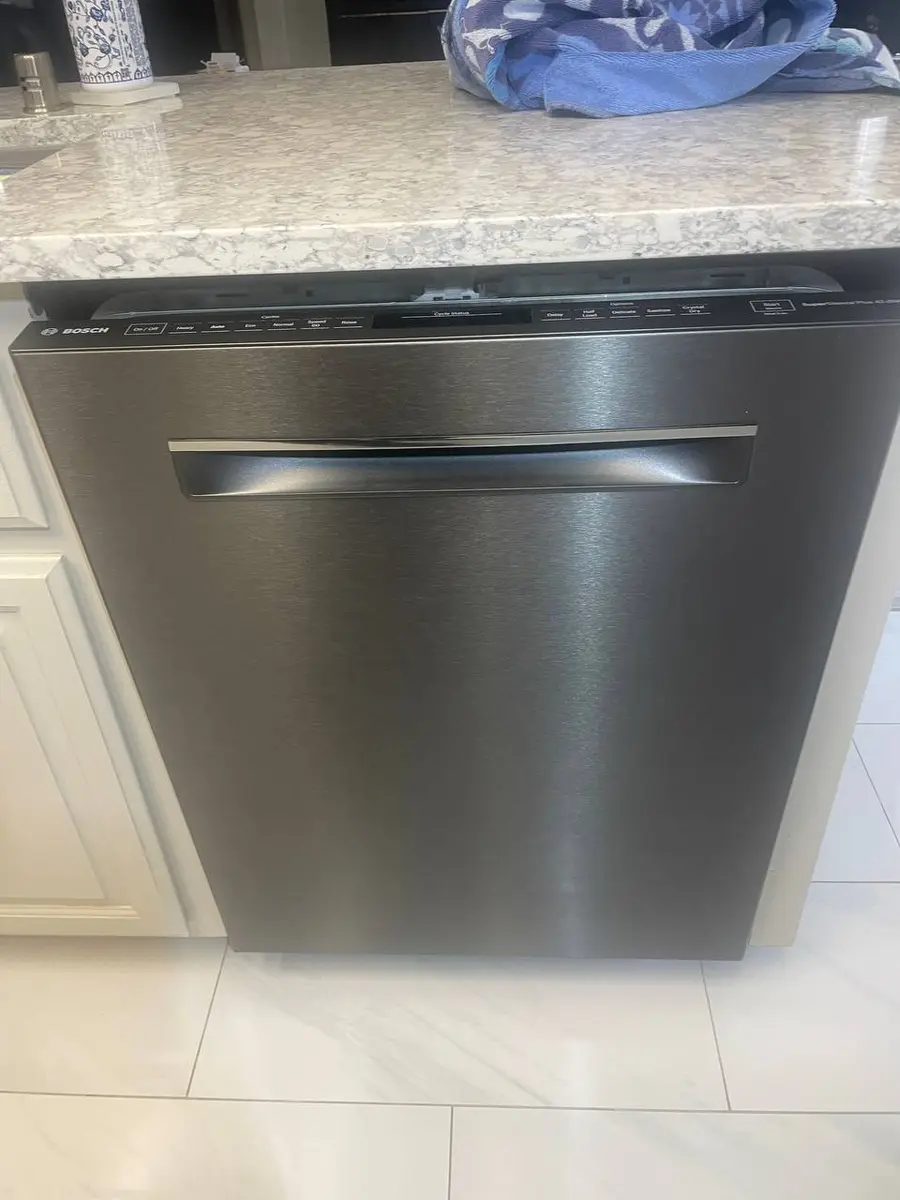
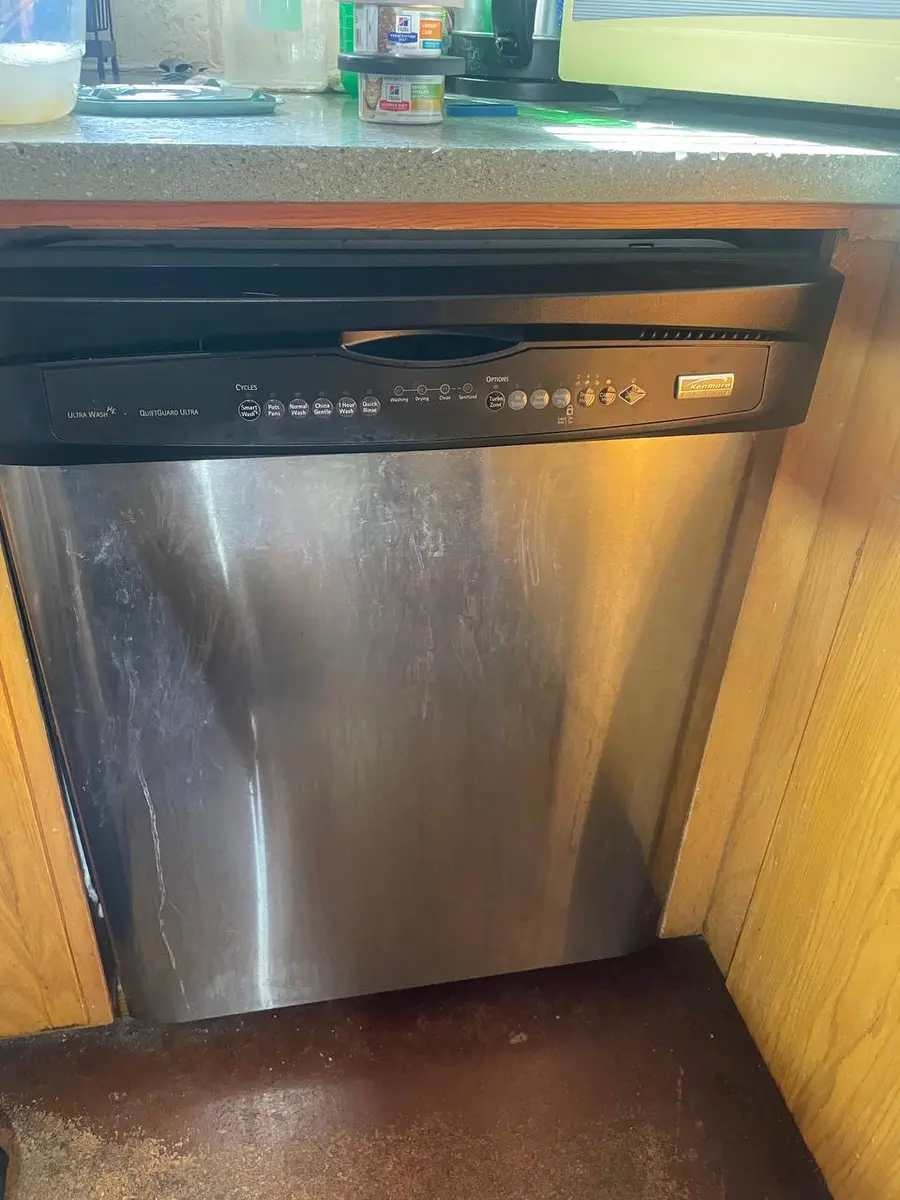
Most likely: a burned-out heating element — but first prove the water is actually cold, because a cold incoming supply mimics a dead heater. Run the kitchen hot tap for 60 seconds, start the dishwasher, and after five minutes pause and touch the tub water: if it is only warm, you have a real heating fault. Then the test depends on your build. A Whirlpool 665 has a visible horseshoe-shaped calrod element on the tub floor you can inspect and test; an LG 630 hides the heater inside the sump, so you test it electrically from underneath; and a Kenmore Elite on the Bosch platform uses a flow-through heater built into the pump. On either main platform, a drifted thermistor can fake the same no-heat symptom by telling the board the water is already hot.
Likely Causes at a Glance#
| Cause | Platform | What to check |
|---|---|---|
| Exposed calrod element burned out | 665 (Whirlpool) | Visible horseshoe on the tub floor; about 15–30 ohms good, OL burned out, near-zero shorted |
| Concealed heater failed | 630 (LG) | Hidden in the sump; test the heater connector for about 10–20 ohms |
| Thermistor drift (fakes no-heat) | Both | Board thinks water is hot; about 55k ohms at 72°F on 665, about 50k at 72°F on 630 |
| Control board relay not powering heater | Both | Element good but no 120V at its connector during the wash phase |
| Flow-through heater (pump-integrated) | Elite (Bosch) | Heats fast but is usually not replaceable separately from the pump |
Do You Have the Right Tools?
Water pressure gauge ($60), spray arm tester, float switch multimeter ($85), and drain inspection camera. Our technician arrives with $3,000+ in professional tools — your diagnostic is free.
Licensed & Insured · 90-Day Warranty · Same-Day Service
Walking Through the Diagnosis#
Confirm the symptom first: purge the hot line at the sink, start the dishwasher on the primed hot water, and after about five minutes carefully touch the tub water — too hot to hold means the heater is fine and the earlier cold was just supply; only warm confirms a heating fault. Then identify the platform and test with the power off at the breaker. On a Whirlpool 665, look at the tub floor for the horseshoe-shaped calrod element and inspect it for blisters, a visible break, or discoloration; then pull the kick panel, disconnect the two terminals underneath, and measure across them — about 15 to 30 ohms is good, OL means burned out, and near zero means shorted. Also check each terminal to the tub frame for a ground fault, which is dangerous and means replace it immediately. On an LG 630 the heater is concealed in the sump, so there is nothing to see — disconnect the heater connector under the unit (two heavy-gauge wires) and measure about 10 to 20 ohms, and test the pins to the sump housing for a ground fault.
If the heater tests good but the water stays cold, two things remain. A drifted thermistor can report that the water is already at temperature when it is cold, so the board never energizes a perfectly good heater — measure it at room temperature (about 55k ohms at 72°F on the 665, about 50k at 72°F on the 630), and a reading well under 10k means it is telling the board the water is hot when it is not. If the thermistor is good too, the control board may not be sending power: verify 120V at the element connector during the wash phase (live-wire work, so a pro is safer), and on 665 models the heater relay on the board is a common failure point. A no-heat condition also drags on the rest of the cycle — the turbidity sensor keeps extending the cycle chasing clean water, detergent pods need about 120°F to dissolve fully, and the sanitize cycle needs water reaching about 150°F, which is impossible without a working heater, so on an LG platform repeated failure to reach temperature eventually sets an HE or tE code.
Repair or Replace? The Short Version#
This is a repair — a calrod element, a concealed heater, a thermistor, or a control board are all inexpensive parts far below the cost of a new dishwasher, and the most common fault (a burned-out 665 element) is a straightforward swap from underneath. The exception to price out is the Bosch-platform Elite flow-through heater, which is usually integrated into the pump assembly and cannot be replaced on its own, making it the one case where labor and part push higher. On a unit under about eight to ten years old, fix it; when it comes down to live 120V board testing or a pump-integrated heater, have it done — book an EasyBear technician.
Safety First — Know the Risks
Live 120V wiring in a wet environment is one of the most dangerous DIY scenarios. Water + electricity = serious shock risk. Our techs are licensed and insured — let them handle the risk.
Licensed & Insured · 90-Day Warranty · Same-Day Service
Frequently Asked Questions#
How do I know if my Kenmore dishwasher heater is bad or the water is just cold?#
Run the kitchen hot tap for about 60 seconds to purge cold water, start the dishwasher immediately, and after five minutes pause and touch the tub water. Too hot to hold means the heater works and the earlier problem was a cold supply; only warm confirms a real heating fault. From there, test the element for continuity — on a 665 it is the visible calrod on the tub floor (about 15 to 30 ohms good).
My Kenmore dishwasher heater tests fine but water stays cold — why?#
Then suspect the thermistor or the control board. A drifted thermistor tells the board the water is already hot, so it never powers a good heater — measure it at room temperature (about 55k ohms at 72°F on a 665, about 50k on a 630), and a reading under 10k means it is misreporting. If the thermistor is good, the board may not be sending 120V to the element during the wash phase, and on 665 models the heater relay on the board is a known weak point.
Why won't my Kenmore dishwasher dry or sanitize?#
Both depend on heat. Detergent pods need water around 120°F to dissolve fully, and the sanitize cycle requires water reaching about 150°F, neither of which a dishwasher with a dead heater can deliver — so you get poor cleaning, detergent residue, and a failed sanitize. Fixing the heating fault (element, thermistor, or the board relay that powers the element) restores drying and sanitizing along with cleaning.
Appliance Repair Technician · 11 years experience
Experienced technician with 11 years specializing in Frigidaire and Electrolux refrigerator and dryer repair with a focus on safety.