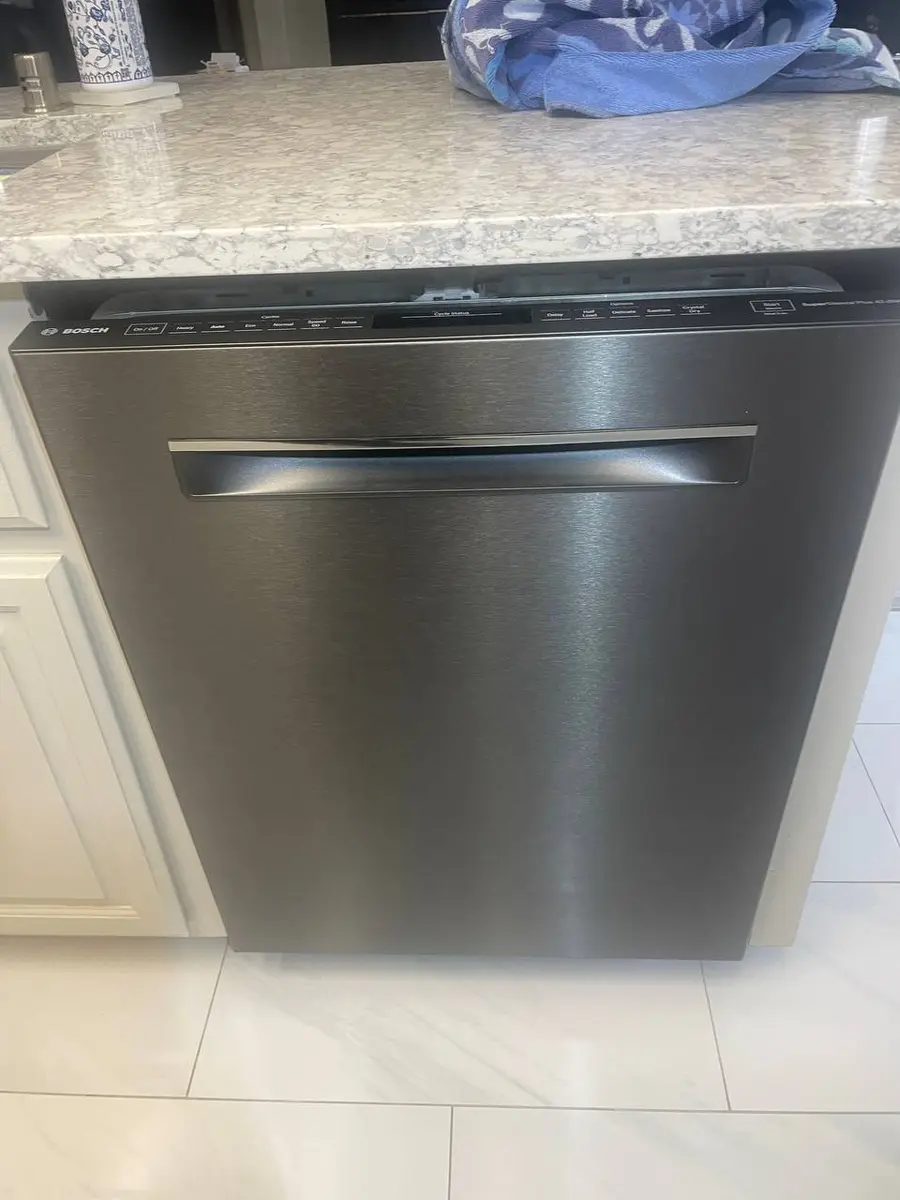
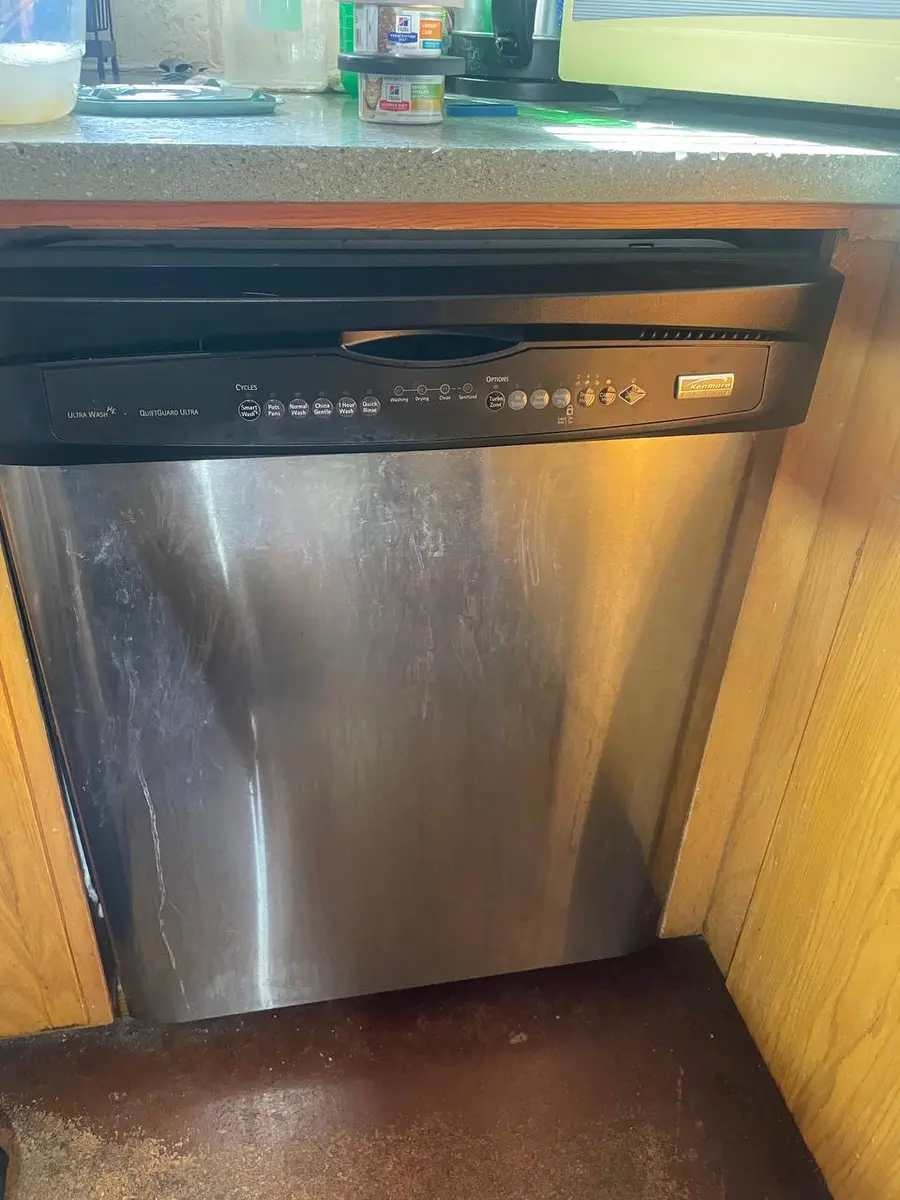
Your dishwasher finishes the cycle and everything inside is dripping wet. Dishes that come out soaking aren't just inconvenient — they can develop water spots, and the standing moisture inside the tub encourages mold and mildew growth. Drying problems affect every dishwasher brand, but the causes and fixes vary depending on whether your unit uses a heated dry system, condensation drying, or a fan-assisted approach. Here's what's actually going wrong and what it costs to fix.
1. Failed Heating Element#
The Problem: Traditional dishwashers (Whirlpool, Maytag, GE) use an exposed calrod heating element at the bottom of the tub. This element heats to 170°F+ during the dry cycle, evaporating water from dish surfaces. When the element burns out or develops a break in the coil, the dry cycle runs but produces no heat.
What to Check:
- After a complete cycle, open the door and carefully touch the heating element — it should be warm
- Look for visible cracks, blistering, or dark spots on the element coil
- Use a multimeter on the element terminals (disconnect power first) — you should read 15–30 ohms
DIY or Pro: The element itself cost varies by model and region and installs from underneath the tub with two mounting nuts. Access requires removing the lower dish rack and spray arm. Moderate DIY — the wiring connections under the tub are the tricky part.
Typical Cost: varies by model and region with a technician.
Do You Have the Right Tools?
Water pressure gauge ($60), spray arm tester, float switch multimeter ($85), and drain inspection camera. Our technician arrives with $3,000+ in professional tools — your diagnostic is free.
Licensed & Insured · 90-Day Warranty · Same-Day Service
2. Malfunctioning Vent and Vent Fan#
The Problem: Many dishwashers have a vent in the door that opens during the dry cycle to release steam. If the vent flap is stuck closed or the vent fan motor has died, moisture stays trapped inside the tub. This is a common issue on GE Profile and Frigidaire models.
What to Check:
- Look at the top of the inner door for the vent opening — it should swing open freely by hand
- Listen for the fan motor running during the dry cycle
- Check for debris or food buildup blocking the vent mechanism
DIY or Pro: Vent assemblies cost varies by model and region. The vent fan motor runs varies by model and region. Both are located in the door panel and require partial disassembly. If you're comfortable removing the inner door panel, this is a manageable repair.
Typical Cost: varies by model and region with a technician.
3. Broken High-Limit Thermostat#
The Problem: The high-limit thermostat monitors the tub temperature and shuts off the heating element if it gets too hot. When this thermostat fails, it can fail in the "open" position — cutting power to the heating element permanently. The dishwasher runs the dry cycle timer, but no heat is produced.
What to Check:
- The thermostat is typically mounted on the tub floor near the heating element
- Test continuity with a multimeter — a good thermostat shows continuity at room temperature
- If it reads open at room temperature, it has failed
DIY or Pro: The part cost varies by model and region. Replacement requires accessing the bottom of the tub from underneath the dishwasher. You'll need to pull the unit out from under the counter, which adds complexity.
Typical Cost: varies by model and region with a technician.
Safety First — Know the Risks
Live 120V wiring in a wet environment is one of the most dangerous DIY scenarios. Water + electricity = serious shock risk. Our techs are licensed and insured — let them handle the risk.
Licensed & Insured · 90-Day Warranty · Same-Day Service
4. Rinse Aid Dispenser Empty or Broken#
The Problem: Rinse aid (Jet-Dry, Finish) reduces water's surface tension, causing it to sheet off dishes instead of forming droplets. This is especially critical for condensation-dry dishwashers (Bosch, Miele) that rely on the temperature difference between hot dishes and cool stainless steel walls to pull moisture away. Without rinse aid, condensation drying effectiveness drops by 40–60%.
What to Check:
- Check the rinse aid reservoir (usually next to the detergent dispenser) — refill if empty
- Adjust the rinse aid dosage setting (most dishwashers have a 1–5 dial)
- If the dispenser cap is cracked or the gasket is worn, rinse aid may leak out during the wash cycle before the dry cycle starts
DIY or Pro: Refilling rinse aid is a $5 fix. If the dispenser mechanism is broken, the entire dispenser assembly cost varies by model and region and requires inner door panel removal.
Typical Cost: $5 for refill; varies by model and region for dispenser replacement.
5. Incorrect Loading or Cycle Selection#
The Problem: This isn't a mechanical failure, but it's the most common reason for wet dishes. Plastic items don't retain heat like ceramic and glass, so they dry poorly in any dishwasher. Nesting bowls, cups facing up (collecting water), and overloading all prevent proper airflow and water drainage.
What to Check:
- Place cups, bowls, and containers at an angle so water drains off
- Don't nest items — air needs to circulate between every piece
- Use the heated dry option (some energy-saving cycles skip it by default)
- Place plastics on the top rack only
DIY or Pro: Free fix. Adjust your loading technique and cycle selection. If dishes still aren't drying after optimizing loading, the issue is mechanical.
Typical Cost: $0.
The Real Cost of DIY
Average DIY attempt: $150-400 in tools you may use once, plus the risk of further damage. Our diagnostic visit costs $0 — we find the problem and give you an honest quote.
Licensed & Insured · 90-Day Warranty · Same-Day Service
When to Call a Professional#
If your dishwasher previously dried dishes well and suddenly stopped, the heating element, thermostat, or vent motor has likely failed. These are electrical components that interact with the control board — if you're not comfortable testing with a multimeter and working around live wiring, call a tech. Bay Area and Sacramento homeowners with Bosch or Miele condensation-dry units should note that these systems are designed to leave slight moisture on plastics — that's normal, not a failure.
FAQ#
Q: Why does my Bosch dishwasher leave dishes wet? A: Bosch uses condensation drying, not a heating element. Hot dishes transfer heat to the cool stainless steel tub walls, causing moisture to condense on the walls and drain away. This works well for ceramic and glass but poorly for plastics. Use rinse aid at the maximum setting and always select the Extra Dry option.
Q: Should I leave the dishwasher door open after a cycle? A: Yes — cracking the door 2–3 inches after the cycle ends lets steam escape and significantly improves drying. Some newer Bosch and Samsung models have an AutoOpen feature that does this automatically.
Q: Is the heated dry option worth the energy cost? A: In California, the heated dry cycle adds roughly $0.05–$0.10 per load to your PG&E or SMUD bill. If you run 5 loads per week, that's about $2–$4 per month. For most households, the convenience is worth it.
Q: My dishwasher smells musty — is that related to the drying problem? A: Likely yes. If dishes aren't drying and moisture lingers in the tub, mold and bacteria thrive in the warm, damp environment. Fix the drying issue first, then run an empty cycle with a cup of white vinegar on the top rack to eliminate odor.
Appliance Repair Technician · 8 years experience
Experienced technician with 8 years specializing in dishwasher repairs and European appliance brands including Bosch and Thermador.