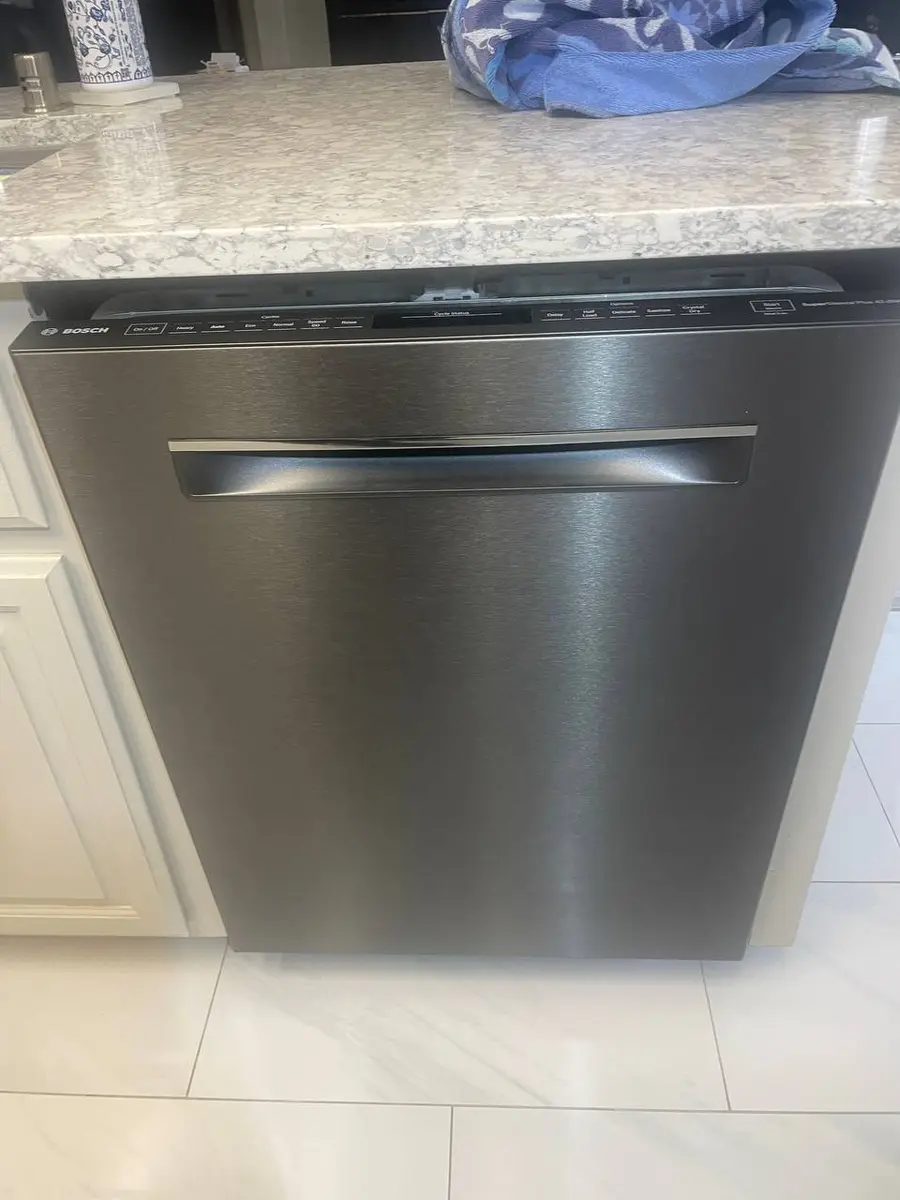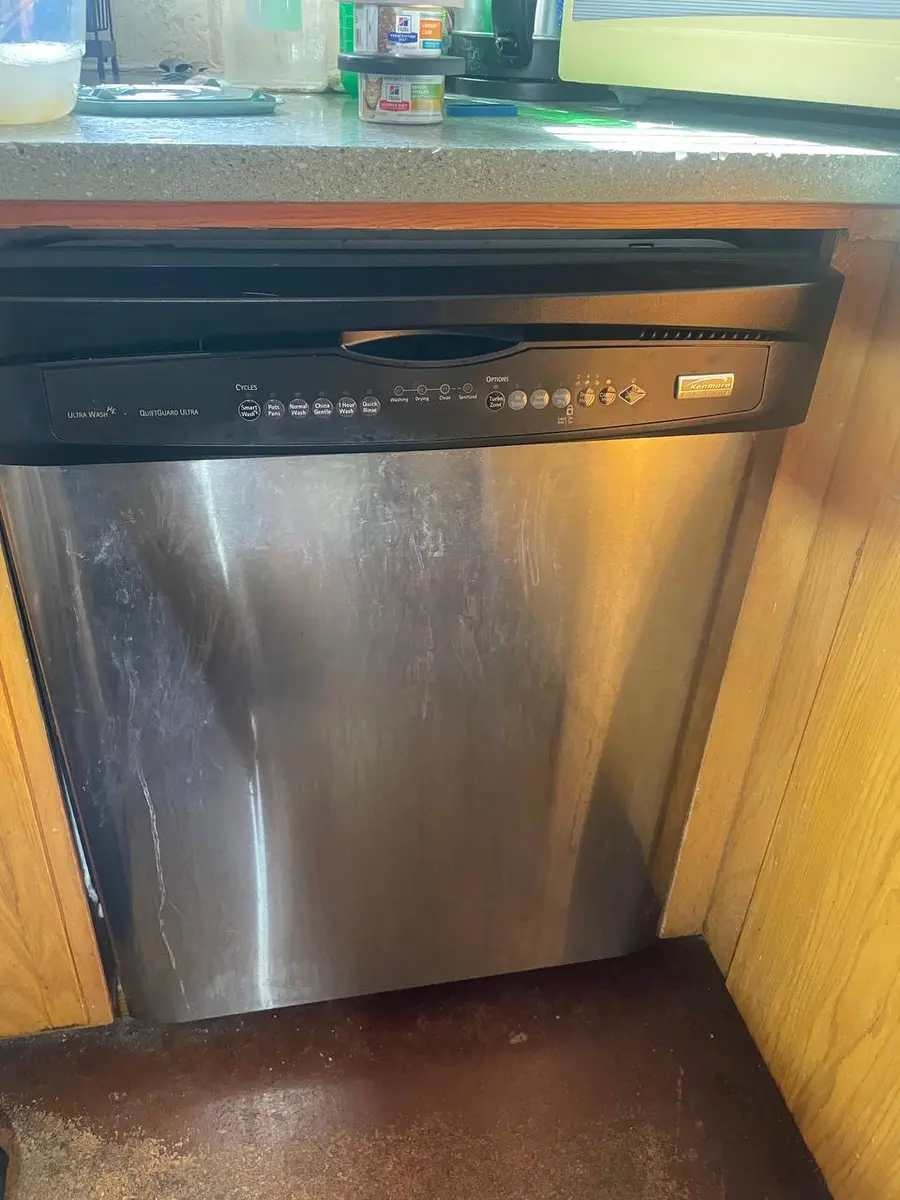
Quick Answer: Why Your Kenmore Dishwasher Is Not Dispensing#
Most likely: before you blame the mechanism, make sure nothing is simply BLOCKING the dispenser door — a tall dish in its swing path, dried detergent gluing the hinge, or a swollen pod wedged in the cup. If the door is clear and still will not release, the actuator has failed, and which one you have depends on the platform: Whirlpool-built 665 Kenmores use a bi-metal spring strip, LG-built 630 models use a wax motor, and Frigidaire-built 587 models use a solenoid. Identify your platform, and the fix is either a cleaning or a targeted part.
Likely Causes at a Glance#
| Cause | Likelihood | What to check |
|---|---|---|
| Door blocked or hinge gummed | Check first | a dish in the swing path; dried detergent on the hinge |
| Bi-metal actuator failed (665 platform) | Common | a click at release but the door stays shut |
| Wax motor failed (630 platform) | Common | the door never opens, even in diagnostic mode |
| Solenoid failed (587 platform) | Occasional | no release; a burned-open coil or stuck pin |
| Control board not signaling | Occasional | mechanism tests good but never fires in a cycle |
Do You Have the Right Tools?
Water pressure gauge ($60), spray arm tester, float switch multimeter ($85), and drain inspection camera. Our technician arrives with $3,000+ in professional tools — your diagnostic is free.
Licensed & Insured · 90-Day Warranty · Same-Day Service
Walking Through the Diagnosis#
Start with the free check, because a surprising share of no-dispense complaints are mechanical obstruction, not a failed part. The dispenser door swings open partway through the cycle, so a tall item on the upper rack or a pot handle below can block its arc, letting it bounce shut and trap the detergent — load the machine, then manually swing the door through its full travel and rearrange anything it touches. Old detergent residue can also glue the hinge shut even after the latch releases, so clean the hinge and cup with hot water and a brush, and check that a gel pod has not swelled and wedged against the cup wall.
If the door is genuinely stuck, test the actuator for your platform. On a Whirlpool 665, the control board heats a bi-metal strip a few minutes into the wash until it bends and trips the latch — run a short cycle and watch: a CLICK with no opening means the strip is working but the door mechanism is stuck with residue or a tired spring, while NO click means the strip has failed or the board is not sending power. On an LG 630, the actuator is a wax motor that expands when heated; enter diagnostic mode (on most models, hold Delay Start and Dual Zone for three seconds) and advance to the dispenser test — if it opens there but not during a normal cycle, the board timing is off, and if it does not open at all, the wax motor has failed completely, which is how they usually go. The Frigidaire 587 solenoid fails by burning open or by a corroded, sticking pin.
Replacing the actuator is straightforward. On a 665, cut power, remove the inner door panel (Torx T20 on most), unplug the dispenser's connector, and swap the assembly. On a 630, the wax motor comes out on its own with a single screw and a short linkage to the latch pin — verify it with diagnostic mode before running a full load. And if the mechanism tests good by hand but never fires in a cycle, the fault is the control board's low-power dispenser relay, which can corrode over time.
Repair or Replace? The Short Version#
Rule of thumb: if the repair comes in under about half the price of a comparable new dishwasher and yours is under eight to ten years old, repair it — most of the time this is a free cleaning, and even a full dispenser assembly or wax motor is an inexpensive part. Because Kenmore parts are relabeled from the Whirlpool, LG, or Frigidaire platform, cross-reference the platform number for a cheaper identical piece. Our technicians identify your platform and carry the dispenser parts — book a repair.
Safety First — Know the Risks
Live 120V wiring in a wet environment is one of the most dangerous DIY scenarios. Water + electricity = serious shock risk. Our techs are licensed and insured — let them handle the risk.
Licensed & Insured · 90-Day Warranty · Same-Day Service
Frequently Asked Questions#
My Kenmore leaves the pod in the cup — is the dispenser broken?#
Not always. First rule out a blockage: a tall dish in the door's swing path, dried detergent gluing the hinge, or a swollen pod wedged in the cup can all trap detergent even when the latch releases. Swing the door by hand and clean the hinge before replacing parts.
How do I know which dispenser mechanism my Kenmore has?#
It depends on the platform. Whirlpool-built 665 models use a bi-metal spring strip, LG-built 630 models use a wax motor, and Frigidaire-built 587 models use a solenoid — the model number on the door plate tells you which.
The board clicks but the door still will not open — what is that?#
On a bi-metal (665) dispenser, a click with no opening means the strip is heating and trying, but the door is stuck — usually dried detergent on the hinge or a fatigued spring. Clean it first; if it still sticks, replace the dispenser assembly.
Detergent is not dispensing but everything tests fine — now what?#
If the mechanism releases by hand and in diagnostic mode but never fires during a real cycle, the control board is not sending the signal. On 665 boards the low-power dispenser relay can corrode, and the board is the fix.
Appliance Repair Technician · 11 years experience
Experienced technician with 11 years specializing in Frigidaire and Electrolux refrigerator and dryer repair with a focus on safety.