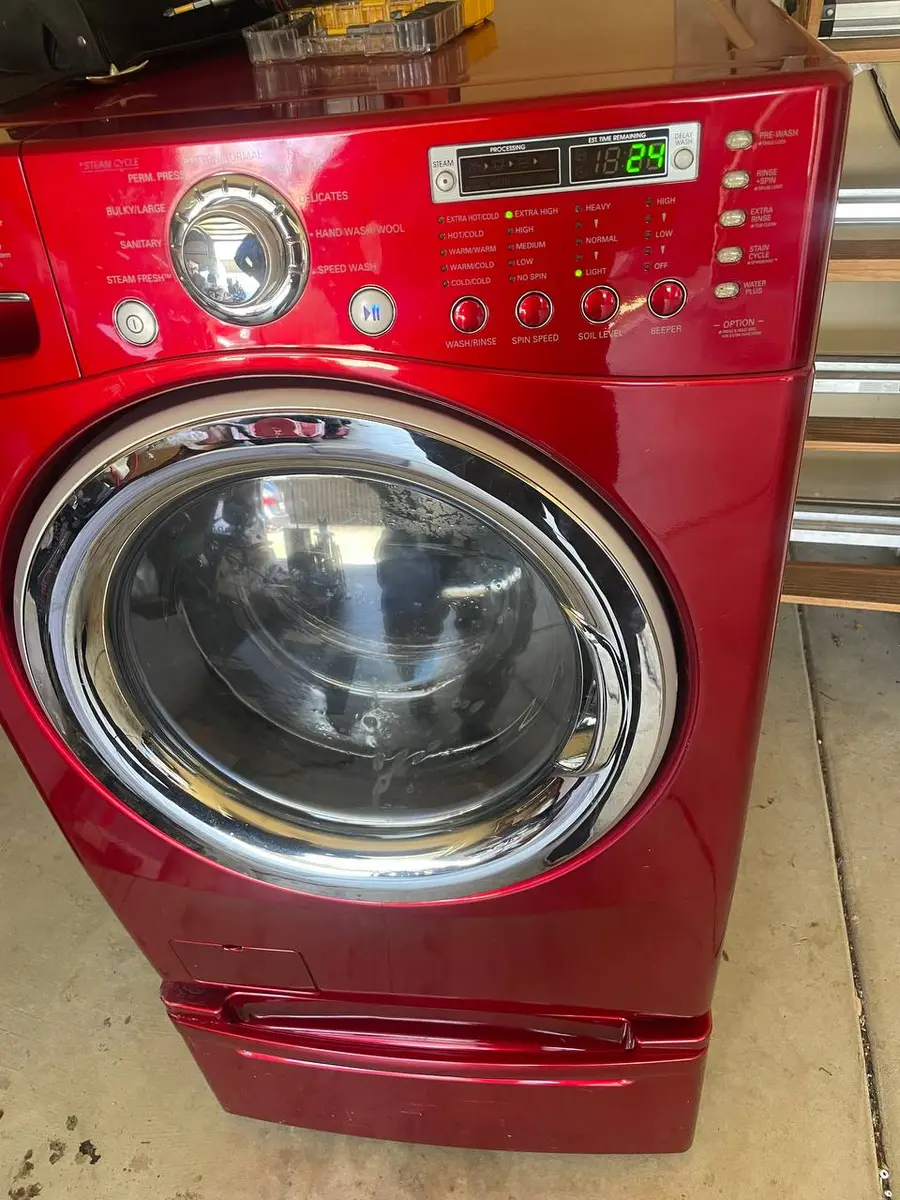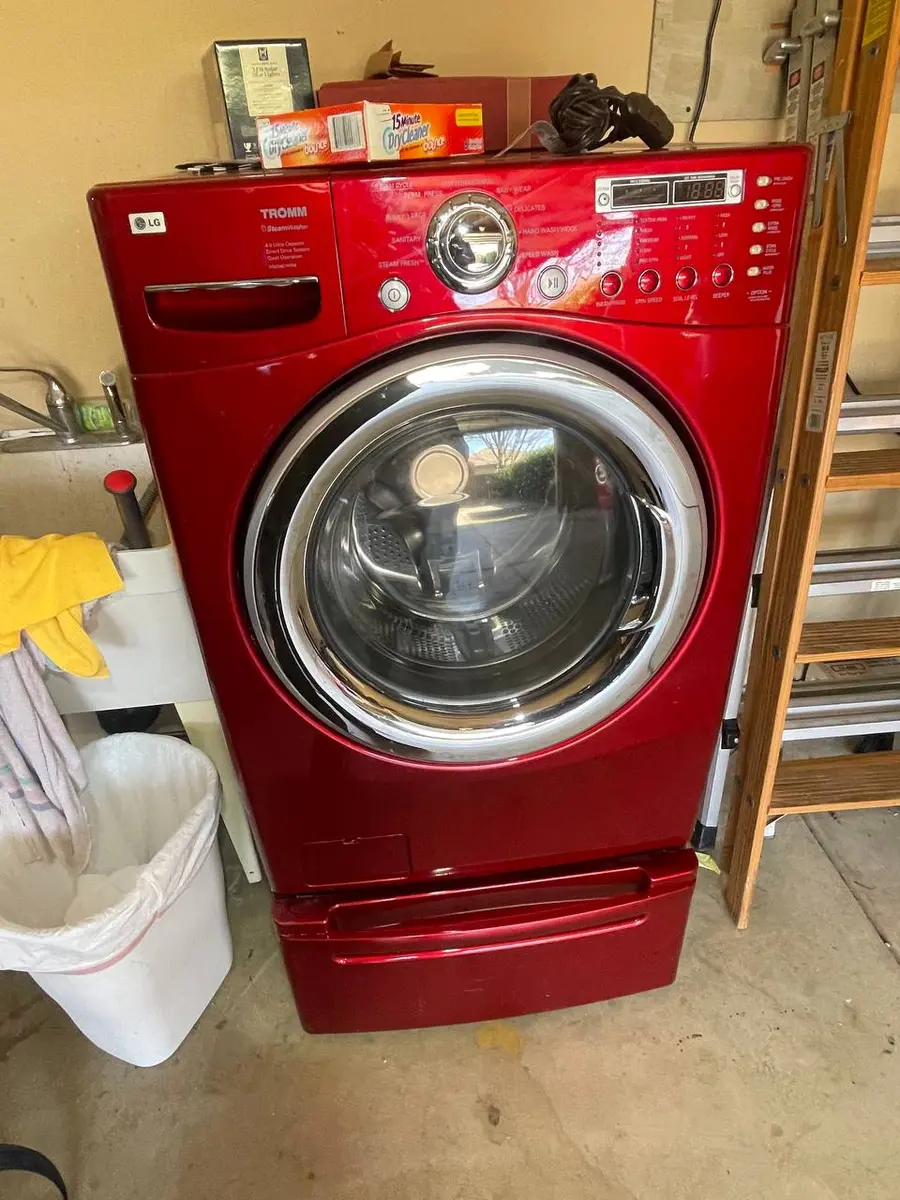
How to Troubleshoot a GE Washing Machine
Most GE washer problems trace to a handful of parts: the drain pump (WH23X24178) when water will not leave, the door lock (WH44X27819) when it will not start, and the shock absorbers (WH01X27538) when it walks during spin. Top-loaders add the shift actuator for no-spin, a worn splutch for grinding, and worn…
GE washers reward diagnosis that respects how the brand is built. Front-load models (GFW series) fail most often at the drain pump, door lock, and shock absorbers. Top-load models (GTW series) tend to go at the shift actuator, lid switch, suspension slides, and drain pump. What follows covers the frequent faults on both, with GE-specific steps.
Tools, Parts, and Safety First#
- Tools needed: Putty knife, Phillips #2 screwdriver, multimeter, pliers, towels
- Parts needed: Depends on diagnosis — see individual sections below
- Time required: 30 minutes diagnosis + 30-90 minutes repair
- Difficulty: Intermediate
- Safety warning: Unplug the washing machine. Turn off water supply valves.
Do You Have the Right Tools?
Bearing puller set ($120), drum spider wrench ($85), multimeter ($85), and diagnostic software. Our technician arrives with $3,000+ in professional tools — your diagnostic is free.
Licensed & Insured · 90-Day Warranty · Same-Day Service
Front-Load (GFW) Common Problems#
Problem 1 — Front-load will not drain#
Water sits in the tub after the cycle, or an error code shows. The usual culprit is a clogged or failed drain pump (GE WH23X24178); GE front-loaders keep an accessible pump filter behind the lower front panel. Pull that panel, set a shallow pan under the filter cap, and back the cap out counterclockwise — a fully clogged pump can release a whole tub's worth of water. Clear the debris (coins, hair ties, small garments). If the pump hums but nothing flows, or the impeller is broken, replace the pump motor.
Problem 2 — Front-load door will not lock#
The washer will not start, and you may hear clicking at the door while the lock indicator stays dark. That points to a failed door lock assembly (GE WH44X27819), electrical or mechanical. Reach it by pulling the top panel and the front-panel edge where the lock mounts; the lock carries three or more wire connections. Test continuity with a multimeter in both the locked and unlocked positions. A dead lock is not repairable — replace it. Also confirm the door strike (the metal hook on the door) is not bent, since a bent strike defeats even a good lock.
Problem 3 — Front-load vibrates hard#
The machine walks, bangs the walls, or shakes violently in spin. First suspect worn shock absorbers (GE WH01X27538), which sit between the outer tub and the base frame to damp tub motion — when they wear, the tub swings free and hits the cabinet. The other possibility is GE's Dynamic Balancing Technology ring shifting, or a badly bunched load; that fluid-filled ring redistributes to fight imbalance but cannot save a load piled on one side. Test the shocks by pressing down on the tub through the door and releasing: it should settle back to center in a single oscillation, while repeated bounces mean worn shocks. Replace them in pairs, and for stubborn imbalance confirm the machine is level and redistribute the load.
Problem 4 — SmartDispense not dispensing#
On GE Profile machines, detergent is not released or the amount is wrong, usually because the SmartDispense bulk-tank pump is clogged with thickened detergent. Remove the tank, flush it with warm water, and run warm water through the dispensing siphon tubes in the housing cavity, then reinstall and test. If there is no dispensing sound at all during the fill, the dispense motor assembly has failed and needs replacing.
Top-Load (GTW) Common Problems#
Problem 5 — Top-load will not spin#
The washer agitates fine but never enters or finishes the spin. The shift actuator (mode shifter) has failed — a motor-driven part on the gearcase that physically shifts the transmission between agitate and spin. Tip the cabinet back (release the spring clips at the seam with a putty knife, the same trick as a GE dryer top panel), find the actuator on the transmission at the base of the tub, unplug it, unscrew it, and fit the new one. Run a diagnostic cycle afterward to confirm.
Problem 6 — Grinding noise in spin#
A loud grinding or scraping specifically during spin means the splutch (spin-clutch) assembly is worn. This GE-specific part couples the spin basket to the transmission output, and when its pads wear they slip and grind. This is an advanced job — agitator off, tub out, access to the transmission top — to replace the splutch cam and spring kit. If the noise comes from the bottom with oil leaking, the transmission itself is failing, which usually is not worth repairing.
Problem 7 — Banging during spin#
Rhythmic banging or thumping at high spin points to worn suspension-rod slides. GE top-loaders hang the tub on four suspension rods with Teflon slides that allow controlled vertical travel; when the Teflon wears, the slides stick and release, throwing the tub around. Tip the cabinet back and inspect all four rods — the Teflon pads at the top of each should be smooth and intact. If any are grooved, cracked, or missing, replace the slide kit, and always do all four at once.
Problem 8 — Lid switch failure#
The washer fills but will not agitate or spin, and seems dead with the lid closed. The lid switch/lock has failed — GE top-loaders use a magnetic or mechanical switch that blocks operation with the lid open. Flip the control console up to reach it, mounted under the top panel near the lid hinge, and test continuity with the lid closed. Replace it if it reads open, and on magnetic models confirm the lid magnet is still present and correctly placed.
Safety First — Know the Risks
High-voltage components and pressurized water lines create flood and shock risk. A single loose fitting can cause thousands in water damage. Our techs are licensed and insured — let them handle the risk.
Licensed & Insured · 90-Day Warranty · Same-Day Service
Diagnostic Mode for GE Washers#
GE front-loaders enter diagnostics by pressing Signal + Delay Start together for 3 seconds, which steps through each component — door lock, fill, drain, spin — one at a time; the step that fails names the bad part. GE top-loaders enter by rotating the cycle knob one click clockwise, three clicks counterclockwise, one click clockwise; every LED should light to confirm entry, then it runs test cycles.
Troubleshooting Tips#
- GE front-load error codes show on the LED panel — common ones are E1 (water level), E2 (door lock), E4 (drain), and dE (door error).
- GE top-loaders with no digital display flash the lid-lock LED in set patterns to signal faults.
- On a WiFi-equipped GE Profile washer, check the SmartHQ app for stored fault history before you open anything — it often names the exact part.
- GE's OdorBlock keeps the front-load drain pump active briefly after a cycle; if the pump runs nonstop or never runs between cycles, the control board timer circuit may have failed.
The Real Cost of DIY
Average DIY attempt: $150-400 in tools you may use once, plus the risk of further damage. Our diagnostic visit costs $0 — we find the problem and give you an honest quote.
Licensed & Insured · 90-Day Warranty · Same-Day Service
When Should You Call a Professional?#
EasyBear technicians serving Sacramento and the Bay Area carry GE-specific diagnostic tools and replacement parts on every service call. Call one for a top-load transmission replacement (often worth more than the machine), a front-load main bearing (full tub disassembly), control-board diagnosis when several symptoms hit at once, or anything involving water-line damage or flooding risk.
Need Professional Help?#
Need help with this repair? Schedule a free diagnostic — our technicians handle GE washer repairs same-day.
Appliance Repair Technician & Diagnostics Specialist · 10 years experience
Electronics and diagnostics specialist with 10 years of experience in modern smart appliance repair, specializing in LG and Samsung.