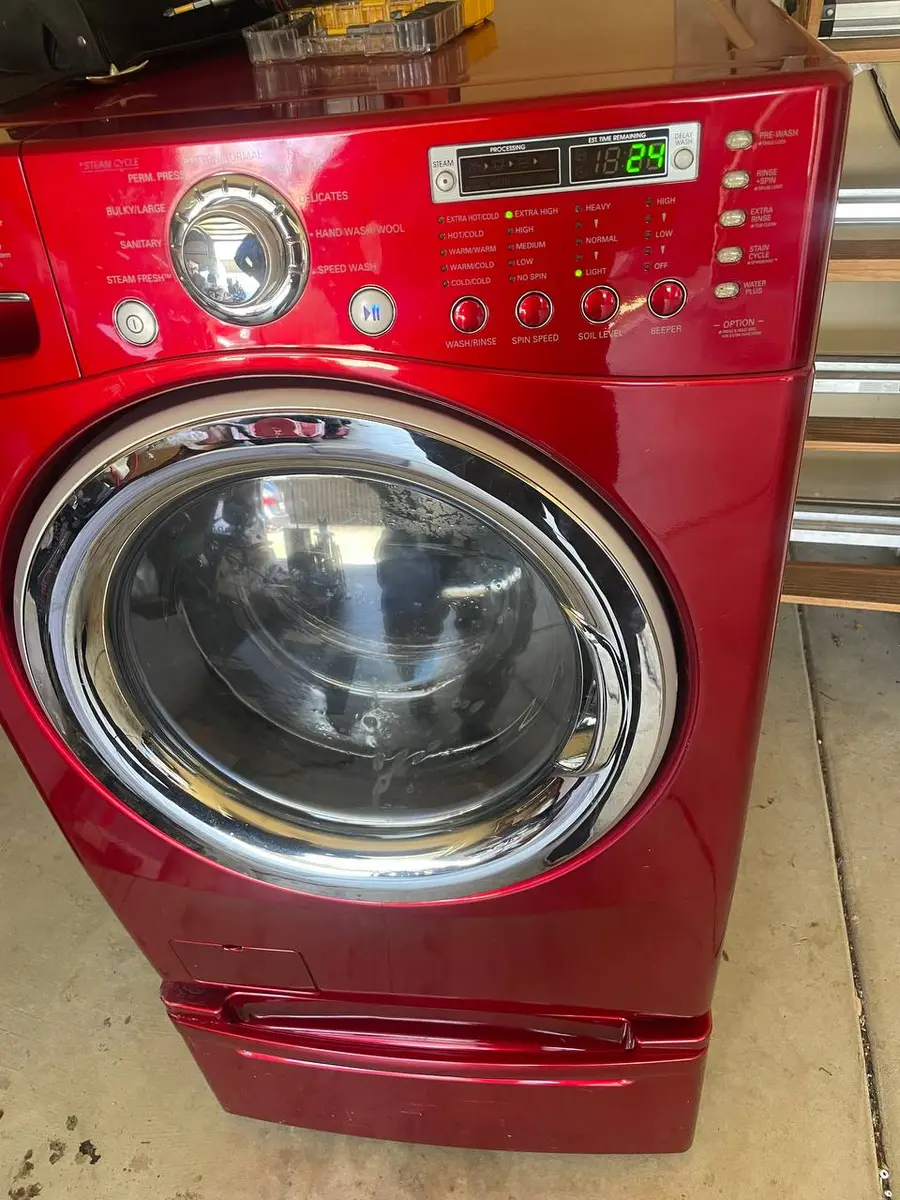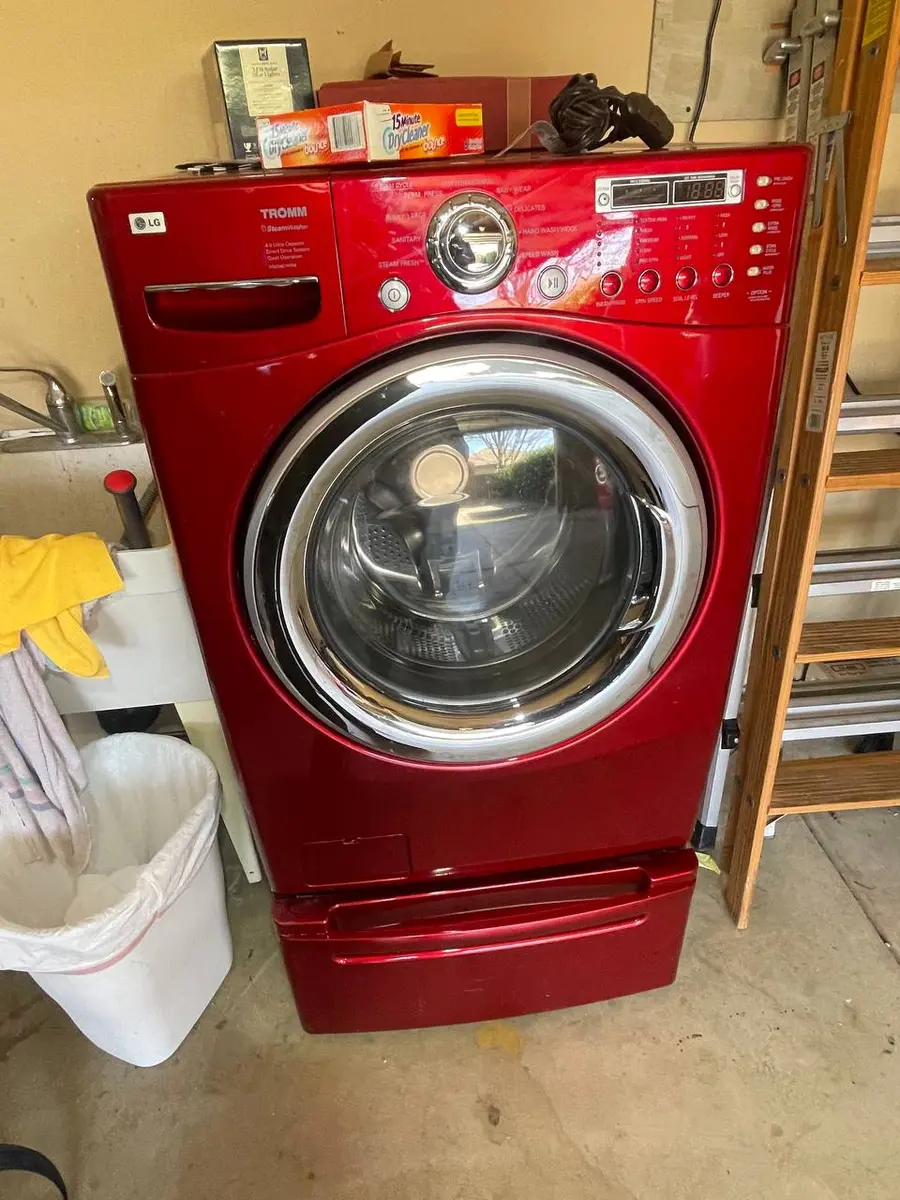
Most washing-machine replacements trace back to a single part: the front-load drum bearing. Nearly every other failure — a pump, a valve, a belt — is an affordable fix that keeps a good machine running. So the smart way to decide is to figure out which camp your problem falls into, then check it against the machine's age. Get those two things straight and the repair-or-replace question mostly settles itself.
The Drum Bearing Is the Washer's Age-Killer#
On a front-loader, worn drum bearings are the fault that most often ends the machine's life. The part itself is cheap, but reaching it means pulling the drum apart, so the job runs $350 to $550 in mostly labor. That price alone would not decide anything — what makes it a turning point is timing. Bearings wear out slowly, so they usually fail when the washer is already well used, which stacks a big-labor repair on top of an aging machine. That combination, not the raw dollar figure, is why the bearing is the classic replacement trigger.
Do You Have the Right Tools?
Bearing puller set ($120), drum spider wrench ($85), multimeter ($85), and diagnostic software. Our technician arrives with $3,000+ in professional tools — your diagnostic is free.
Licensed & Insured · 90-Day Warranty · Same-Day Service
Sort Your Repair Against the 50% Rule#
The guideline is straightforward: once a repair passes half the price of a comparable new machine, replacement gets the edge. A quality washer runs $600 to $1,400, putting the 50% line around $300 to $700. The table sorts the common failures against it.
| Washer repair | Typical total (parts + labor) | Lean |
|---|---|---|
| Inlet valve / drive belt | $120–300 | Repair |
| Drain pump | $200–400 | Repair |
| Control board | $250–550 | Evaluate by age |
| Drum bearing (front-load) | $350–550 | Replace-leaning past 8 years |
Three of the four sit under the 50% line and are easy yeses — a leaking valve, a slipping belt, or a pump that will not drain are all worth fixing on almost any washer. Only the drum bearing climbs into the zone where age gets a vote.
Where the Washer's Age Puts You#
Washers last 10 to 14 years, averaging about 11, so an eight-year-old machine is already into the back half of its life. Match the age band to the repair's share of a new unit and the verdict appears.
| Washer age | Repair under 25% of a new unit | 25–50% | Over 50% |
|---|---|---|---|
| Under ~6 years | Repair | Repair | Evaluate — bearing or board? |
| ~6–9 years | Repair | Evaluate | Replace-leaning |
| Over ~9 years | Evaluate | Replace-leaning | Replace |
Prefer the answer for your exact age? Each stage has its own short read: is it worth repairing a 5-year-old, 7-year-old, 10-year-old, 12-year-old, or 15-year-old washing machine.
Safety First — Know the Risks
High-voltage components and pressurized water lines create flood and shock risk. A single loose fitting can cause thousands in water damage. Our techs are licensed and insured — let them handle the risk.
Licensed & Insured · 90-Day Warranty · Same-Day Service
The 8-Year Line on Front-Load Bearings#
Under eight years, a $350 to $550 bearing job is usually worth it — the machine has years left and no other major part is likely due. Past eight, the same repair becomes hard to justify: you are pouring bearing-level labor into a washer that is closing on its average lifespan, and the drum teardown often reveals other tired components while it is open. That is the moment we most often tell people to stop spending and start shopping. A bearing on a younger machine is a repair; a bearing on an older one is usually a goodbye.
Mold and Odor Are Maintenance, Not a Death Sentence#
A front-loader that smells musty is not a broken washer, and it is never a reason to replace one. The odor comes from moisture and detergent residue trapped in the door gasket and drum — a cleaning problem, not a mechanical failure. Leaving the door ajar between loads, wiping the gasket, using the right amount of high-efficiency detergent, and running an occasional cleaning cycle clears it up. We mention this because it is one of the most common reasons people wrongly assume their washer is finished. Smell is maintenance; bearings and boards are the parts that actually decide a washer's fate.
The Real Cost of DIY
Average DIY attempt: $150-400 in tools you may use once, plus the risk of further damage. Our diagnostic visit costs $0 — we find the problem and give you an honest quote.
Licensed & Insured · 90-Day Warranty · Same-Day Service
Efficiency, Tariffs, and the 2026 Context#
Newer washers use less water and energy than older ones, but the savings are modest compared with a refrigerator, so they rarely swing a washer decision on their own. Treat efficiency as a tiebreaker when a repair and a replacement are already close, not as a reason to scrap a machine that only needs a pump.
The tariff picture, on the other hand, does move the needle — toward repair. New-appliance prices rose about 4.3 percent month over month after the 2025 tariffs, and parts rose 5 to 20 percent, but whole units climbed faster than components, so fixing beats buying more often than it did a year ago. California's SB-244 right-to-repair law backs that up: since July 2024, manufacturers must keep parts, tools, and documentation available for at least seven years after a machine's last production run for anything over $100, which keeps 2017-and-newer washers serviceable rather than orphaned.
What We See in the Field#
Most washer repairs we complete land between $200 and $600 all-in, which is exactly why so many machines are worth saving — a pump, valve, or belt is a routine, same-visit fix. The pattern that flips to replacement is narrow and consistent: a drum bearing on a front-loader past eight years, especially when a control board or another part has already been replaced. When a customer is weighing a big bearing job against a matched washer-dryer purchase, the age of the machine, not the sticker price of the part, is what we tell them to look at first.
Top-loaders tell a quieter version of the same story. Without a horizontal drum riding on bearings under a heavy spin, they simply lack the one fault that ends most front-loaders, so their repairs skew toward the cheap end — belts, valves, and pumps that keep the machine in service. Whatever style you own, the rule holds: price the fault, weigh it against the age, and let the drum bearing be the part that gets the extra scrutiny.
Don't Void Your Warranty
Opening your appliance yourself may void the manufacturer warranty. Our repair comes with a 90-day guarantee, and we document everything for warranty compliance.
Licensed & Insured · 90-Day Warranty · Same-Day Service
Catch the Bearing Before It Wrecks the Drum#
The drum bearing rarely fails without warning, and heeding that warning can be the difference between a repair and a replacement. Early on, a worn bearing announces itself as a low rumble or grinding that builds through the spin cycle, when the drum is turning fastest. At that stage the fix is still the bearing job described above. Keep running the machine hard after the noise starts, though, and the failing bearing can chew into the drum, the spider arm, and the outer tub — parts expensive enough that the repair stops making sense and the whole washer has to go.
So if your front-loader has developed a spin-cycle growl, get it looked at before the next few weeks of laundry turn a contained repair into a total loss. Diagnosing noise early is the single best way to keep a bearing problem on the affordable side of the line.
The same discipline applies to leaks and error codes. A small leak from a hose or pump seal is cheap now and corrosive later; a recurring error code is the machine flagging a problem before it strands you mid-load. None of these are reasons to replace a washer on their own — they are reasons to get it diagnosed while the fix is still small, which is exactly how you avoid the pricey failures that do end a machine.
Frequently Asked Questions#
Is it worth repairing a 10-year-old washing machine? For a pump, valve, or belt at $120 to $400, yes — those are cheap fixes relative to a $600 to $1,400 new machine. For a $350 to $550 front-load bearing at this age, replacement is usually the better call.
What is the average lifespan of a washing machine? Washers last 10 to 14 years, averaging about 11. On front-loaders, worn drum bearings are the failure that most often ends the machine.
How much does a washing machine repair cost? Common repairs run $120 to $550 — inlet valves and belts $120 to $300, drain pumps $200 to $400, control boards $250 to $550. A front-load drum bearing is the labor-heavy outlier at $350 to $550.
When should I replace my washing machine instead of fixing it? Replace when a front-load bearing fails past about eight years, when a repair clears half the $600 to $1,400 cost of a new unit, or when major parts start failing in succession. A musty smell is not a reason — that is maintenance.
Does the 50% rule apply to washing machines? Yes. With new washers at $600 to $1,400, the 50% line sits near $300 to $700 — a threshold only the drum bearing and a pricier control board tend to reach, which is why most washer faults stay on the repair side.
Are washing machine parts more expensive after the tariffs? Parts rose roughly 5 to 20 percent after the 2025 tariffs, but whole machines rose faster at about 4.3 percent month over month, shifting the math toward repair. SB-244 also keeps parts available for at least seven years on 2017-and-newer washers.
Lead Appliance Repair Technician · 12 years experience
Experienced technician with 12 years specializing in washing machine and dryer repairs across all major brands.