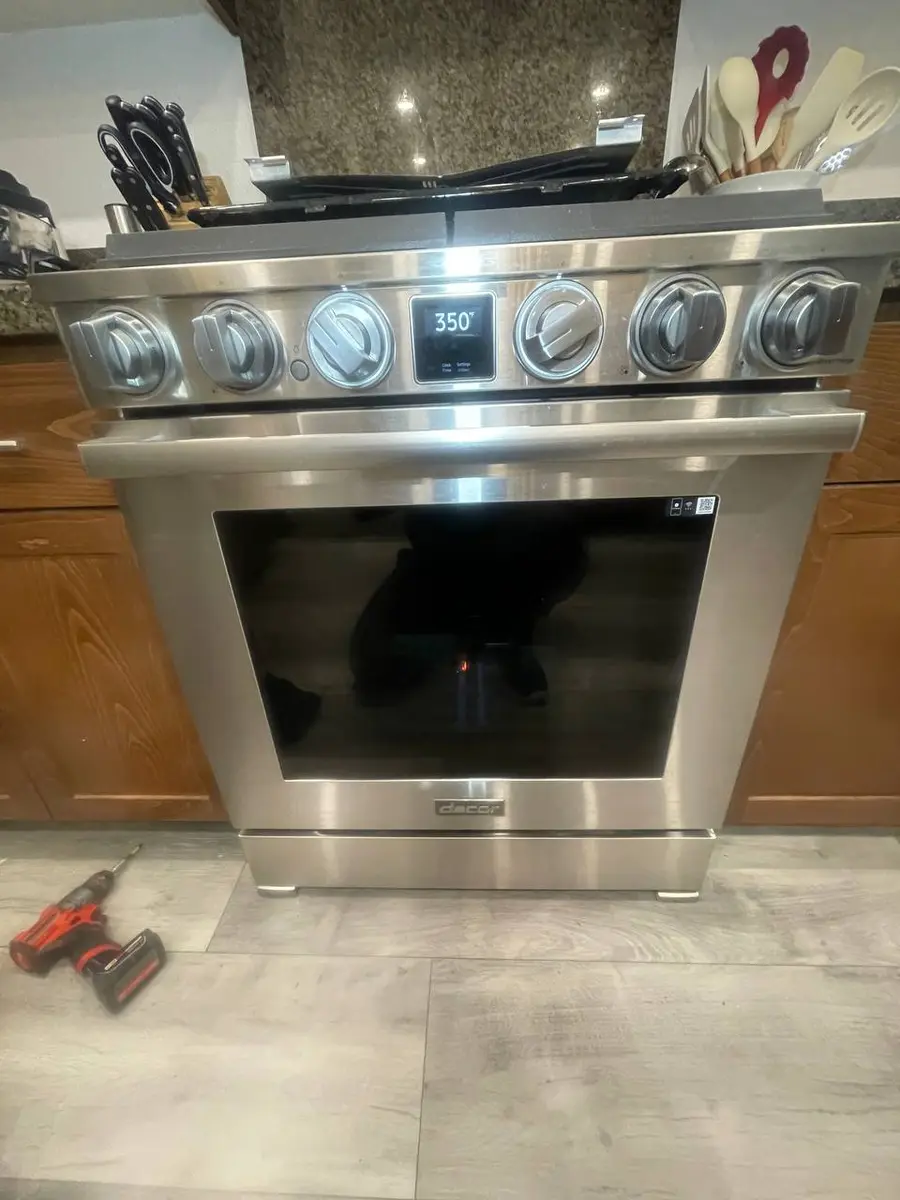
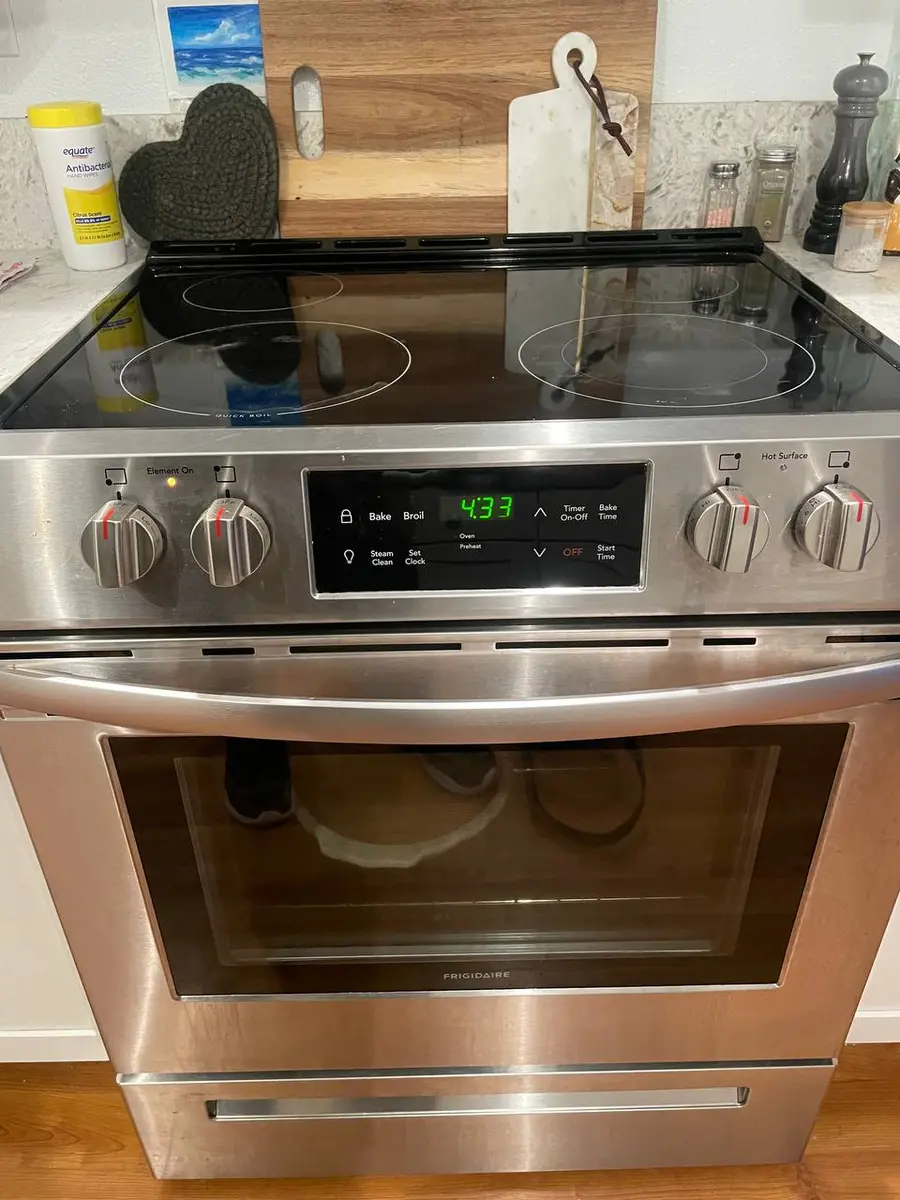
A Hotpoint oven baking at the wrong temperature is usually a drifted temperature sensor or a slipped calibration setting — and the calibration is a free fix you can do yourself. A partly failed element, a leaky door gasket, or a worn board relay round out the list. First, confirm the error with an oven thermometer, since a 25°F swing is normal and only 50°F-plus is a real fault.
Verify Before You Fix#
Don't chase a temperature problem on the display's word alone. Set an oven thermometer in the center of the middle rack, preheat to 350°F, wait twenty minutes after the preheat signal, and read it. Up to about 25°F of difference is normal, because the oven cycles around the setpoint; more than 50°F off, or a wild swing, means a component or the calibration is at fault. Because Hotpoint is GE Appliances' value line — GE internals with simpler controls — the parts fit directly and repairs run roughly 10 to 20% below the equivalent GE model, and one of the fixes costs nothing at all. This shows up across models like the RBS360DMWW, RAS200DMWW, and RB525DHWW.
Do You Have the Right Tools?
Combustion analyzer ($300), igniter tester ($120), temperature calibrator ($150), and gas pressure manometer. Our technician arrives with $3,000+ in professional tools — your diagnostic is free.
Licensed & Insured · 90-Day Warranty · Same-Day Service
The Causes, Most Likely First#
Faulty temperature sensor (RTD) (about 35%)#
The top cause. The RTD sensor — a thin metal rod at the upper rear of the cavity — drifts out of calibration over time and feeds the board a wrong reading, so the oven overshoots or undershoots the setpoint, sometimes by 50 to 100°F. Meter it at room temperature: a healthy Hotpoint sensor reads about 1,080 ohms, and a reading well off that confirms it's failed and needs replacing.
Calibration offset needed (about 25%)#
The free fix, and worth trying before you buy any part. Many Hotpoint ovens let you trim the temperature from the control panel, and the factory calibration can drift over the years. Check your manual for the sequence — typically holding Bake for about five seconds, then using the arrows to adjust within a ±35°F range — and set it against a reliable oven thermometer. If a modest, steady offset brings the oven back in line, you're done without a repair.
Partially failed heating element (about 20%)#
An element with a partial internal break still glows but puts out less than full wattage, so the oven runs below its setpoint. On electric Hotpoint ovens, compare the bake element's glow to a healthy one — a noticeably dim glow signals reduced output, and a section that stays dark while the rest glows explains food that cooks unevenly.
Worn door gasket (about 10%)#
The silicone or fiberglass-rope door gasket keeps heat in the cavity, and a hardened or torn one lets it leak, causing the oven to swing as it fights the loss. Run the oven at 400°F and hold your hand near the door edge — feeling significant heat escaping means the gasket has failed and should be replaced.
Control-board relay wear (about 10%)#
The board relay that switches the elements on and off wears with heavy use, and a tired relay cycles the heat erratically so the temperature swings widely between too hot and too cold. This one shows up most on ovens with ten or more years of daily cooking behind them.
A Sensible Order of Attack#
Baseline with a thermometer first. Then try the calibration offset, since it's free and fixes a quarter of these cases outright. If the error is large or erratic rather than a steady offset, meter the RTD sensor and replace it if it reads far from 1,080 ohms. Check the element's glow for a dim or dark section, and feel the door edge at temperature for a gasket leak. Save the control board for last, since it's the priciest suspect and the least common. Working cheap-to-expensive keeps a simple recalibration from turning into an unnecessary sensor or board swap. And remember that food burning on just one side is uneven heating, not overall inaccuracy — rotate pans, check any convection fan, and suspect a partially broken element rather than the calibration. Calibration shifts the whole cavity evenly, so it can never fix a one-sided burn — chasing it there only wastes an afternoon.
Related reading: a Hotpoint oven that won't heat and a Hotpoint oven that won't start.
Hotpoint [oven repair](/bay-area/services/oven-repair) across [Sacramento](/sacramento/sacramento) and the Bay Area — sensor, calibration, and element service in one visit. Book a technician.
Senior Gas Appliance Specialist · 18 years experience
AGA-certified gas appliance specialist with 18 years of experience in residential and commercial oven, range, and cooktop repairs.