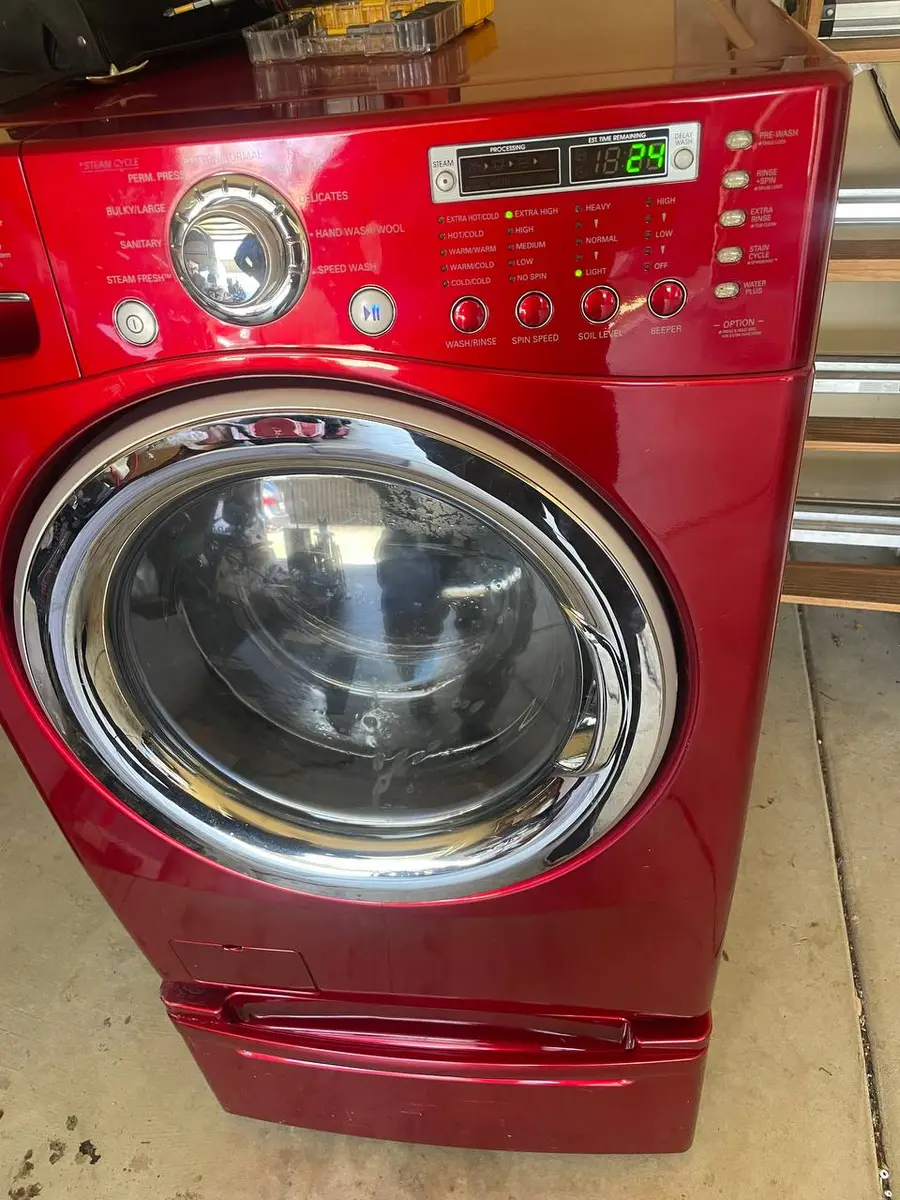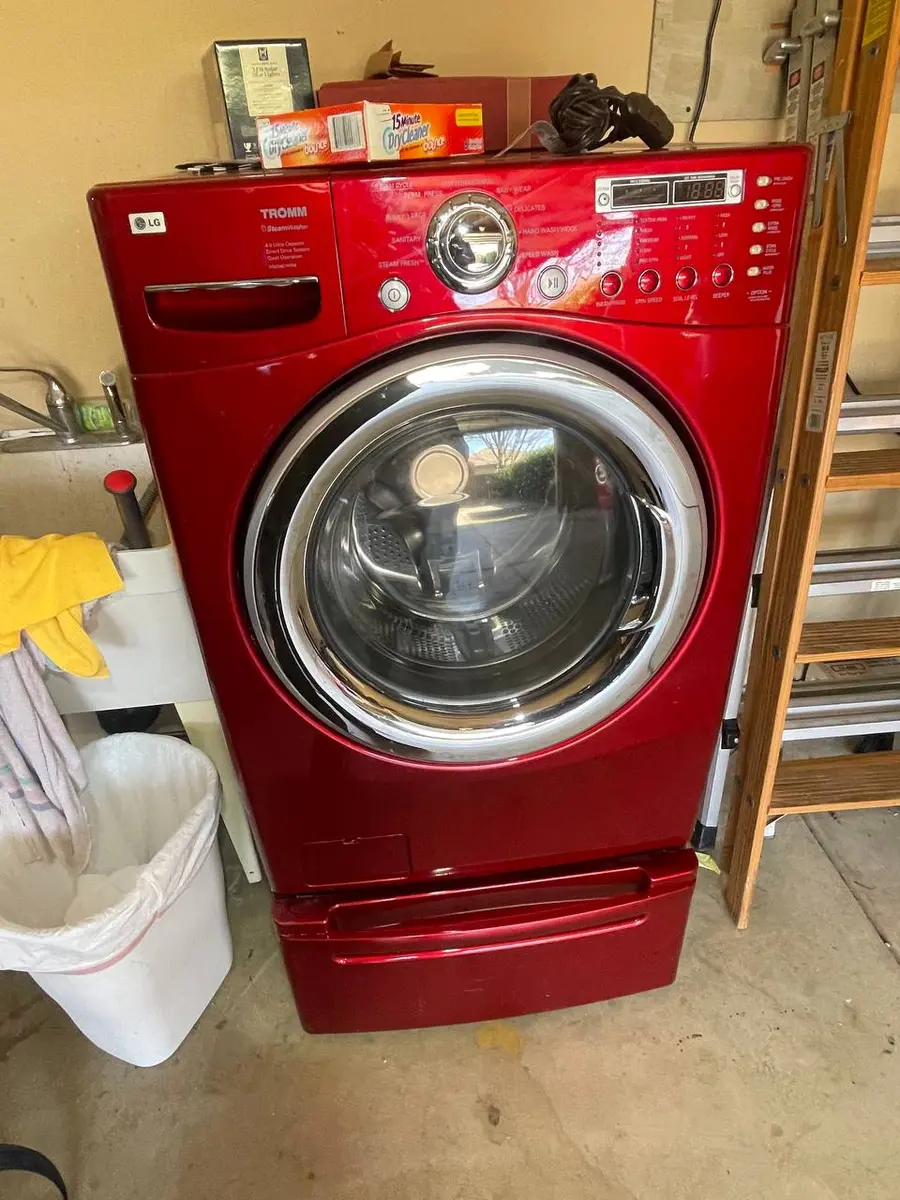
Electrolux Washer (Kenmore) oL — Fix Guide
oL on an Electrolux-built Kenmore washer means the motor is pulling too much current — an "overload." The usual cause is simply too much laundry in the drum, which you fix by removing some and restarting. On Electrolux-branded models the same fault shows as E57.
What oL means#
The control board watches how much current the drive motor draws. When that current climbs past a safe threshold, the board stops the cycle and shows oL to protect the motor. Most of the time the extra current comes from an overstuffed drum forcing the motor to work too hard — a condition you correct, not a component you replace.
Fix it first#
- Press Cancel and wait for the door or lid to unlock (a minute or two).
- Take out about a third of the load.
- Restart the cycle. If oL was overloading, it will not come back.
Do You Have the Right Tools?
Bearing puller set ($120), drum spider wrench ($85), multimeter ($85), and diagnostic software. Our technician arrives with $3,000+ in professional tools — your diagnostic is free.
Licensed & Insured · 90-Day Warranty · Same-Day Service
Load capacity guide#
These Kenmore/Electrolux front-loaders (the 417-series) typically hold 4.2 to 4.5 cubic feet. A useful rule of thumb: a regular load fills the drum loosely to the top of the opening without packing; heavy items like jeans and towels should fill to about two-thirds; and stick to one queen comforter or one king sheet set per load. Packing past these lines is what usually trips oL.
When oL is NOT overloading#
If oL shows up with a normal load or an empty drum, unplug the washer and spin the drum by hand:
- Grinding or rough rotation — the main drum bearings have failed and are creating drag that trips the overcurrent sensor. Bearing replacement means pulling the outer tub, a real repair.
- Catching or clicking once per turn — a foreign object such as an underwire, coin, or button is wedged between the inner drum and outer tub, dragging at one spot per revolution.
- Smooth rotation but oL persists — a partially shorted motor winding draws excess current even under a normal load, which points at motor replacement.
Safety First — Know the Risks
High-voltage components and pressurized water lines create flood and shock risk. A single loose fitting can cause thousands in water damage. Our techs are licensed and insured — let them handle the risk.
Licensed & Insured · 90-Day Warranty · Same-Day Service
DIY check before you call#
With the machine unplugged, spin the drum and listen. Free, smooth, quiet rotation means the mechanicals are fine and the problem was the load. Grinding, catching, or clicking tells you it is bearings or a lodged object — worth shining a flashlight into the gap between drum and tub for anything metal before assuming the worst.
Worth-fixing verdict#
If lightening the load fixes it, there is nothing to repair — just follow the capacity guide. A lodged object is usually a cheap, quick removal. Bearing or motor failure is a more involved repair; it is worth doing on a sound machine, but on an older washer with failed bearings you should weigh the cost against replacement. Remember that repeated overloading is what wears bearings, stresses the motor, and can bend the drum spider — so respecting the capacity limits is the cheapest fix of all.
The Real Cost of DIY
Average DIY attempt: $150-400 in tools you may use once, plus the risk of further damage. Our diagnostic visit costs $0 — we find the problem and give you an honest quote.
Licensed & Insured · 90-Day Warranty · Same-Day Service
Why overloading is more than an inconvenience#
It is tempting to cram in one more load's worth of laundry, but a packed drum is exactly what wears these machines out early. The motor works harder to turn the extra mass, the bearings and drive components carry more load every rotation, and the door seal on a front-loader gets stretched by clothing forced against it. Over months, that accelerated wear is what turns a simple oL warning into an actual bearing or motor repair. Respecting the capacity guide is genuinely cheaper than the parts it protects.
What to do if oL keeps coming back#
If you have lightened the load and oL still appears, do not keep forcing cycles — each attempt puts the motor through another overcurrent event. Unplug the machine, run the hand-spin test, and check for a lodged object first, since that is a free fix. If the drum grinds or the code survives an empty-drum test, book a diagnosis rather than continuing to run it, because repeatedly tripping the overcurrent protection can stress the motor and board further.
Kenmore washer stopping on oL? Schedule a visit — our technicians diagnose and repair across the [Sacramento](/sacramento/sacramento) and Bay Area.
Lead Appliance Repair Technician · 12 years experience
Experienced technician with 12 years specializing in washing machine and dryer repairs across all major brands.