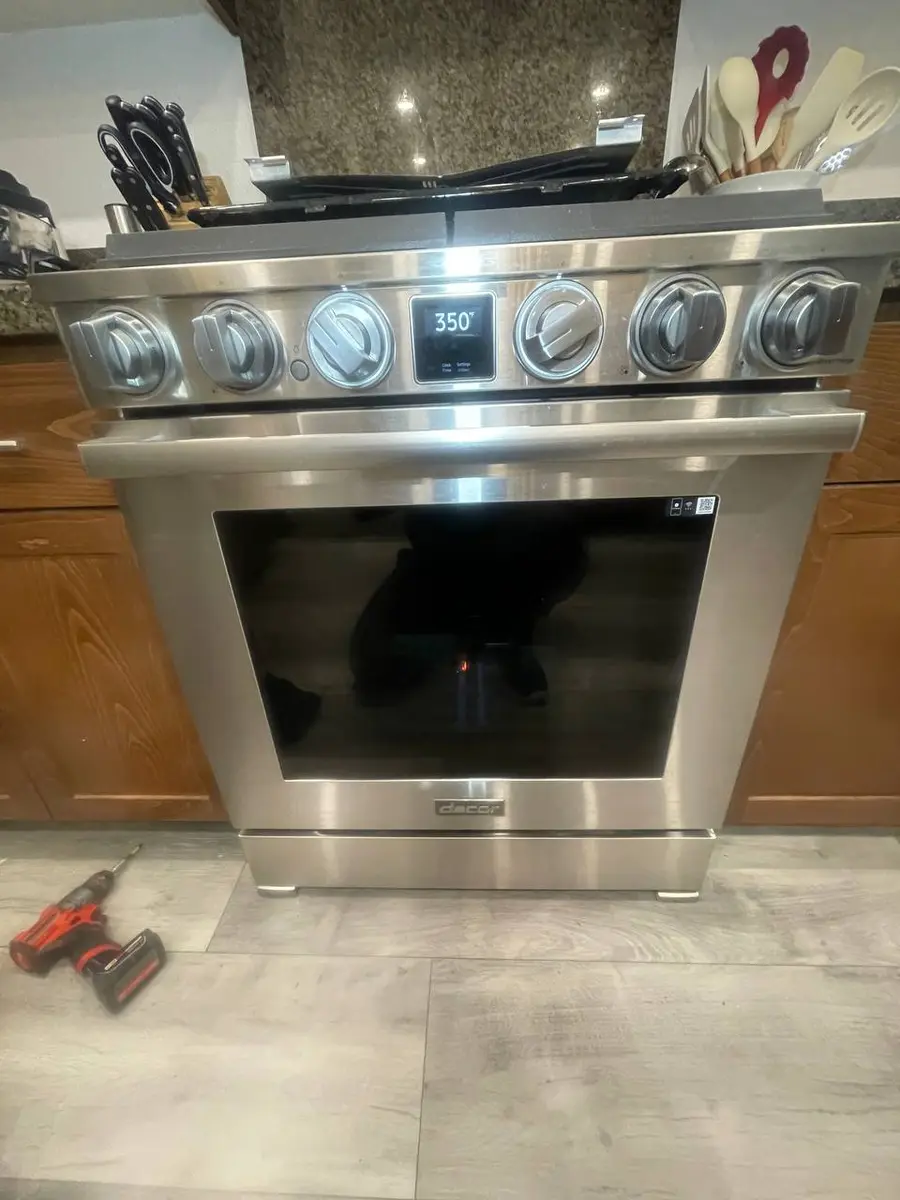
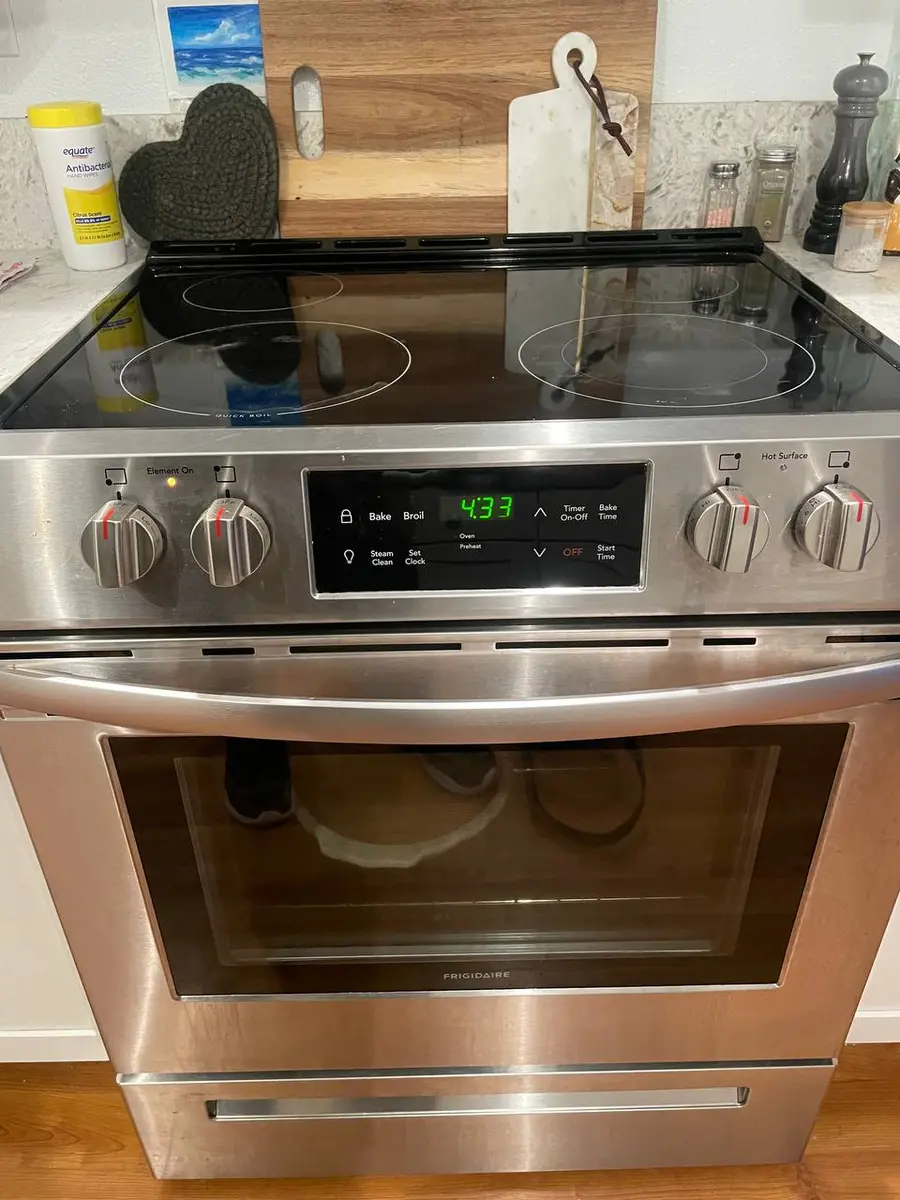
Electric Range Amps, Watts & Breaker Size
A 30-inch freestanding electric range is 40 A at 240 V and 9,600 W on a 40 A breaker through a 14-50R (or older 10-50R) receptacle; a 36-inch or pro-style model is 50 A and 12,000 W on a 50 A circuit. The upgrade question that follows — whether the outlet already behind your range takes the bigger machine — is what…
Electric Range Power Requirements at a Glance#
A 30-inch freestanding electric range runs on a 240 V circuit at 40 A, a connected load of 9,600 W, through a 14-50R receptacle on a 40 A double-pole breaker. A 36-inch or pro-style range steps up to 50 A and 12,000 W on a 50 A circuit. Those two rows are the specification, and they are also the reason a range upgrade so often stalls: the receptacle face looks identical either way, and only the breaker tells you which class your kitchen is wired for. The table below reads that pair back as a verdict.
Electric Range Electrical Specifications#
| Configuration | Voltage | Amps | Watts (max load) | Breaker | Outlet (NEMA) |
|---|---|---|---|---|---|
| 30-inch freestanding electric range | 240 V | 40 A | 9,600 W | 40 A | 14-50R / 10-50R |
| 36-inch or pro-style electric range | 240 V | 50 A | 12,000 W | 50 A | 14-50R |
A freestanding electric range gathers every surface element and the oven onto one high-amperage feed, which is why it claims the largest cord-and-plug circuit in most kitchens. Pro-style widths raise the demand far enough that some models abandon the 40-amp receptacle for a hardwired 50-amp feed spliced straight into a junction box.
Do You Have the Right Tools?
Combustion analyzer ($300), igniter tester ($120), temperature calibrator ($150), and gas pressure manometer. Our technician arrives with $3,000+ in professional tools — your diagnostic is free.
Licensed & Insured · 90-Day Warranty · Same-Day Service
The outlet and breaker you already have, and what they will run#
Pull the range forward, read the receptacle face, then read the number stamped on the breaker toggle feeding it. Both matter — the receptacle alone does not decide it.
| What you find | What it is | What it will run |
|---|---|---|
| A four-slot 14-50R receptacle on a 40 A double-pole breaker | The current standard for a 30-inch range | Any 30-inch freestanding range at 40 A and 9,600 W. A 36-inch or pro-style model at 50 A is not covered by this breaker, identical receptacle or not |
| A four-slot 14-50R receptacle on a 50 A double-pole breaker | The heavier branch behind the same receptacle face | Both classes on this page, the 12,000 W pro-style included |
| A three-slot 10-50R receptacle on a 40 A breaker | The older three-wire style, where the frame grounds through the neutral | A 30-inch range, with the cord changed to match the receptacle at the terminal block — the four-wire cord in the carton is swapped, never adapted |
| A hardwired connection and no receptacle at all | A dedicated 240 V branch terminated at the range | The same two classes; with no plug in the picture, the breaker rating is the only thing deciding which range you can fit |
| A 40 A breaker and a pro-style range on order | A 50 A appliance against a 40 A branch | Nothing, until the circuit is re-pulled: 12,000 W at 50 A needs a heavier conductor as well as a bigger breaker, and that is licensed work |
Two configurations are counted above, and they share a receptacle face while differing by a full breaker size. That is the trap this page exists to name: the plug tells you nothing, and only the number stamped on the breaker toggle says which class your kitchen is actually wired for.
Circuit and Breaker Sizing for the Electric Range#
The range breaker follows the combined draw of the oven and all the surface elements. A 30-inch freestanding range running near 40 A sits on a 40 A breaker, while a 36-inch or pro-style unit near 50 A takes a 50 A breaker, with the conductor sized to the breaker over the run to the 14-50R receptacle. This is a dedicated 240 V branch circuit — the 9,600 to 12,000 W connected load rules out sharing with a separate wall oven, which needs its own feed. Because the range plugs in, the swap from a three-wire to a four-wire setup is about the cord and receptacle, not the breaker: a modern 14-50R outlet carries a separate ground the older 10-50R did not.
Safety First — Know the Risks
Gas ovens involve live gas lines — a loose connection creates explosion and carbon monoxide risk. Electric ovens run on 240V circuits. Our techs are licensed and insured — let them handle the risk.
Licensed & Insured · 90-Day Warranty · Same-Day Service
Gas vs. Electric: How the Electric Range Wiring Differs#
An electric range and a gas range are wired worlds apart. The electric version heats both oven and cooktop resistively, which is why it needs the 240 V, 40 to 50 A circuit, the 9,600 to 12,000 W feed and the 14-50R receptacle. A gas range burns fuel to cook and uses electricity only for the igniters, controls and oven light, so it runs on an ordinary 120 V outlet drawing just a few amps plus a gas line. Converting from gas to electric therefore means adding a full 240 V, 40 to 50 A circuit and a 14-50R outlet — the 120 V gas receptacle cannot feed an electric range.
Installation and Safety Notes for Electric Range Wiring#
Because the range is cord-and-plug connected, the key match is the plug to the receptacle: a four-prong 14-50R keeps neutral and ground separate, while an older three-prong 10-50R bonds them, so the cord and the range’s terminal block must suit whichever outlet is installed. Adding a new 240 V, 40 to 50 A circuit is permitted-and-inspected work covering the conductor, breaker and receptacle. Changing a range cord to fit an existing outlet is a manageable homeowner task, but running a new high-amperage line back to the panel and landing the two-pole breaker is a licensed electrician’s job.
The Real Cost of DIY
Average DIY attempt: $150-400 in tools you may use once, plus the risk of further damage. Our diagnostic visit costs $0 — we find the problem and give you an honest quote.
Licensed & Insured · 90-Day Warranty · Same-Day Service
Electric Range Electrical FAQ#
What breaker size does a 30-inch freestanding range use?#
A 30-inch freestanding electric range draws about 40 A at 240 V and 9,600 W, so it sits on a dedicated 40 A breaker feeding a 14-50R receptacle.
Should I choose a 40-amp or a 50-amp circuit for the oven?#
Follow the nameplate. A standard 30-inch range takes a 40 A circuit, while a 36-inch or pro-style model whose connected load reaches 12,000 W needs a 50 A circuit. When in doubt, the larger unit’s rating decides.
Which receptacle does a modern cooking range plug into?#
A modern electric range uses a four-prong 14-50R receptacle, which carries a separate neutral and ground. Older installations may still have a three-prong 10-50R, and the range cord must match whichever is present.
Can the range and the wall oven ride on one shared feed?#
No. The range already fills a dedicated 40 to 50 A circuit with its 9,600 to 12,000 W load. A separate wall oven is its own appliance and needs its own dedicated circuit.
Do I have to rewire when swapping a three-wire cord for a four-wire?#
Usually not the branch circuit itself — you change the cord and, if the outlet is being updated, the receptacle to a 14-50R, and reconfigure the range’s terminal block. The breaker and conductor typically stay as they are if already correctly sized.
How high does the connected load climb on a pro-style model?#
A 36-inch or pro-style electric range can reach a connected load of about 12,000 W at 240 V, corresponding to roughly 50 A of running current — the reason it takes a 50 A circuit.
Appliance Repair Technician & Diagnostics Specialist · 10 years experience
Electronics and diagnostics specialist with 10 years of experience in modern smart appliance repair, specializing in LG and Samsung.