Are Smart Ovens Worth It? Remote Preheat Value vs
Smart ovens add remote preheat, guided cooking, and connected temperature probes — genuinely useful if you will use them, but they cost more up front and more to repair. Whether they are worth it comes down to how much you actually cook and whether you will lean on the smart features; the data shows a lot of owners do…
The feature that sells them#
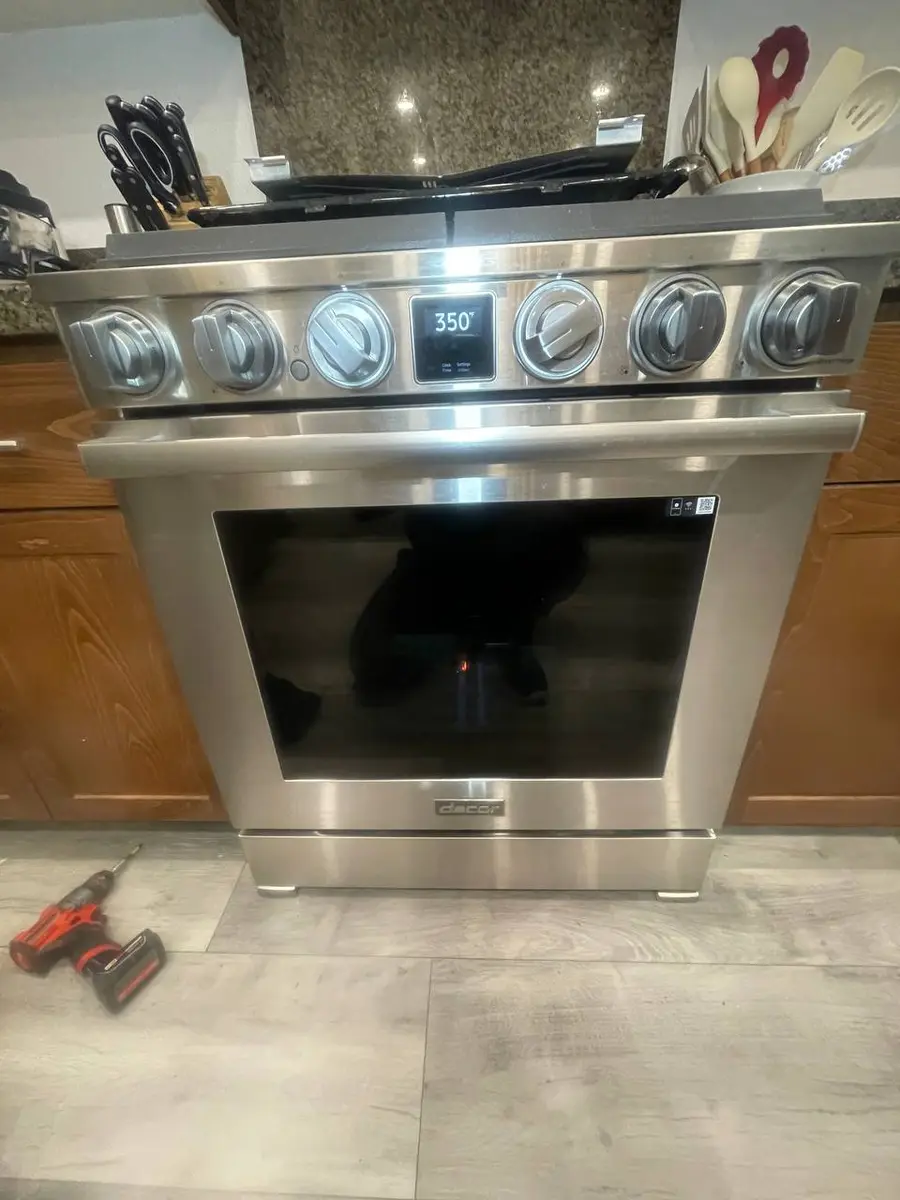
Remote preheat is the headline: tap your phone at the store and the oven is at 375F when you get home. GE Profile, Samsung, and LG all offer it, gated by a safety check that the cavity is empty before it will heat remotely (GE verifies the starting temperature is below about 150F, Samsung adds a camera check on some models, LG uses temperature only). The catch is usage: only about 35% of owners still use remote preheat weekly after the first year, the most common reason being that they store pans in the oven, which trips the empty-cavity safety block.
Guided cooking — the underrated one#
Select a recipe in the app and the oven sets temperature, mode, rack guidance, and time, with alerts to turn or baste. Beyond convenience, it has a quiet repair benefit: wrong-setting mistakes (broil instead of bake, self-clean instead of convection) drive roughly 8% of service calls, and guided cooking removes that user-error path.
Do You Have the Right Tools?
Combustion analyzer ($300), igniter tester ($120), temperature calibrator ($150), and gas pressure manometer. Our technician arrives with $3,000+ in professional tools — your diagnostic is free.
Licensed & Insured · 90-Day Warranty · Same-Day Service
Smart temperature probes#
Connected probes (GE WB20X31433, Samsung DG61-01100A) stream temperature to your phone so you can watch a roast from the couch, where a traditional probe only shows on the oven panel. They fail at about the same rate as traditional probes — the sensing element is the same thermistor on a wire — with the "smart" transmitter in the handle adding a bit to replacement cost while usually outlasting the thermistor.
The self-clean risk#
Self-clean is the leading cause of oven control-board failure across all ovens, and smart ovens are more exposed: LCD touchscreens degrade faster under heat than membrane keypads, Wi-Fi modules can overheat (some ovens disable Wi-Fi during self-clean), and connected boards have more to fail. Our data shows smart ovens run a 4.2% control-panel failure rate within 30 days of a self-clean versus 2.1% for traditional membrane-keypad ovens. Use steam clean (250F) instead when you can.
Safety First — Know the Risks
Gas ovens involve live gas lines — a loose connection creates explosion and carbon monoxide risk. Electric ovens run on 240V circuits. Our techs are licensed and insured — let them handle the risk.
Licensed & Insured · 90-Day Warranty · Same-Day Service
When a smart oven makes sense#
Strong case: you cook often (four-plus meals a week) and will use guided cooking and the probe, and your schedule makes remote preheat genuinely time-saving. Weak case: you use the oven a couple of times a week for basic reheating, you run self-clean frequently (raising the risk to an expensive touchscreen), or you store items in the oven (which blocks remote preheat anyway).
What we recommend#
If you are buying smart, GE Profile is the pick: the most mature app, the best guided-cooking library, and — crucially — a separate Wi-Fi adapter, so a connectivity failure is a cheap module swap rather than the main-board replacement Samsung's integrated design forces. Samsung has better cameras but pricier connectivity repairs. If you go traditional, use a standalone meat thermometer and your phone's timer, and put the savings toward the appliance itself. Either way, the smart features are the whole value proposition — judge the oven on whether you will use them week in and week out, because the baking underneath is identical to a traditional oven and the premium buys convenience, not better cooking. So a smart oven earns its premium exactly to the extent that you will actually reach for those features week to week, and no further than that.
Need a smart [oven repair](/bay-area/services/oven-repair)? Book a free diagnostic — our technicians handle both the connected side and the traditional repair.
Senior Gas Appliance Specialist · 18 years experience
AGA-certified gas appliance specialist with 18 years of experience in residential and commercial oven, range, and cooktop repairs.