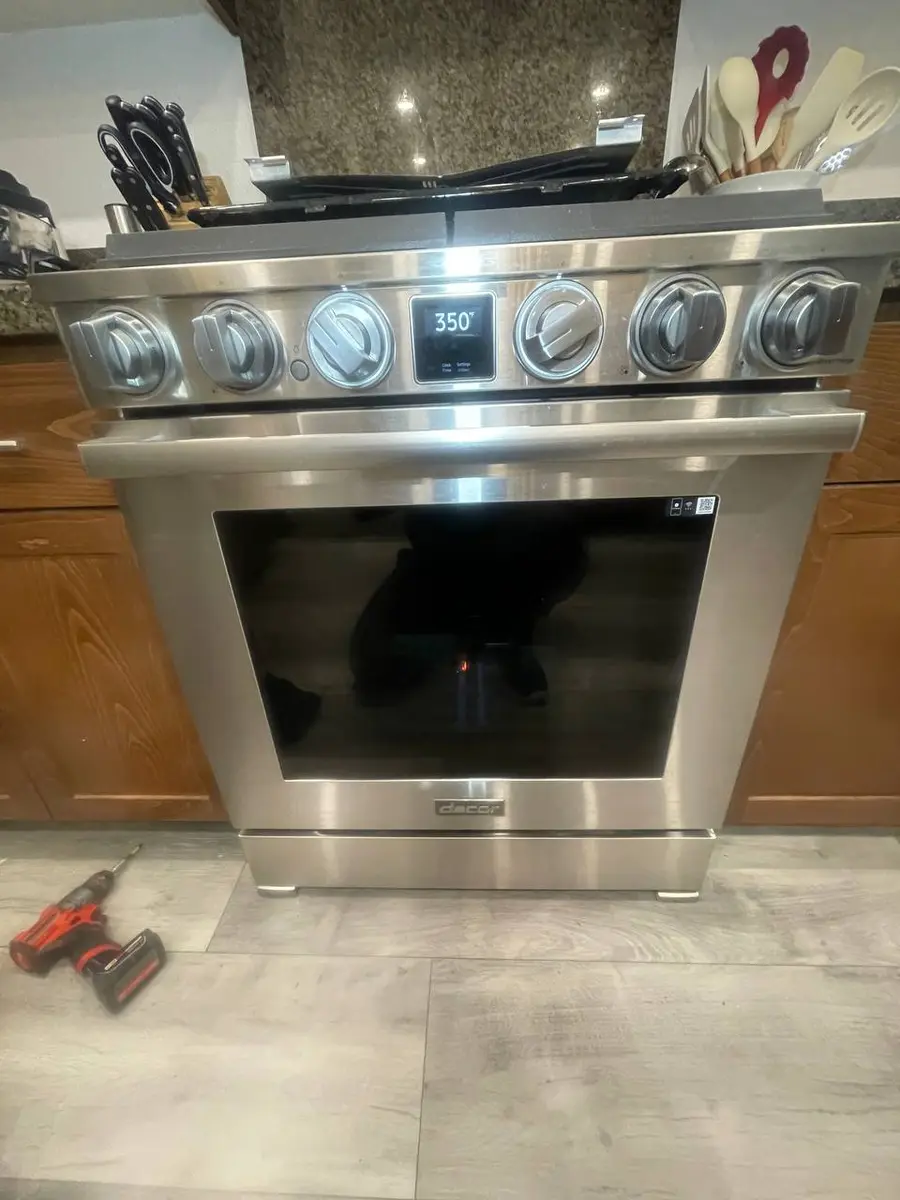
<p>When a Wolf oven develops not heating issues, the stakes are higher than with standard appliances. Wolf units represent a significant investment — often varies by model and condition or more — and require specialized diagnostic knowledge, proprietary parts, and factory-trained technicians. Generic repair guides miss the engineering specifics that make Wolf appliances unique. This guide provides Wolf-specific diagnosis, repair expectations, and cost estimates based on real service data.</p>
<h2>Quick Answer</h2>
<p>Wolf oven not heating is most commonly caused by: Flat igniter failure (Wolf uses high-output igniters rated at 3.2-3.6 amps); Temperature sensor (RTD probe) drift or open circuit; Dual-relay control board failure. Expected repair cost: (luxury brands command a premium for proprietary parts and specialized labor).</p>
<h2>Why Wolf Repairs Are Different</h2>
<p>Wolf appliances are engineered with proprietary components, tighter tolerances, and advanced control systems that standard appliance repair training does not cover. Using aftermarket parts or generic repair approaches on a Wolf unit risks further damage, voiding remaining warranty coverage, and compromising the performance that justified the premium price. Always use a technician experienced with Wolf appliances specifically.</p>
<h2>Affected Wolf Models</h2>
<p>This symptom is reported across these [Wolf oven models](/blog/hub/models-wolf-oven):</p>
<ul>
<li><strong>DF486G</strong></li>
<li><strong>GR486G</strong></li>
<li><strong>SO30PM</strong></li>
<li><strong>DO30PM</strong></li>
<li><strong>DF606DG</strong></li>
</ul>
<h2>What Are the Common Causes?</h2>
<h3>1. Flat igniter failure (Wolf uses high-output igniters rated at 3.2-3.6 amps)</h3>
<p>Gas oven igniters are silicon carbide (SiC) or silicon nitride (Si3N4) elements that must draw sufficient current (typically 3.2-3.6 amps) to open the gas valve safety solenoid. A weak igniter may glow visibly but fail to reach the amperage threshold, so gas never flows. Measure current draw with a clamp meter — below 3.0A, the igniter is too weak. The igniter should glow bright orange-white within 60 seconds; a dim orange glow indicates degradation. Always replace with OEM-spec amperage rating. Cost: installed.</p>
<p>In our technicians' experience, wear on the primary failure component accounts for the majority of solving wolf oven not heating issues cases on Wolf units.</p>
<h3>2. Temperature sensor (RTD probe) drift or open circuit</h3>
<p>The oven temperature sensor is an NTC (negative temperature coefficient) thermistor probe mounted inside the oven cavity. At room temperature (72F), it should read approximately 1080-1100 ohms. Resistance decreases as temperature rises. Measure at the sensor connector with the oven cold — an open circuit, shorted reading (near 0 ohms), or a value far outside the 1080 ohm range confirms failure. A drifted sensor causes the oven to overshoot or undershoot the set temperature by 25-75 degrees. Sensor replacement:.</p>
<h3>3. Dual-relay control board failure</h3>
<p>The electronic control board manages heating cycles, temperature regulation, and safety interlocks. Board failure typically manifests as no response to controls, erratic temperature swings, or persistent error codes after power cycling. Inspect the board for visible damage: bulging capacitors, darkened solder joints, or burnt relay contacts. Power-cycle the unit (breaker off for 10 minutes) before condemning the board. If the error returns immediately, the board has a hardware fault. OEM boards cost and require exact model matching.</p>
<h3>4. <a href="https://www.cpsc.gov/Safety-Education/Safety-Guides/General-Information/Carbon-Monoxide-Information-Center" rel="nofollow noopener" target="_blank">Gas safety</a> valve not opening (requires igniter draw test)</h3>
<p>Gas oven igniters are silicon carbide (SiC) or silicon nitride (Si3N4) elements that must draw sufficient current (typically 3.2-3.6 amps) to open the gas valve safety solenoid. A weak igniter may glow visibly but fail to reach the amperage threshold, so gas never flows. Measure current draw with a clamp meter — below 3.0A, the igniter is too weak. The igniter should glow bright orange-white within 60 seconds; a dim orange glow indicates degradation. Always replace with OEM-spec amperage rating. Cost: installed.</p>
<h3>5. Convection element burnout on dual-fuel models</h3>
<p>The convection heating element is a circular resistive loop mounted behind the rear oven wall panel, surrounding the convection fan. It provides supplemental heat during convection cooking. Test element resistance: 15-35 ohms is normal; an open circuit (infinite reading) confirms failure. A partially failed element may heat intermittently or have visible hot spots and cold zones. On dual-fuel models, this element works alongside gas burner heat and its failure causes uneven baking on convection mode while standard bake may work normally. Element replacement:.</p>
<h2>Step-by-Step Diagnosis</h2>
<p>Important: Wolf appliances often contain high-voltage components or gas connections. Do not attempt repairs beyond basic inspection unless you have professional training.</p>
<ol>
<li><strong>Record model and serial number:</strong> Located on the Wolf identification plate (typically inside the door frame or on the rear panel). This is essential for ordering correct proprietary parts.</li>
<li><strong>Note any error codes or indicator lights:</strong> Wolf control panels display diagnostic information that narrows the cause significantly. Record the exact code sequence.</li>
<li><strong>Check basic conditions:</strong> Verify power supply, water connections, and gas supply (if applicable) are functioning normally. Confirm the appliance is level and has proper ventilation clearance per Wolf installation specifications.</li>
<li><strong>Listen and observe:</strong> Run a short cycle and note any unusual sounds, vibrations, smells, or visual indicators. The pattern of the symptom (constant vs. intermittent, when in the cycle it occurs) provides key diagnostic information.</li>
<li><strong>Check warranty status:</strong> Wolf warranty coverage varies by model and component. Contact Wolf or check your purchase records before authorizing any out-of-pocket repair. Some components carry extended warranties beyond the base coverage period.</li>
</ol>
<h2>When Should You Call a Professional?</h2>
<p>For Wolf appliances, professional service is recommended for essentially all repairs beyond basic cleaning and filter replacement. The proprietary parts, specialized diagnostic software, and precise calibration requirements make DIY repair impractical and risky for the investment involved. Contact a Wolf-authorized service provider or an experienced luxury appliance repair company.</p>
<h2>Frequently Asked Questions</h2>
<h3>Why is my Wolf [oven not heating up](/bay-area/services/oven-not-heating)?</h3>
<p>The most common cause on Wolf gas and dual-fuel ovens is a weak igniter. Wolf igniters must draw 3.2-3.6 amps to open the gas safety valve. When the igniter weakens below this threshold, it glows visibly but cannot draw enough current to open the valve. Igniter replacement on Wolf ovens costs vary by model and condition due to the specialized flat-style igniter design.</p>
<h3>How much does Wolf [oven repair cost](/blog/oven-repair-cost-guide)?</h3>
<p>Wolf oven repairs range. Igniter replacement costs. Temperature sensor (RTD) replacement runs. Control board replacement is the most expensive at because Wolf uses proprietary boards not shared with any other brand. Extended service plans through Sub-Zero Group cover these repairs for up to 5 years.</p>
<h3>How much does Wolf oven not heating repair cost?</h3>
<p>Wolf oven not heating repair cost varies depending on the specific issue, parts needed, and labor. The diagnostic fee is waived when you proceed with the repair. OEM Wolf parts may be at the higher end of the range. EasyBear provides an upfront quote after diagnosis with no hidden fees.</p>
<p><em>Need help with your Wolf oven? <a href="/book">Book an EasyBear technician</a> for expert Wolf repair. Our technicians carry OEM parts and have brand-specific training for every service call.</em></p>
4.85 (232 verified reviews)
Same-Day Appliance Repair
Fixed or It's Free
Free Service Call & Diagnosis — no hidden fees, offer ends Jun 10
AT
Angela Thompson
Appliance Repair Technician · 11 years experience
EPA 608 UniversalNASTeC Certified
Experienced technician with 11 years specializing in Frigidaire and Electrolux refrigerator and dryer repair with a focus on safety.