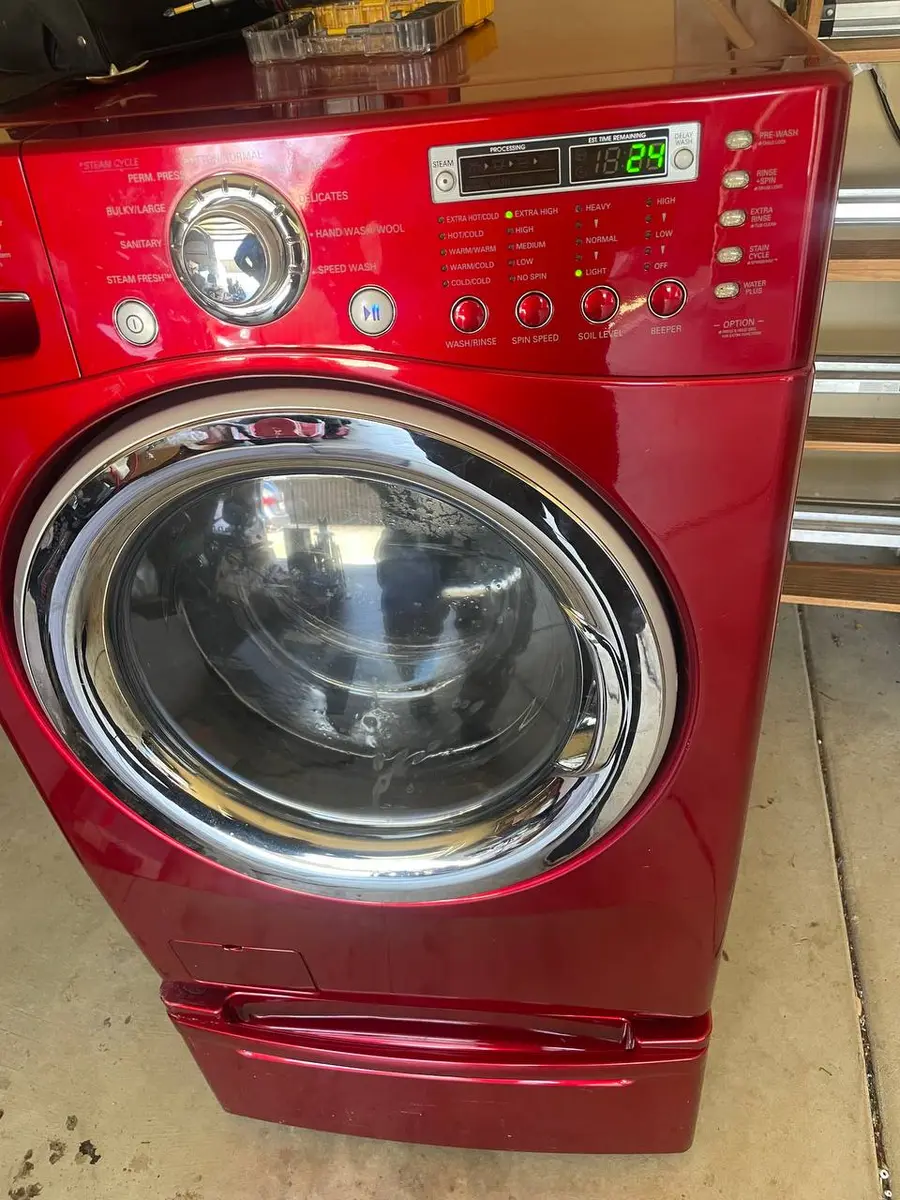
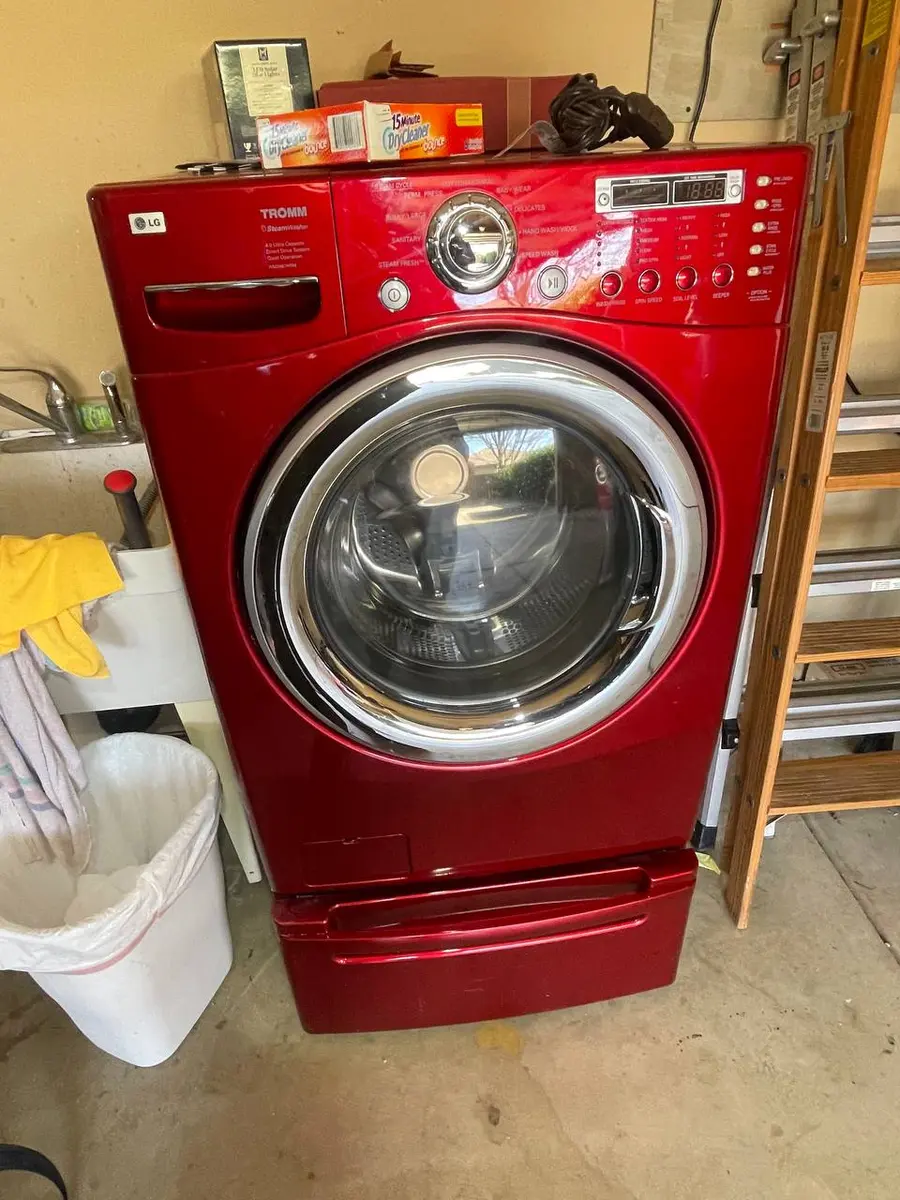
Samsung washers display error codes on the digital panel when something goes wrong. Some codes indicate a simple fix you can handle yourself in minutes. Others point to a component failure that requires professional repair. This guide covers every common Samsung washer error code, what causes it, and whether you can fix it at home.
DIY or a call: every Samsung code, triaged
A code list tells you what a code means. This tells you whether it is your afternoon or a technician’s. Start with the reset on any code you have not seen before — unplug for 5 minutes — then find your row.
| Code | DIY or a call | The one action |
|---|---|---|
| UE / Ub — unbalanced load | DIY, almost always | redistribute the drum and add a few towels around a single heavy item. If it persists with balanced loads on a level machine, the suspension rods or shock absorbers are worn and that is a call. |
| DC — door not closed | DIY first | open it, check nothing is caught in the gasket, close it firmly, and wipe the latch and strike plate. If it clicks shut and the code stays, the door lock assembly is the repair. |
| SE / 5E — drain error | DIY | the drain pump filter behind the small panel at the bottom front is the most common cause. Unplug the washer first, then towels down, cap open slowly, drain into a shallow pan, and pull out the coins and hair ties. Also check the hose is not pushed more than 6 inches into the standpipe. |
| nF / 4E — no fill | DIY | both supply valves fully open, hoses unkinked, then disconnect and clean the mesh inlet screens — hard water in the Sacramento and Bay Area silts them up. Only if all three are clean is the inlet valve the answer. |
| LE / LE1 — water level or leak | DIY first | if you can see suds, run a rinse and cut the detergent — HE detergent only in an HE machine. Then check the door gasket for tears or debris. A pressure switch is what is left after those. |
| dE / Ed — door lock error | DIY first | unplug for 5 minutes and try again; a power glitch mid-cycle causes most of these. If the door is physically stuck, the emergency release is a small tab or cord behind the bottom panel. |
| OE / 0E — overflow | A call, immediately | cancel and unplug now, then check whether water keeps flowing with the machine unplugged. If it does, the inlet valve is stuck open — shut the supply valves at once. This is the one code on the list that is a water damage risk. |
| tE / tE1 / tE2 — temperature sensor | A call | unplug for 5 minutes in case it is transient. If it returns, the thermistor needs testing and probably replacing, which is not a DIY job. |
| Sud / Sd — excessive suds | Always DIY | wait 15-20 minutes and let the machine dissolve them, then run an extra rinse. Use 1-2 tablespoons of HE detergent next time — hard water areas need less, not more. |
Nine rows for the nine code families this guide documents, triaged rather than merely defined. Seven of the nine start as your own work and only two are a call from the outset, which is the real distribution and the thing a code list never tells you. The reset that heads the table — unplug for 5 minutes — is Samsung own transient-fault clear and it belongs before the triage rather than inside it. Multiple different codes in a short period is not in this table on purpose: that pattern points at the control board rather than at any single code.
UE / Ub — unbalanced load
What it means: The washer detected an unbalanced load during the spin cycle and stopped to prevent damage.
Common causes:
- Washing a single heavy item (comforter, blanket, jeans) without counterbalancing items
- Overloading the drum
- Washer not level
What to do:
- Open the door and redistribute the items evenly around the drum
- If washing a single large item, add a few towels to balance the load
- Check that the washer is level — place a bubble level on top and adjust the feet
- Restart the spin cycle
DIY or pro? DIY in almost all cases. If the error persists with balanced loads and a level machine, the suspension rods or shock absorbers may be worn — that requires professional repair.
DC — door not closed
What it means: The washer cannot detect that the door is fully closed and locked.
Common causes:
- Door not pushed firmly shut
- Clothing caught in the door seal
- Worn or damaged door latch
- Faulty door lock assembly
What to do:
- Open and firmly close the door, making sure nothing is caught in the gasket
- Inspect the door latch for visible damage
- Clean the latch and strike plate with a damp cloth
- If the door clicks shut but the error persists, the door lock assembly may need replacement
DIY or pro? Start with DIY (cleaning, re-closing). If the latch mechanism is damaged, the door lock needs professional replacement.
SE / 5E — drain error
What it means: The washer cannot drain water within the expected time.
Common causes:
- Clogged drain pump filter (the most common cause)
- Kinked or clogged drain hose
- Drain pump failure
- Drain standpipe blockage
What to do:
- Unplug the washer before you drain it. Check the drain pump filter — it is behind a small access panel at the bottom front of the machine. Place towels down, slowly open the cap, and drain water into a shallow pan. Remove any coins, buttons, hair ties, or debris
- Inspect the drain hose for kinks or clogs
- Make sure the drain hose is not inserted more than 6 inches into the standpipe
- Close the filter cap, plug the washer back in and run a spin/drain cycle to test
DIY or pro? DIY for filter cleaning and hose issues. If the drain pump itself is failed (motor not running), it needs professional replacement.
nF / 4E — no fill (water supply error)
What it means: The washer is not receiving water or not filling fast enough.
Common causes:
- Water supply valves turned off
- Kinked supply hoses
- Clogged inlet filter screens
- Faulty water inlet valve
What to do:
- Verify both hot and cold supply valves behind the washer are fully open
- Check supply hoses for kinks
- Turn off valves, disconnect hoses from the washer, and inspect the small mesh screens in the inlet valve. Clean any sediment or mineral buildup (common in Sacramento and Bay Area hard water)
- Reconnect, turn on valves, and test
DIY or pro? DIY for valve and filter issues. If screens are clean and valves are open but the washer still will not fill, the inlet valve needs replacement.
LE / LE1 — water level sensor error
What it means: The washer detected a low water level or a water leak.
Common causes:
- Excessive suds from too much detergent (especially with HE machines)
- Leaking door boot seal
- Faulty water level pressure switch
- Loose hose connections
What to do:
- If you see excessive suds, run a rinse cycle and reduce detergent in future loads. Use only HE detergent in HE machines
- Check for visible leaks under and around the washer
- Inspect the door gasket for tears or debris preventing a seal
- If no visible cause, the pressure switch or its hose may need inspection
DIY or pro? DIY for suds and simple leak issues. Pressure switch or sensor replacement requires a professional.
Rather have a pro handle it?
A vetted local technician can come out and diagnose your washer at home.
dE / Ed — door lock error
What it means: The door lock mechanism has failed to engage or disengage.
Common causes:
- Power glitch during cycle
- Worn door lock actuator
- Wiring issue between door lock and control board
What to do:
- Unplug the washer for 5 minutes, then plug back in and try again
- Check for objects obstructing the door latch
- If the door is physically locked and won't open, try the emergency release (a small tab or cord accessible from behind the bottom panel)
DIY or pro? Power cycle fixes most transient cases. Persistent dE errors require door lock replacement.
OE / 0E — overflow error
What it means: The washer has detected too much water in the tub.
Common causes:
- Faulty water inlet valve (stuck open)
- Malfunctioning water level sensor
- Control board issue
What to do:
- Cancel the cycle and unplug the washer immediately
- Check if water continues to flow even with the machine unplugged — if so, the inlet valve is stuck open. Turn off the supply valves immediately
- Do not attempt to use the washer until the issue is resolved
DIY or pro? This requires professional diagnosis. A stuck-open inlet valve is a water damage risk and should be repaired promptly.
tE / tE1 / tE2 — temperature sensor error
What it means: The water temperature sensor is reading outside normal range.
Common causes:
- Faulty thermistor (temperature sensor)
- Wiring connection issue
- Control board problem
What to do:
- Unplug for 5 minutes and restart — transient sensor glitches sometimes resolve
- If the error returns, the thermistor needs testing and likely replacement
DIY or pro? Professional repair needed.
Sud / Sd — excessive suds
What it means: The washer detected too many suds, which impedes draining and rinsing.
What to do:
- Let the washer sit for 15-20 minutes — it will try to dissolve the suds
- Run an extra rinse cycle
- In future loads, use less detergent (1-2 tablespoons of HE detergent is sufficient)
- Hard water needs the same or more detergent, because minerals tie up surfactant and suppress suds; it is soft water that needs less to avoid oversudsing
DIY or pro? Always DIY. This is a detergent amount issue, not a machine problem.
When to call a professional
Call a technician if:
- The error code persists after performing the recommended steps
- You see error codes you do not recognize (Samsung occasionally updates codes with new models)
- The washer displays multiple different error codes in a short period — this often indicates a control board issue
- Any error involving water overflow (OE) or electrical components (tE, PE)
Samsung error codes are diagnostic clues, not repair instructions. They tell you where to look but not always what is wrong. A trained technician uses the error code as a starting point and then tests the specific components to identify the actual failure.
Frequently asked questions
Q: How do I reset my Samsung washer error code? A: Unplug the washer for 5 minutes, then plug it back in. This clears most transient error codes. If the error returns after a reset, the underlying problem still exists and needs to be addressed.
Q: Are Samsung washers reliable? A: Samsung washers offer good features and competitive pricing. Regular maintenance — especially cleaning the drain filter monthly — significantly reduces the likelihood of problems.
Q: My Samsung washer is showing an error but is still under warranty. What should I do? A: Check the warranty card or Samsung's warranty terms for your model to see what is covered and for how long. Contact Samsung directly at 1-800-726-7864 to schedule a warranty service visit. If your washer is out of warranty, EasyBear offers free diagnostic visits and can repair all Samsung washer models.
Q: Which Samsung washer codes should I not try to fix myself? A: Two of the nine. OE or 0E means overflow — cancel, unplug, and if water keeps flowing with the machine unplugged, shut the supply valves immediately, because a stuck-open inlet valve is a water damage risk. tE, tE1 or tE2 is the temperature sensor, which needs testing rather than guessing. Everything else on the list starts as your own work, and six of the nine usually end there.
Q: What if my Samsung shows several different codes in a short time? A: That pattern is different from any single code and it is not something to chase code by code. Multiple unrelated errors in a short period usually points at the control board rather than at each component the codes name.