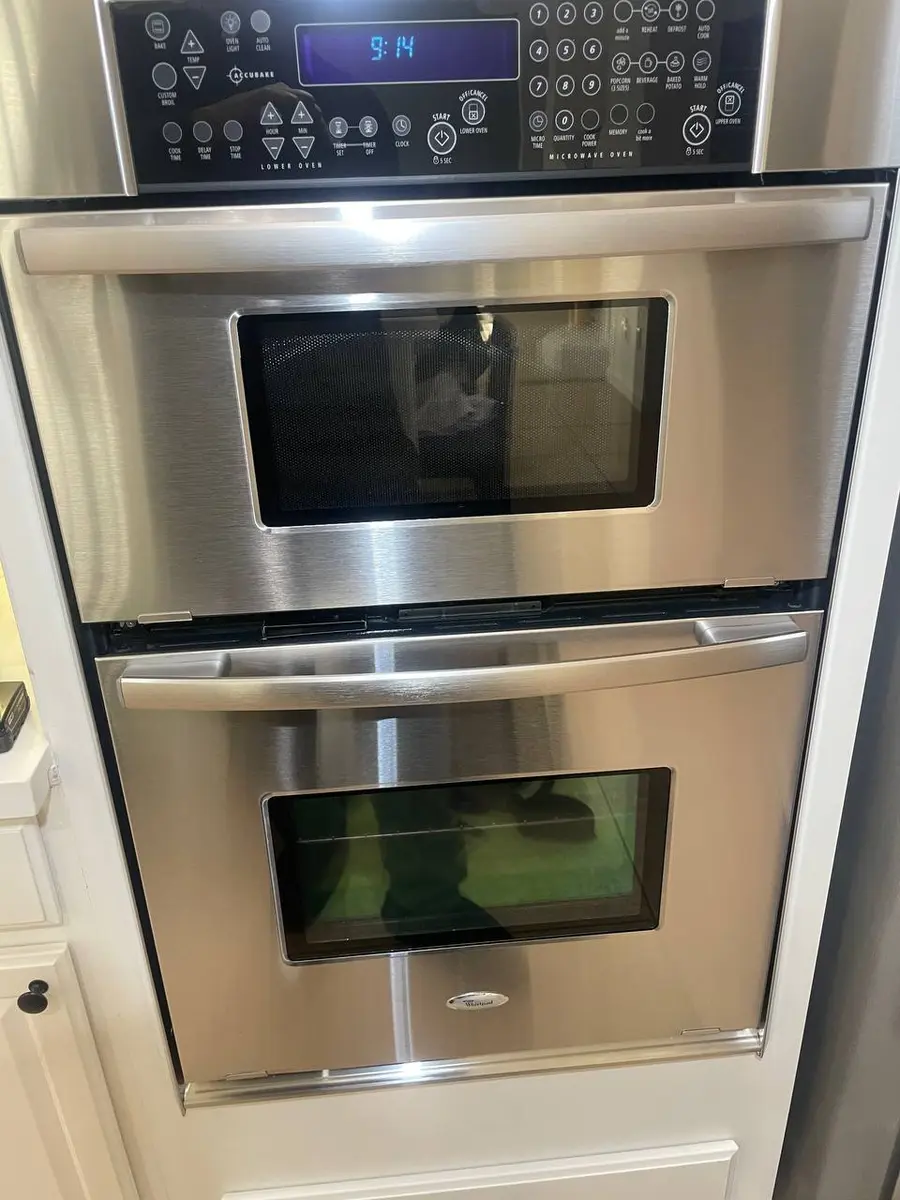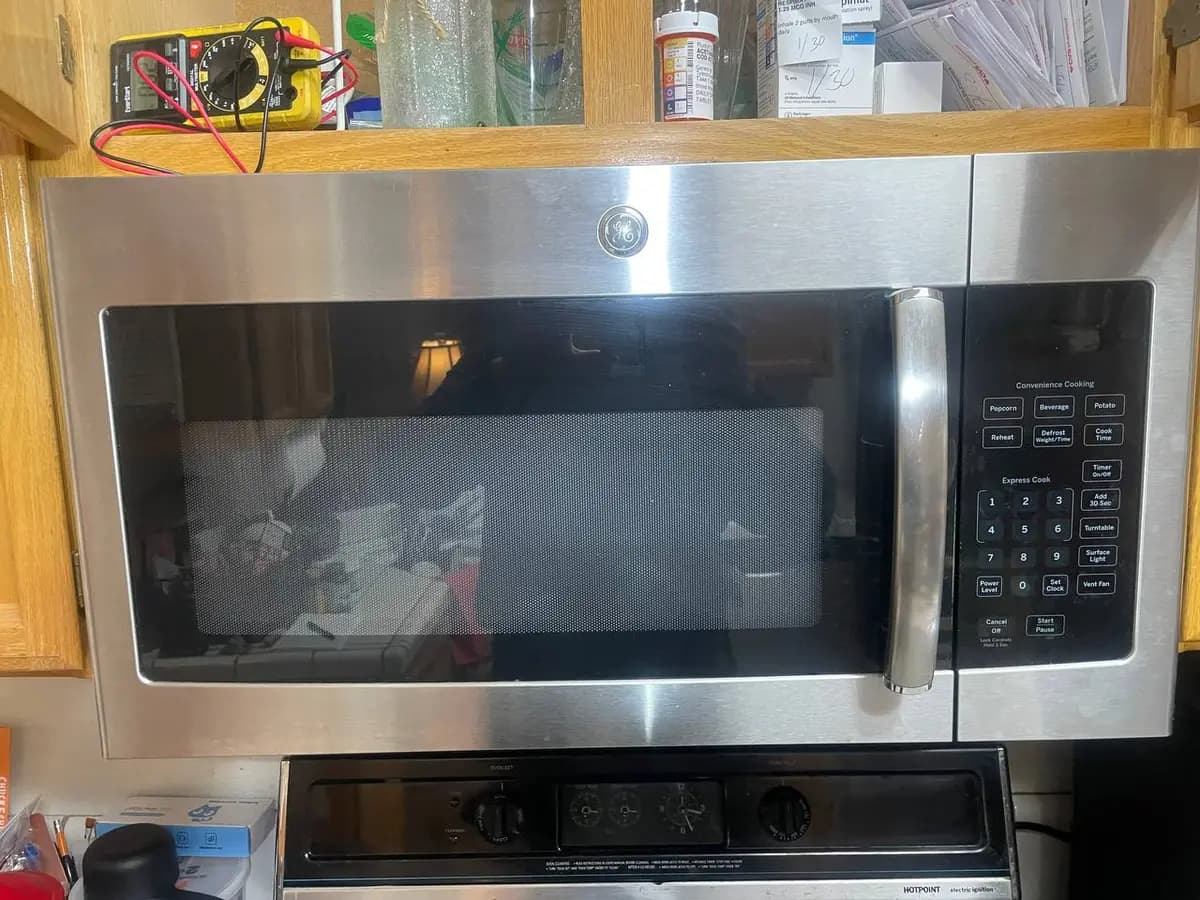
Whirlpool microwaves use a straightforward F-number error code system displayed on the control panel. The codes cover control board faults, sensor failures, door switch issues, and heating system problems. This system is shared across Whirlpool (WMH, WMC, WML series), Maytag (MMV series), KitchenAid (KMHC, KMHS series), and Amana countertop and over-the-range models. This guide covers every code with model-specific repair detail and clear safety warnings — microwave repair carries unique electrical hazards that every homeowner should understand before opening the unit.
Critical Safety Warning#
Microwaves contain a high-voltage capacitor that stores a lethal charge (over 4,000 volts) even after the unit is unplugged. This capacitor can hold its charge for hours or even days after disconnecting power. Never remove the outer cabinet of a microwave unless you are trained in high-voltage capacitor discharge procedures. The troubleshooting steps in this guide focus on external checks and adjustments that do not require opening the microwave cabinet. Internal repairs should be performed by a qualified technician with proper high-voltage discharge tools.
Do You Have the Right Tools?
High-voltage capacitor discharge tool ($90), magnetron tester ($200), microwave leakage detector ($150). Our technician arrives with $3,000+ in professional tools — your diagnostic is free.
Licensed & Insured · 90-Day Warranty · Same-Day Service
How Whirlpool Microwave Error Codes Work#
Whirlpool microwaves display error codes as "F" followed by a number (F1, F2, F3, etc.) on the LED or LCD display. Some newer models add an "E" suffix (F1E1, F3E2). On models without a numeric display, error conditions are indicated by a specific pattern of beeps.
Basic reset: Unplug the microwave (or turn off the breaker for built-in/over-the-range models) for 3 minutes. Plug back in. If the code returns, the fault requires repair. Always wait at least 3 minutes — this allows the internal capacitor to partially discharge and the control board to fully reset.
F1 — Control Board / EEPROM Error#
The main control board has detected an internal fault, memory corruption, or communication error in its EEPROM chip.
Common causes:
- Power surge damage (the most common cause — microwaves are sensitive to voltage spikes)
- Control board component failure from age
- Firmware corruption in the EEPROM memory
- Loose connector between the control panel and main board
How to fix:
- Unplug for 3 minutes, then restore power. Power surges cause momentary EEPROM glitches that sometimes clear with a full reset.
- If F1 returns immediately, check the connector between the touchpad/control panel and the main board. On over-the-range models (WMH series), access is from the top after removing the vent grille. Reseat the ribbon cable firmly.
- If the connector is secure and F1 persists, the main control board has failed. On Whirlpool countertop models, the control board and touchpad are often a single integrated assembly (varies by model and region). On over-the-range models, they may be separate parts (varies by model and region for the board, varies by model and region for the touchpad).
- Consider the age and original cost of the microwave — if the repair cost approaches 50% of a new unit, replacement is usually more economical.
Part cost: Main control board varies by part depending on model. Touchpad membrane varies by part.
Safety First — Know the Risks
Microwave capacitors store lethal voltage (4,000V+) even when unplugged. This is the single most dangerous DIY appliance repair. Our techs are licensed and insured — let them handle the risk.
Licensed & Insured · 90-Day Warranty · Same-Day Service
F2 — Humidity/Steam Sensor Error#
The humidity sensor (used in Sensor Cook, Sensor Reheat, and Sensor Popcorn modes) is reading an out-of-range value or not responding.
Common causes:
- Steam buildup coating the humidity sensor inside the cooking cavity
- Failed humidity sensor (part varies by model)
- Sensor wire damage from heat exposure inside the cavity
- Heavy food splatter on the sensor opening
How to fix:
- Clean the microwave interior thoroughly. The humidity sensor is typically located on the top wall or ceiling of the cooking cavity, behind a small vent or cover. Steam, grease, and food splatter coat the sensor and cause false readings. Clean with a mild dish soap solution and a non-abrasive cloth.
- Make sure the vent area around the sensor is clear of debris and grease buildup.
- Test by running a Sensor Cook cycle with a cup of water. If the microwave still shows F2, the sensor has failed.
- On over-the-range models, the sensor can also be affected by external cooking steam from the stove below — ensure the microwave's ventilation fan is working properly.
- Sensor replacement typically requires removing the outer cabinet — this is a professional repair due to the high-voltage capacitor hazard.
Part cost: Humidity sensor varies by part. Professional repair varies by model and repair complexity.
F3 — Temperature Sensor / Thermistor Error (Convection Models)#
On Whirlpool microwaves with convection oven capability, the F3 code indicates the oven cavity temperature sensor has failed. This code only applies to convection microwave models.
Common causes:
- Failed oven thermistor (shorted or open circuit)
- Damaged thermistor wire from convection heating cycles
- Connector corrosion from heat and steam exposure
How to fix:
- This code only appears in convection mode. If the microwave functions normally in microwave-only mode but shows F3 in convection mode, the convection thermistor is the issue.
- The thermistor is inside the cavity wall, requiring cabinet removal for access. Due to the high-voltage capacitor, this is a professional repair.
- A technician will test the thermistor resistance: approximately 1,080 ohms at room temperature (same RTD-type sensor used in Whirlpool ovens).
Part cost: Convection thermistor varies by part. Professional repair varies by model and repair complexity.
The Real Cost of DIY
Average DIY attempt: $150-400 in tools you may use once, plus the risk of further damage. Our diagnostic visit costs $0 — we find the problem and give you an honest quote.
Licensed & Insured · 90-Day Warranty · Same-Day Service
F4 — Humidity Sensor Open / Short (Variant)#
Some Whirlpool models use F4 to indicate a specific humidity sensor failure mode (open or shorted circuit) distinct from the general F2 sensor error.
How to fix:
- Follow the same cleaning and diagnostic steps as F2.
- F4 typically indicates a more definitive sensor hardware failure (as opposed to F2, which can sometimes be a temporary condition from steam buildup).
- Sensor replacement is required — professional repair recommended.
Part cost: Same as F2 — humidity sensor varies by part.
F5 — Door Sensing Error#
The microwave control board cannot detect the door position correctly. The microwave will not start because the interlock safety system is compromised.
Common causes:
- Misaligned door latch hooks (the microwave door has 2–3 latch hooks that must engage corresponding switches)
- Worn or broken door latch springs
- Failed door interlock switch (the most common cause on units over 5 years old)
- Door hinge damage causing misalignment
- Food debris preventing the door from closing completely
How to fix:
- Clean the door latch area. Food particles and grease accumulate around the latch hooks and prevent them from fully engaging the interlock switches. Clean with a damp cloth.
- Inspect the door for alignment. Open and close the door slowly, observing the latch hooks. They should engage cleanly into the switch housing without excessive force. If the door is sagging (common on over-the-range models with heavy doors), the hinge pins may be worn.
- Check the door close action. The door should click firmly closed. If it doesn't latch solidly, the springs inside the latch mechanism may be broken.
- Interlock switches are a safety-critical repair. Microwaves have 2–3 interlock switches that must all close before the magnetron can activate. A failed switch that doesn't reliably close triggers F5. This is a professional repair — accessing the switches requires cabinet removal.
Part cost: Door latch assembly varies by part. Interlock switch kit varies by part. Professional repair varies by model and repair complexity.
Warning: Never attempt to bypass or defeat microwave door interlock switches. These switches prevent microwave radiation from escaping when the door is open. Bypassing them creates a serious radiation exposure hazard.
Don't Void Your Warranty
Opening your appliance yourself may void the manufacturer warranty. Our repair comes with a 90-day guarantee, and we document everything for warranty compliance.
Licensed & Insured · 90-Day Warranty · Same-Day Service
F6 — No Microwave Power / Magnetron Issue#
The control board is activating the cooking cycle but cannot detect microwave energy output. The magnetron, high-voltage transformer, or high-voltage diode may have failed.
Common causes:
- Failed magnetron (the component that generates microwave energy)
- Blown high-voltage fuse or thermal cutoff
- Failed high-voltage diode
- Failed high-voltage capacitor
- High-voltage transformer failure
How to fix:
- Note the symptoms carefully. If the turntable rotates and the light turns on but food does not heat, the high-voltage circuit has a component failure.
- If the microwave runs for a few seconds then shuts off, a thermal cutoff may be tripping from overheating — check ventilation.
- All high-voltage circuit diagnosis and repair must be performed by a qualified technician. The high-voltage capacitor, diode, and magnetron operate at 4,000+ volts and can deliver a lethal shock even with the unit unplugged.
- As a cost guideline: magnetron replacement cost varies by model and region. On microwaves a certain threshold new, magnetron replacement is usually not economical.
Part cost: Magnetron varies by part. High-voltage diode varies by part. High-voltage capacitor varies by part. High-voltage fuse varies by part. Professional repair (magnetron) varies by model and repair complexity.
F7 — Inverter Error (Inverter Models Only)#
On Whirlpool microwaves with inverter technology (which provides true variable power instead of cycling the magnetron on/off), F7 indicates the inverter board has failed.
Common causes:
- Inverter board component failure (MOSFETs, capacitors)
- Overheating from blocked ventilation
- Power surge damage
How to fix:
- Ensure the microwave ventilation is not blocked. Over-the-range models need clear vent paths; countertop models need clearance around all sides.
- Unplug for 5 minutes and retry. Inverter boards can overheat from extended cooking sessions and may recover after cooling.
- If F7 persists, the inverter board must be replaced. This is a professional repair.
Part cost: Inverter board varies by part. Professional repair varies by model and repair complexity.
Is It Worth Your Time?
Microwave repair requires specialized testing of the magnetron, capacitor, diode, and transformer — each requiring specific safety procedures. Our technician diagnoses the issue in about 30 minutes — same-day appointments available.
Licensed & Insured · 90-Day Warranty · Same-Day Service
F9 — Door Latch Motor Error (Select Models)#
On Whirlpool models with a motorized door latch (typically commercial-style or premium built-in models), the latch motor has failed to engage or release.
How to fix:
- The motorized door latch should activate when you press Start and release when the cycle completes or you press Open/Stop.
- If the door won't open after a cycle, unplug the microwave for 5 minutes. The latch should release when power is disconnected.
- If the door won't latch to start a cycle, the latch motor has failed. Professional replacement required.
Part cost: Door latch motor assembly varies by part. Professional repair varies by model and repair complexity.
SE — Sensor Key Error / Shortcut Key Failure#
The control panel detects a key press that is not releasing, or a Sensor Cook shortcut button is malfunctioning.
How to fix:
- Unplug for 3 minutes.
- Press each button on the panel firmly to free any stuck key.
- Clean the touchpad surface with a damp cloth — grease and steam residue cause phantom key presses.
- If SE persists, the touchpad membrane or its connector is faulty. Replacement is usually needed.
Part cost: Touchpad membrane varies by part.
The Risk of Getting It Wrong
A wrong diagnosis often turns a simple fix into a costly replacement. Without proper diagnostic tools, you might replace the wrong part — or cause additional damage. Our free diagnostic eliminates the guesswork.
Licensed & Insured · 90-Day Warranty · Same-Day Service
Additional Microwave Troubleshooting (No Code Displayed)#
Several common microwave problems do not trigger error codes:
Turntable doesn't rotate:
- Check that the turntable guide (plastic ring with wheels) is properly seated on the cavity floor.
- Inspect the coupler (3-pronged plastic piece that connects the turntable motor to the glass tray).
- If the motor hums but doesn't turn, the turntable motor has failed (varies by model and region).
Interior light doesn't work:
- Replace the bulb (40W appliance bulb, varies by model and region). Access the bulb compartment from inside the cavity or behind the vent grille on over-the-range models.
- If the bulb is good, the light socket or wiring has failed.
- Immediately stop the microwave.
- Check the waveguide cover (a thin cardboard or mica sheet on the cavity wall near where the microwave energy enters). If it is cracked, burned, or food-stained, replace it (varies by model and region). Running the microwave with a damaged waveguide cover can damage the magnetron.
- Remove any metal (foil, twist ties, metallic-rimmed dishes) from the cavity.
Whirlpool Microwave Diagnostic Mode#
Most Whirlpool microwaves do not have a full diagnostic mode like washers or ovens. However, a basic self-test is available:
- Unplug the microwave for 3 minutes, then plug back in.
- The display should show the clock prompt (indicating the control board booted successfully).
- Press and hold the Start button for 5 seconds. On some models, this runs a display segment test (all segments illuminate) and outputs any stored error code.
- On over-the-range models with a vent fan, press the fan speed button to verify the fan motor operates at all speeds.
Cup of water test (functional test):
- Place a microwave-safe cup with 8 oz of room-temperature water in the center.
- Run on High for 1 minute.
- The water should be noticeably warm (approximately 130–150 degrees F). If barely warm, the magnetron is weakening. If no heat at all, the high-voltage circuit has failed.
Free Diagnostic Visit — Zero Risk
Our certified technician comes to your home, diagnoses the problem with professional tools, and gives you an honest quote — all at zero cost. No parts markup, no hidden fees. If you decide not to proceed, you pay nothing.
Licensed & Insured · 90-Day Warranty · Same-Day Service
Frequently Asked Questions#
Q: My Whirlpool microwave shows F1 and then goes blank. Is it safe? A: An F1 that causes the display to go blank indicates the control board has failed enough that it cannot maintain its own operation. The microwave is safe in the sense that it cannot activate the magnetron without a functioning control board. However, do not attempt to use it. Have the board replaced or consider replacing the unit if it is over 7 years old.
Q: Why does my over-the-range Whirlpool microwave show F2 when I cook on the stove below it? A: Steam from stovetop cooking rises into the microwave's ventilation system and reaches the humidity sensor, triggering a false F2 reading. Use the microwave's ventilation fan (ducted to the exterior or recirculating) when cooking on the stove below. If F2 persists, clean the humidity sensor area thoroughly — steam deposits build up over time.
Q: How do I know if my microwave is worth repairing? A: Compare the estimated repair cost to 50% of a new equivalent model. For Whirlpool microwaves: countertop models cost varies by model and region new, so repairs a certain threshold are usually not economical. Over-the-range models cost varies by model and region new, so repairs up to $200 may be worthwhile. Built-in models cost varies by model and region making repairs up to $400 reasonable. The magnetron is the most expensive component — if it fails on a countertop unit, replace the microwave.
Q: My microwave runs but food doesn't heat. There's no error code. What's wrong? A: This is almost always a high-voltage circuit failure — the magnetron, diode, capacitor, or transformer. The turntable rotates and light works because those run on normal household voltage, but the 4,000V circuit that powers the magnetron has failed. Do not attempt to diagnose the high-voltage circuit yourself. A technician can safely test each component.
Q: Can I replace a microwave interlock switch myself? A: While the switch itself is inexpensive (varies by model and region), accessing it requires removing the outer cabinet, which exposes the high-voltage capacitor. Even unplugged, this capacitor can deliver a lethal shock. Unless you are experienced with high-voltage capacitor discharge procedures, this repair should be done by a professional. The risk is not worth the cost savings.
When to Call a Professional#
All internal microwave repairs should be performed by a qualified technician due to the high-voltage capacitor hazard. Specifically:
- F6 (no microwave power) — All high-voltage circuit components are lethal to work on without proper training and tools.
- F5 (door sensing) requiring switch replacement — Accessing interlock switches exposes the high-voltage capacitor.
- F3 (convection thermistor) — Cabinet removal required.
- Any sparking, burning smell, or unusual sounds — Stop using immediately. These can indicate arcing inside the waveguide area or magnetron failure, which can escalate to fire.
- Over-the-range installation/removal — These units weigh 50–80 lbs and require proper mounting hardware. Improper installation risks the unit falling.
Whirlpool microwave giving you trouble? EasyBear's certified technicians are trained in high-voltage microwave repair and carry common parts including magnetrons, control boards, interlock switches, and touchpad assemblies. Free diagnostic visit, same-day repair when economical, and every job backed by our 90-day parts and labor warranty. Schedule your free diagnosis today.
Appliance Repair Technician & Diagnostics Specialist · 10 years experience
Electronics and diagnostics specialist with 10 years of experience in modern smart appliance repair, specializing in LG and Samsung.