Radiant Smooth-Top vs Coil Cooktop: Looks vs Repair Cost#
Short answer: A coil cooktop is the cheapest cooking appliance to keep running — its elements plug in and cost almost nothing — while a radiant smooth-top trades that low-cost repairability for a sleek, easy-clean glass surface that carries one big, expensive failure mode: cracking. The glass is the whole difference.
Radiant vs Coil at a Glance#
| Factor | Coil | Smooth-top (radiant) |
|---|---|---|
| Element swap | Plug-in, owner-done | Under glass, professional |
| Surface risk | None | A crack means a full assembly |
| Controls | Mechanical switches | Often electronic touch |
| Look and cleaning | Utilitarian, drip pans | Sleek, wipes clean |
| Typical lifespan | 15-25 years | 12-18 years |
Verdict: Coil is the cheapest and longest-lived choice; a smooth-top is for buyers who want the look and easy cleaning and will accept the glass as a future risk.
Do You Have the Right Tools?
Multimeter ($85), vacuum pump ($250), diagnostic software, and specialized hand tools. Our technician arrives with $3,000+ in professional tools — your diagnostic is free.
Licensed & Insured · 90-Day Warranty · Same-Day Service
Coil: About as Simple as an Appliance Gets#
A coil burner literally plugs into a socket. Lift the old element, pull it free, push the new one in — no tools, no disassembly, no service call — which makes it the fastest and cheapest repair in the whole kitchen. The only other parts that see real heat are the infinite switch that cycles power to set the burner temperature and the receptacle the element plugs into, both cheap and quick to replace. The drip pans are purely cosmetic. There is no control board, no display, and nothing electronic to fail, which is why a coil stove almost never needs a professional at all.
Smooth-Top: The Glass Is the Weak Point#
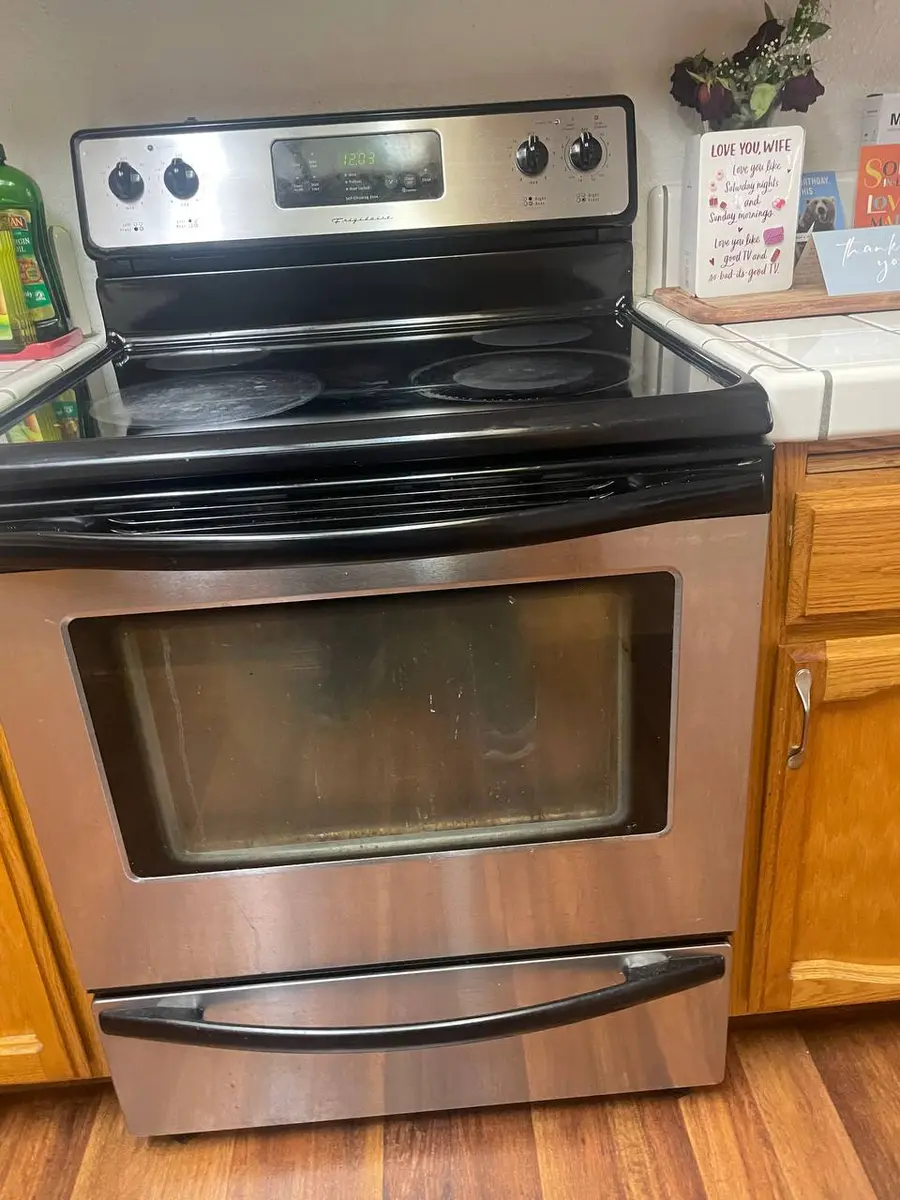
A radiant smooth-top hides its elements beneath a ceramic-glass surface that looks sharp and wipes clean, and that surface is exactly where the cost lives. A dropped pan, a sudden hot-to-cold thermal shock, or heavy cookware dragged across it can crack the glass, and because the elements and sensors are bonded to its underside, a crack means replacing the entire surface assembly, not a pane. A cracked top must also come out of service immediately — a spill can reach the live elements beneath it, creating a shock risk. Even a routine element failure means lifting that glass to reach the radiant element underneath, and the touch controls many smooth-tops use add an electronic failure point a coil stove never has.
Safety First — Know the Risks
Appliances involve high voltage (120-240V), pressurized water, gas lines, and chemical refrigerants. Over 400 DIY repair injuries are reported yearly. Our techs are licensed and insured — let them handle the risk.
Licensed & Insured · 90-Day Warranty · Same-Day Service
Which Lasts Longer#
Coil stoves are close to indestructible: you can drop fresh elements into a decades-old range, the mechanical switches run fifteen to twenty-five years, and the enameled-steel body rarely fails, so the whole appliance routinely reaches the far end of a 15-25 year span. Smooth-tops run shorter, around 12-18 years, and their life is often ended not by a worn part but by a single cracked surface or aging touch electronics. What breaks less on a smooth-top costs more to fix; what breaks on a coil costs almost nothing.
How to Avoid the One Expensive Repair#
Since the cracked surface is the only pricey failure a smooth-top faces, a little care goes a long way toward never paying for it. Use flat-bottomed cookware and set pots down rather than sliding them, so the glass never takes a point impact or a deep scratch that can grow into a crack under heat. Keep heavy cast iron for a coil range, where dropping or dragging a skillet costs nothing, and avoid moving a frozen pot straight onto a glowing zone, which invites a thermal-shock crack. Treat the surface gently and a smooth-top can reach the far end of its lifespan; treat it roughly and the glass becomes an expensive, single-event failure.
The Real Cost of DIY
Average DIY attempt: $150-400 in tools you may use once, plus the risk of further damage. Our diagnostic visit costs $0 — we find the problem and give you an honest quote.
Licensed & Insured · 90-Day Warranty · Same-Day Service
Our Recommendation#
Choose coil if budget, low maintenance, and the longest possible service life matter, if it is going into a rental, or if you cook with heavy cast iron. Choose a smooth-top if kitchen aesthetics and effortless cleaning are the priority, you will use flat-bottomed cookware and avoid dragging it, and you accept that a cracked surface is a real future cost. Both cook well; the decision is really about looks versus the price of a repair.
Appliance Repair Technician · 11 years experience
Experienced technician with 11 years specializing in Frigidaire and Electrolux refrigerator and dryer repair with a focus on safety.