GE Gas Cooktop Burner Won't Ignite — Causes & Fix
A GE gas cooktop burner that won't ignite usually traces to a clogged or wet igniter, the single spark module that all burners share, or a stuck burner valve. Clean and dry the ceramic igniter first — food debris and boil-over water cause most no-light calls — then use the click test to decide whether the fault is one…
Start at the igniter, because it fails most#
On a GE drop-in gas cooktop the igniter sits in a ceramic base right beside each burner, and it is exposed to everything that boils over. Splattered food packs the gap between the electrode and the burner, and the spark can no longer jump to the gas. Pull the burner cap and head and clean around the ceramic tip with a pin or a stiff brush until the gap is bright and clear. If a pot recently boiled over, the electrode may simply be wet — towel the area dry and give it fifteen to twenty minutes before trying again.
Use the click test to split the fault#
| What you hear and see | Most likely cause |
|---|---|
| One burner silent, the rest click normally | That burner's electrode or its wire |
| No burner clicks anywhere | The shared spark module has failed |
| Clicks fine but no gas smell, one burner | Stuck valve behind that knob |
| Nothing lights, other gas appliances dead too | Gas supply, not the cooktop |
Because one module drives every electrode, a total lack of clicking is a module story, while a single quiet burner is a local wiring or electrode story.
Do You Have the Right Tools?
Multimeter ($85), vacuum pump ($250), diagnostic software, and specialized hand tools. Our technician arrives with $3,000+ in professional tools — your diagnostic is free.
Licensed & Insured · 90-Day Warranty · Same-Day Service
Confirm gas is actually reaching the burner#
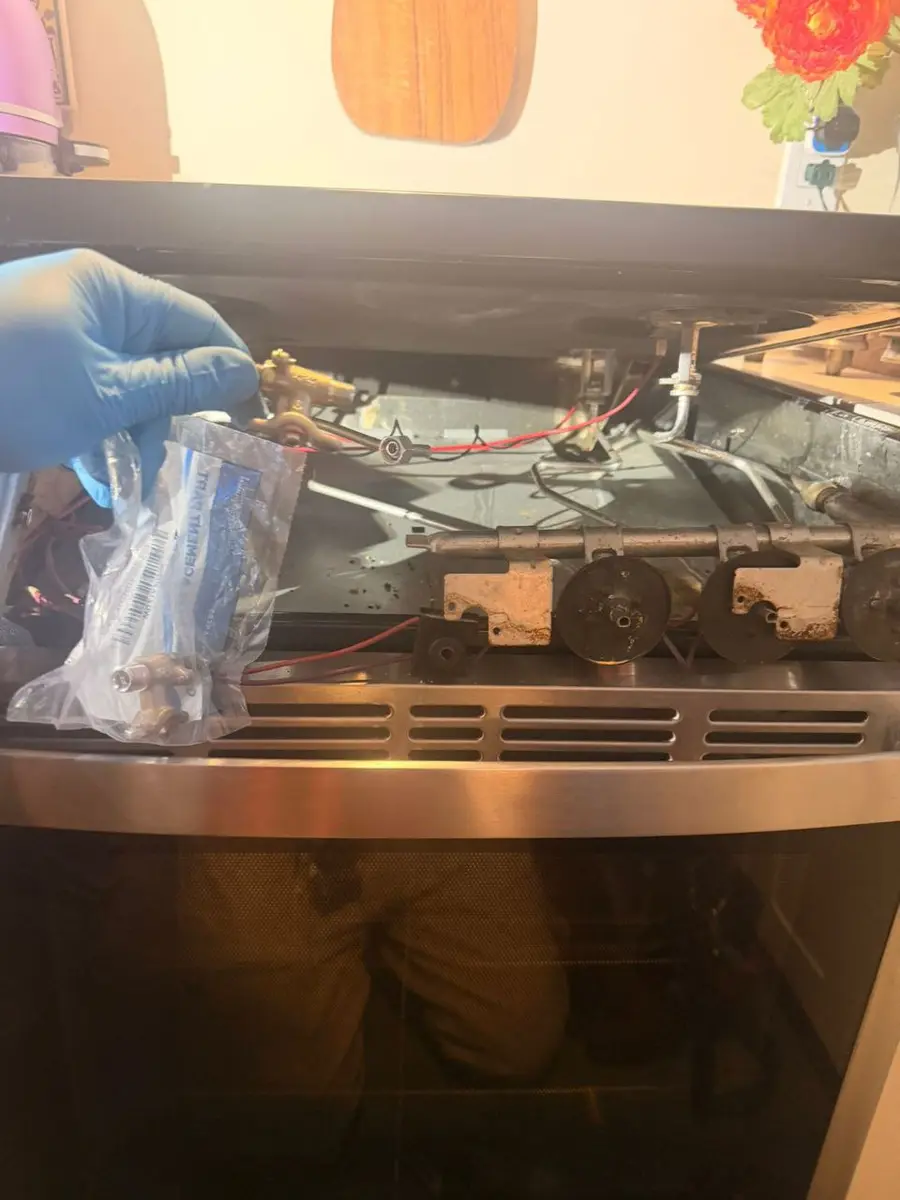
Before condemning any electrical part, make sure gas is available. Check that the shutoff valve behind the cooktop is fully open — the handle should run parallel to the pipe — and try lighting another gas appliance in the house to confirm supply. A burner that clicks briskly with no whiff of gas at the ports points to a valve that is not opening behind the knob, an internal-stiffness failure common as these valves age.
Check the cap and the wiring#
A cap that is dropped back on crooked scatters gas away from the spark, so a burner can click and still refuse to light. Spin each cap after cleaning; it should rotate without wobble. Then trace the thin igniter wire from the burner back toward the module and look for a connector that has loosened or a lead chewed by a rodent — a surprisingly common find on cooktops backed against an exterior wall.
Safety First — Know the Risks
Appliances involve high voltage (120-240V), pressurized water, gas lines, and chemical refrigerants. Over 400 DIY repair injuries are reported yearly. Our techs are licensed and insured — let them handle the risk.
Licensed & Insured · 90-Day Warranty · Same-Day Service
Get it ready before the cooking season#
Most of these fixes are a ten-minute clean-and-dry with no parts at all, which makes it worth doing a full burner check before the busy autumn cooking weeks arrive. If every burner has gone silent, or a burner clicks with no gas, the module or the valve is involved and gas work is best handed off. Book an EasyBear technician and we will bring GE modules, electrodes, and valves so it is one visit, not two.
Senior Gas Appliance Specialist · 18 years experience
AGA-certified gas appliance specialist with 18 years of experience in residential and commercial oven, range, and cooktop repairs.