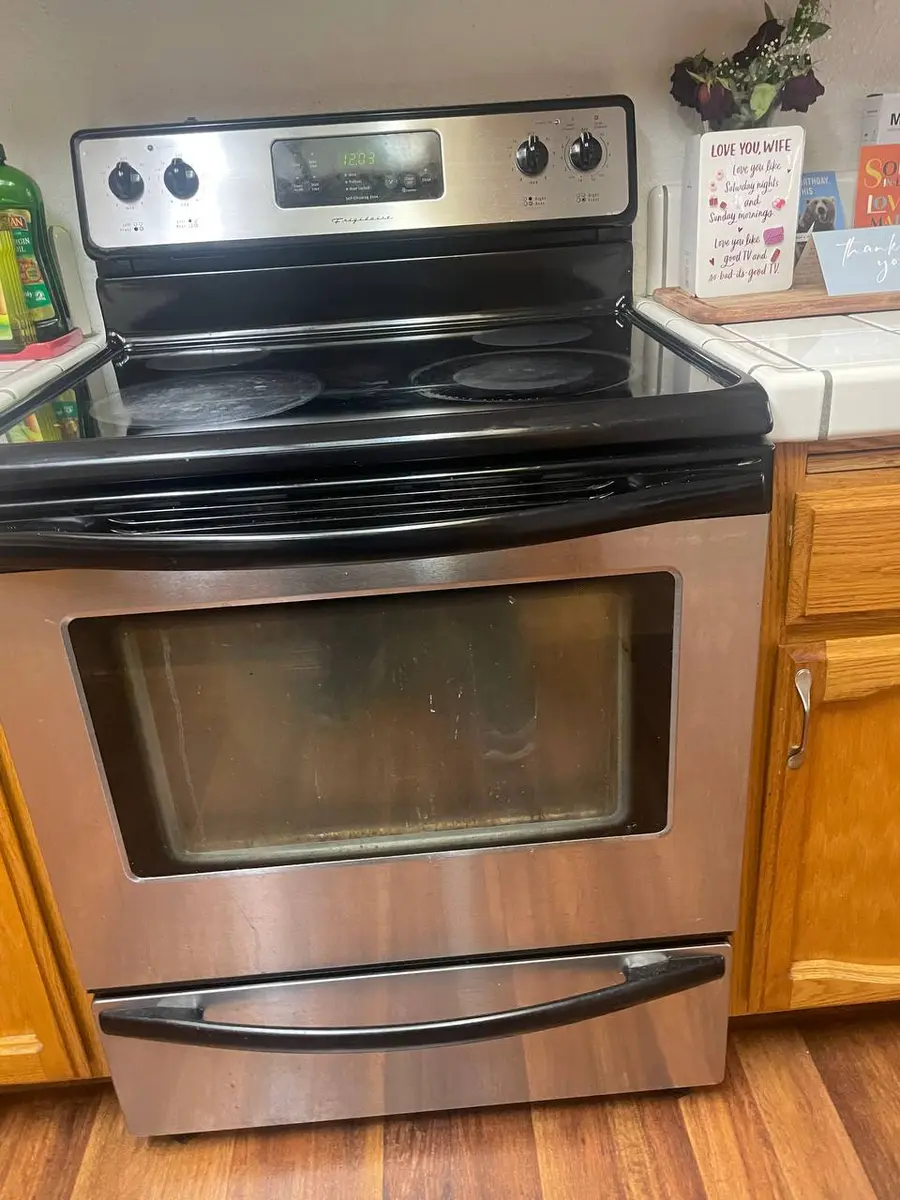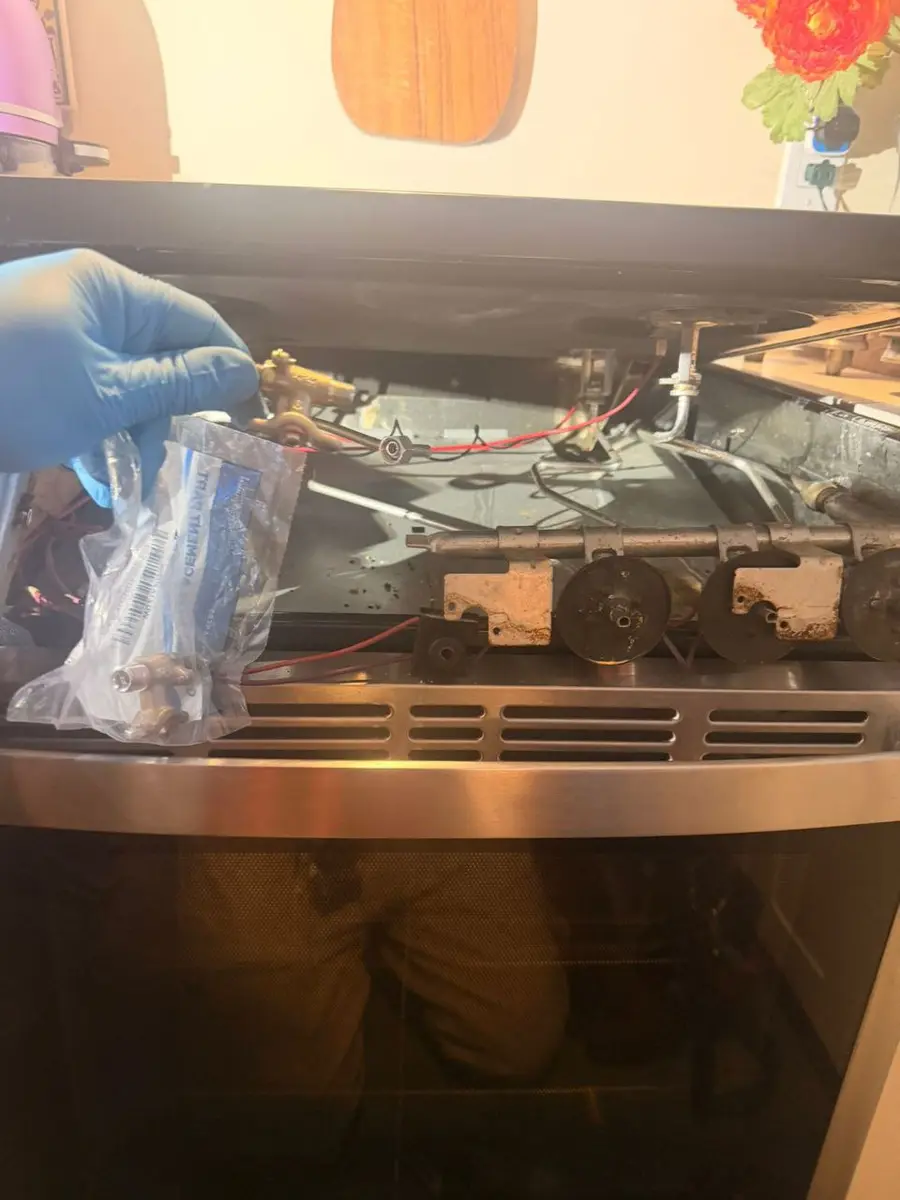
Viking cooktops deliver professional-grade performance — sealed burners with up to 18,500 BTU on Professional gas models, and precision induction zones with full-surface magnetic detection on their induction lineup. When the control system detects a malfunction, it communicates through error codes displayed on the induction control panel or indicated by LED flash patterns on gas models with electronic ignition systems.
This guide covers all Viking cooktop error codes across both Professional gas and induction product lines. Gas cooktops use F-prefix codes for ignition and safety system faults, while induction models use E-prefix codes for electronics and coil diagnostics.
Viking Gas Cooktop Error Codes#
Viking Professional gas cooktops with electronic ignition modules and flame-sensing circuits can display fault codes through the ignition status LEDs. These codes indicate issues with the gas delivery, ignition, or safety sensing systems.
F1 — Ignition Failure (No Flame Detected)#
The electronic ignition module has sparked the burner repeatedly (typically 4 cycles of 3 seconds each) without the flame sensor detecting a stable flame. The gas valve closes as a safety measure.
Common causes:
- Burner cap misaligned after cleaning (most common cause)
- Clogged burner ports (food debris, boilover residue)
- Wet igniter electrode (after cleaning or boilover)
- Failed igniter electrode (cracked ceramic insulator)
- Gas supply issue (low pressure, shutoff valve partially closed)
- Flame sensor probe corroded or coated with carbon
Troubleshooting steps:
- Remove the burner cap and clean thoroughly — soak in warm soapy water, use a pin or needle to clear each burner port.
- Replace the burner cap ensuring it sits flat and centered on the burner base. Misalignment is the #1 cause of ignition failure on Viking Professional cooktops.
- Clean the igniter electrode tip with fine sandpaper (400 grit). The electrode should have a sharp tip with 3–4mm gap to the burner.
- Clean the flame sensor (separate from igniter on some Viking models) — it's a small probe near the burner that detects flame presence via rectification current.
- Verify gas supply: check shutoff valve is fully open, try other burners. If all burners fail, the issue is supply-side.
Parts: Igniter electrode (varies by model and region), flame sensor (varies by model and region), burner cap (varies by model and region). Professional labor: varies by model and region total.
Diagnostic tip: After cleaning a Viking gas cooktop, always verify each burner cap is seated correctly before testing. The caps are heavy brass and must sit perfectly flat — even a slight tilt prevents proper gas/air mixing and ignition.
F2 — Flame Sensed Without Gas Command#
The flame sensor detects flame (or reads a flame signal) when no gas valve should be open. This is a critical safety code — it may indicate a gas valve stuck open or a faulty flame sensor giving false readings.
Common causes:
- Gas valve solenoid stuck in open position
- Flame sensor giving false positive (carbon buildup mimicking flame signal)
- Residual heat near sensor after recent high-temperature cooking
- Control module misinterpreting sensor feedback
Immediate action: If you smell gas with F2 displayed, immediately turn off the gas supply at the shutoff valve, ventilate the area, and do not operate any electrical switches. Call for emergency service.
Troubleshooting steps:
- With the cooktop powered off, check whether you can smell gas near the burners. If yes, shut off gas supply immediately.
- If no gas smell, the flame sensor may be giving a false signal. Clean the sensor probe thoroughly — carbon residue can create a conductive path that the module interprets as flame.
- Test the flame sensor: disconnect it from the module. If F2 clears, the sensor is faulty.
- If F2 persists with sensor disconnected, the control module itself may be misreading.
Parts: Flame sensor (varies by model and region), gas valve assembly (varies by model and region), control module (varies by model and region). Professional labor: varies by model and region total.
Warning: F2 with gas odor is a potential gas leak emergency. Do not attempt DIY repair. Shut off gas and call a licensed gas technician immediately.
F3 — Multiple Ignition Fault#
The control module has detected repeated ignition failures across multiple burners within a short time window, suggesting a system-level issue rather than a single-burner problem.
Common causes:
- Gas supply pressure too low for all burners
- Main gas regulator failure
- Ignition module (spark generator) failing
- Moisture in the ignition system (after steam cleaning)
- Ground fault in ignition wiring
Troubleshooting steps:
- Try each burner individually. If ALL fail to light, the issue is the ignition module or gas supply.
- Try lighting a burner manually with a match or lighter. If it lights and stays lit, gas supply is fine — the electronic ignition system has failed.
- Check the spark module: when you turn a knob, you should hear rapid clicking (ticking). If silent, the spark module has failed.
- If clicking is present but no spark visible at any burner, check grounding. Viking igniters require proper grounding to generate spark.
- If sparks are visible but gas doesn't flow to any burner, the gas supply pressure may be insufficient. Verify shutoff valve, check other gas appliances in the home.
Parts: Ignition/spark module (varies by model and region), gas regulator (varies by model and region). Professional labor: varies by model and region total.
F4 — Gas Valve Timeout#
A specific gas valve was commanded open but the control module did not confirm flow within the expected timeframe. The valve closes and the module locks out that burner.
Common causes:
- Gas valve solenoid failure (no click when energized)
- Wiring issue to specific valve
- Gas line obstruction downstream of valve
- Control module valve driver failure
Troubleshooting steps:
- Listen for the valve click when turning the burner knob. A click = valve activating. No click = electrical failure.
- Check if other burners work normally. If only one is affected, the issue is isolated to that burner's valve or wiring.
- Test valve solenoid resistance: typical Viking gas valve coils read 400–800 ohms.
- Check for gas line blockage: disconnect flexible supply at the valve outlet and verify gas flows (carefully, with ventilation).
Parts: Individual gas valve (varies by model and region), valve wiring harness (varies by model and region). Professional labor: varies by model and region total.
Do You Have the Right Tools?
Multimeter ($85), vacuum pump ($250), diagnostic software, and specialized hand tools. Our technician arrives with $3,000+ in professional tools — your diagnostic is free.
Licensed & Insured · 90-Day Warranty · Same-Day Service
Viking Induction Cooktop Error Codes#
Viking induction cooktops use a completely different diagnostic system — E-prefix codes displayed on the touch-panel LCD. These codes address the high-frequency electronics, magnetic coil systems, and thermal management circuits.
E1 — IGBT Overtemperature#
The IGBT (Insulated Gate Bipolar Transistor) power module that drives the induction coil has exceeded its thermal limit. The cooktop shuts down the affected zone to prevent component damage.
Common causes:
- Ventilation obstruction below cooktop (blocked cooling air intake)
- Cooling fan failure
- Extended high-power cooking session on maximum setting
- Ambient temperature too high (above 95°F in cooktop cabinet space)
- Thermal paste degradation between IGBT and heatsink
Troubleshooting steps:
- Allow the unit to cool for 30 minutes with power on (fans running). E1 often self-clears once temperature drops.
- Check ventilation below the cooktop — Viking induction units require unobstructed airflow underneath. Verify nothing is stored beneath that blocks the intake grilles.
- Listen for the cooling fan. It should run when any zone is active and for several minutes after cooking ends. If silent, the fan has failed.
- If E1 occurs repeatedly during normal cooking, the IGBT heatsink may need reapplication of thermal compound (a professional repair).
Parts: Cooling fan (varies by model and region), IGBT module (varies by model and region), thermal compound reapplication (labor only). Professional labor: varies by model and region total.
Diagnostic tip: Viking induction cooktops require 2 inches minimum clearance below the glass for cooling airflow. Kitchen renovations that add a drawer beneath the cooktop can restrict airflow and cause chronic E1 during heavy use.
E2 — Incompatible Cookware Detected#
The induction zone has been activated but cannot detect ferromagnetic cookware (or the cookware has insufficient magnetic response for induction heating).
Common causes:
- Non-inductive cookware placed on zone (aluminum, copper, glass, most stainless steel)
- Cookware too small for the zone (less than 60% zone coverage on Viking)
- Delaminated cookware base (magnetic layer separated from pan body)
- Induction coil fault (less common — cannot generate field)
Troubleshooting steps:
- Test with known-compatible cookware — cast iron or magnetic stainless steel. A magnet stuck firmly to the pan base confirms compatibility.
- Ensure the pan covers at least 60% of the cooking zone diameter. Undersized pans won't trigger the detection circuit.
- Try the same pan on a different zone. If it works elsewhere, the original zone's coil or detection circuit may be faulty.
- Check the glass surface for cracks — a cracked glass can interfere with the induction field coupling.
Parts: Induction coil assembly (varies by model and region per zone). Professional labor: varies by model and region total (glass must be removed to access coils).
E3 — Power Supply Fault#
The internal power supply feeding the induction electronics is outside its specified voltage or current range. All zones shut down for protection.
Common causes:
- Household voltage fluctuation (brownout or overvoltage)
- Internal power supply board failure
- Loose power connection at terminal block
- Capacitor failure on power supply board
Troubleshooting steps:
- Check household voltage at the cooktop's dedicated circuit — should be 240V AC ±10%. Below 216V or above 264V triggers E3.
- Reset the breaker — toggle off for 30 seconds, then on. If E3 clears, it was likely a transient voltage event.
- If E3 persists, the internal power supply board needs professional diagnosis. Look for bulging capacitors or burn marks.
- Verify the wire connections at the junction box behind/below the cooktop are tight and free of corrosion.
Parts: Power supply board (varies by model and region), terminal block (varies by model and region). Professional labor: varies by model and region total.
E4 — Induction Coil Fault#
A specific induction coil has failed — it's either open-circuit (broken winding) or short-circuit (insulation failure). The affected zone will not heat.
Common causes:
- Coil winding burnout from extended overheating
- Insulation breakdown (age-related, accelerated by moisture)
- Physical damage from impact through the glass
- Connector failure between coil and power board
Troubleshooting steps:
- Identify which zone is affected — the display typically indicates the zone number with E4.
- Test from another zone with the same cookware to confirm the issue is zone-specific.
- Professional access required: the glass cooktop surface must be removed to access individual coils.
- Coil resistance measurement varies by Viking model — typically 10–30 ohms per coil.
Parts: Induction coil (varies by model and region), coil connector (varies by model and region). Professional labor: varies by model and region total (includes glass removal/reinstallation).
E5 — Control Panel Communication Error#
The touch-control panel cannot communicate with the main power board. Controls are unresponsive.
Common causes:
- Ribbon cable between control panel and power board damaged or disconnected
- Touch panel board failure (moisture ingress from spills)
- Main board communication port failure
- Power surge damaging communication circuit
Troubleshooting steps:
- Power cycle: turn off the breaker for 5 minutes, restore power. Communication errors often clear after a full reset.
- Check for visible liquid under the glass near the control area — spills that seep under the glass can damage the touch panel circuitry.
- If E5 persists, professional disassembly is needed to inspect the ribbon cable and board connections.
Parts: Touch control panel (varies by model and region), ribbon cable (varies by model and region), main power board (varies by model and region). Professional labor: varies by model and region total.
E6 — Overheating Glass Surface#
The glass surface temperature sensor detects excessive heat — typically above 580°F on the glass. This protects against glass stress fracture.
Common causes:
- Empty pan left on active zone at high power
- Pan boiled dry (all liquid evaporated)
- Temperature sensor failure (false reading)
- Blocked ventilation causing heat buildup under glass
Troubleshooting steps:
- Remove any cookware from the affected zone immediately.
- Allow the cooktop to cool naturally — do not place anything cold on hot glass (thermal shock risk).
- After cooling, test the zone at low power. If E6 appears immediately at low power with cool glass, the temperature sensor has failed.
- Check that undercooktop ventilation is clear.
Parts: Glass temperature sensor (varies by model and region). Professional labor: varies by model and region total.
Frequently Asked Questions#
Q: Can I still use other burners if one Viking cooktop zone shows an error? A: On gas models, generally yes — each burner is independent except for F3 (system-level) and F2 (safety shutdown). On induction models, E3 (power supply) and E5 (communication) shut down all zones. E1, E2, E4, and E6 typically affect only the specific zone.
Q: Why does my Viking induction cooktop click or buzz during cooking? A: Some acoustic noise is normal for induction cooking — it's the vibration of the magnetic field in the cookware base. Heavier, flat-bottomed cookware minimizes this. Loud buzzing suggests cookware with laminated bases that vibrate more. This is not an error condition.
Q: How much do Viking cooktop repairs typically cost? A: Viking gas cooktop repairs range from $250 for igniter/sensor issues to $650 for valve or module replacement. Induction repairs are generally more expensive — $400 for fan/sensor issues up to significant cost for coil or board replacement, because glass removal is required for most internal components.
Q: My Viking gas cooktop clicks continuously but won't light. Is that an error code? A: Continuous clicking without ignition is usually a wet igniter (from cleaning or boilover) or a misaligned burner cap, not necessarily a coded fault. Dry the igniter area thoroughly, verify the cap is seated flat, and clean burner ports. If clicking continues with correct cap placement, the igniter electrode or spark module needs attention.
Q: Can I replace a single induction zone on my Viking cooktop? A: Yes — individual induction coils are replaceable. However, the repair requires removing the entire glass surface (a precision operation to avoid cracking) and is strictly a professional repair. Coil-only replacement cost varies by model and region including labor.
Safety First — Know the Risks
Appliances involve high voltage (120-240V), pressurized water, gas lines, and chemical refrigerants. Over 400 DIY repair injuries are reported yearly. Our techs are licensed and insured — let them handle the risk.
Licensed & Insured · 90-Day Warranty · Same-Day Service
When to Call a Professional#
- F2 (flame sensed without command) — potential gas leak, requires immediate professional response
- Any gas code with gas odor — emergency situation, shut off gas and call immediately
- E3 (power supply) or E5 (communication) — board-level electronics requiring specialized equipment
- E4 (induction coil) — requires glass removal, no DIY path
- Recurring ignition failures after cleaning — may indicate deeper gas system issue
EasyBear's certified technicians service Viking Professional cooktops — both gas and induction. We arrive equipped for Viking-specific diagnostics, from ignition module testing to induction coil measurement. Our free diagnostic visit pinpoints the exact fault without guesswork. Every repair backed by our 90-day parts and labor warranty. Schedule your free diagnosis today.
Lead Appliance Repair Technician · 12 years experience
Experienced technician with 12 years specializing in washing machine and dryer repairs across all major brands.