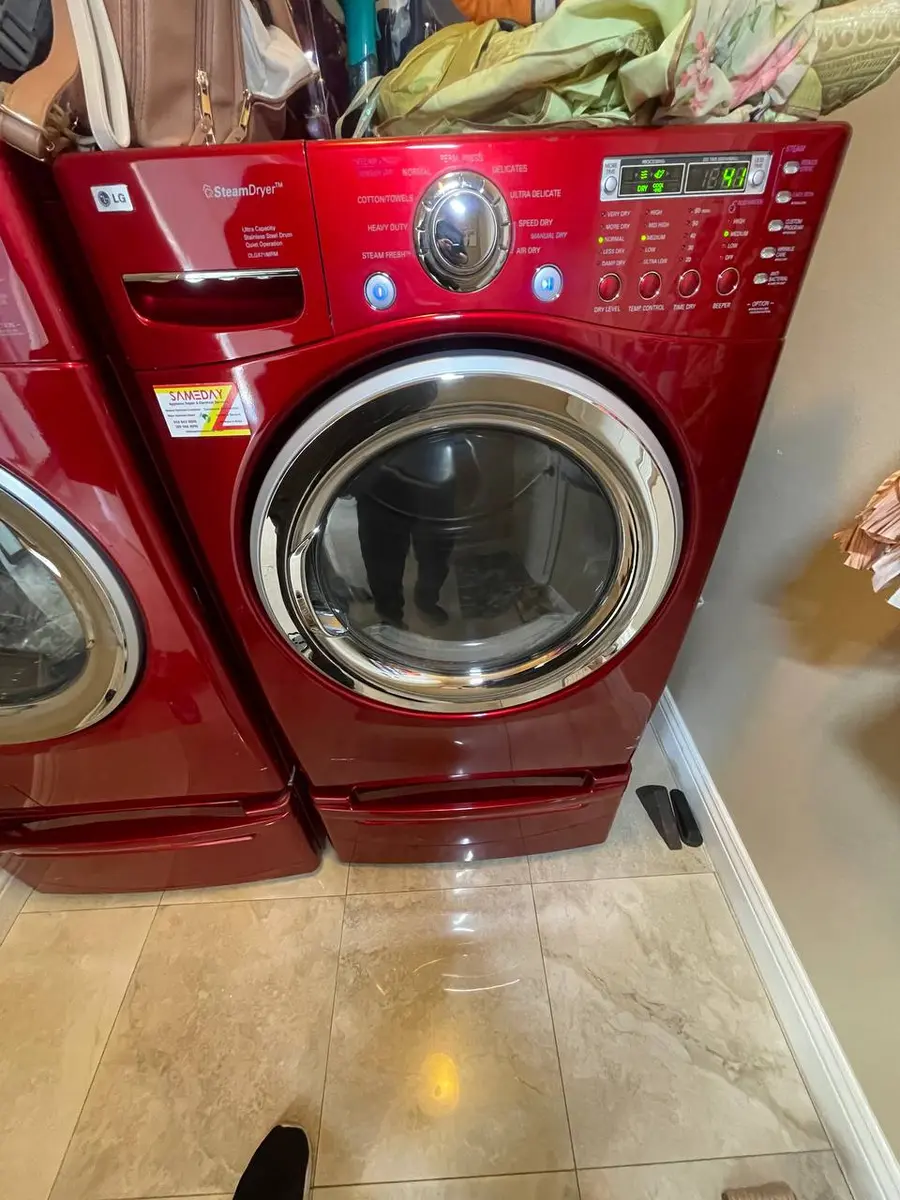
An LG dryer that takes too long is a restricted exhaust vent about 40% of the time — and LG's FlowSense indicator is built to warn you about exactly that. The other culprits are film-coated moisture sensor bars, a weakening heating element or igniter, an overloaded drum, or a washer leaving the clothes too wet. Start at the vent.
Check the Vent First — and Read FlowSense#
The single dominant cause, roughly 40% of long-dry complaints, is a blocked exhaust. When humid air can't escape, the dryer recirculates moisture-laden air and a load that should take 45 minutes stretches past 90. LG gives you a gauge for this: the FlowSense indicator flags restriction directly, and the tells are a hot dryer exterior and surprisingly little lint on the filter. Clean the entire duct run from the dryer to the exterior cap, replace any crushed or kinked section with rigid 4-inch metal duct, and run a test load.
| FlowSense | Restriction | Impact | Action |
|---|---|---|---|
| No indicator | Clear | Normal dry times | Routine annual cleaning |
| d80 | ~80% blocked | 50 to 75% longer cycles | Clean soon |
| d90 | ~90% blocked | Cycles may not complete | Clean immediately |
| d95 | ~95% blocked | Fire-hazard territory | Stop using; clean before next load |
Do You Have the Right Tools?
Gas leak detector ($130), thermal fuse tester ($95), belt tension gauge, and vent inspection camera ($180). Our technician arrives with $3,000+ in professional tools — your diagnostic is free.
Licensed & Insured · 90-Day Warranty · Same-Day Service
If the Vent Is Clear, Work Down the List#
Contaminated moisture sensor bars (about 25%)#
Fabric-softener and dryer-sheet residue coat the two metal sensor bars inside the drum near the lint-filter slot, leaving an insulating film. LG's Sensor Dry system then reads intermittent false "dry" signals, which confuses the algorithm — some models drag the cycle out, others cut it short. Wipe both bars with isopropyl alcohol and a little fine sandpaper, and make it a monthly habit to keep the film from rebuilding.
Degraded heating component (about 20%)#
A partly failed electric element or a tiring gas igniter puts out less heat than designed, so the dryer still finishes but slowly — often unnoticed until dry times climb by half. On electric models, test the element resistance, which should read roughly 10 to 20 ohms on most LG dryers; on gas, time the ignition, and more than about 90 seconds points to a weak igniter. Replace the degraded part.
Overloaded drum (about 10%)#
LG's mega-capacity drums tempt you to stuff them, but clothes need room to tumble both for even drying and for proper contact with the sensor bars. An overpacked load chokes airflow through the mass and starves the sensors of good readings. Keep the drum no more than about 75% full and split oversized loads.
Washer leaving clothes too wet (about 5%)#
Sometimes the dryer isn't the problem at all. If the LG washer's spin is weak — from off-balance detection dropping the spin speed or a partly clogged drain pump — clothes arrive far wetter and simply take longer to dry. Run a spin-only cycle and check: laundry should come out damp, not dripping.
Optimize the Vent, and Use Smart Diagnosis#
Before tearing into hardware, run LG Smart Diagnosis through the ThinQ app or the phone audio option — it distinguishes a vent restriction from a genuine heating or sensor fault, so you know whether to clean the duct or open the dryer. For the duct itself, rigid 4-inch galvanized or aluminum performs best; LG rates a maximum run around 64 feet for a straight rigid duct, subtracting roughly 5 feet for each 90-degree elbow and 2.5 feet for each 45. Avoid white vinyl flex duct entirely — it traps lint, chokes airflow, and is a fire hazard banned by many codes — and use a termination cap with a proper gravity or spring flap rather than a screen that clogs. Expect a normal seasonal bump of 10 to 20% longer drying in winter as cold intake air and cold duct walls cut efficiency; only a jump of 50% or more means something has actually failed.
Safety First — Know the Risks
Gas dryers carry carbon monoxide and explosion risk. Even electric dryers involve 240V circuits that can deliver a fatal shock. Our techs are licensed and insured — let them handle the risk.
Licensed & Insured · 90-Day Warranty · Same-Day Service
Why Vents Restrict, and How to Keep Them Clear#
Understanding how a duct clogs makes the whole problem preventable. Lint escapes even a clean filter in fine amounts and settles wherever airflow slows — at elbows, at long horizontal runs, and at the exterior cap — building a felt lining that narrows the passage until FlowSense starts flagging it. Every bend compounds this, which is why LG's length rating subtracts distance for each elbow: a duct with several 90-degree turns effectively behaves like a much longer straight run. The maintenance that prevents nearly all of it is simple. Clean the lint filter every single load, and clean the full exhaust duct once a year — every six months if your run is long or has multiple bends. Wipe the moisture sensor bars monthly so the Sensor Dry system keeps reading accurately, keep the drum under about 75% full, and respond the moment FlowSense reaches d80 rather than waiting for d90. Separating heavy items like towels from light delicates also shortens overall time, since mixing them forces the whole load to run until the wettest pieces are done.
One more practical note on the heating causes: a weak element or igniter and a restricted vent can feel identical from the laundry room, both leaving clothes damp after a full cycle. The difference is the vent signs — a hot cabinet and low filter lint point to airflow, while a cool exterior with long cycles points to heat. Let Smart Diagnosis or the FlowSense reading settle which before you test a component.
Related reading: an LG dryer with no or weak heat and an LG dryer venting or draining issue.
LG [dryer repair](/bay-area/services/dryer-repair) across [Sacramento](/sacramento/sacramento) and the Bay Area — vent, sensor, and heating diagnostics in one visit. Schedule a technician.
Senior Appliance Repair Technician · 15 years experience
EPA-certified technician with 15 years of experience specializing in refrigerator and cooling system repairs.