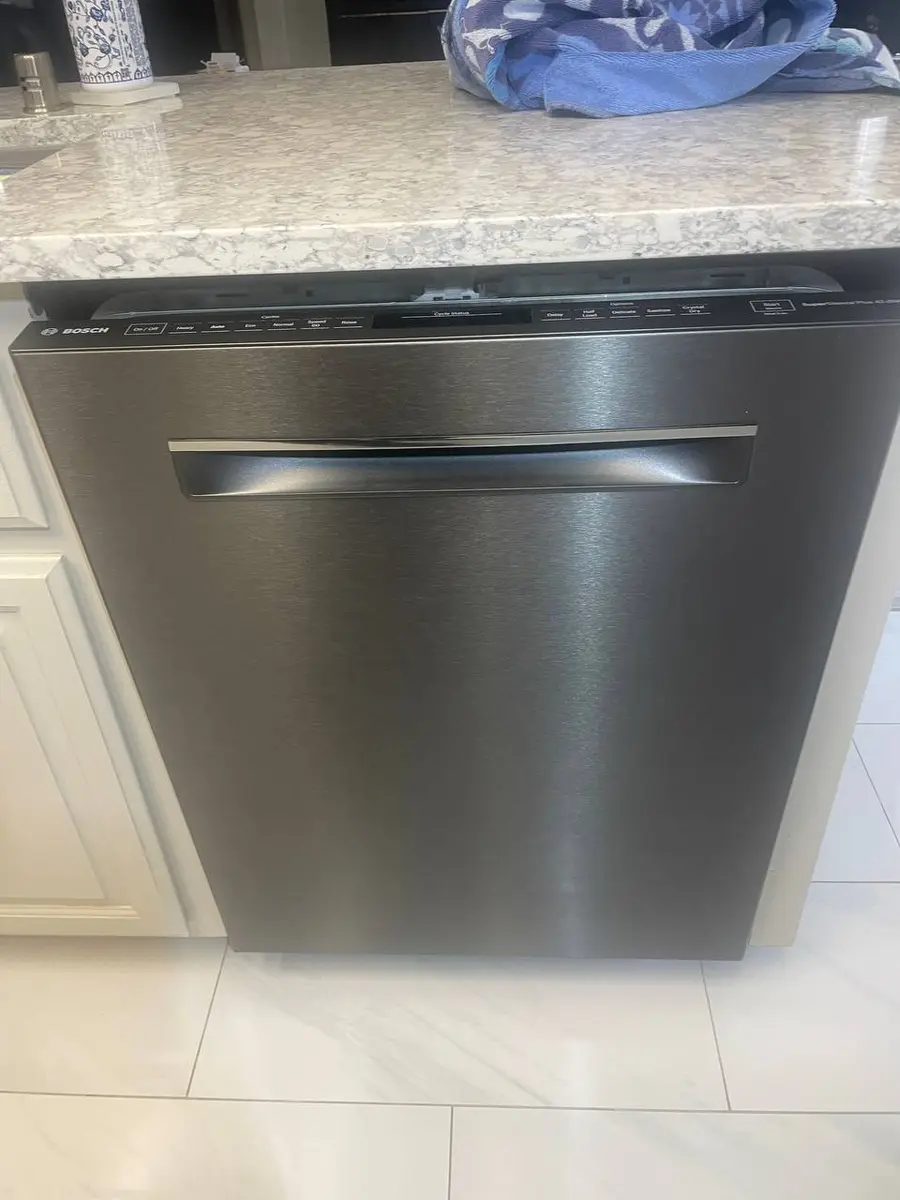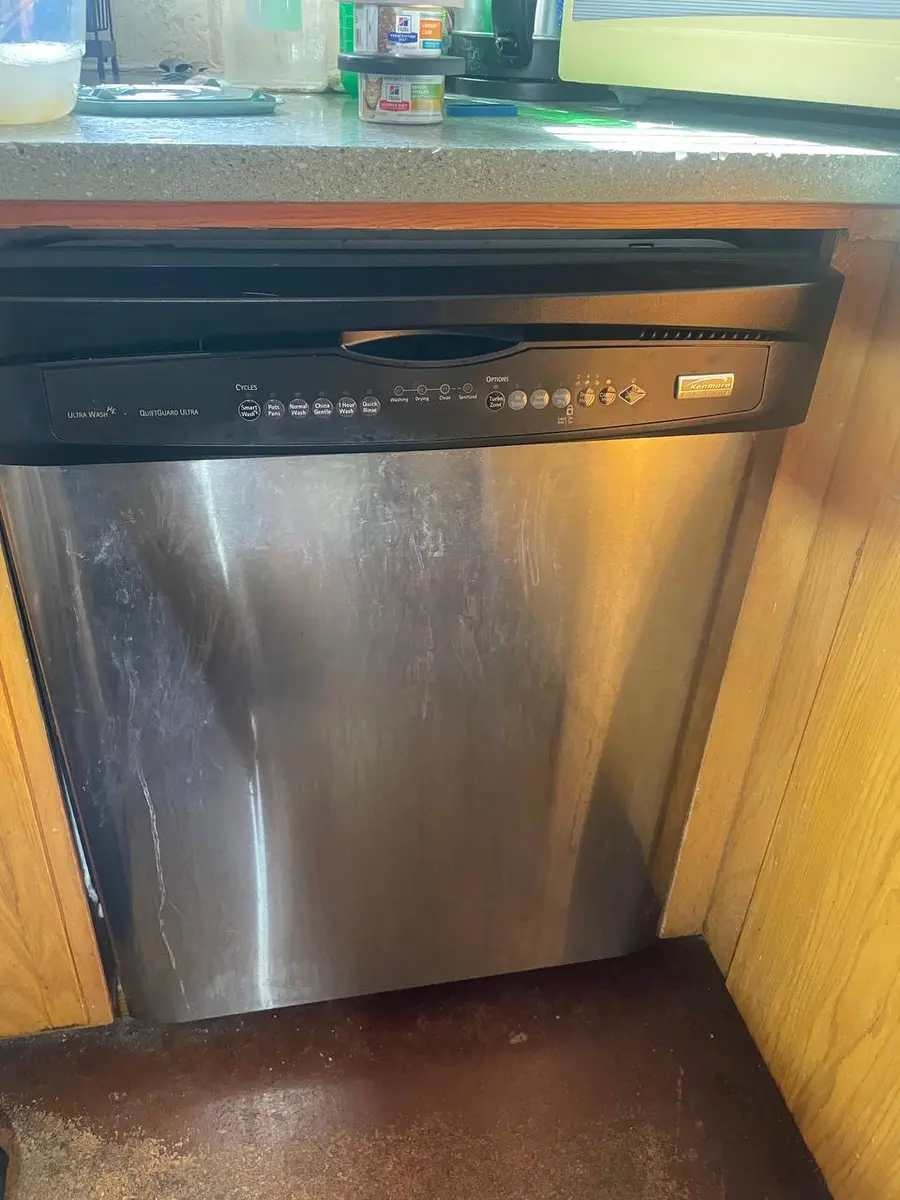
An LG [dishwasher](/blog/repair-or-replace-dishwasher) that flashes its lights instead of washing is almost always reporting a condition it will not start on — and on LG the leading conditions are power quality and water supply, not a failed board. The most likely fix is confirming a firmly latched door, an open water inlet, and stable house voltage; only when those check out does a blinking LG point at the control. Reading the pattern in that order keeps you from replacing parts that were never broken.
Quick answer: supply first, control last#
Before anything else, confirm three supplies: the door is latched, the inlet valve under the sink is open with decent pressure, and the outlet is delivering a steady 115-125V. LG controls are fussy about voltage, and a sag toward 108V or a surge near 132V can leave the machine blinking rather than running. If all three are solid and it still blinks, then treat it as a component fault.
Do You Have the Right Tools?
Water pressure gauge ($60), spray arm tester, float switch multimeter ($85), and drain inspection camera. Our technician arrives with $3,000+ in professional tools — your diagnostic is free.
Licensed & Insured · 90-Day Warranty · Same-Day Service
How LG display-free models signal faults#
Many LG dishwashers use cycle-status LEDs rather than a numeric screen, so a flashing pattern is the code. The useful signal is when in the cycle it stops:
- Blinking before any water enters → fill or door-latch side (inlet valve, latch switch, float).
- Blinking after wash but with water left in the tub → drain side (pump, hose, filter).
- Blinking at random points with no water pattern → power quality or control communication.
That timing narrows the search far faster than staring at the lights alone.
Power quality: the LG-specific first suspect#
LG's inverter-driven controls are more sensitive to marginal power than older mechanical timers. On a shared or long circuit, voltage that dips toward 108V under load, or spikes toward 132V, can trip a protective blink and abort the cycle.
- Plug a simple outlet tester or meter into the same receptacle and confirm it reads within the 115-125V band under load.
- Move any high-draw appliance off the same circuit — a microwave or disposer sharing the line can drag voltage down mid-cycle.
- If readings wander outside the band, the fix is electrical (circuit or supply), not the dishwasher.
Safety First — Know the Risks
Live 120V wiring in a wet environment is one of the most dangerous DIY scenarios. Water + electricity = serious shock risk. Our techs are licensed and insured — let them handle the risk.
Licensed & Insured · 90-Day Warranty · Same-Day Service
Door latch and water inlet: the everyday causes#
Door latch#
LG will not energize the wash system until the latch switch confirms closure. Press the door until it clicks; if there is no positive click, food debris on the strike, a warped door seal, or a worn latch is holding it electrically open.
Water inlet#
A blink that lands right where fill should begin usually means the machine is not getting water. Confirm the supply stop under the sink is fully open, check the inlet screen for scale, and make sure the fill float in the tub floor moves freely and is not stuck up on debris.
Drain side, when water is left behind#
- Clean the cylindrical sump filter — LG filters clog faster than most and a blocked filter reads as a drain fault.
- Check the drain hose loop for kinks and confirm the high loop or air gap is intact.
- Inspect the drain pump for a trapped seed or shard; LG pumps stall on small hard debris.
The Real Cost of DIY
Average DIY attempt: $150-400 in tools you may use once, plus the risk of further damage. Our diagnostic visit costs $0 — we find the problem and give you an honest quote.
Licensed & Insured · 90-Day Warranty · Same-Day Service
What the LED pattern is telling you#
LG groups the status LEDs by wash phase, so the light that is blinking, and how fast, narrows the fault before you open anything. A slow, steady blink on the cycle indicator usually means the machine is waiting on a condition (door, water, drain) rather than reporting a dead part. A fast blink or a full-panel flash is the abort signal. Watch one full cycle attempt and note the exact moment it stops — that timestamp is worth more than the pattern itself, because it tells you which supply the control was reaching for when it gave up.
Model and installation notes#
Built-in LG dishwashers are usually hardwired or share the under-sink circuit with the disposer, which is why voltage matters so much on this brand. If the unit was recently installed or moved, recheck the water line for a crimp, the drain hose for a lost high loop, and the leveling feet — an out-of-level LG can leave the base float sitting high enough to read a phantom leak and blink before it ever fills. On direct-drive models the inverter control is quieter but less tolerant of a marginal neutral, so a shared circuit that was "fine" for an older dishwasher can still trip a new LG.
Don't Void Your Warranty
Opening your appliance yourself may void the manufacturer warranty. Our repair comes with a 90-day guarantee, and we document everything for warranty compliance.
Licensed & Insured · 90-Day Warranty · Same-Day Service
Which faults need a technician#
- Control board (part family 4027ED3002A): if supplies are perfect and the blink persists, the main board may be failing. Confirming it requires isolating inputs and reading the board, so it is a technician job — not a guess-and-swap.
- Inlet valve that will not open electrically: a valve receiving voltage but not filling has failed internally and needs replacement with the water off.
- Latch switch that reads open when shut: continuity testing confirms it; that is meter work.
Everything upstream — voltage, an open stop valve, a clean filter, a firm latch — is yours to check; the board and valve are where a pro takes over.
How to reset an LG dishwasher#
- Press Power off, then hold Start/Pause for about five seconds to abort the stuck cycle.
- If that does not clear it, cut the breaker for one minute and restore power so the control fully resets.
- Run a rinse cycle. A blink that returns at the same step confirms a real fault to trace rather than a transient.
Is It Worth Your Time?
Dishwasher issues overlap between drain pump, wash motor, inlet valve, and control board. DIY diagnosis averages 3-5 hours. Our technician diagnoses the issue in about 30 minutes — same-day appointments available.
Licensed & Insured · 90-Day Warranty · Same-Day Service
Preventing repeat blinking#
- Keep the dishwasher on its own circuit where possible so shared loads cannot sag the voltage.
- Rinse the sump filter monthly to head off drain-side codes.
- Wipe the latch strike and door seal so the switch closes cleanly every time.
- If the panel blinks only when other kitchen appliances run, have an electrician confirm the circuit is not overloaded — the dishwasher is the symptom, not the cause.
LG dishwasher blinking after you have checked power and water? EasyBear technicians diagnose the control same-day across the region. Book a repair.
Frequently Asked Questions#
Why is my LG dishwasher blinking and not starting?#
The most common cause is a supply problem the control refuses to run on: an unlatched door, a closed or low-flow water inlet, or unstable voltage. LG controls expect a steady 115-125V; a brownout toward 108V or a spike near 132V can leave the lights blinking instead of starting a cycle.
How do I reset an LG dishwasher?#
Press Power to turn it off, then hold Start/Pause for a few seconds, or cut the breaker for one minute and restore it. That clears a transient blink. If the pattern returns at the same point in the cycle, the fault is real.
What does it mean when the LG cycle lights flash together?#
Flashing cycle LEDs on a display-free LG model are the fault readout. Together with a stall early in the cycle it usually means a fill or drain problem; check the inlet valve is open and the drain is clear before assuming a control fault.
Is a flashing LG dishwasher worth repairing?#
Usually yes. Most blinking cases are a door switch, inlet, or drain issue rather than a dead board, so the repair is minor relative to replacement. A confirmed control-board fault is the only expensive outcome, and even that beats a new machine on a unit under about ten years old.
Senior Appliance Repair Technician · 15 years experience
EPA-certified technician with 15 years of experience specializing in refrigerator and cooling system repairs.