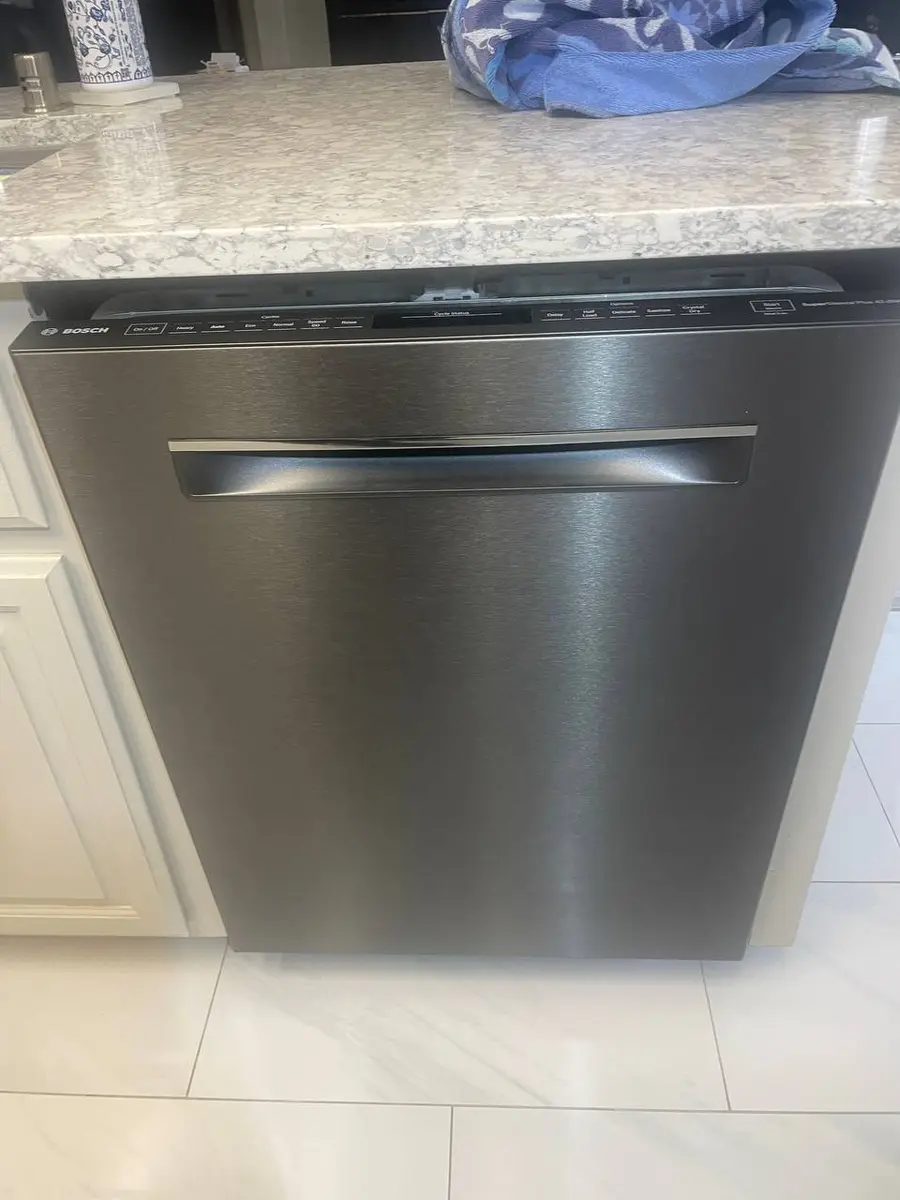
When an LG dishwasher shows display not working, it is telling you something specific. Below are the causes we see most, ranked, with what each looks like and how to check it.
The likely culprit#
Most likely: ribbon cable fatigue at the door hinge. Under the hood, the most frequent cause of LG dishwasher display fault is degradation of the flat ribbon cable that routes through the door hinge. Every time the door opens, this cable bends. If that checks out, look next at control board power supply section failure.
Do You Have the Right Tools?
Water pressure gauge ($60), spray arm tester, float switch multimeter ($85), and drain inspection camera. Our technician arrives with $3,000+ in professional tools — your diagnostic is free.
Licensed & Insured · 90-Day Warranty · Same-Day Service
Ranked causes and what to look for#
Match your symptom to the rows below, starting at the top:
| Likely cause | How common | What you'll notice / what to check |
|---|---|---|
| Ribbon Cable Fatigue at the Door Hinge | 40% of cases | The most typical cause of LG dishwasher display breakdown is degradation of the flat ribbon cable that routes… |
| Control Board Power Supply Section Failure | 25% of cases | The main control board on LG dishwashers contains an integrated power supply section that converts household 120V AC… |
| Display Board Itself Failed | 20% of cases | The display board is a separate component from the main control board on most LG dishwasher models. |
| Incoming Power Issues | 10% of cases | LG dishwashers require stable 120V AC to operate their electronic controls. |
| Child Lock or Demo Mode Active | 5% of cases | Before assuming hardware breakdown, verify that the display is not deliberately disabled: Child Lock: On LG dishwashers, press… |
Sorting it out, step by step#
Here is what each cause looks like up close and how to confirm it.
1. Ribbon Cable Fatigue at the Door Hinge (40% of cases)#
Every time the door opens, this cable bends. LG's door hinge geometry creates a specific stress point where the cable enters the door panel through a small channel. The most typical cause of LG dishwasher display breakdown is degradation of the flat ribbon cable that routes through the door hinge. Rule it in or out with a visual check and a continuity test where possible.
2. Control Board Power Supply Section Failure (25% of cases)#
Put simply, the main control board on LG dishwashers contains an integrated power supply section that converts household 120V AC into the low-voltage DC required by the display (typically 3.3V or 5V). Capacitor degradation in this section — particularly electrolytic capacitors exposed to heat from the nearby wash motor connections — can result in insufficient voltage reaching the display while the control board otherwise functions normally. LG-specific control board vulnerability: LG dishwasher control boards are documented to be sensitive to voltage spikes from the household electrical supply. Try a hard reset first — unplug for a minute — then look for scorched spots or swollen parts on the board.
3. Display Board Itself Failed (20% of cases)#
The display board is a separate component from the main control board on most LG dishwasher models. It contains the LED/LCD drivers, segment decoders, and touch-sensing circuits (on touch-panel models). Component breakdown on this board can kill the display while the main board remains fully operational. Reseat the board’s connectors and inspect for burned relays; board faults usually need a replacement, not a repair.
4. Incoming Power Issues (10% of cases)#
Behind the scenes, lG dishwashers require stable 120V AC to operate their electronic controls. Voltage below 108V or above 132V can cause the display to malfunction. The control board's power supply section has a narrower operating range than the motor circuits, so the display dies first while the mechanical components might still function on degraded power. With the unit unplugged, inspect this part for visible wear or a loose connection and test it before replacing.
5. Child Lock or Demo Mode Active (5% of cases)#
Some LDT models require holding Rinse + Dry simultaneously. When child lock is active, all buttons and display are locked — the lock icon may be too dim to see if the display backlight has degraded. Before assuming hardware breakdown, verify that the display is not deliberately disabled: Child Lock: On LG dishwashers, press and hold the Child Lock button (or Lock icon) for 3 seconds. Rule it in or out with a visual check and a continuity test where possible.
Safety First — Know the Risks
Live 120V wiring in a wet environment is one of the most dangerous DIY scenarios. Water + electricity = serious shock risk. Our techs are licensed and insured — let them handle the risk.
Licensed & Insured · 90-Day Warranty · Same-Day Service
In a nutshell#
The fast version, top to bottom:
- Ribbon Cable Fatigue at the Door Hinge — 40% of the time; with the unit unplugged, inspect this part for visible wear or a loose connection and test it before replacing.
- Control Board Power Supply Section Failure — 25% of the time; reseat the board’s connectors and inspect for burned relays.
- Display Board Itself Failed — 20% of the time; try a hard reset first — unplug for a minute — then look for scorched spots or swollen parts on the board.
- Incoming Power Issues — 10% of the time; rule it in or out with a visual check and a continuity test where possible.
- Child Lock or Demo Mode Active — 5% of the time; with the unit unplugged, inspect this part for visible wear or a loose connection and test it before replacing.
What fixing it usually involves#
A typical repair follows the same arc: confirm the cause with a quick test, unplug and open the relevant panel, swap the failed part, then reassemble and run a full cycle to verify. On this symptom the ribbon cable fatigue at the door hinge is where most visits start.
The Real Cost of DIY
Average DIY attempt: $150-400 in tools you may use once, plus the risk of further damage. Our diagnostic visit costs $0 — we find the problem and give you an honest quote.
Licensed & Insured · 90-Day Warranty · Same-Day Service
Keeping it from coming back#
Most of these faults are wear-driven, so periodic cleaning and gentle use stretch the time between repairs on your LG dishwasher.
When to stop and call for help#
Call a technician if the symptom persists after the checks above, if the repair means reaching power, gas, or sealed components, or if your LG dishwasher is still under warranty — DIY work can void it. The bill scales with the part involved and your model, and a technician can confirm the exact figure before starting.
When in doubt, book a same-day diagnosis. A tech who knows LG dishwashers can confirm the cause and quote the repair on the spot.
Senior Appliance Repair Technician · 15 years experience
EPA-certified technician with 15 years of experience specializing in refrigerator and cooling system repairs.