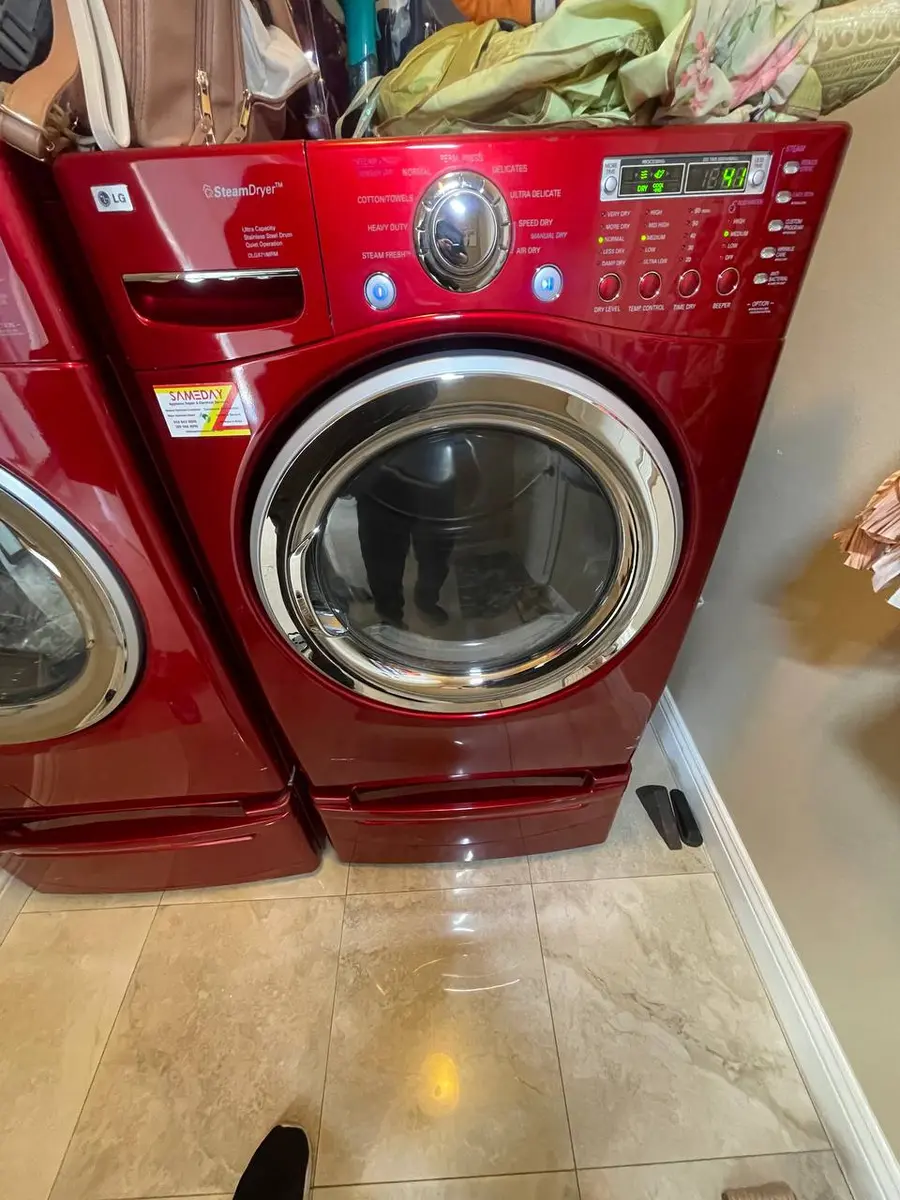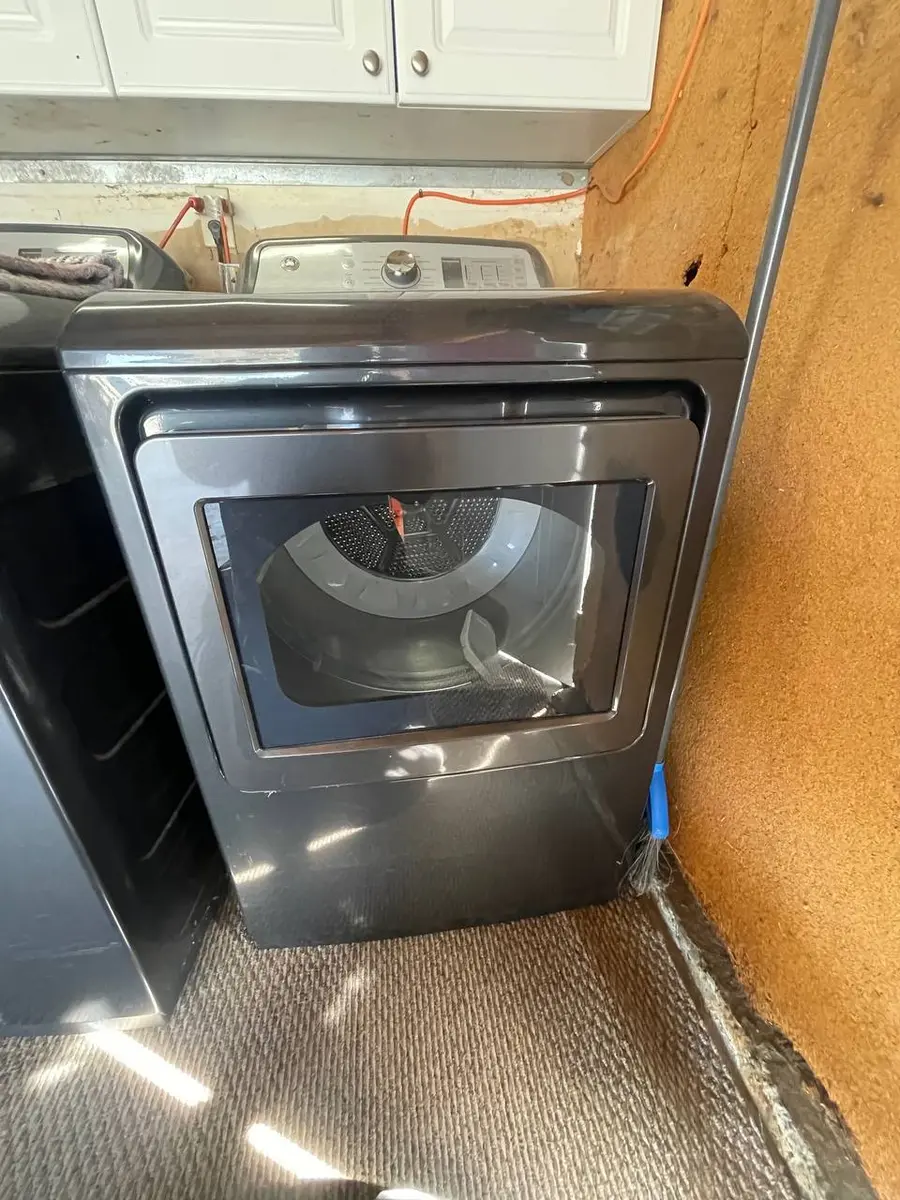
Frigidaire Dryer Not Heating: Causes & Fix
A Frigidaire dryer that tumbles without heat has five suspects, and testing them in the right order means nothing gets replaced on a hunch. Work down the chain: thermal fuse first — part 137032600, and by far the most common failure, especially after a vent blockage — then the heating element on an electric model or…
Tools: Phillips #2, 1/4-inch nut driver, multimeter, torch and a vacuum.
Safety. Unplug the dryer completely. Gas models get their shutoff valve closed — the quarter-turn lever behind the machine — and wait 5 minutes before touching element wiring.
Access#
Pull the dryer away from the wall so you can work from the rear, then take the top panel off: 2 rear Phillips screws, slide it back, lift it up. Frigidaire tapes a service sheet behind the toe plate, and it carries the diagnostic flowchart for your specific model, so that is worth retrieving before you start metering.
Do You Have the Right Tools?
Gas leak detector ($130), thermal fuse tester ($95), belt tension gauge, and vent inspection camera ($180). Our technician arrives with $3,000+ in professional tools — your diagnostic is free.
Licensed & Insured · 90-Day Warranty · Same-Day Service
What the readings should be#
Everything in the heat chain is a pass or fail number, which is what makes this diagnosis so much cleaner than guessing from symptoms.
| Component | Healthy reading | Failed |
|---|---|---|
| Thermal fuse | Near 0 ohms, continuity | OL or infinite — it has opened |
| Safety switches | Near 0 ohms | OL |
| Heating element | 10-50 ohms | Infinite means a broken coil |
| Gas igniter | 50-400 ohms | Outside that range |
| Motor windings | 2-6 ohms | Not a heat fault, but confirms the drive side |
Test in the order above rather than by convenience. The fuse is both the cheapest and the likeliest, and finding it open often tells you the whole story before you touch anything else.
The part everyone skips#
A blown thermal fuse is a consequence, not a cause. It opened because heat built up behind restricted airflow, so clean the entire exhaust vent path before the new fuse goes anywhere near the machine. Fit a fuse into a blocked duct and you have bought yourself the same repair in a few weeks, which is why weak exhaust flow sits behind most heat-related failures on these dryers.
Cascading damage is worth checking for too: the same restricted airflow that opened the fuse has been cooking the element for months, so meter the element even when the fuse is obviously the immediate fault.
Safety First — Know the Risks
Gas dryers carry carbon monoxide and explosion risk. Even electric dryers involve 240V circuits that can deliver a fatal shock. Our techs are licensed and insured — let them handle the risk.
Licensed & Insured · 90-Day Warranty · Same-Day Service
Verify with a real load#
Run a full drying cycle with a small load and watch the first 10 minutes. You want heat you can feel at the exhaust vent, a drum holding steady speed, and no new noises. On DrySense models, confirm the automatic cycle finishes at the right dryness rather than stopping short.
If it is still wrong#
- Same fault after the repair. There is a second failure in the chain. Test every component in the heat path rather than stopping at the first bad reading.
- Intermittent heat. Usually a spade connector that is not fully seated, or a part that passes cold and fails once hot.
- New noise afterwards. A panel not fully home, a misrouted belt, or a tool left in the cabinet.
- Runs but the exhaust is weak. Back to the vent, which is the root cause you were meant to fix.
Gas smell at any point means leave and call the gas company, not us. A tripped house breaker suggests a short inside the machine, several failed components at once suggests wiring or the board, and 240V work you would rather not do is a perfectly good reason to book a repair.
Lead Appliance Repair Technician · 12 years experience
Experienced technician with 12 years specializing in washing machine and dryer repairs across all major brands.