How to Disassemble a Samsung Refrigerator#
A Samsung refrigerator teardown runs on a short, deliberate kit: a 5/16" hex nut driver, a Phillips #2 screwdriver, a flat blade, pliers and — the item that shapes everything else — a multimeter. Isolate the unit at the breaker first. After that, the panel you remove is dictated by the component you are chasing, not by a sequence: the rear panel, the interior evaporator cover, the top panel, a service access panel, the toe grille and the control panel each reach different things. Half an hour to just under an hour is a fair allowance, and the sealed refrigerant circuit is where the job stops.
Before You Start#
Tools needed:
- Flat-blade screwdriver
- Multimeter
- 5/16" hex nut driver
- Phillips #2 screwdriver
- Pliers
Isolate first — every time:
- Cut power at the breaker or unplug the unit
Time required: 30-55 minutes Difficulty: Intermediate
Safety warning: The sealed refrigerant system is under pressure and is not a DIY boundary — opening a line vents refrigerant and needs EPA 608 certification. Condenser fan blades and sharp evaporator fins sit directly behind the panels being removed.
Do You Have the Right Tools?
Refrigerant gauges ($200+), vacuum pump ($250), leak detector ($150), and EPA-certified recovery equipment. Our technician arrives with $3,000+ in professional tools — your diagnostic is free.
Licensed & Insured · 90-Day Warranty · Same-Day Service
Ways Into a Samsung Refrigerator#
Which panel you take off depends on the component you are after. These are the access points a refrigerator repair reaches for, most-used first:
- Remove the rear panel
- Remove the interior cover (evaporator / liner panel)
- Lift the top panel
- Open the service access panel
- Drop the toe grille / kick plate
- Free the control panel
Where this procedure stops: Stop at the sealed system: compressor, condenser, evaporator coil and any brazed line are certification territory, not access work.
What Makes a Samsung Teardown Different#
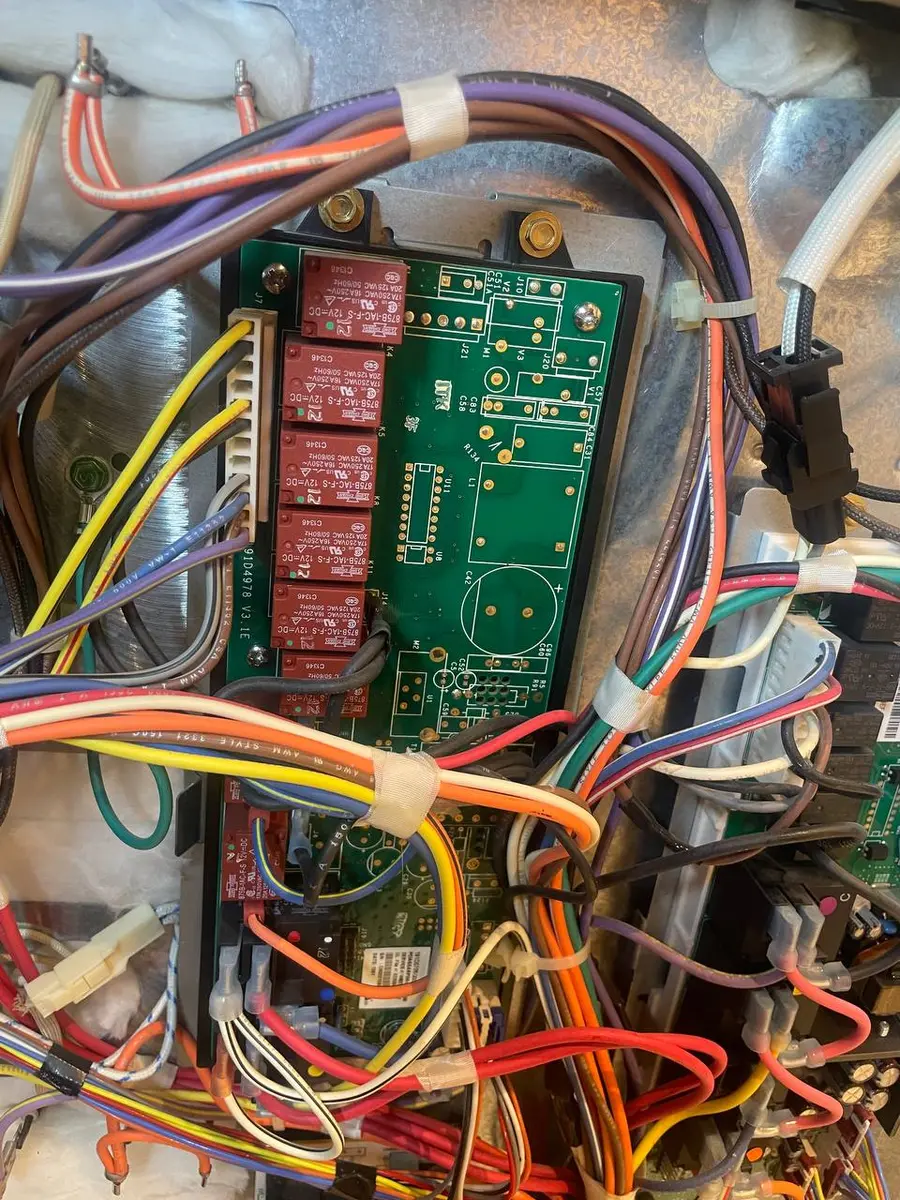
Read the attested tool list for what it implies rather than as a shopping list, and one item stands out. A multimeter is not a disassembly tool. It does not remove anything. Its presence in the attested set says something about the shape of the work: a Samsung panel comes off, more often than not, so that a component can be reached and tested where it sits — not levered out and carried to a bench. That reframes the whole exercise. You are opening a route to a measurement, and the panel is in the way rather than being the point.
Two consequences follow. The first is that the routes which put you in front of electronics matter more here than a raw frequency ranking suggests — the control panel and the interior cover, in particular, are where a meter has something to do. The second is that you should plan to have the panel off and the unit still assembled enough to be safe around while you take a reading, rather than stripping everything you can reach on the assumption you will work it out later.
On fasteners, Samsung is the plainer of the two hex-driven brands in this batch. Its attested list carries a single hex size, the 5/16 inch, where GE's carries two. Take that as a description of what has been attested and not as a guarantee that no other size exists on your cabinet: if you find a head your driver rattles inside, that is a signal to stop and find the right size, never to lean harder. The flat blade on the list is a pry-and-release tool for clips and trim, and using it as a driver is the reliable way to ruin a head. The pliers are there for what a driver cannot grip.
Samsung sits alongside two other published Samsung teardowns here — the dryer and the washing machine — which are a fair check on the tool signature but say nothing about how this particular cabinet opens. Fastener conventions travel across a brand's line. Panel layouts do not.
One thing to have straight before the rear panel moves: it opens the compressor compartment. The compressor carries a start relay and a run capacitor, and a capacitor can hold its charge well after the unit is unplugged — pulling the cord makes the motor safe, not the compartment. The condenser fan spins on sharp blades in the same space, and the evaporator fins behind the interior cover are sharp enough to cut a hand reaching in blind.
Safety First — Know the Risks
Refrigerant (R-134a/R-600a) requires EPA certification to handle. Improper discharge is a federal violation and health hazard. Our techs are licensed and insured — let them handle the risk.
Licensed & Insured · 90-Day Warranty · Same-Day Service
Reassembly Notes#
Because so much Samsung work is diagnostic, the most common reassembly error is not mechanical at all — it is a connector left half-seated after a measurement. A connector that is pushed on but not latched will pass a wiggle test and fail a week later, intermittently, in a way that is far harder to trace than the original fault. Seat every connector you disturbed until it latches, and confirm by feel rather than by sight.
Where the door carries a display or a through-the-door dispenser, the harness for it runs through the hinge. That harness moves every time the door swings, so it is unforgiving of a lazy re-route: seat the connector fully and check the run is clear of the hinge's travel before you close the door on it.
On the fasteners themselves, a nut driver in sheet metal gives you more leverage than the thread can survive and very little warning. Take each one to snug and stop; a fastener that keeps turning has already pulled its thread, and continuing will not recover it. Keep hardware grouped by the panel it came from so nothing goes back into a hole it did not come out of.
The interior cover must sit flat and be fastened at every point — it is part of the path the cold air takes, so a cover left proud has a real effect once the unit runs. Likewise the toe grille, which stands in front of the condenser and feeds air to it.
If the refrigerator is plumbed for ice or water, the supply line behind it does not move with the cabinet: watch it as you push the unit back rather than trusting that it found its own way. Restore power only once everything is fastened and both doors seal.
When to Stop and Call a Technician#
Stop at the sealed system: compressor, condenser, evaporator coil and any brazed line are certification territory, not access work. That is not a caution you can weigh against convenience. The sealed refrigerant system is under pressure and is not a DIY boundary — opening a line vents refrigerant and needs EPA 608 certification. Condenser fan blades and sharp evaporator fins sit directly behind the panels being removed.
The same stop applies to the compressor's start relay and run capacitor, which sit in the compartment the rear panel opens and can hold charge after the unit is unplugged.
There is a particular temptation on a brand whose attested kit includes a meter: having taken a reading, it feels like the next step is yours to take. Frequently it is not, because the reading points into the sealed system, and that is precisely where a home teardown ends. EasyBear runs same-day appliance repair across Sacramento and the Bay Area, and our technicians carry the certification that sealed-system work requires.
EasyBear is an independent appliance repair company. We are not affiliated with or authorized by Samsung.
The Real Cost of DIY
Average DIY attempt: $150-400 in tools you may use once, plus the risk of further damage. Our diagnostic visit costs $0 — we find the problem and give you an honest quote.
Licensed & Insured · 90-Day Warranty · Same-Day Service
FAQ#
What tools do I need to take apart a Samsung refrigerator?#
A 5/16" hex nut driver, a Phillips #2 screwdriver, a flat blade, pliers and a multimeter. The meter is the one worth noticing — it is not a tool for taking anything apart, and its place on the list says the panels usually come off so a component can be tested where it sits rather than removed.
What size hex driver does a Samsung refrigerator use?#
The 5/16 inch, measured across the flats of the head rather than by thread or length. Only that one size is attested here, which is worth flagging: GE's list carries two, so a single size is a real difference and not an omission on our part. If you meet a head your driver moves inside, treat it as a size you have not identified yet — do not press on and round it.
Which panel do I take off to reach the part I need?#
Whichever one is between you and the component. The routes above are ranked by how frequently repairs use them, not sequenced, so nothing there is a first step. The rear panel opens the compressor compartment, the interior cover reaches the evaporator side, the toe grille reaches the base and the condenser area, the control panel reaches the electronics, and the top and service access panels reach what lies behind them. On a brand whose work is often diagnostic, the control panel and the interior cover earn more attention than their position in a frequency ranking implies.
How do I know the power is really off before I start?#
Use the meter — it is on the attested list precisely so that you can. And be specific about one Samsung-shaped trap: a dark front display is not proof of an isolated circuit. A panel can be dark for its own reasons while the circuit behind it remains live, so treat the display as an indicator of nothing in this context. Unplug the unit or throw the breaker, then confirm with the meter that the circuit you meant to kill is the circuit that is dead.
How long does it take to open up a Samsung refrigerator?#
Half an hour to just under an hour is the planning band. It is worth knowing where that comes from: it is the mean of the bands declared across the teardown guides published here, none of which covers a refrigerator, so it is a corpus-level estimate rather than a refrigerator measurement. If your job includes taking readings, add time for that — the panel comes off quickly, the diagnosis does not.
What should I stop and call a technician for?#
The sealed system in all its parts — compressor, condenser, evaporator coil and every brazed line joining them. Opening one vents refrigerant, and doing so legally requires EPA 608 certification. The compressor's start relay and run capacitor are the other stop, because both can hold charge with the unit unplugged. A meter reading that points at any of these is a result to act on by calling someone, not a licence to continue.
Do most Samsung repairs start at the rear panel?#
The rear panel is the most-used way into a refrigerator across repairs in general, which is why it leads the ranked list. It is not, though, a starting instruction, and on this brand in particular a good share of the work begins at the control panel or the interior cover instead — wherever the component you intend to measure actually lives.
Senior Appliance Repair Technician · 15 years experience
EPA-certified technician with 15 years of experience specializing in refrigerator and cooling system repairs.