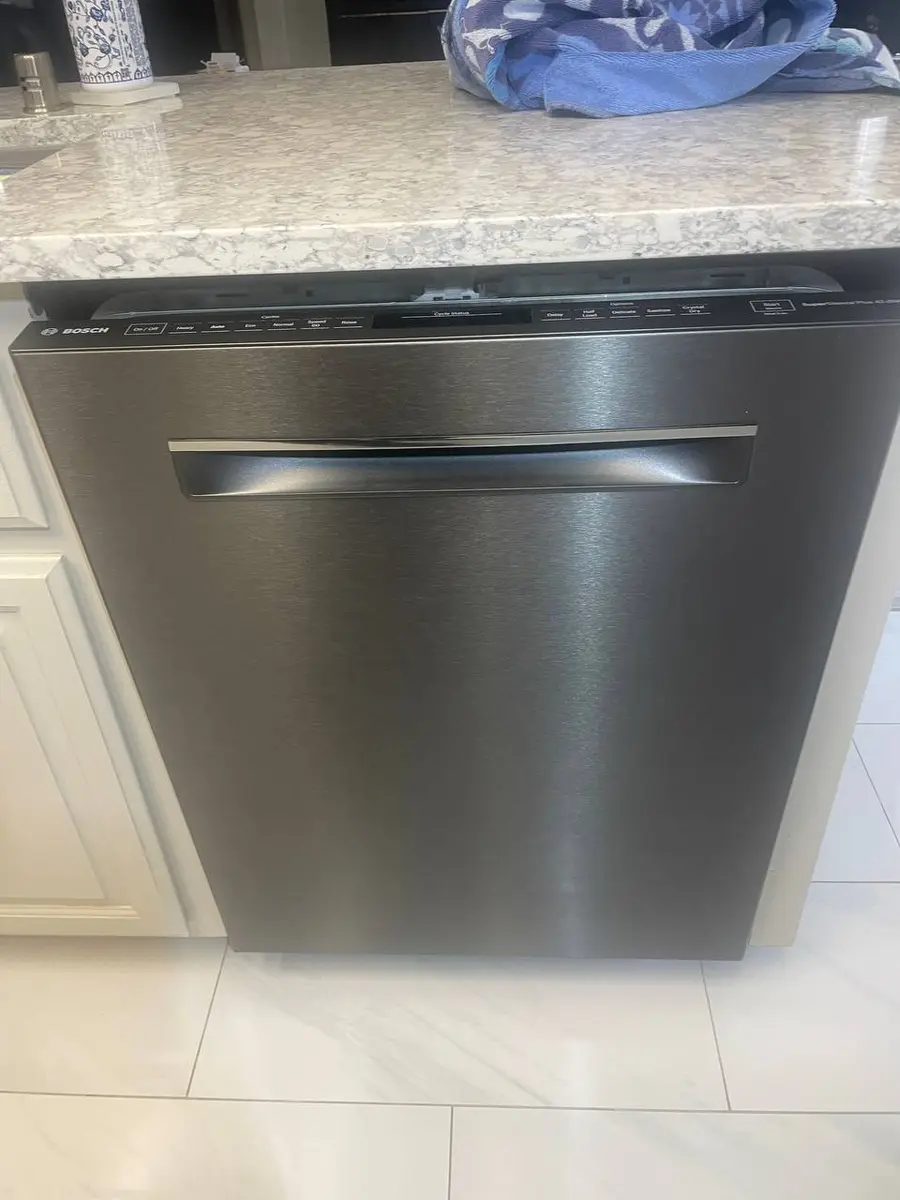
Standing water in a Hotpoint [dishwasher](/blog/repair-or-replace-dishwasher) means the drain path is blocked somewhere between the tub and the sink drain — most often a clogged filter, then a failed drain pump, a kinked or plugged hose, or a stuck check valve. Check the removable bottom filter first; it's the cause about a third of the time and a free fix. Hotpoint is GE's value line, so GE parts fit.
Follow the Water Out#
Every drain fault is a blockage at one point along the path the water takes to leave: it passes the bottom filter, through the drain pump, out the hose, past a check valve, and into the disposal or air gap at the sink. Work that path from the tub outward and you'll find the block without guessing. Because Hotpoint is built by GE Appliances as its value line — GE internals with simpler controls — the parts fit directly and repairs run about 10 to 20% below the equivalent GE model. This shows up across the line, including the HDF310PGRWW, HDA3600HWW, and HDF330PGRWW.
Do You Have the Right Tools?
Water pressure gauge ($60), spray arm tester, float switch multimeter ($85), and drain inspection camera. Our technician arrives with $3,000+ in professional tools — your diagnostic is free.
Licensed & Insured · 90-Day Warranty · Same-Day Service
The Causes, Most Common First#
Clogged drain filter or food trap (about 35%)#
The most frequent cause and the easiest to fix. The filter at the bottom of the tub catches food so it doesn't reach the pump, and when it isn't cleaned it packs solid and stops water from getting to the drain pump at all. Pull the bottom rack, twist out the filter assembly, and rinse it under running water with a soft brush. Make this a monthly habit and you'll head off most drainage trouble before it starts.
Failed drain pump (about 25%)#
The drain pump pushes water out through the hose, and when its impeller breaks or the motor dies, the water just sits. On Hotpoint dishwashers the pump lives under the filter assembly at the bottom, and the classic sign is a buzz during the drain step with no water moving — the motor tries but the impeller can't. Glass shards and hard debris that slip past the filter are what usually chew up the impeller, so check the sump for them while you're in there.
Blocked drain hose or disposal connection (about 20%)#
The drain hose ties into the garbage disposal or the sink drain, and a very common culprit is a brand-new disposal whose knockout plug was never removed — the water has nowhere to go. Check for kinks in the hose under the sink too, and if you're connected to a disposal, run the disposal before starting the dishwasher to clear the shared drain path.
Check valve stuck closed (about 10%)#
A check valve in the drain path near the pump keeps dirty water from flowing back into the tub, and if debris or mineral buildup jams it shut, water can't get out either. Cleaning it, or replacing it if it won't free up, restores the flow.
Clogged air gap (about 10%)#
If your install routes the drain through an air gap — the small chrome cylinder on the sink deck — debris inside it blocks drainage, and water backing up into the sink during the drain cycle is the giveaway. Pop the air-gap cap off and clean it out with a bottle brush.
A Simple Order of Attack#
Standing water after a cycle is always a blocked drain system, so work outward: clean the bottom filter and remove all debris first, since that alone clears most cases. If the filter's clean, check the hose connection under the sink — run the disposal, look for kinks, and confirm the disposal knockout plug was removed. Clean the air gap if you have one and water backs up in the sink. Only when all of those come up clear does the drain pump become the likely answer, and a buzz-with-no-water during drain confirms it. Cut power before reaching into the sump, and watch for glass, which both damages the pump and cuts fingers.
Safety First — Know the Risks
Live 120V wiring in a wet environment is one of the most dangerous DIY scenarios. Water + electricity = serious shock risk. Our techs are licensed and insured — let them handle the risk.
Licensed & Insured · 90-Day Warranty · Same-Day Service
Keep the Drain Clear#
Nearly every drain fault on these machines traces back to what reaches the sump, so a little upkeep prevents most of them. Scrape plates before loading so large food scraps never land in the filter, and clean that bottom filter monthly rather than waiting for standing water to remind you. Keep glass out of the machine when a piece has already broken, since shards are what wreck the pump impeller and jam the check valve. If your dishwasher shares its drain with a disposal, run the disposal empty for a few seconds before each dishwasher cycle to keep that junction clear. And if you ever have a new disposal installed, confirm the installer knocked out the dishwasher plug — a forgotten knockout is one of the most common "sudden won't drain" calls, and it's a two-minute fix once you know to look.
Related reading: a Hotpoint [dishwasher not cleaning dishes](/bay-area/services/dishwasher-not-cleaning-dishes) and a Hotpoint dishwasher that's leaking.
Hotpoint [dishwasher repair](/blog/complete-guide-dishwasher-repair) across [Sacramento](/sacramento/sacramento) and the Bay Area — filter, pump, and drain diagnostics in one visit. Book a technician.
Senior Gas Appliance Specialist · 18 years experience
AGA-certified gas appliance specialist with 18 years of experience in residential and commercial oven, range, and cooktop repairs.