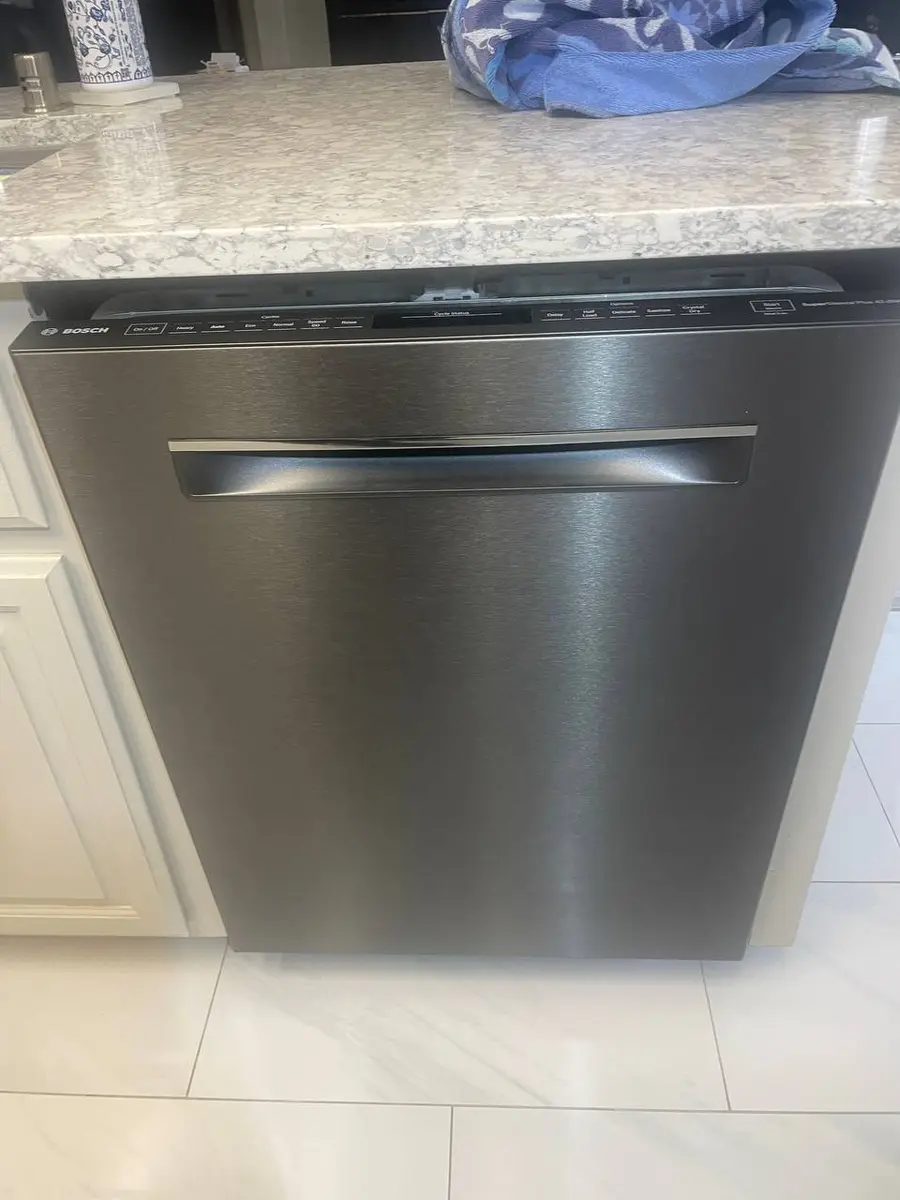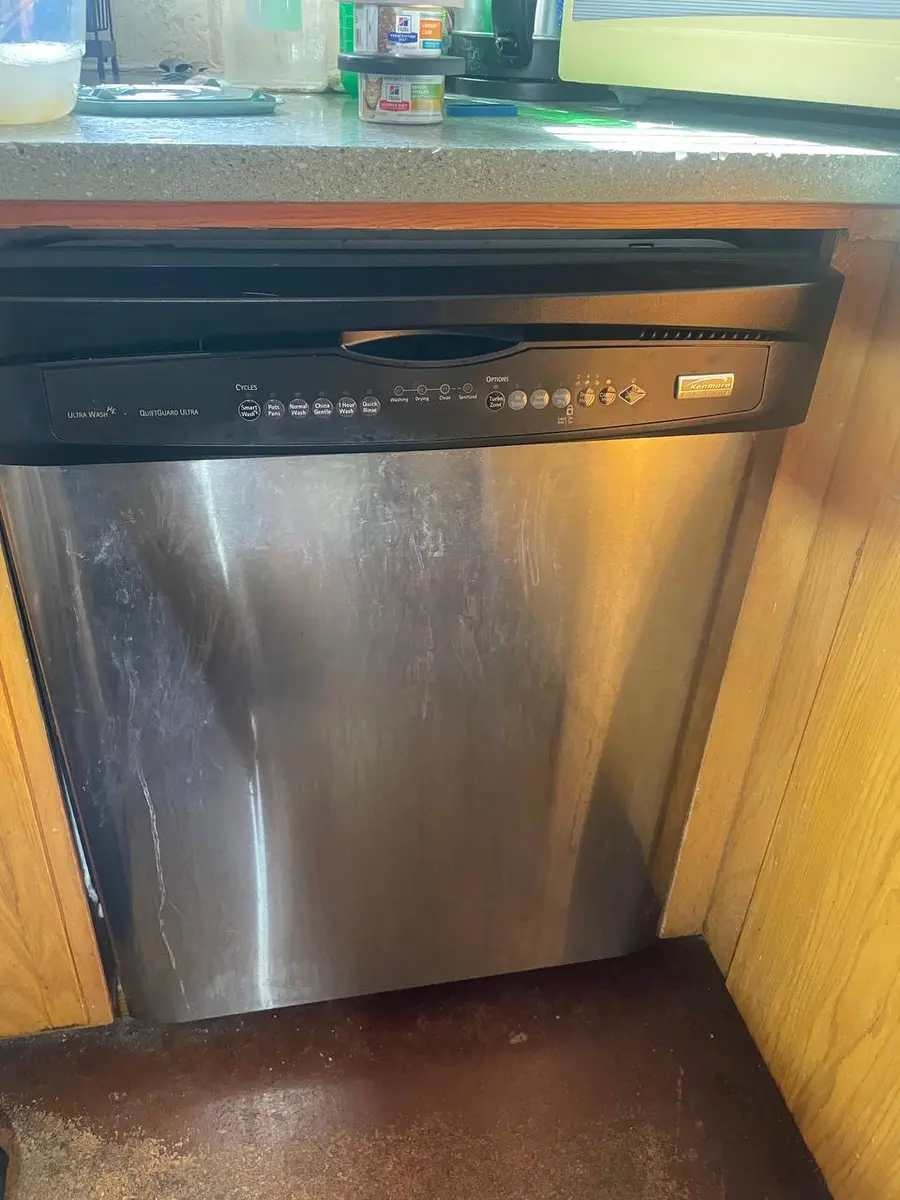
Hotpoint Dishwasher Not Cleaning Dishes? Causes
Before you suspect a component, do three things that cost nothing. Clear the spray arm nozzles, get the water to 120°F (49°C), and clean the filter. Those three account for 70% of poor cleaning complaints on Hotpoint dishwashers. Only if performance is unchanged afterwards is it worth looking at the wash motor.
The five causes, by share of cases#
1. Clogged spray arms — 30%. Mineral deposits and food debris block the nozzle holes, so water pressure and coverage both drop. The arms usually twist or unclip off. Clear each hole with a toothpick or thin wire, then soak the arms in white vinegar for 30 minutes to dissolve the mineral buildup. Refit them and check they spin freely by hand.
2. Low water temperature — 25%. A Hotpoint dishwasher needs water at 120°F (49°C) minimum to clean properly. If the water heater is set below that, or the kitchen is a long way from it, the machine fills with lukewarm water and the detergent never does its job. Two fixes: run the hot tap at the kitchen sink for 1-2 minutes before starting a cycle, and check the water heater setting — 120°F is the recommended figure.
3. Wash motor or circulation pump — 20%. The motor pressurises water through the spray arms, so a failing one means arms that spin weakly or not at all. Listen during the wash: a steady hum is healthy. Grinding, intermittent running or silence is not. This is the first cause on the list that actually needs a part.
4. Detergent problems — 15%. Too little detergent, expired detergent, or pods used on short cycles all produce the same result. Fresh powder or liquid, measured for your water hardness, works best — and hard water needs more, not less. Check the dispenser door is not blocked by a tall item, because it has to open during the wash.
5. Dirty filter — 10%. A clogged drain filter pushes dirty water back into the wash, so food particles recirculate and redeposit on the dishes. Take the filter assembly out of the bottom of the machine and rinse it monthly. An empty hot cycle with 2 cups of white vinegar, also monthly, cleans the internals behind it.
The models this comes up on#
HDF310PGRWW, HDA3600HWW and HDF330PGRWW.
Worth knowing where these machines come from: Hotpoint is GE's value line, manufactured by GE Appliances (Haier), and internally identical to GE models with simplified controls. GE parts fit Hotpoint units directly, and repair costs run 10-20% lower than the equivalent GE model — a genuine advantage when a real part is needed.
Do You Have the Right Tools?
Water pressure gauge ($60), spray arm tester, float switch multimeter ($85), and drain inspection camera. Our technician arrives with $3,000+ in professional tools — your diagnostic is free.
Licensed & Insured · 90-Day Warranty · Same-Day Service
Before you dig in#
Disconnect power at the circuit breaker or unplug the unit. Find your exact model number on the serial plate, usually inside the door frame, on the rear panel or under the lid, since that determines the exact parts and diagnostic procedures. If your machine has a digital display, note any error code first — it narrows things to a specific component immediately. Then work the highest-probability cause, check accessible parts for visible damage, confirm the settings are right, and run a test cycle, watching the first 10-15 minutes.
Call a technician if the problem survives all of that, if you notice a burning smell, sparking or electrical damage, if the repair means touching gas connections or high-voltage components, or if the machine is under warranty — a professional diagnosis preserves the coverage.
Two related complaints#
Cloudy glasses come from one of two sources and the difference matters. Hard water mineral etching is permanent: reduce the detergent, add rinse aid, and use a water softener if hardness is above 7 grains. Detergent film is not permanent — it washes off with a hot cycle and 2 cups of white vinegar, no dishes in the machine.
Pre-rinsing is the habit to drop. Modern Hotpoint dishwashers are designed for food-soiled dishes. Scrape the large pieces into the bin and leave the rest, because the detergent enzymes need food to work on. Pre-rinsing can actively reduce cleaning performance, since the sensors read clean water and use less energy accordingly. Scrape, do not rinse.
Weak spray arms after a full clean? Book a repair — that points at the wash motor.
Senior Gas Appliance Specialist · 18 years experience
AGA-certified gas appliance specialist with 18 years of experience in residential and commercial oven, range, and cooktop repairs.