GE Smart Dryer Vent-S Alert: What to Do
A GE SmartHQ Vent-S alert means the cloud detected 30 to 50% airflow restriction in your dryer's exhaust — early enough to clean the vent before it becomes a fire risk. It's the smart feature working correctly, not a fault. Clean the lint filter and the exhaust duct first.
What Vent-S is watching#
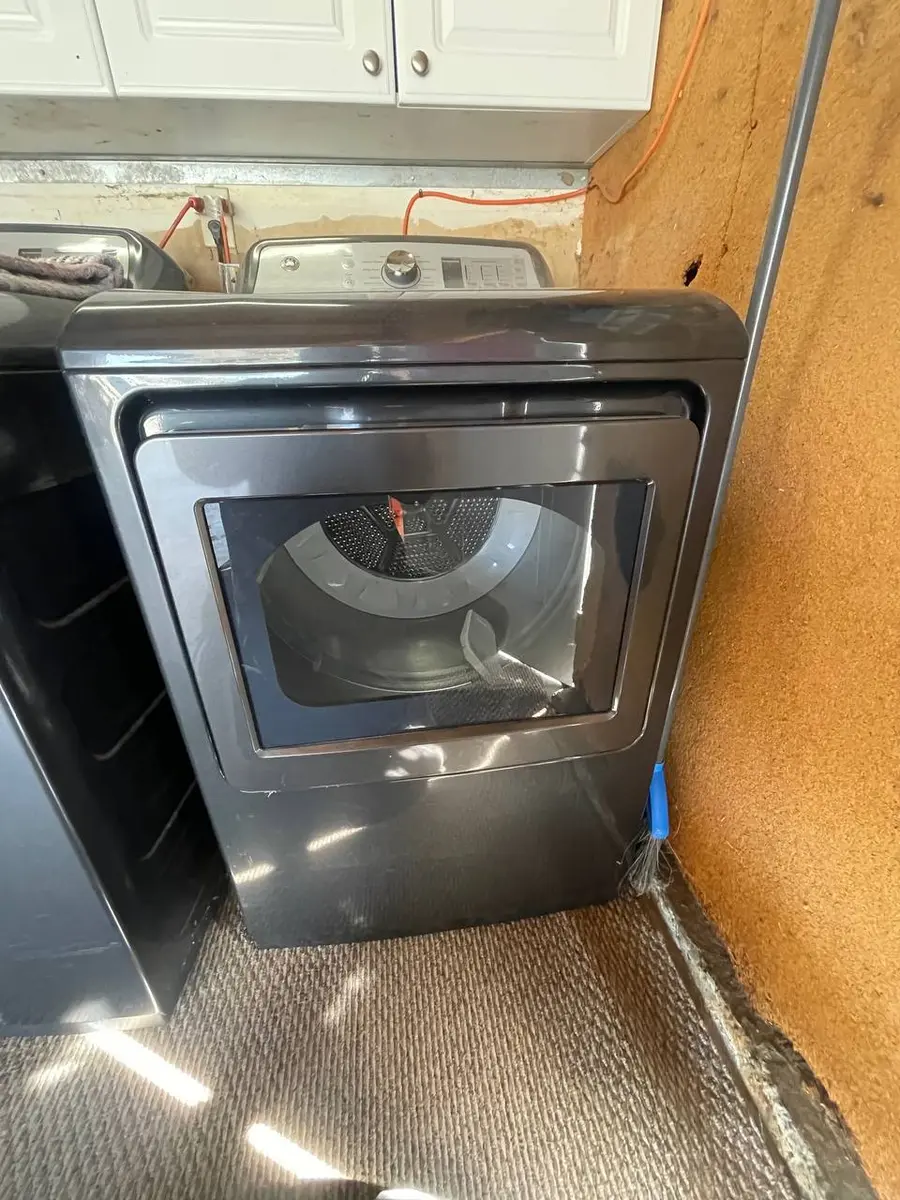
GE smart dryers (GFD85ESPN, GFD65ESPN, GTD86ESPN series) monitor three signals that together read vent health: exhaust thermistor readings (a blocked vent raises exhaust temperature through backpressure), cycle-time deviation (longer cycles at the same load mean less airflow), and heater duty cycle (a restricted vent trips the high-limit thermostat more often). SmartHQ's cloud analyzes these across several cycles and fires Vent-S when the pattern suggests 30 to 50% restriction — well before the dryer's own d80, d90, or d95 codes, which need more than 60% blockage.
Why the early warning matters#
By the time d80 shows, the dryer is already running inefficiently and lint has built to a genuine fire hazard. Catching it at 30 to 50% is the whole value: it lets you clean the vent before it reaches the dangerous 60%-plus range. NFPA data attributes a large share of dryer fires — 34% — to a failure to clean, which is exactly the maintenance Vent-S prompts. This is one smart feature that earns its keep.
Do You Have the Right Tools?
Gas leak detector ($130), thermal fuse tester ($95), belt tension gauge, and vent inspection camera ($180). Our technician arrives with $3,000+ in professional tools — your diagnostic is free.
Licensed & Insured · 90-Day Warranty · Same-Day Service
What to do when you see it#
Clean the lint filter immediately — it should be cleaned before every load, and skipped loads let lint restrict airflow at the source. The same day, clean the exhaust duct: disconnect the dryer from the vent, brush the duct from the dryer end and again from the exterior cap, clean the exterior flap, and check for bird nests, packed lint, or crushed sections. Then inspect the duct material — replace corrugated foil or vinyl flex with rigid or semi-rigid metal, which building code (IRC M1502) requires because corrugations trap lint.
Check the run length#
The maximum recommended vent run is 35 feet for 4-inch rigid duct, reduced by 5 feet for each 90-degree elbow and 2.5 feet for each 45-degree elbow. Runs past that limit always accumulate lint faster, so a persistent Vent-S on a clean duct can simply mean the run is too long.
Safety First — Know the Risks
Gas dryers carry carbon monoxide and explosion risk. Even electric dryers involve 240V circuits that can deliver a fatal shock. Our techs are licensed and insured — let them handle the risk.
Licensed & Insured · 90-Day Warranty · Same-Day Service
After cleaning — and when it's the hardware#
Run a normal cycle. If Vent-S clears within a couple of cycles, the cleaning fixed it. If it persists, the duct may have a hidden obstruction deeper in the run, the run may exceed the maximum, or the exhaust thermistor (WE04X28744) may have drifted and be giving false readings — a genuine hardware case for a technician. Vent-S is a smart analytics alert flagging a real maintenance need, so treat it as the useful warning it is.
Frequently Asked Questions#
What does the GE SmartHQ Vent-S alert mean?#
It's a predictive vent-restriction alert from GE's cloud analytics, firing at 30 to 50% airflow restriction — before the dryer's own d80, d90, or d95 codes, which trigger above 60%. Clean the exhaust vent and lint filter right away.
Is GE smart vent monitoring actually worth it?#
Yes. It catches restriction early, before it becomes a fire risk. With 34% of dryer fires linked to failure to clean, an alert that prompts cleaning at 30 to 50% is genuinely valuable.
Vent-S won't clear after I cleaned the vent — why?#
Either a hidden obstruction remains deeper in the run, the run exceeds the recommended maximum, or the exhaust thermistor has drifted and needs replacement. That last one is a technician job.
Vent-S persisting on a clean duct? Book a free diagnostic — we clean vents, test the thermistor, and verify airflow on smart and traditional dryers.
Lead Appliance Repair Technician · 12 years experience
Experienced technician with 12 years specializing in washing machine and dryer repairs across all major brands.