GE Dryer Control Board Replacement Guide
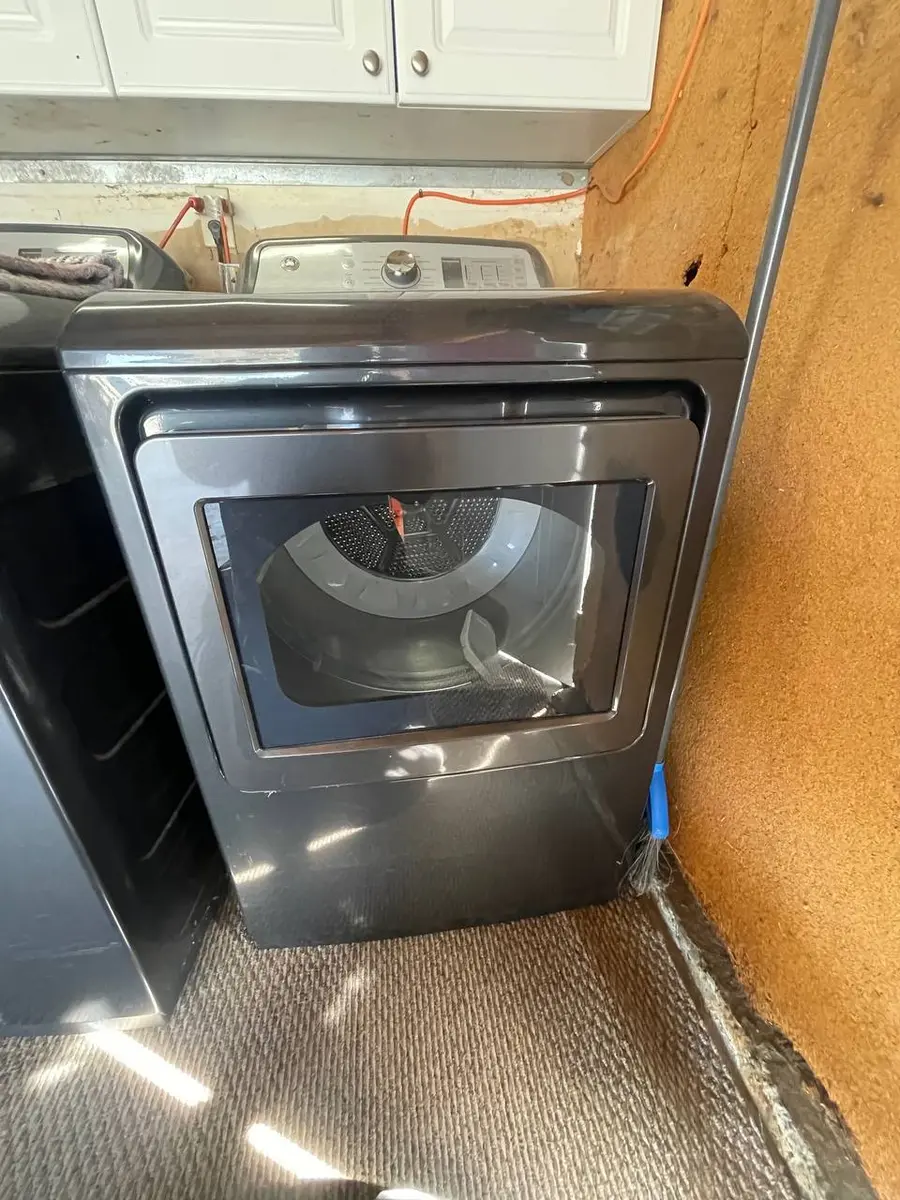
A GE dryer that behaves erratically — dead one minute, mis-cycling the next — often has a failing control board. The board comes out with a few connectors, but confirm it before you buy, because it is one of the pricier parts.
It is one of the more common service calls on a GE dryer, and for a repair this specific it pays to understand the part before you touch it. Here is what the control board does, how to tell it has failed, and what a sound replacement looks like.
What the Control Board Actually Does#
Every input and output of the dryer runs through the control board — it interprets the buttons, sequences the cycle, and switches power to the working parts. That central role is why a board fault can imitate a failure almost anywhere else in the machine.
Do You Have the Right Tools?
Gas leak detector ($130), thermal fuse tester ($95), belt tension gauge, and vent inspection camera ($180). Our technician arrives with $3,000+ in professional tools — your diagnostic is free.
Licensed & Insured · 90-Day Warranty · Same-Day Service
Signs Your Control Board Is Failing#
- The dryer is completely dead — no lights, no response — though the outlet and breaker are good
- Cycles start and then stall, skip stages, or restart on their own
- Communication or configuration fault codes appear on the display
- Buttons do nothing, or the wrong function lights up when pressed
- A component gets no power even though the component itself tests fine
- Settings are forgotten or the panel behaves inconsistently between uses
- Visible scorching, a burnt smell, or a swollen component on the board itself
Note any code the dryer shows before you clear it — it narrows the fault fast.
Confirming It Is the Control Board#
A board is expensive to guess at, so rule out the cheap stuff first. A large share of suspected board failures are really a loose harness, a stuck interlock, or a failed part the board is correctly reporting. Reseat every connector — vibration works them loose over years — and test the parts the board is accusing before you condemn it.
Safety First — Know the Risks
Gas dryers carry carbon monoxide and explosion risk. Even electric dryers involve 240V circuits that can deliver a fatal shock. Our techs are licensed and insured — let them handle the risk.
Licensed & Insured · 90-Day Warranty · Same-Day Service
Choosing the Correct Control Board#
Getting the exact part is half the battle. GE part numbers ride a WB, WR, or WH family prefix depending on the appliance, and GE Appliances is now a Haier company so newer stock flows through that channel. Confirm the full number against your model on the GE parts site — a family prefix alone is not enough to guarantee fit. GE service data is keyed tightly to the model and serial, so have both off the nameplate before you call for the exact part.
Before You Start#
Confirm the exact board your GE dryer uses before spending, since many machines ran several revisions and the wrong one will not talk to the rest of the dryer. Unplug the machine fully — the board holds live voltage — and set up good light and a phone camera. Photograph every connector before you touch it, and touch bare chassis metal to shed static so you do not kill the new board on contact.
The Real Cost of DIY
Average DIY attempt: $150-400 in tools you may use once, plus the risk of further damage. Our diagnostic visit costs $0 — we find the problem and give you an honest quote.
Licensed & Insured · 90-Day Warranty · Same-Day Service
How the Swap Goes#
- Disconnect the dryer from power completely — for gas units, turn the gas valve off too before you start.
- Locate the board — under the console on many machines, or behind a rear or top panel on others — and photograph every connector before touching anything.
- Discharge static by touching bare chassis metal, then release the connector tabs and unplug each harness without pulling on the wires.
- Unclip the board from its housing and transfer any jumper or ribbon cable the new board did not ship with.
- Seat the replacement, reconnect every harness in the order your photo shows, and confirm each tab clicks home.
- Restore power and gas, start a timed cycle, and confirm the drum turns and the air heats within a minute or two.
Tools for the Job#
- A nut driver or Phillips screwdriver for the console or access panel
- A phone camera to document every connector before unplugging
- A multimeter to confirm incoming power and clear the accused parts
- An anti-static habit — touch bare metal before handling the board
Don't Void Your Warranty
Opening your appliance yourself may void the manufacturer warranty. Our repair comes with a 90-day guarantee, and we document everything for warranty compliance.
Licensed & Insured · 90-Day Warranty · Same-Day Service
After the Swap: What Good Looks Like#
After the board goes in, restore power to the GE dryer and run a full cycle, watching that every stage sequences, the panel responds correctly, and no fault codes return. Confirm each keyed connector is fully home. If the machine is still dead or erratic, the board may not have been the root cause — recheck the harness, the incoming power, and any part the codes named, because a surge or a failing neighbor will take the new board down too on the dryer.
Is the Repair Worth It?#
Because the board is expensive, weigh it against the machine. A newer, otherwise-healthy dryer justifies the repair; an aging unit with other failures does not, and the smarter spend is a replacement.
Is It Worth Your Time?
A dryer not heating could be the element, thermal fuse, gas valve, igniter, or timer. Average DIY diagnosis: 3-4 hours with no guarantee of finding the issue. Our technician diagnoses the issue in about 30 minutes — same-day appointments available.
Licensed & Insured · 90-Day Warranty · Same-Day Service
What the Repair Costs#
The cost splits into the part and the labor, and both move with your model and your area, so a single published figure would be misleading. Look up the control board for your exact model, and add a typical service visit’s labor if you are not doing it yourself. A real quote beats a generic estimate every time.
Getting the Most From the New Part#
A control board should last the life of the dryer — it has no moving parts. When one dies early the cause is almost always external: a power surge, water reaching it from a leak above, or heat from a failing part feeding it. A surge protector and fixing any upstream leak protect the replacement.
The Risk of Getting It Wrong
A wrong diagnosis often turns a simple fix into a costly replacement. Without proper diagnostic tools, you might replace the wrong part — or cause additional damage. Our free diagnostic eliminates the guesswork.
Licensed & Insured · 90-Day Warranty · Same-Day Service
Keeping the New Control Board Healthy#
- Protect the dryer with a surge protector — a single spike is a common board killer
- Fix any leak above or around the board before water intrusion claims the replacement
- Keep the dryer ventilated so heat from a hard-working neighbor part does not bake the board
- Address a failing motor or component promptly before it feeds heat back into the board
- Keep connectors clean and fully seated so vibration does not work them loose over the years
Mistakes That Cost People Twice#
- Ordering by model number alone when the machine ran several board revisions — match the number printed on your actual board
- Skipping the harness reseat, which mimics a dead board and costs nothing to rule out
- Not photographing the plugs, then guessing on reassembly even though the connectors are keyed
- Handling the new board without discharging static first and killing it before it ever runs
Free Diagnostic Visit — Zero Risk
Our certified technician comes to your home, diagnoses the problem with professional tools, and gives you an honest quote — all at zero cost. No parts markup, no hidden fees. If you decide not to proceed, you pay nothing.
Licensed & Insured · 90-Day Warranty · Same-Day Service
What Happens If You Wait#
A board fault that leaves the dryer dead is merely inconvenient, but an intermittent one is worse — it can drive attached parts erratically and mask the real state of the machine. If the board shows any scorching or burnt smell, stop using the appliance until it is replaced.
None of this has to be a solo job. If any step here gives you pause, a technician can confirm the diagnosis and handle the swap so you are not guessing with an expensive part.
Appliance Repair Technician · 11 years experience
Experienced technician with 11 years specializing in Frigidaire and Electrolux refrigerator and dryer repair with a focus on safety.