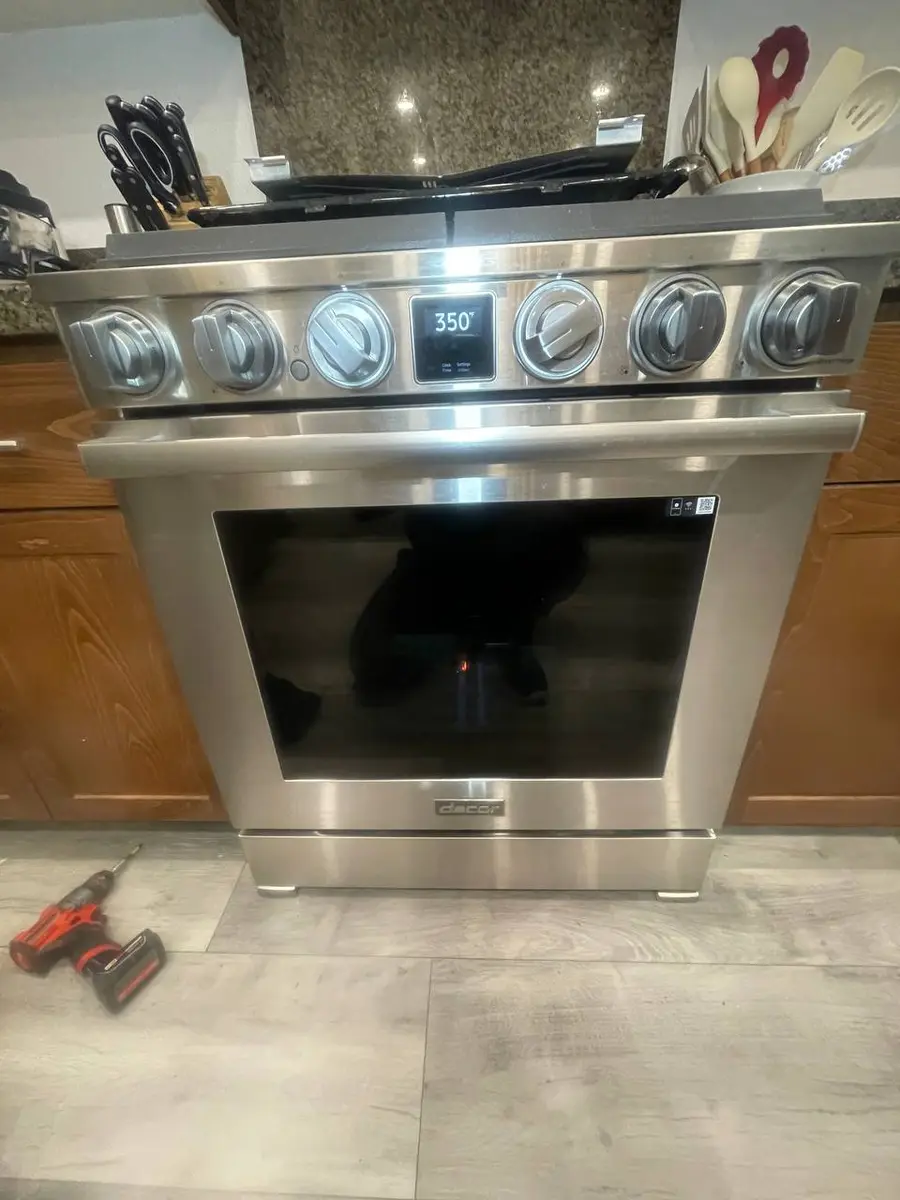
GE Profile Gas Range Burner Won't Ignite — Causes
A GE Profile burner that won't ignite is usually a dirty or wet electrode, a spark gap that has drifted too wide, or the shared spark module. Work it in order — clean and dry the electrode, confirm the gap and cap seating, then use the click pattern to decide between a single-electrode fault and a dead module.
Step 1 — clean and dry the electrode#
Profile burners spark from a ceramic electrode set into the burner base. Everyday cooking packs grease and food into the small gap between the electrode and the burner, and the spark stops reaching the gas. Remove the grate, cap, and head, and clean the electrode and its gap with a straight pin and a stiff brush. If a boil-over is the trigger, dry the whole area and wait until it is bone-dry — a wet electrode is the most common reason a Profile burner clicks endlessly without catching.
Step 2 — check the gap and the cap#
The electrode should sit roughly an eighth of an inch from the burner. If the tip has been knocked or corroded so the gap opened up, the spark weakens and may miss the gas entirely; a light dressing with fine sandpaper cleans a corroded tip. Then reseat the cap flat and level — a cap set on crooked sends gas to one side, away from the spark, and produces the same click-but-no-light symptom as a bad electrode.
Do You Have the Right Tools?
Multimeter ($85), vacuum pump ($250), diagnostic software, and specialized hand tools. Our technician arrives with $3,000+ in professional tools — your diagnostic is free.
Licensed & Insured · 90-Day Warranty · Same-Day Service
Step 3 — read the click pattern#
Turn each burner and listen. One silent burner among several that click tells you the electrode or wire on that single position has failed — the module is doing its job. If the whole cooktop stays silent, the spark switch or the shared module is the suspect, since one module fires every electrode. This one test saves you from replacing a module when only a single electrode is at fault.
Step 4 — confirm gas and the valve#
If a burner sparks strongly but you smell no gas, gas is not reaching it. Verify the shutoff behind the range is fully open and that another gas appliance still lights. If supply is good and one burner still clicks dry, the valve stem behind that knob has likely stiffened internally and needs replacing — a parts repair rather than a clean.
Safety First — Know the Risks
Appliances involve high voltage (120-240V), pressurized water, gas lines, and chemical refrigerants. Over 400 DIY repair injuries are reported yearly. Our techs are licensed and insured — let them handle the risk.
Licensed & Insured · 90-Day Warranty · Same-Day Service
The oven igniter, and a seasonal check#
Remember the oven burner is not part of this spark system: it uses a hot-surface igniter that must glow and pull enough current to open its safety valve, so diagnose it separately if the oven is the problem. With heavy cooking weeks ahead, running each burner through this sequence now avoids a surprise on a day you need the whole range. When a module or valve is involved, book an EasyBear technician and we will bring Profile electrodes, modules, and valves.
Senior Gas Appliance Specialist · 18 years experience
AGA-certified gas appliance specialist with 18 years of experience in residential and commercial oven, range, and cooktop repairs.