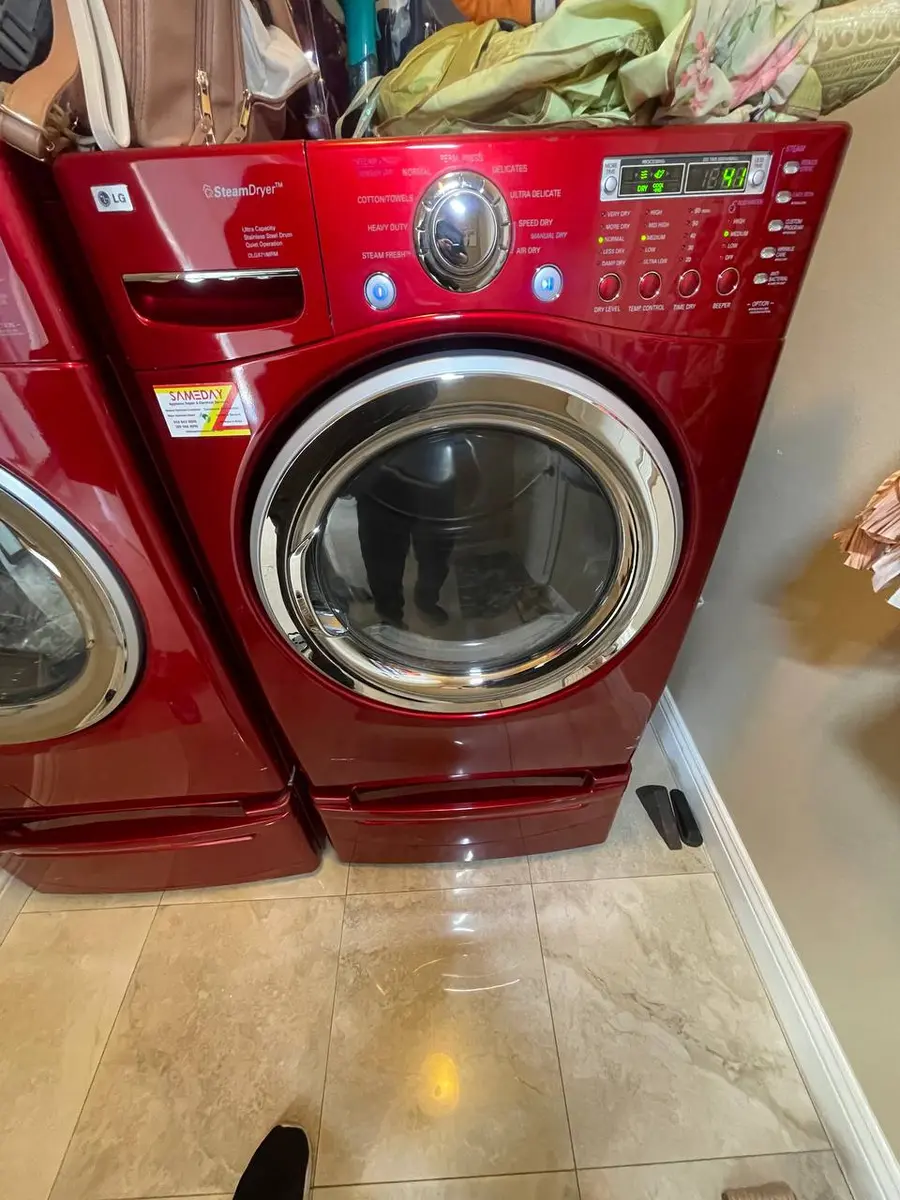
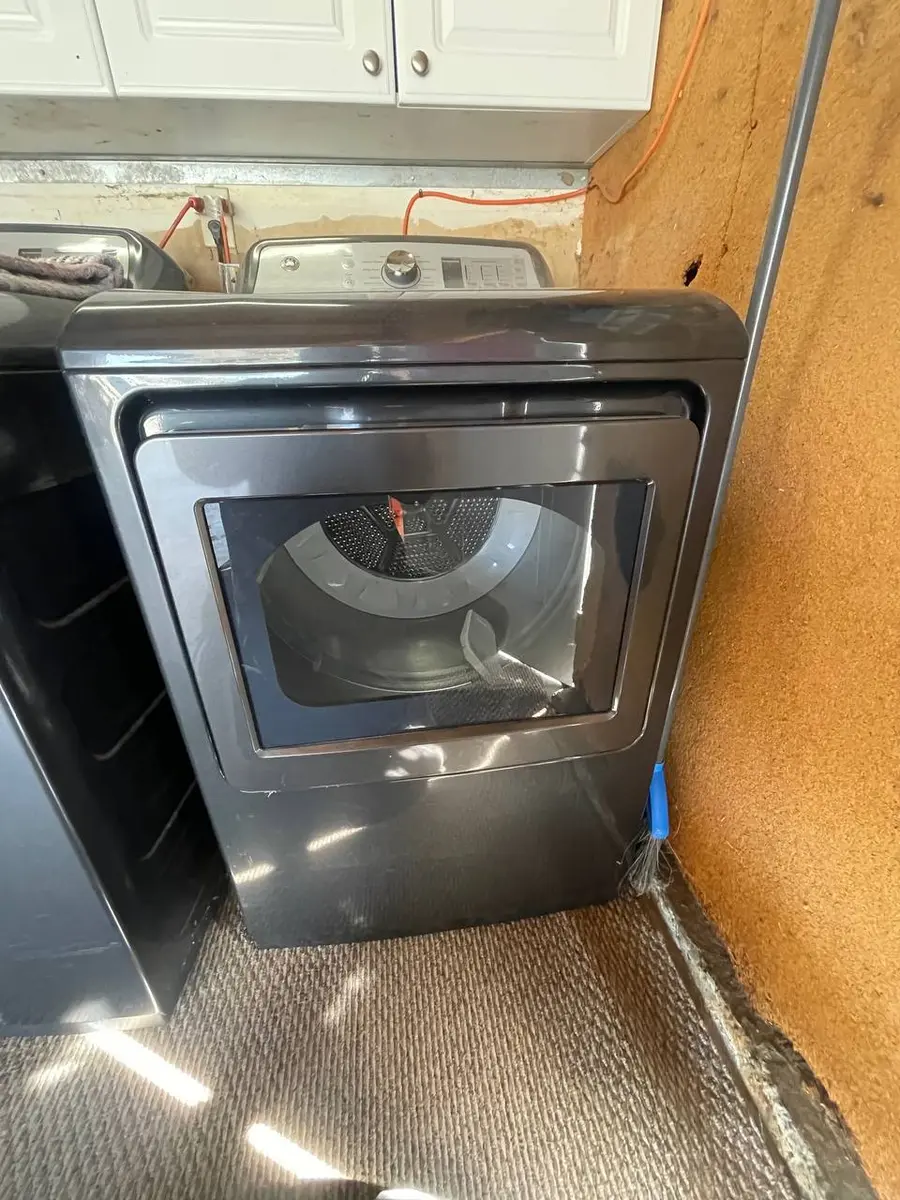
A GE dryer that tumbles but does not produce heat is one of the most common appliance repair calls we receive. GE dryers, including the popular GTD, GFD, and PTD series, are reliable machines, but the components responsible for generating heat have a finite lifespan. The drum will spin, clothes will tumble, and the timer will advance, but everything comes out damp.
The good news is that no-heat problems on GE dryers follow a short list of likely causes. Here is how to diagnose and fix each one.
Blown Thermal Fuse#
The Problem: The thermal fuse is a one-time safety device that cuts power to the heating circuit if the dryer overheats. Once it blows, it does not reset. The dryer will run normally except that no heat is produced.
Where to Find It: On most GE electric dryers (GTD33, GTD42, GTD65 series), the thermal fuse is mounted on the blower housing at the back of the dryer. On gas models (GTD72, GTD84), it is typically on the burner assembly housing.
How to Diagnose:
- Unplug the dryer and access the back panel
- Locate the thermal fuse. It is a small, flat component with two wire terminals
- Test for continuity with a multimeter. A good fuse reads 0 ohms. A blown fuse reads OL (open line)
- If the fuse has no continuity, it is blown and must be replaced
Important: A blown thermal fuse is almost always caused by restricted airflow. Before installing a new fuse, clean the exhaust vent and lint trap thoroughly. Otherwise the new fuse will blow again.
Part Cost: varies by part. Total Repair Cost: varies by part including labor.
Do You Have the Right Tools?
Gas leak detector ($130), thermal fuse tester ($95), belt tension gauge, and vent inspection camera ($180). Our technician arrives with $3,000+ in professional tools — your diagnostic is free.
Licensed & Insured · 90-Day Warranty · Same-Day Service
Failed Heating Element (Electric Models)#
The Problem: The heating element is a coil of resistance wire that glows red-hot when energized. Over time, the wire can break, creating an open circuit that prevents heating. This is the most common cause of no heat on GE electric dryers.
Where to Find It: The heating element is housed in a metal can at the rear of the dryer drum. On GE Profile and front-load models (GFD55, GFD65), it is accessed from the back panel.
How to Diagnose:
- Unplug the dryer and remove the back panel
- Locate the element housing (cylindrical metal container with two wires)
- Disconnect the wires and test the element for continuity. It should read between 8-20 ohms
- Visually inspect the coil for breaks. Even a small gap means no heat
Part Cost: varies by part. Total Repair Cost: varies by part including labor.
Faulty Gas Valve Solenoids (Gas Models)#
The Problem: GE gas dryers use two or three solenoid coils to open the gas valve when heat is needed. These solenoids can fail intermittently, meaning the dryer heats for part of the cycle then stops, or fails to ignite at all.
How to Diagnose:
- Start the dryer and observe the igniter through the lower access panel. If the igniter glows but gas never flows, a solenoid has failed
- A tricky symptom: the dryer heats during the first cycle but not the second, because solenoids can work when cold but fail once they warm up
Part Cost: varies by part for a solenoid kit. Total Repair Cost: varies by part including labor.
Safety First — Know the Risks
Gas dryers carry carbon monoxide and explosion risk. Even electric dryers involve 240V circuits that can deliver a fatal shock. Our techs are licensed and insured — let them handle the risk.
Licensed & Insured · 90-Day Warranty · Same-Day Service
Defective Igniter (Gas Models)#
The Problem: The igniter heats up to ignite the gas. If it cracks or weakens, it will not reach the temperature needed to open the gas valve safety circuit.
How to Diagnose:
- Watch the igniter through the lower access panel. If it does not glow at all, it has failed
- If it glows but appears dim or takes longer than 90 seconds without gas igniting, it is too weak
Part Cost: varies by part. Total Repair Cost: varies by part including labor.
Bad High-Limit Thermostat#
The Problem: The high-limit thermostat monitors exhaust temperature and cuts power to the heater if it gets too hot. Unlike the thermal fuse, some GE models use a resettable thermostat that can fail in the open position permanently.
How to Diagnose:
- Located near the heating element or burner assembly
- Test for continuity with a multimeter at room temperature. It should read 0 ohms (closed circuit)
- If it reads OL, it has failed open and the heater circuit is broken
Part Cost: varies by part. Total Repair Cost: varies by part including labor.
The Real Cost of DIY
Average DIY attempt: $150-400 in tools you may use once, plus the risk of further damage. Our diagnostic visit costs $0 — we find the problem and give you an honest quote.
Licensed & Insured · 90-Day Warranty · Same-Day Service
Broken Timer or Control Board#
The Problem: On older GE dryers with mechanical timers, the timer contacts that energize the heating circuit can wear out. On newer electronic models, the main control board manages heat cycles. If the relevant circuit fails, the dryer runs without heat.
How to Diagnose:
- This is typically a diagnosis of elimination. If the thermal fuse, element, and thermostats all test good, the timer or board is suspect
- On mechanical timers, you can test the specific contacts with a wiring diagram and multimeter
- On electronic boards, look for visible burn marks or damaged components
Part Cost: varies by part for timer; varies by part for control board. Total Repair Cost: varies by part including labor.
The Exhaust Vent Factor#
Before replacing any parts, always check the exhaust vent. A clogged vent is the root cause behind at least 30% of GE dryer no-heat calls. When the vent is restricted, the dryer overheats internally, tripping thermal safety devices. The dryer will seem to stop heating when in reality the vent restriction is causing a cascading safety shutoff.
Disconnect the vent from the back of the dryer and run a test cycle. If the dryer heats normally with the vent disconnected, your vent needs cleaning. GE recommends professional vent cleaning annually.
Don't Void Your Warranty
Opening your appliance yourself may void the manufacturer warranty. Our repair comes with a 90-day guarantee, and we document everything for warranty compliance.
Licensed & Insured · 90-Day Warranty · Same-Day Service
When to Call a Professional#
If you are comfortable using a multimeter and working with unplugged appliances, testing thermal fuses and heating elements is straightforward. However, gas dryers require extra caution. Never work on gas valve components unless you are experienced with gas appliance repair. Control board diagnosis and replacement also benefits from professional expertise, as incorrect wiring can cause additional damage.
EasyBear technicians carry GE-specific thermal fuses, heating elements, and gas valve solenoid kits for same-visit repair. We diagnose the problem for free before quoting any work.
Frequently Asked Questions#
Q: My GE dryer heats on some cycles but not others. What causes this? A: Intermittent heating on gas models almost always points to failing gas valve solenoids. On electric models, a cycling thermostat that is sticking open can produce the same symptom.
Q: Is it worth replacing the heating element on an old GE dryer? A: If the dryer is under 10 years old and otherwise runs well, absolutely. A heating element replacement at varies by model and region is a fraction of the varies by model and region cost of a new dryer. If the dryer is over 12 years old, weigh the repair cost against replacement.
Q: Why did my GE dryer thermal fuse blow? A: Restricted exhaust vent is the cause in the vast majority of cases. Less common causes include a failed cycling thermostat that did not shut off the heater, or running the dryer with no exhaust vent connected.
Q: Can I bypass the thermal fuse temporarily? A: Technically possible but extremely dangerous and never recommended. The thermal fuse exists to prevent fires. Bypassing it removes a critical safety device and creates a fire hazard. Replace the fuse and fix the underlying airflow issue.
Lead Appliance Repair Technician · 12 years experience
Experienced technician with 12 years specializing in washing machine and dryer repairs across all major brands.