Short answer: a GE cooktop typically lasts 14 to 20 years with proper maintenance — comfortably inside the 13-20 year industry range, backed by an above-average reliability rating.
That rating means fewer service calls and longer intervals between repairs than rival cooktops at the same price. It is drawn from service-call frequency data — Yale Appliance's 33,190 service-call dataset, Consumer Reports surveys, and aggregated repair-shop records — where a lower service rate marks the more dependable unit.
GE at a glance#
| Measure | GE cooktop | Industry |
|---|---|---|
| Expected lifespan | 14-20 years | 13-20 years |
| Reliability rating | Above average | Average |
| First common failure (gas) | Igniter, at 3-6 years | Varies |
| Induction control board | Occasional, 8-15 years | Varies |
Do You Have the Right Tools?
Multimeter ($85), vacuum pump ($250), diagnostic software, and specialized hand tools. Our technician arrives with $3,000+ in professional tools — your diagnostic is free.
Licensed & Insured · 90-Day Warranty · Same-Day Service
GE cooktop failures by age#
| Age range | Common failure | Frequency |
|---|---|---|
| 3-6 years | Igniter (gas) | Common |
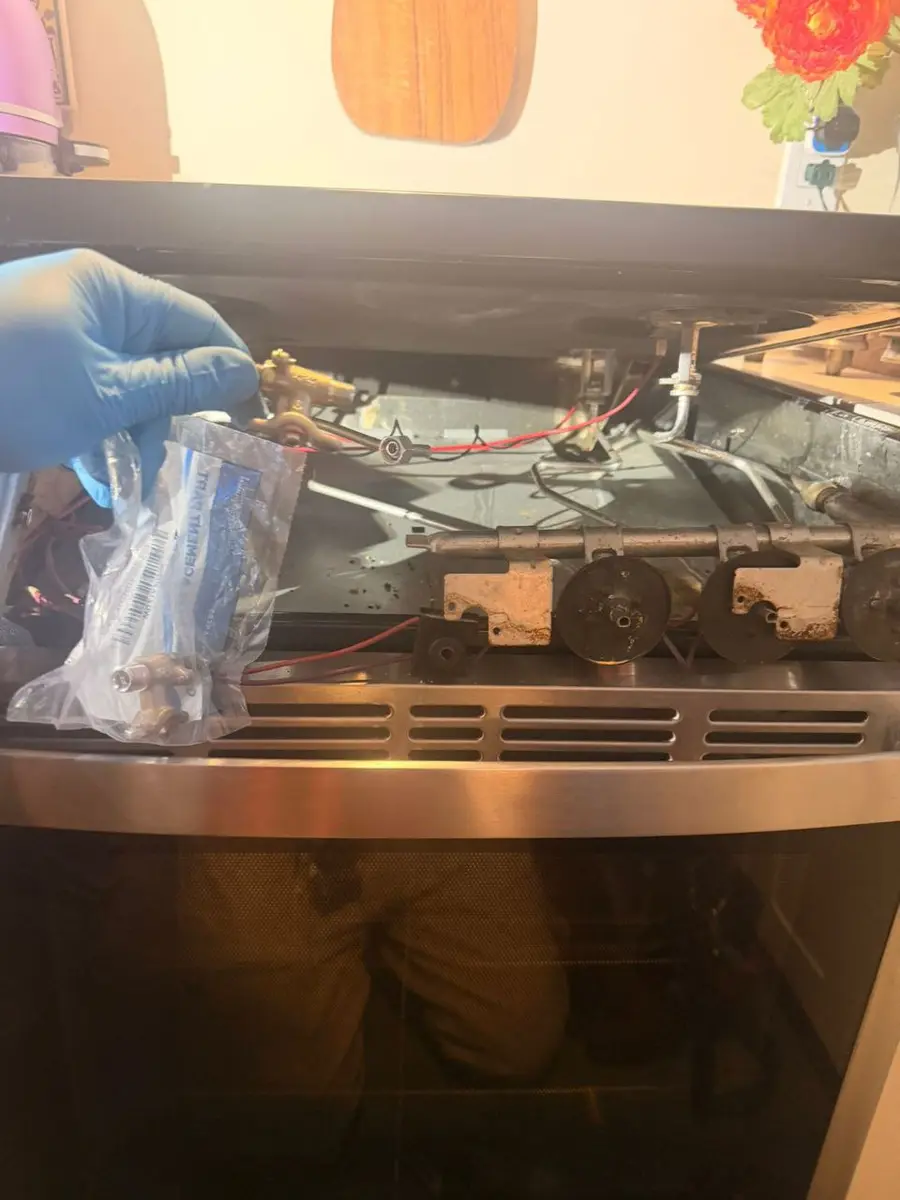
| 5-10 years | Burner valve | Occasional |
| 8-15 years | Control board (induction) | Occasional |
On gas models the igniter at 3-6 years is the usual first repair. Early signs — clicking that will not light, weak flame, intermittent ignition — are worth a diagnostic before the part fails outright. Induction owners see less over the years, but a control-board fault between 8 and 15 years is the one to plan for.
What wears a GE cooktop out early#
- Igniter corrosion (gas): spills corrode igniters, so wipe them clean after any boil-over.
- Blocked burner ports (gas): food debris causes uneven flame and extra thermal stress; clear ports monthly with a pin.
- Cracked glass (electric/induction): dropped or rough-bottomed cookware can crack the surface — often an unrepairable failure.
- Wrong induction cookware: non-ferromagnetic pans force the coils to run flat out and wear faster.
- Grease around the controls: buildup works into knobs and switches, causing intermittent faults and eventual shorts.
Care differs by type: gas models want burner caps and grates cleaned weekly, while induction surfaces should get a non-abrasive cooktop cleaner after each use.
Safety First — Know the Risks
Appliances involve high voltage (120-240V), pressurized water, gas lines, and chemical refrigerants. Over 400 DIY repair injuries are reported yearly. Our techs are licensed and insured — let them handle the risk.
Licensed & Insured · 90-Day Warranty · Same-Day Service
A maintenance routine by cooktop type#
Gas, electric, and induction wear in different ways, so the upkeep differs too:
- After every use, wipe the surface and clean around the burners or elements once cool.
- Weekly, remove gas burner grates and caps, clean them thoroughly, and check igniter tips for debris.
- Monthly, clear burner ports with a pin for an even flame, and inspect ceramic glass for cracks.
- Every six months, check gas connections for leaks and confirm the control knobs turn smoothly.
- Annually, have a professional inspect gas valve mechanisms, the ignition system, or the induction coils.
- Use only cookware rated for your surface, and never drag cast iron across glass or ceramic tops.
Kept up, that routine adds about 20-30% to a GE cooktop's life. Induction owners have one extra rule — only flat-bottomed, ferromagnetic cookware, lifted rather than slid, since dragging heavy pans is the leading cause of a cracked glass top, which is an unrepairable failure rather than a simple part swap.
Repair or replace a GE cooktop?#
Through the first five years, repair. From 4 to 10, fix single-part faults if the quote stays under 50% of a comparable new GE. From 10 to 15, keep to simple in-budget repairs. Past 15, or once a repair crosses 50%, replacement is usually smarter, and a newer cooktop trims energy use too.
The failure that changes this math is cracked glass on an electric or induction top: because it is usually unrepairable, a crack on an older unit effectively forces replacement regardless of the rest of the machine's condition. Gas owners rarely face that cliff — an igniter or burner valve is almost always a straightforward part swap. The one safety step never to skip on any gas cooktop is an annual leak check with soapy water on every joint and valve. Book a visit if a burner is acting up.
Senior Gas Appliance Specialist · 18 years experience
AGA-certified gas appliance specialist with 18 years of experience in residential and commercial oven, range, and cooktop repairs.