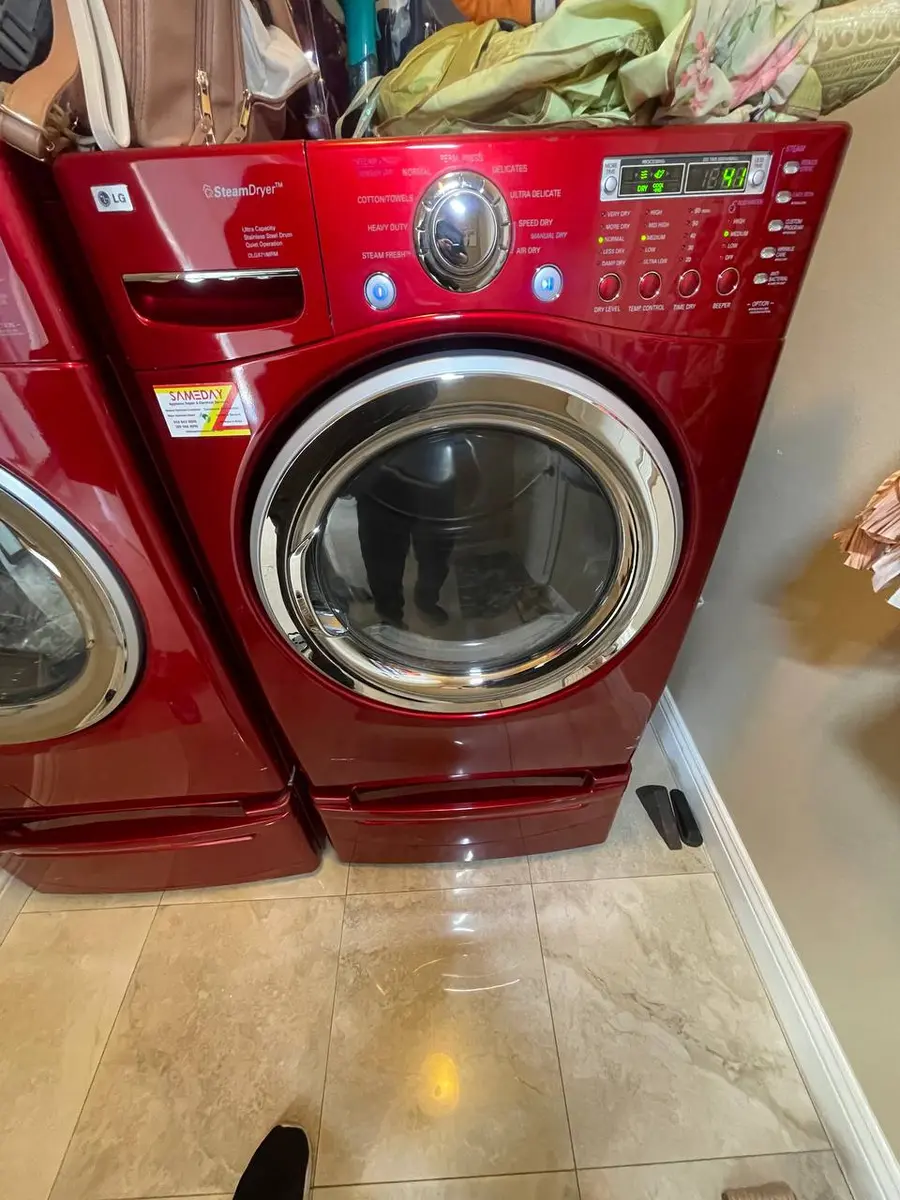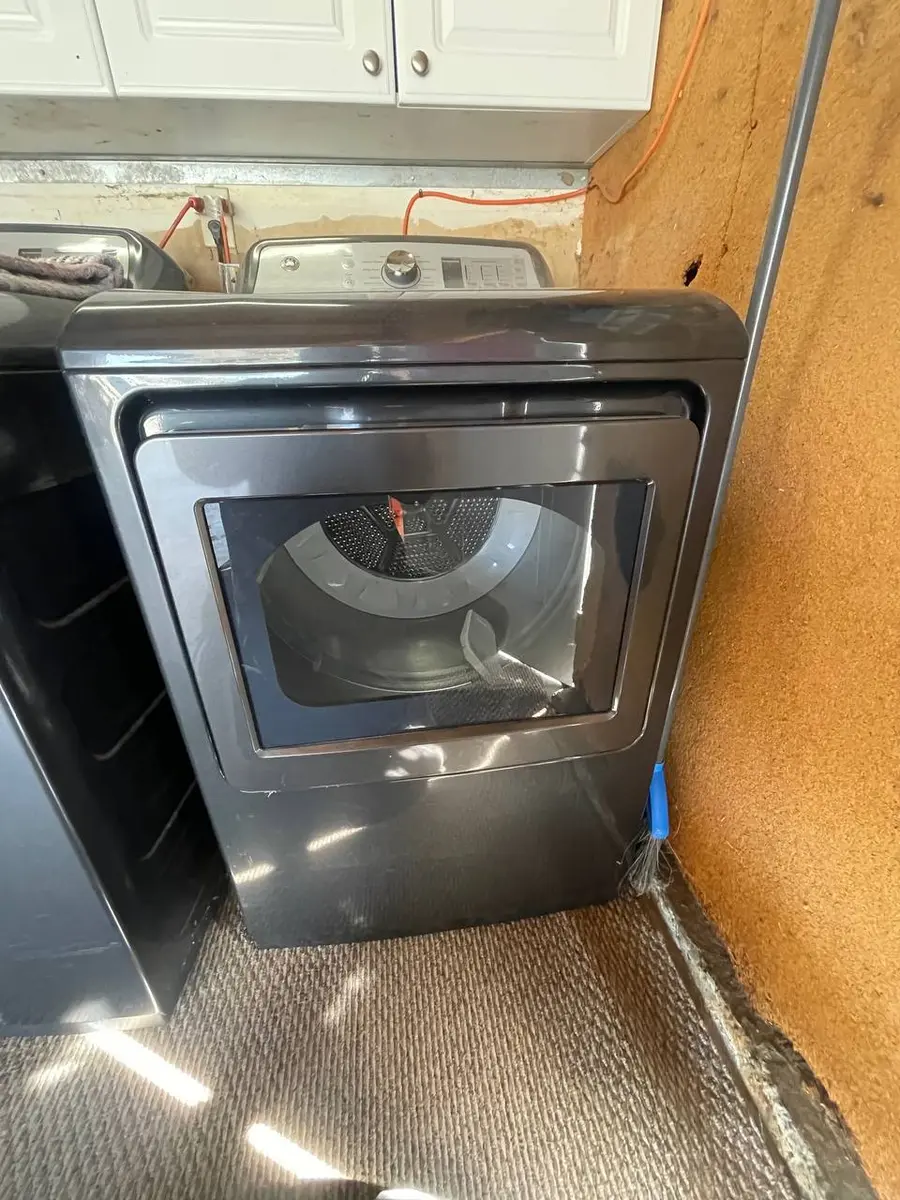
Gas vs Electric Dryer
Gas vs Electric Dryer: each has distinct strengths in reliability, repair cost, and longevity. See the detailed comparison below for repair data and our technician recommendation.
Gas and electric dryers are 80% identical machines. They share the same drum, motor, belt, rollers, blower, exhaust system, and control board. The only difference is the heat source: a gas burner assembly versus an electric heating element. But that 20% difference changes the repair experience in ways that matter for cost, safety, and DIY feasibility.
How Does Component Compare?#
| Component | Gas Dryer | Electric Dryer |
|---|---|---|
| Heat source | Gas burner (igniter + gas valve + flame sensor) | Heating element coil (nichrome wire) |
| Power requirement | 120V outlet + gas line | 240V outlet (two hot legs) |
| Drum, motor, belt, rollers | Identical | Identical |
| Exhaust system | Identical (both vent externally) | Identical |
| Control board | Same or very similar | Same or very similar |
| Thermal fuse | Identical location and function | Identical location and function |
| Moisture sensor | Identical | Identical |
Do You Have the Right Tools?
Gas leak detector ($130), thermal fuse tester ($95), belt tension gauge, and vent inspection camera ($180). Our technician arrives with $3,000+ in professional tools — your diagnostic is free.
Licensed & Insured · 90-Day Warranty · Same-Day Service
How Do Repair Costs Compare?#
| Repair | Gas Dryer | Electric Dryer |
|---|---|---|
| No heat — heat source | Igniter: Varies | Heating element: Varies |
| No heat — thermal fuse | Varies | Varies |
| Gas valve coils | Varies | N/A |
| Drum belt | Varies | Varies |
| Drum rollers | Varies | Varies |
| Motor | Varies | Varies |
| Control board | Varies | Varies |
| Flame sensor | Varies | N/A |
| High-limit thermostat | Varies | Varies |
Average repair cost: Gas varies by model. Electric varies by model. Essentially identical.
Gas Dryer: The Heat Source Failure Chain#
Gas dryers use a multi-component ignition system, and the components fail in a predictable sequence:
The Igniter (Most Common Gas Repair)#
The igniter is a silicon carbide or silicon nitride glow bar that heats to 2,500°F to ignite the gas. Silicon carbide igniters (found in older Whirlpool, Maytag, Kenmore models) become brittle and crack after 3-5 years. Silicon nitride igniters (found in newer models and Samsung/LG) last longer but still have a finite life.
Diagnosis: The dryer runs, tumbles, but produces no heat. You can observe the igniter through the burner access opening — it should glow bright orange/white. If it glows dimly or not at all, it needs replacement. Parts cost: varies by model. Total with labor: varies by model.
Gas Valve Coils#
The gas valve solenoid coils open the valve to release gas when the igniter reaches operating temperature. These coils develop intermittent failures unique to gas dryers: the dryer heats at the start of a cycle, then stops heating mid-cycle. The coils work when cold but fail when they heat up from proximity to the burner.
The intermittent pattern: Cycle 1 heats fine. Cycle 2 heats for 10 minutes then stops. Cycle 3 does not heat at all. This pattern drives homeowners crazy because the dryer "sometimes works." The fix is straightforward: replace both coils as a set (varies by model parts, varies by model).
Flame Sensor#
The flame sensor confirms the burner is lit and tells the control board to keep the gas valve open. When it fails, the gas valve closes immediately after the igniter fires — the burner lights for 2-3 seconds then extinguishes. Parts: varies by model. Total cost varies by model.
Safety First — Know the Risks
Gas dryers carry carbon monoxide and explosion risk. Even electric dryers involve 240V circuits that can deliver a fatal shock. Our techs are licensed and insured — let them handle the risk.
Licensed & Insured · 90-Day Warranty · Same-Day Service
Electric Dryer: The Heating Element#
Electric dryers have a simpler heat source: a coiled nichrome wire element housed in a metal can. When current flows through the element, it heats to 1,200-1,500°F. The element fails in two ways:
Open Element (Complete Break)#
The nichrome coil breaks from thermal cycling fatigue — expanding when hot, contracting when cool, thousands of times. When it breaks, the circuit opens and no heat is produced. This is binary: the element either works or it does not. There is no intermittent phase like gas valve coils.
Diagnosis: Multimeter across element terminals should read 10-30 ohms. Infinite resistance (OL) means the element is broken. Visual inspection often reveals the break point — a gap in the coil with discoloration.
Parts: varies by model. Total cost varies by model. The element is accessed through the rear panel (Whirlpool/Maytag/Kenmore) or the front lower panel (Samsung/LG). Replacement takes 30-45 minutes.
Grounded Element (Short to Housing)#
Less common but more dangerous: the element coil sags and contacts its metal housing, creating a short circuit. This can trip the house breaker or blow the thermal fuse. The element must be replaced — it cannot be repaired.
The Safety Differential#
This is the most significant difference between gas and electric dryer repairs:
Gas dryers require gas line management on every service call. Even a belt replacement (which has nothing to do with the gas system) requires the technician to:
- Shut off the gas supply valve behind the dryer
- Disconnect the flexible gas connector from the dryer
- Move the dryer away from the wall for access
- Complete the repair
- Reconnect the gas line with new thread sealant (not Teflon tape — yellow gas-rated pipe dope)
- Test every connection with gas leak detector solution (soap bubbles or electronic sniffer)
- Verify no leaks under pressure for a minimum of 3 minutes
Skipping leak testing on a gas reconnection is the single most dangerous shortcut in appliance repair. An undetected gas leak fills the laundry area with natural gas or propane, creating explosion risk. This is why we recommend against DIY gas dryer repairs — even competent DIYers may not have a gas leak detector or may rush the reconnection.
Electric dryers require 240V disconnect. The risk is electrical shock, which is serious but manageable: unplug the dryer or turn off the double-pole breaker. There is no lingering hazard after disconnection (unlike gas, which can leak from a degraded connection even when the valve is "off").
The Real Cost of DIY
Average DIY attempt: $150-400 in tools you may use once, plus the risk of further damage. Our diagnostic visit costs $0 — we find the problem and give you an honest quote.
Licensed & Insured · 90-Day Warranty · Same-Day Service
Energy Cost Differences (Not Repair, But Relevant)#
Gas dryers cost roughly 50% less per load to operate than electric dryers because natural gas is cheaper than electricity per BTU in most markets. Over 10 years at 5 loads per week, the operating cost difference varies by model — roughly equivalent to 2-3 repairs. This operating cost advantage is often cited as a reason to choose gas, but it does not affect repair costs or reliability.
Ventless Electric Dryers: A Third Category#
Heat-pump (ventless) electric dryers are a growing category that changes the repair equation:
- No heating element — heat is generated by a compressor and heat exchanger (like a small air conditioner running in reverse)
- Compressor replacement is expensive: varies by model versus competitive rates for a standard heating element
- Lint filter and heat exchanger cleaning are critical maintenance — neglect causes compressor overwork and premature failure
- Longer dry times (60-90 minutes versus 40-55 for vented dryers) increase motor and bearing wear
Heat-pump dryers are more expensive to repair than either gas or standard electric dryers, but they use 50% less energy than standard electric — similar operating cost to gas without requiring a gas line.
Don't Void Your Warranty
Opening your appliance yourself may void the manufacturer warranty. Our repair comes with a 90-day guarantee, and we document everything for warranty compliance.
Licensed & Insured · 90-Day Warranty · Same-Day Service
What Do We Recommend?#
Choose gas if: You already have a gas line to the laundry area. The operating cost savings are real. Have a professional do all repairs.
Choose electric if: No gas line exists (installing one varies by model and condition). You prefer DIY-friendly repairs. You want simpler, faster diagnostics.
Choose heat-pump electric if: You cannot vent externally (apartment, interior laundry room). Accept higher repair costs for energy efficiency and installation flexibility.
Our technicians' field observations align with this conclusion — gas and electric dryers are 80% identical machines..
Not sure which type you have or need help with a repair? EasyBear technicians service every dryer configuration. Book your diagnostic appointment today and we will handle the rest.
Appliance Repair Technician · 11 years experience
Experienced technician with 11 years specializing in Frigidaire and Electrolux refrigerator and dryer repair with a focus on safety.