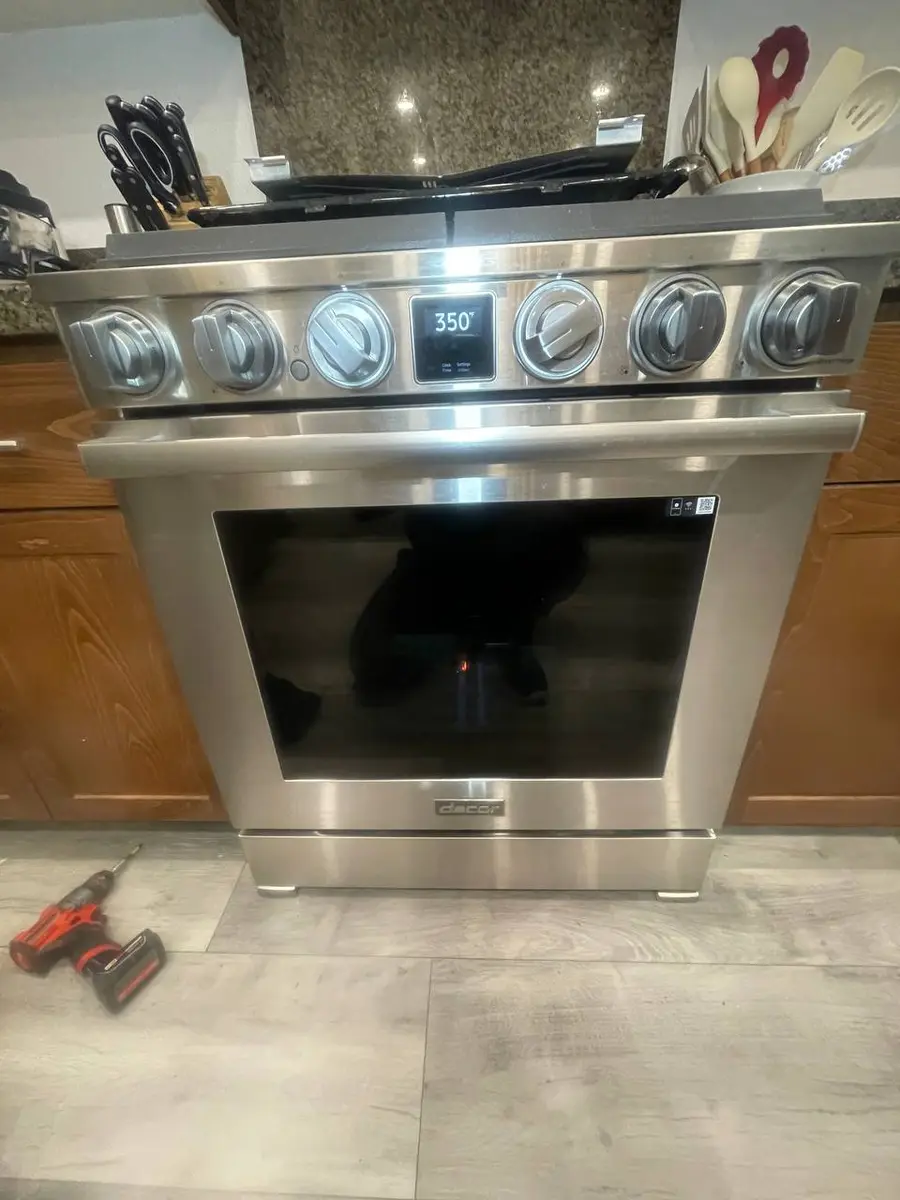
Gas stove repair in California comes with a unique set of considerations: state gas safety regulations, seismic shut-off valve requirements, and the ongoing conversation about gas-to-electric conversion. Whether you're repairing a basic gas range or a professional-grade Viking or Wolf, here's what California homeowners actually pay in 2026 — and when regulatory requirements affect your repair costs.
Average Costs by Component#
| Repair Type | Parts Cost | Total with Labor | Common Brands |
|---|---|---|---|
| Igniter (oven) | Varies | Varies | All brands — universal issue |
| Igniter (stovetop) | Varies | Varies | GE, Whirlpool, Samsung |
| Spark module | Varies | Varies | Controls all burner igniters |
| Gas safety valve | Varies | Varies | Critical safety component |
| Oven thermostat | Varies | Varies | Mechanical models |
| Oven temperature sensor | Varies | Varies | Electronic models |
| Bake element (electric oven on dual-fuel) | Varies | Varies | Dual-fuel ranges only |
| Burner valve (gas cock) | Varies | Varies | Per burner position |
| Oven control board | Varies | Varies | Samsung, LG, Bosch |
| Door hinge replacement | Varies/pair | Varies | Wear item, all brands |
| Oven door gasket | Varies | Varies | Affects heat retention |
| Convection fan motor | Varies | Varies | Convection models only |
| Self-clean lock motor | Varies | Varies | Post-self-clean failure |
| Gas flex line replacement | Varies | Varies | Recommended every 10 years |
Average California gas stove repair: varies by model and region for standard component issues.
Do You Have the Right Tools?
Multimeter ($85), vacuum pump ($250), diagnostic software, and specialized hand tools. Our technician arrives with $3,000+ in professional tools — your diagnostic is free.
Licensed & Insured · 90-Day Warranty · Same-Day Service
Premium Brand Pricing#
Premium gas ranges (Viking, Wolf, Thermador, Dacor, BlueStar) carry significantly higher parts costs:
| Component | Standard Brand | Premium Brand |
|---|---|---|
| Oven igniter | Varies | Varies |
| Gas valve | Varies | Varies |
| Control board | Varies | Varies |
| Thermostat | Varies | Varies |
| Burner assembly | Varies | Varies |
Premium brands also require factory-certified technicians for warranty work, which can limit your repair options and increase wait times. In the Sacramento area, certified Viking and Wolf technicians are limited — expect 3–7 day wait times versus same-day or next-day for standard brands.
California-Specific Cost Factors#
Gas safety regulations: California Mechanical Code requires gas appliance connections to meet specific standards. If a technician discovers a non-compliant gas connection during your repair (flexible connector over 4 feet, corroded fittings, missing drip leg), they are required to bring it up to code. This can add varies by model and region to a standard repair visit. Older Sacramento homes (pre-1990) frequently have outdated gas connections.
Seismic gas shut-off valves: California law requires seismic gas shut-off valves on all residential gas lines. If your home doesn't have one and a gas appliance is being serviced, the technician may recommend installation (varies by model and region). While not required for a stove repair specifically, it's a safety upgrade worth considering.
Licensed technician requirement: California requires appliance technicians working on gas equipment to hold appropriate licensing. This contributes to higher labor rates (varies by region in Sacramento, varies by region in the Bay Area) compared to states with less stringent requirements.
Electrification pressure: Several California cities have banned gas in new construction. While existing gas stoves are grandfathered, parts availability for older gas models may decline over the next decade. If your gas stove is over 15 years old and needs a major repair, consider the long-term parts availability trajectory.
Safety First — Know the Risks
Appliances involve high voltage (120-240V), pressurized water, gas lines, and chemical refrigerants. Over 400 DIY repair injuries are reported yearly. Our techs are licensed and insured — let them handle the risk.
Licensed & Insured · 90-Day Warranty · Same-Day Service
Repair vs Replace#
Standard gas ranges (varies by model and region new): Repair any component failure a certain threshold on a stove less than 12 years old. Gas ranges have a 15–20 year lifespan when maintained. Common affordable repairs (igniters, thermostats, door hardware) are almost always worthwhile.
Premium gas ranges ($2,500–significant cost new): Repair virtually any single-component failure. Even a $450 control board repair on a $5,000 Viking range is cost-effective. The only exception: if the unit needs multiple major repairs totaling over varies by model and region evaluate the unit's remaining useful life.
Dual-fuel ranges ($1,500–significant cost new): These units have gas burners with an electric oven. Repairs can involve both gas and electrical systems. The electric oven components (heating elements, boards) add repair scenarios that pure gas ranges don't have. Repair costs are comparable to gas-only models for most issues.
How to Save on Gas Stove Repair#
Clean burner components regularly: Remove grate, burner cap, and burner head monthly. Clear clogged burner ports with a toothpick or thin wire. Clean the igniter area with a soft brush. This prevents 30–40% of gas stovetop service calls.
Test the oven igniter yourself: If the oven won't light, turn on the oven and watch the igniter through the broiler drawer opening (bottom of the oven). The igniter should glow bright orange within 30–60 seconds. If it glows dimly or takes more than 90 seconds, it's weak and needs replacement.
Replace the gas flex connector proactively: Gas flex connectors are recommended for replacement every 10–15 years. A corroded or cracked connector is a gas leak risk. Replacing it during another repair (varies by model and region additional parts cost) is cheaper than a separate service call.
Check for manufacturer recalls: Gas stove recalls are relatively common, especially for ignition and gas valve issues. Check the CPSC recall database before paying for a repair — the manufacturer may cover the repair at no cost.
The Real Cost of DIY
Average DIY attempt: $150-400 in tools you may use once, plus the risk of further damage. Our diagnostic visit costs $0 — we find the problem and give you an honest quote.
Licensed & Insured · 90-Day Warranty · Same-Day Service
FAQ#
Q: Is it safe to repair a gas stove myself? A: Minor external repairs (replacing burner caps, cleaning igniters, replacing grates) are safe for homeowners. Any repair involving gas connections, valves, or internal gas components should be done by a licensed technician. Gas leaks from improper repairs are a serious explosion and carbon monoxide risk.
Q: My gas stove clicks but won't light. How much will that cost to fix? A: Continuous clicking usually means a wet or dirty igniter — clean it for free. If the igniter clicks and glows but gas doesn't flow, the safety valve or spark module has likely failed (varies by model and region depending on component). If there's no click at all, the spark module is dead (varies by model and region).
Q: How long do gas stove igniters last? A: Oven igniters last 3–5 years on average with regular oven use. Stovetop igniters last longer (7–10 years) because they're used for seconds at a time versus continuous heating during oven operation. Igniters are the most commonly replaced gas stove component.
Q: Should I switch from gas to electric/induction? A: Consider conversion if: your gas stove needs a significant cost repair, it's over 15 years old, or you're planning a kitchen renovation. PG&E and SMUD offer electrification rebates (varies by model and region) that offset conversion costs. The total switch (new induction range + 240V circuit installation + gas line capping) runs varies by model and region but eliminates ongoing gas connection maintenance and improves indoor air quality.
Senior Gas Appliance Specialist · 18 years experience
AGA-certified gas appliance specialist with 18 years of experience in residential and commercial oven, range, and cooktop repairs.