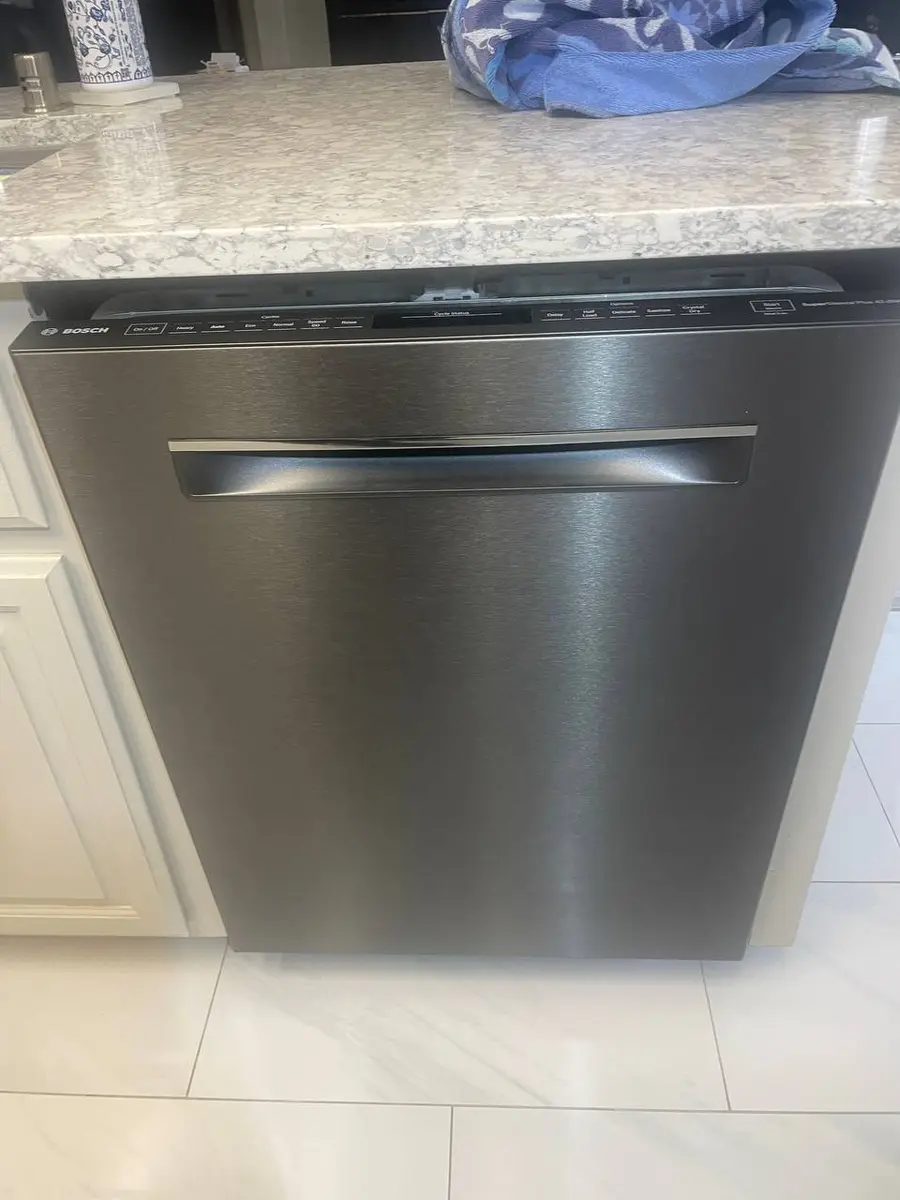
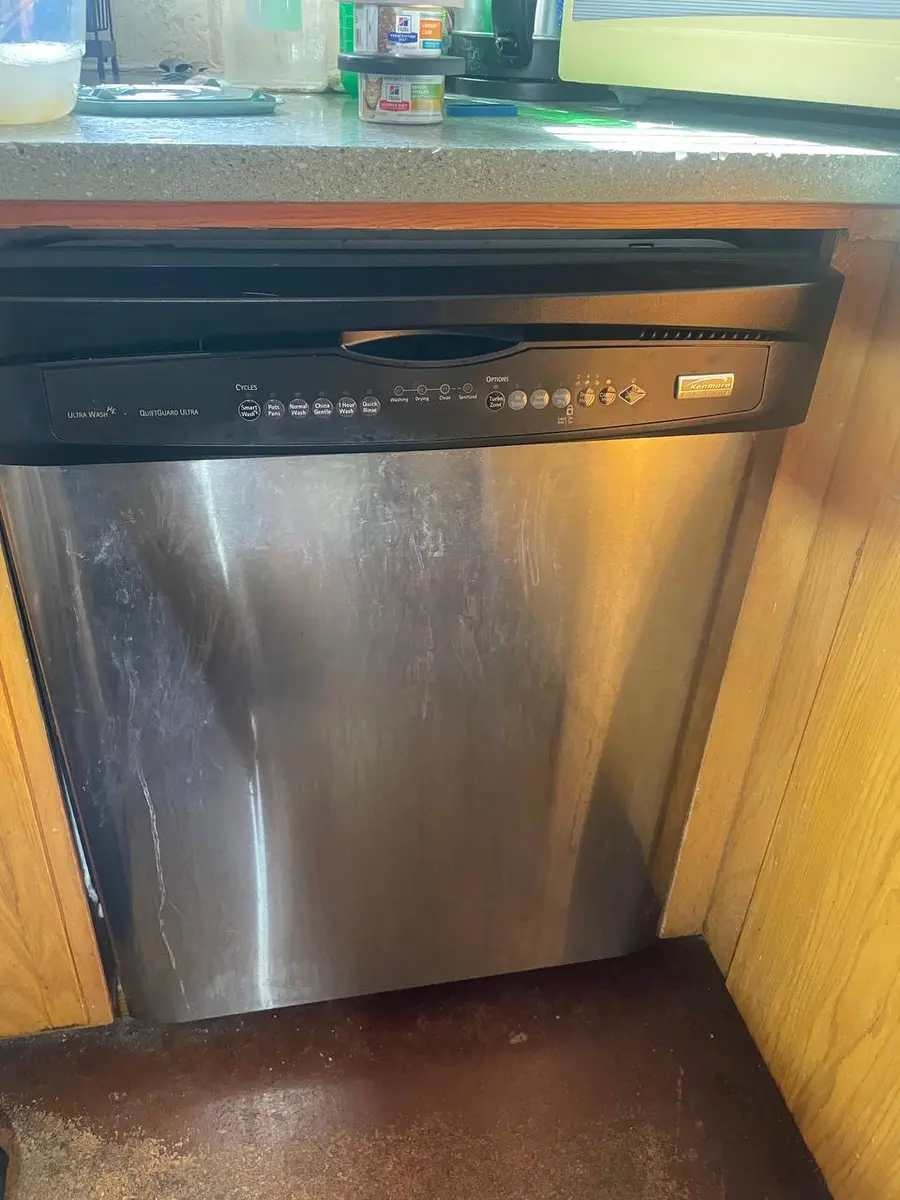
What this Frigidaire vs LG comparison is based on#
The two columns on this page are shaped differently before they disagree about anything. Frigidaire's is top-heavy: one component takes nearly half of it and the rest is a short tail. LG's has no leader worth the name — its first three rows sit at 30%, 28% and 15%, close enough together that the ordering among them is not the interesting part.
Behind the columns are 103 CPSC SaferProducts incident reports naming a component on a Frigidaire [dishwasher](/blog/repair-or-replace-dishwasher) and 47 doing the same for an LG, both filed between 2011 and 2026. Each figure below is a share of its own corpus. Neither is a share of machines built, sold or installed, because the database records none of those.
Three rows pull apart, and they do not pull the same way#
Where these corpora differ, they differ repeatedly. The heating element is named in 45% of the Frigidaire reports and 2% of the LG ones, a 43-point separation and the widest here. Wiring or the power cord runs 24 points the other way, 28% for LG against 4% for Frigidaire. The motor adds 14 more in LG's direction, 15% against 1%.
Three components, two directions, and no row where the two records converge on the same emphasis. Even the control board, the row that usually holds two dishwasher corpora together, is 11 points apart at 19% for Frigidaire and 30% for LG — prominent in both columns, but distinctly more so in one.
What the LG column's evenness costs and buys#
An even column is harder to summarise and easier to trust in one specific way. Harder, because there is no single answer to what LG dishwasher reports are about: a reader gets three answers, and the difference between the first and the third is a matter of a few filings out of 47. Easier, because a corpus with no dominant row is less likely to have been shaped by one episode — a recall cluster or a single widely-reported failure mode tends to produce a spike, not a plateau.
The Frigidaire column is the reverse. Its 45% row rests on 46 separate filings, which is firm evidence for the concentration itself, and the concentration is exactly what an episode would also produce. The data cannot separate those readings, so the page states the shape and stops.
Reading the tails, and what none of it settles#
Below the third row both columns are thin, and thin in a way that deserves naming. LG's drain pump or hose and heating element rows are one filing each out of 47, worth about two points apiece; Frigidaire's motor and thermostat rows are one filing out of 103, worth about one. Where two such rows appear to differ, they do not — the table marks the closest of them as one-report noise.
For repair planning the usable output is two different starting points. An LG dishwasher can arrive at the workbench with a board, a wiring or a motor complaint, all three of which are well represented in its record. A Frigidaire arrives disproportionately with a heat complaint. What neither column can say is how often any machine reaches any of those states, since the filings have no fleet behind them in the data.
Frigidaire vs LG dishwashers: what the reports mention#
Both columns are shares of their own corpus, and the corpora differ in size. Frigidaire: CPSC SaferProducts incident reports for Frigidaire dishwashers, 2011-2026, n=103. LG: CPSC SaferProducts incident reports for LG dishwashers, 2011-2026, n=47. A difference no larger than one report on either side is marked "within one-report noise".
| Component mentioned | Frigidaire | LG | Difference |
|---|---|---|---|
| Heating Element | 45% (46 of 103) | 2% (1 of 47) | 43 points more often for Frigidaire |
| Wiring or Power Cord | 4% (4 of 103) | 28% (13 of 47) | 24 points more often for LG |
| Motor | 1% (1 of 103) | 15% (7 of 47) | 14 points more often for LG |
| Control Board | 19% (20 of 103) | 30% (14 of 47) | 11 points more often for LG |
| Drain Pump or Hose | 2% (2 of 103) | 2% (1 of 47) | no measured difference (within one-report noise) |
About the corpus: these are CPSC SaferProducts reports — incidents someone chose to report, not units sold — so the shares on this page are shares of the reports and never a failure rate. The corpus is weighted toward safety events: 12,007 of its 20,581 records (58%) are fire, smoke, burn or melt reports, which over-represents the components that burn and under-represents the ones that merely stop working.
Do You Have the Right Tools?
Water pressure gauge ($60), spray arm tester, float switch multimeter ($85), and drain inspection camera. Our technician arrives with $3,000+ in professional tools — your diagnostic is free.
Licensed & Insured · 90-Day Warranty · Same-Day Service
Frigidaire dishwashers: the reported component split#
Frigidaire dishwashers — every share in this table is a share of: CPSC SaferProducts incident reports for Frigidaire dishwashers, 2011-2026, n=103.
| Component mentioned | Share of reports | Reports |
|---|---|---|
| Heating Element | 45% | 46 of 103 |
| Control Board | 19% | 20 of 103 |
| Wiring or Power Cord | 4% | 4 of 103 |
| Drain Pump or Hose | 2% | 2 of 103 |
| Water Valve or Line | 2% | 2 of 103 |
| Motor | 1% | 1 of 103 |
| Thermostat or Sensor | 1% | 1 of 103 |
Shares of reports, not failure rates — see the corpus note above.
LG dishwashers: the reported component split#
LG dishwashers — every share in this table is a share of: CPSC SaferProducts incident reports for LG dishwashers, 2011-2026, n=47.
| Component mentioned | Share of reports | Reports |
|---|---|---|
| Control Board | 30% | 14 of 47 |
| Wiring or Power Cord | 28% | 13 of 47 |
| Motor | 15% | 7 of 47 |
| Compressor | 2% | 1 of 47 |
| Drain Pump or Hose | 2% | 1 of 47 |
| Heating Element | 2% | 1 of 47 |
Shares of reports, not failure rates — see the corpus note above.
Safety First — Know the Risks
Live 120V wiring in a wet environment is one of the most dangerous DIY scenarios. Water + electricity = serious shock risk. Our techs are licensed and insured — let them handle the risk.
Licensed & Insured · 90-Day Warranty · Same-Day Service
How to use these numbers#
What this comparison can settle: which components the reported incidents of each brand actually concentrate on, for this appliance. What it cannot settle: which brand fails more often. That would need units sold, and no public source states it. Use the component split to plan for the repair each brand is most reported for, not to rank the two.
Lead Appliance Repair Technician · 12 years experience
Experienced technician with 12 years specializing in washing machine and dryer repairs across all major brands.