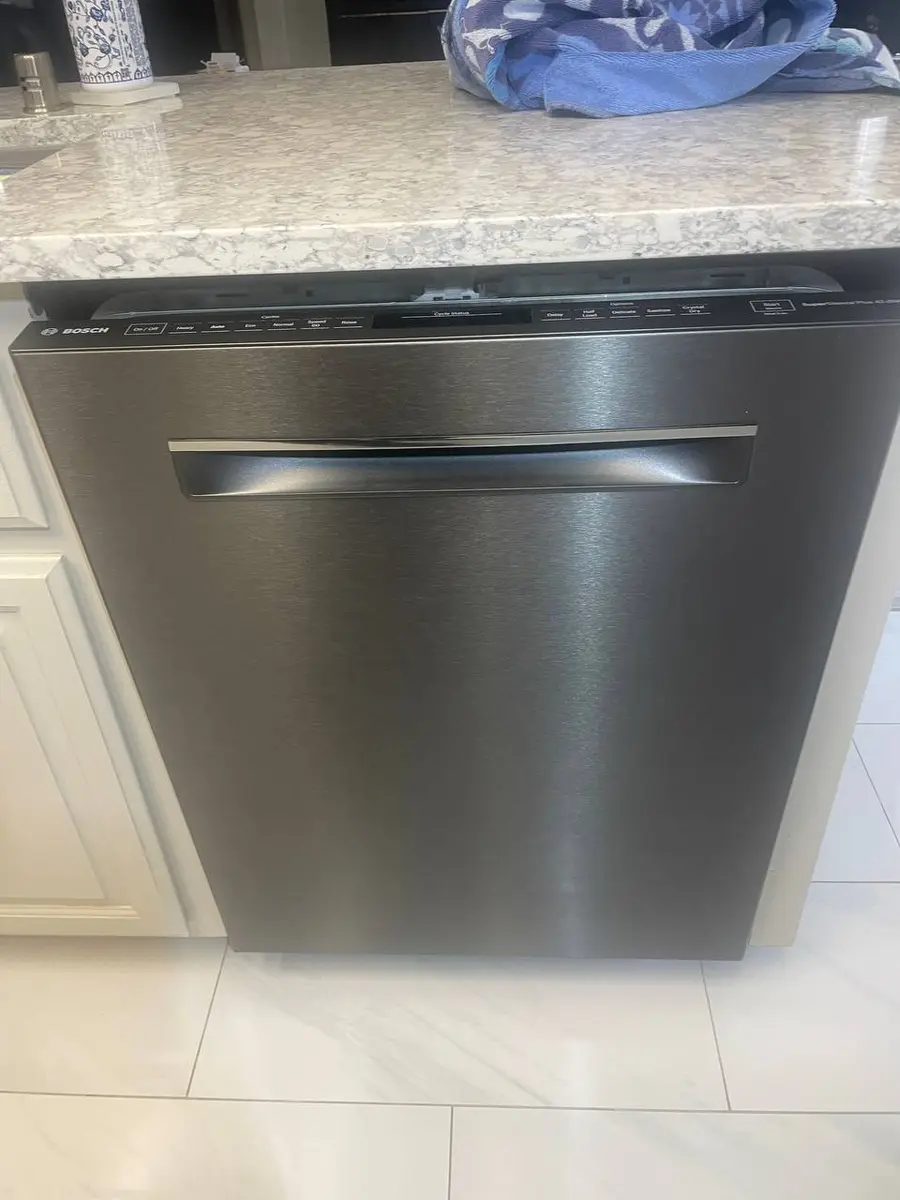
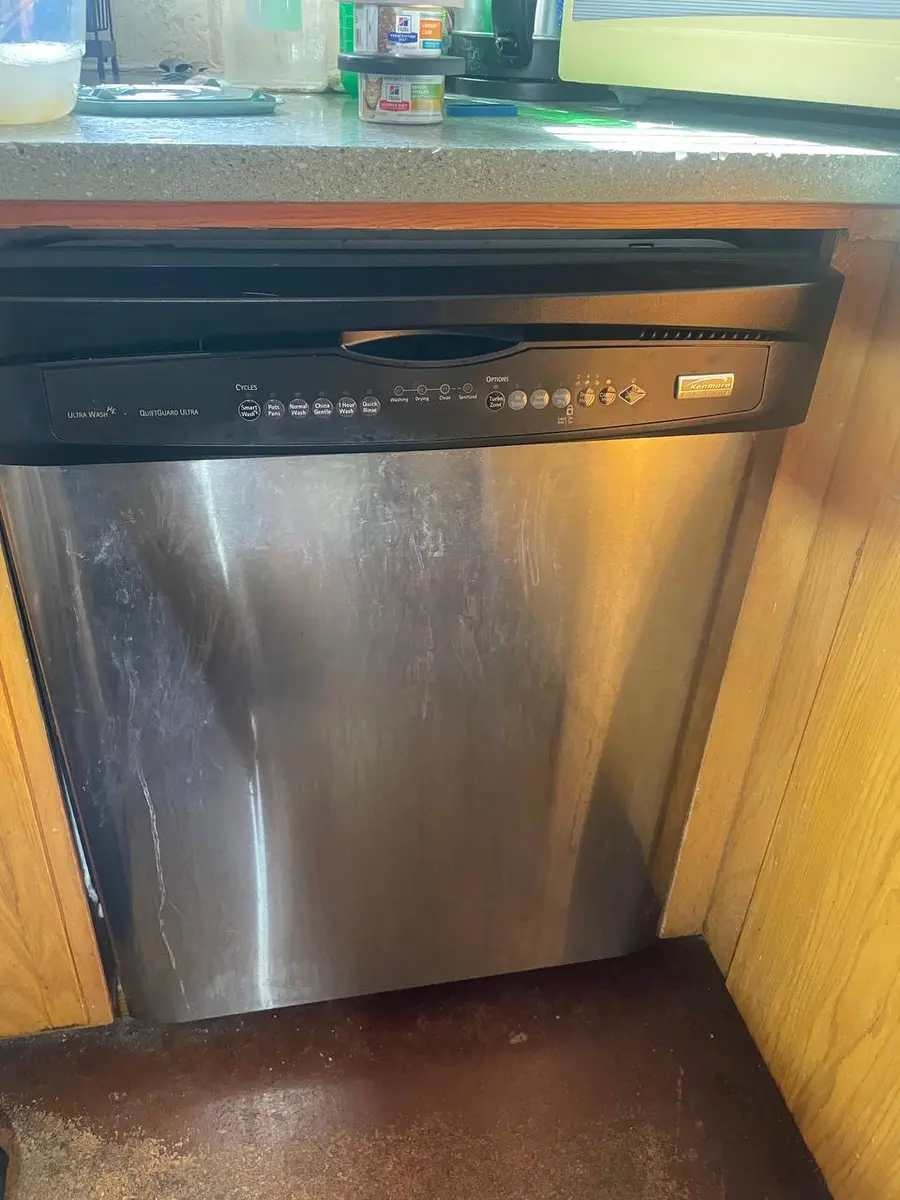
Frigidaire dishwashers offer solid performance at an accessible price point, making them one of the most popular brands in American households. Models from the FFCD2418 (basic built-in) to the Gallery FGID2476SF and the newer GDPP4517AF handle daily loads reliably, but they develop predictable wear patterns as they age. Knowing the common failure points can save you time, money, and the inconvenience of hand-washing dishes while you wait for a repair.
Here are the most common Frigidaire dishwasher problems and practical solutions for each.
Not Draining#
The Problem: Water remains standing in the bottom of the tub after the cycle completes. You may notice the water when loading the next batch of dishes or smell stagnant water between uses.
Common Causes:
- Clogged drain filter or fine screen
- Food debris blocking the drain check valve
- Kinked drain hose under the sink
- Failed drain pump motor
- Garbage disposal knockout plug not removed (new installations)
How to Fix It:
- Remove the lower rack and locate the drain filter at the bottom of the tub. On FFCD models, it twists counterclockwise to remove. On Gallery models, it lifts straight up
- Clean the filter and screen under running water with a soft brush
- Check inside the drain sump for food debris or broken glass
- Trace the drain hose from the dishwasher to the sink drain or disposal connection. Straighten any kinks
- If you recently installed a garbage disposal, verify the knockout plug was removed from the dishwasher inlet port
- Listen during a drain cycle. If the pump is silent, the motor has likely failed and needs replacement
Estimated Repair Cost: $0 for filter cleaning; $140-$240 for drain pump.
Do You Have the Right Tools?
Water pressure gauge ($60), spray arm tester, float switch multimeter ($85), and drain inspection camera. Our technician arrives with $3,000+ in professional tools — your diagnostic is free.
Licensed & Insured · 90-Day Warranty · Same-Day Service
Leaking Water#
The Problem: Water appears on the floor in front of or around the dishwasher during or after a cycle.
Common Causes:
- Worn or damaged door gasket (the most common source of front leaks)
- Loose or cracked spray arm creating spray outside the intended path
- Door latch not pulling the door tight enough against the gasket
- Excessive suds from using regular dish soap instead of dishwasher detergent
- Failed tub seal at the motor shaft (leak underneath the unit)
How to Fix It:
- Inspect the door gasket by running your hand along its full length. Feel for tears, hard spots, or sections that have separated from the channel
- Check that both spray arms are securely seated and spin freely without hitting loaded dishes or the walls
- Open and close the door several times. The latch should pull the door snug against the gasket with a solid click
- Confirm you are using dishwasher-specific detergent. Regular dish soap produces excessive suds that push past the door seal
- Remove the kick plate and inspect under the unit for drips. A leak at the motor shaft seal requires pump assembly replacement
Estimated Repair Cost: varies by model and region for door gasket; varies by model and region for pump seal.
Not Cleaning Dishes#
The Problem: Dishes come out with food residue, spots, film, or a gritty texture despite running a full wash cycle.
Common Causes:
- Clogged spray arm nozzles restricting water flow
- Dirty or overdue filter
- Water temperature too low (should be at least 120 degrees F at the tap)
- Incorrect loading blocking spray arm rotation
- Detergent dispenser not opening during the wash cycle
- Worn wash motor impeller reducing water pressure
How to Fix It:
- Remove the upper and lower spray arms and clean each nozzle with a toothpick or thin wire. Hard water deposits frequently clog the small holes
- Clean the drain filter. A dirty filter reduces overall water circulation
- Run the kitchen faucet on hot for 90 seconds before starting the dishwasher to ensure hot water reaches the unit immediately
- Load dishes so nothing blocks the spray arm rotation paths. Tall items on the sides, not the center
- Check the detergent dispenser door mechanism. If it sticks closed, the detergent dissolves during the pre-wash instead of the main wash
- Run a cycle with 2 cups of white vinegar placed in a bowl on the top rack to dissolve mineral buildup
Estimated Repair Cost: $0 for maintenance; $150-$250 for wash motor/impeller.
Safety First — Know the Risks
Live 120V wiring in a wet environment is one of the most dangerous DIY scenarios. Water + electricity = serious shock risk. Our techs are licensed and insured — let them handle the risk.
Licensed & Insured · 90-Day Warranty · Same-Day Service
Error Code i30 — Leak Detected in Base#
What It Means: The anti-flood sensor in the base of the dishwasher has detected water. The machine stops all operation as a safety measure.
How to Fix It: Cancel the cycle, unplug the unit, and tilt it slightly backward to check for water in the base tray. Identify the leak source (usually a hose clamp or pump seal), fix it, and dry out the base tray. The sensor will not reset until the tray is completely dry.
Estimated Repair Cost: varies by model and region depending on leak source.
Error Code i20 — Drain Problem#
What It Means: The dishwasher attempted to drain but detected insufficient water flow through the drain circuit. This is the code equivalent of the "not draining" symptom described above.
How to Fix It: Follow the same steps as the "Not Draining" section. Clean the filter, check the drain hose, and inspect the pump. If the pump runs but water does not move, the check valve may be stuck or the pump impeller is broken.
The Real Cost of DIY
Average DIY attempt: $150-400 in tools you may use once, plus the risk of further damage. Our diagnostic visit costs $0 — we find the problem and give you an honest quote.
Licensed & Insured · 90-Day Warranty · Same-Day Service
Error Code i10 — Fill Problem#
What It Means: The dishwasher is not receiving enough water during the fill cycle.
How to Fix It: Check that the water supply valve under the sink is fully open. Inspect the inlet screen for mineral deposits. Confirm household water pressure is adequate (minimum 20 PSI). If the valve is open and water flows freely when the hose is disconnected, the inlet valve solenoid needs replacement (varies by model and region).
Making Unusual Noises#
The Problem: Grinding, humming, or loud buzzing during operation that the dishwasher did not make when new.
Common Causes:
- Hard food debris or glass fragments caught in the wash impeller or drain pump
- Spray arm hitting a dish or utensil during rotation
- Wash motor bearing failure (loud grinding during wash cycle)
- Loose item in the silverware basket vibrating against the tub
How to Fix It:
- Check for any loose items in the tub, silverware basket, and spray arm area
- Clean the sump area and remove any hard debris
- Run an empty cycle to isolate the sound. If it persists without any dishes, the motor bearings or pump are the source
- A gradually worsening grinding noise during the wash phase typically indicates motor bearing wear requiring motor replacement
Estimated Repair Cost: $0 for loose items; $180-$300 for motor replacement.
Don't Void Your Warranty
Opening your appliance yourself may void the manufacturer warranty. Our repair comes with a 90-day guarantee, and we document everything for warranty compliance.
Licensed & Insured · 90-Day Warranty · Same-Day Service
When to Call a Professional#
Filter cleaning, gasket inspection, and spray arm maintenance are tasks any homeowner can handle. However, pump replacements, motor diagnosis, and leak investigation beneath the unit involve disassembly, electrical connections, and water line work that benefit from professional tools and experience. Persistent error codes after basic troubleshooting warrant a service call.
EasyBear technicians service all Frigidaire dishwasher models and carry common replacement parts for same-visit repairs. Our diagnostic visit is free, with no obligation.
Frequently Asked Questions#
Q: Where is the filter on my Frigidaire dishwasher? A: The filter is at the bottom center of the tub, beneath the lower spray arm. On most models, it either twists to unlock (counterclockwise) or lifts straight up. Check your model's manual for the specific method.
Q: How often should I clean my Frigidaire dishwasher filter? A: Monthly is ideal. If you typically pre-rinse dishes, every 6-8 weeks is acceptable. If you load dishes without rinsing, clean it every 2 weeks to prevent drain issues.
Q: My Frigidaire dishwasher is 7 years old and the pump failed. Repair or replace? A: Repair. Frigidaire dishwashers last 9-13 years on average. A pump replacement at varies by model and region is significantly less than a varies by model and region replacement machine, and the rest of the unit likely has years of service remaining.
Appliance Repair Technician · 8 years experience
Experienced technician with 8 years specializing in dishwasher repairs and European appliance brands including Bosch and Thermador.