Electric Coil vs Glass-Top Stove: A Technician's Repair Breakdown#
Short answer: From a repair bench, a coil stove is the least expensive appliance in the kitchen to fix, while a glass-top adds four failure modes a coil model simply cannot have — a fragile surface, buried elements, touch electronics, and heat limiters. If low repair cost is your goal, coil wins outright.
Coil vs Glass-Top at a Glance#
| Repair area | Coil stove | Glass-top |
|---|---|---|
| Heating element | Plug-in swap, seconds | Under glass, surface removed |
| Surface | Nothing to break | A crack ends its life |
| Controls | Mechanical infinite switch | Touch panel and board |
| Heat protection | None needed | Temperature limiters |
| Overall repair cost | Lowest of any stove | Higher |
Verdict: Coil is unbeatable on repair cost and longevity; a glass-top is worth it only if you value the flat, modern surface enough to accept its added failure points.
Do You Have the Right Tools?
Multimeter ($85), vacuum pump ($250), diagnostic software, and specialized hand tools. Our technician arrives with $3,000+ in professional tools — your diagnostic is free.
Licensed & Insured · 90-Day Warranty · Same-Day Service
Coil: The Cheapest Repair There Is#
Nothing in a kitchen fixes as cheaply as a coil burner. The element lifts out of its socket and a new one pushes in — no tools, seconds of work — so most owners never call anyone. Behind the panel, each burner runs off an infinite switch, a bimetallic strip that pulses power on and off to hold a temperature, and swapping it is two screws and two terminals. The socket the element plugs into can pit or arc after years of heat, but it too is a quick, inexpensive replacement. Drip pans are cosmetic, and there is no board, display, or touch layer anywhere — nothing electronic exists to fail.
Glass-Top: Four Failure Modes Coil Never Has#
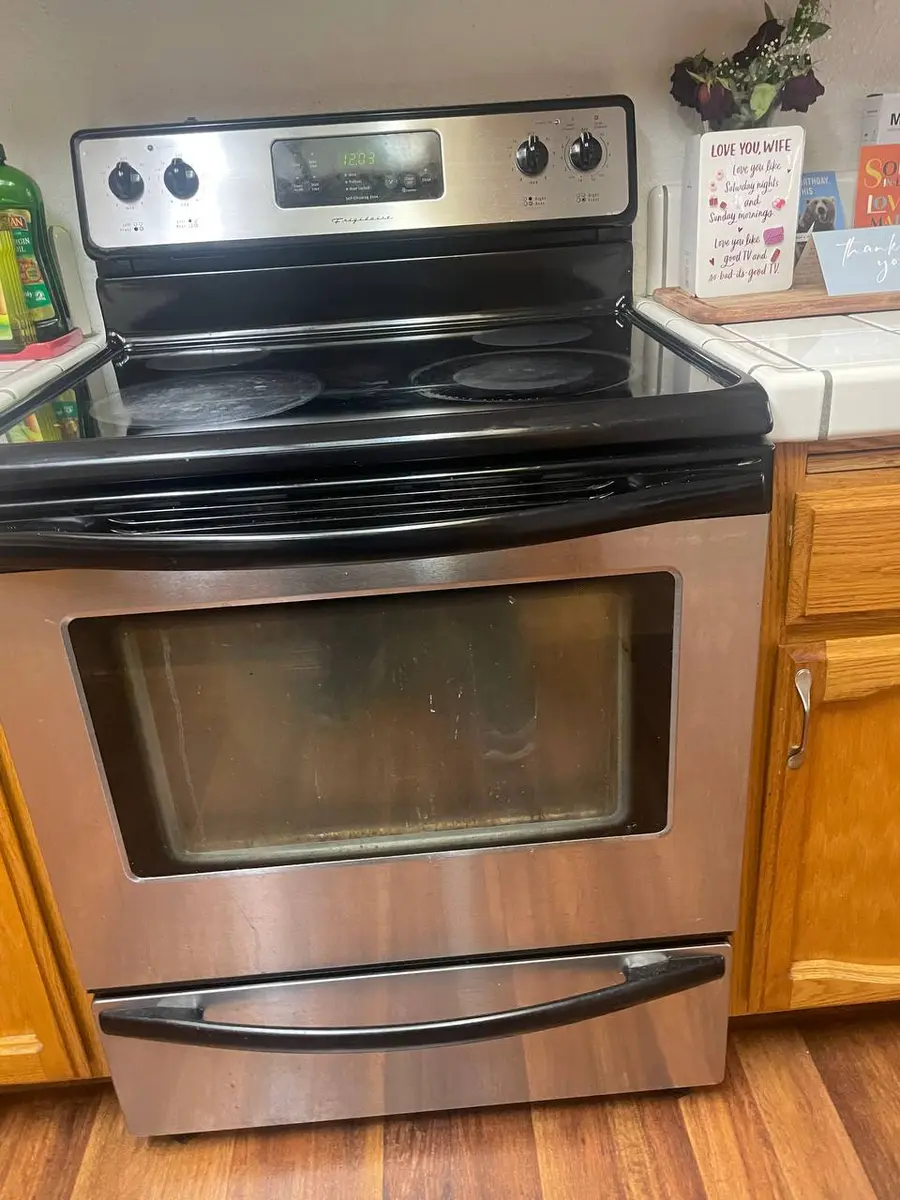
- The glass surface: heat-resistant to well over a thousand degrees but not impact-resistant, it cracks from a dropped skillet, a hot-then-cold thermal shock, or dragged cast iron. Because the elements are bonded beneath it, a crack means replacing the whole surface assembly, and a cracked top must be retired at once — spills can reach the energized elements below.
- Buried elements: the radiant elements sit under the glass, so a failed one is reached only by removing the surface — thirty to sixty minutes of work versus thirty seconds on a coil.
- Touch controls: capacitive panels go unresponsive when the board fails or phantom-activate when condensation gets under them, an electronics failure a knob-controlled coil stove never sees.
- Temperature limiters: one under each zone cuts power if the glass overheats, and when a limiter fails open that burner dies — reachable, again, only by lifting the glass.
Safety First — Know the Risks
Appliances involve high voltage (120-240V), pressurized water, gas lines, and chemical refrigerants. Over 400 DIY repair injuries are reported yearly. Our techs are licensed and insured — let them handle the risk.
Licensed & Insured · 90-Day Warranty · Same-Day Service
Durability Over the Long Run#
Coil stoves earn their near-indestructible reputation: fresh elements drop into a range decades old, the mechanical switches last fifteen to twenty-five years, and the enameled-steel chassis rarely fails, so the appliance routinely reaches 15-25 years. Glass-tops run about 10-15 years, and their end usually arrives as a single cracked surface rather than a worn-out part, with the touch electronics carrying a shorter life than a coil model's simple switches. The pattern is consistent: a coil stove fails rarely and cheaply, a glass-top fails rarely but expensively.
Cookware and Cleaning: The Everyday Trade-off#
Beyond the repair bench, the two stoves ask different things of you day to day, and that shapes which failures you will ever see. A coil range shrugs off anything — cast iron, warped pans, canning pots — because heat goes straight into the burner, and the drip pans catch spills you simply swap out when they look tired. A glass-top rewards flat-bottomed cookware and gentle handling and punishes the opposite, but in exchange it wipes clean in one pass with no pans or reflector bowls to scrub. Match the surface to how you actually cook: heavy, careless, high-volume kitchens are happier on coil, while cooks who keep flat pans and value a seamless clean-up get real satisfaction from a glass-top, so long as they respect it.
The Real Cost of DIY
Average DIY attempt: $150-400 in tools you may use once, plus the risk of further damage. Our diagnostic visit costs $0 — we find the problem and give you an honest quote.
Licensed & Insured · 90-Day Warranty · Same-Day Service
Our Recommendation#
Pick coil for a budget kitchen, a rental, heavy cast-iron cooking, or simply the longest life at the lowest repair cost — it is the most tenant-proof, repairable stove made. Pick a glass-top if the smooth, modern look and wipe-clean surface matter to you, you will commit to flat-bottomed cookware and careful handling, and you accept the glass as a real future expense. Both cook the same food; only their repair bills differ.
Appliance Repair Technician · 11 years experience
Experienced technician with 11 years specializing in Frigidaire and Electrolux refrigerator and dryer repair with a focus on safety.