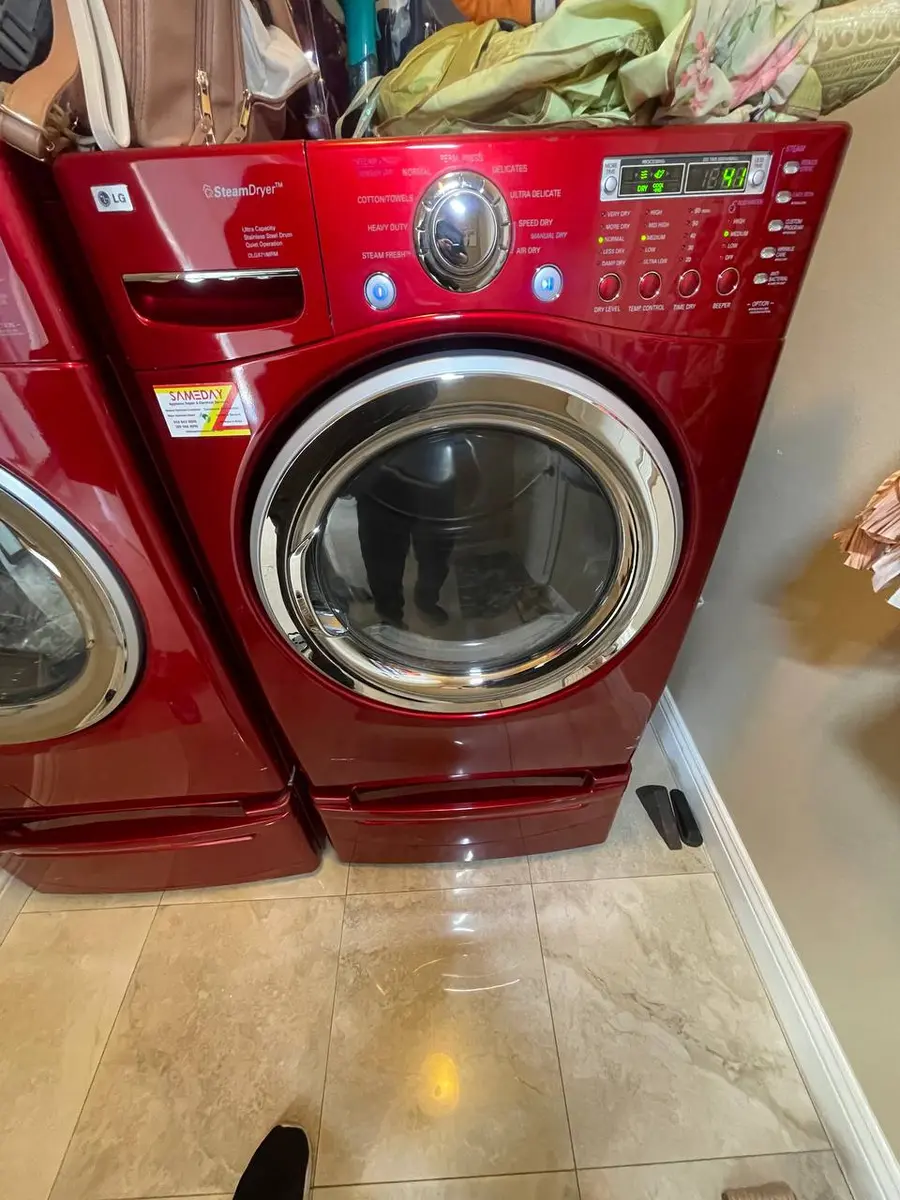
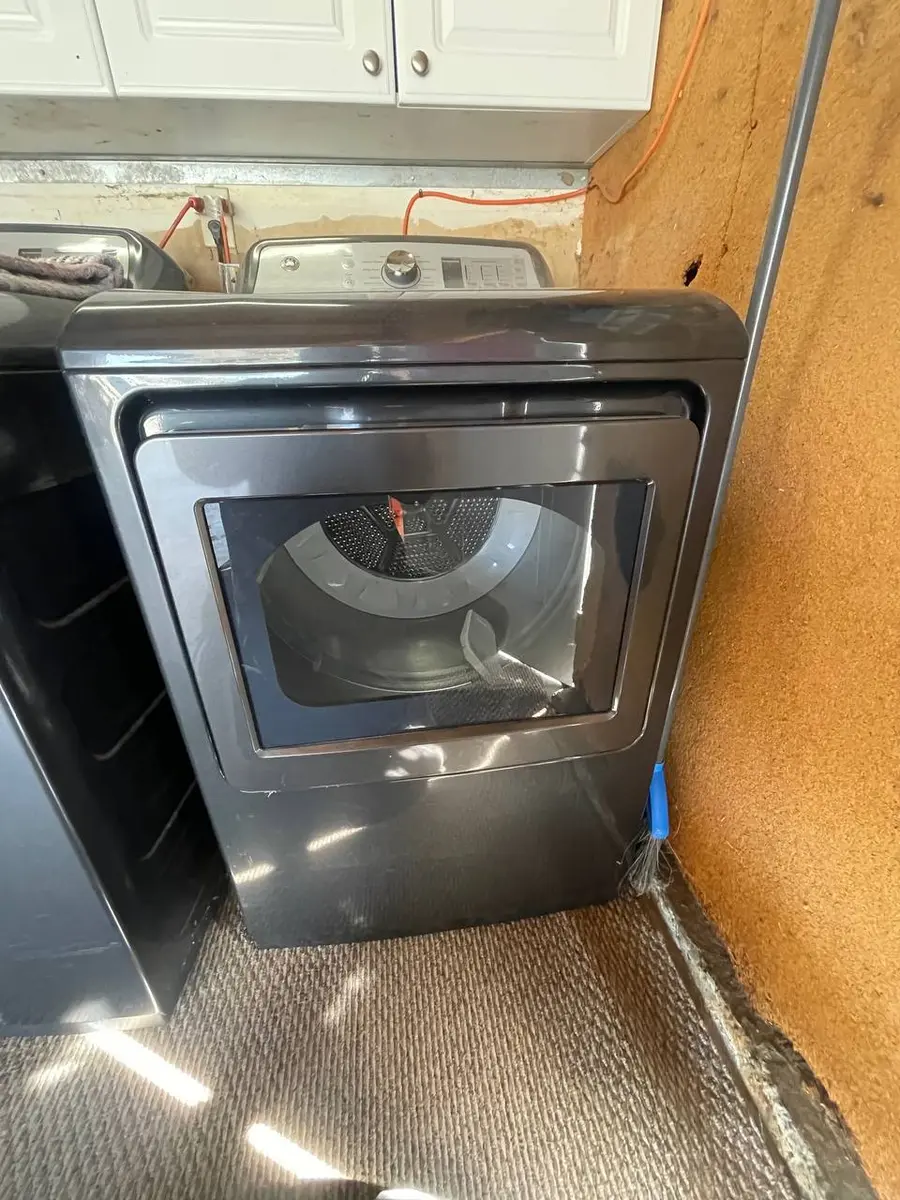
Dryer Wattage: That Number Is for the Other Dryer
An electric dryer is the heavyweight of household appliances, drawing about 2,500-5,000 watts while running and using roughly 45-90 kWh a month. That is about $8-15 a month nationally at $0.17/kWh, or about $14-27 a month in California at $0.30/kWh. A gas dryer uses only a few hundred watts of electricity plus gas,…
If a refrigerator is a slow drip, an electric dryer is a fire hose. It has the highest running wattage of any everyday appliance in the house, because drying clothes means generating a lot of heat, fast. The saving grace is time: a dryer runs an hour a load, a few loads a week, not around the clock. That combination — huge draw, limited runtime — is what puts it in the 45-90 kWh-a-month range and makes it one of the few big appliances you can genuinely time to save money.
All of which describes an electric dryer, and roughly a fifth of American laundry rooms do not contain one. A gas dryer's electrical draw is an order of magnitude smaller because it makes its heat by burning gas, so quoting it a 2,500-5,000 watt figure describes an appliance the household does not own. Establish which one is behind your machine first — it takes ten seconds and it changes every number on this page.
Which dryer do you have, and which number is yours?#
Pull the machine forward and look at what goes into the back of it. Two things are visible without tools — the cord and whether there is a pipe — and between them they decide which column of this page you should be reading.
| What you find behind the dryer | What you own | The number that applies to you |
|---|---|---|
| A heavy cord with three or four large pins, and no pipe of any kind | An electric dryer on its own dedicated circuit | 2,500-5,000 W while running, 45-90 kWh a month, about $8-15 nationally or $14-27 in California. |
| A flexible metal line running into the back, plus an ordinary household plug | A gas dryer | About 300-400 W electric — 5-10 kWh a month, roughly $1-2 — with the actual heat billed as gas therms. |
| You already know it is gas, and you want the total | A gas dryer | Electricity is a rounding error. Your dryer cost lives on the gas bill, and per unit of heat therms usually undercut electric resistance, which is why gas dryers typically win on running cost. |
| Electric, and the bill is at the top of the band or above it | An electric dryer working harder than it should | Loads taking two or three cycles double the kWh without changing the wattage. That is a venting or sensor problem showing up as an energy problem. |
| Electric, and you are comparing against a heat pump model | A conventional resistance dryer | The 2,500-5,000 W figure is resistance heating. A heat pump dryer is a different machine on this axis and the band above does not describe it. |
| Either type, and you are trying to cut the bill | Whichever you have | Run consecutive loads while the drum is still warm, clean the lint screen every load, and dry full but not packed. Runtime is the lever on a dryer, not wattage. |
| Either type, on a time-of-use electricity plan | Whichever you have | A dryer is one of the few large loads you genuinely control the timing of. Moving loads off peak does more here than on any always-on appliance. |
| A cord that has been changed, or an adapter in the circuit | Unknown, and worth checking properly | An adapter on a 2,500-5,000 W load is a safety question before it is a cost one. Have the circuit looked at. |
Denominator: every figure above is one of this page's own — 2,500-5,000 W and 45-90 kWh a month for an electric dryer, 300-400 W and 5-10 kWh for a gas one, four to six loads a week, and the two rates it prices against, $0.17/kWh nationally and $0.30/kWh in California. Two appliance types and two published rates, not a measurement of your machine or your utility. Your own rate is on your bill, and gas therms are priced separately from any of it.
How many watts does a dryer use?#
Almost all of a dryer's draw is the heating element (electric) or the blower and controls (gas). Here is how the two types compare.
| Dryer type | Electrical draw | Usage | kWh/month (electric) |
|---|---|---|---|
| Electric dryer | 2,500-5,000 W | About 4-6 loads a week | 45-90 |
| Gas dryer | About 300-400 W electric, plus gas for heat | About 4-6 loads a week | 5-10 (electric) plus gas therms |
An electric dryer runs on a dedicated circuit precisely because of that 2,500-5,000 watt heat load. A gas dryer still needs electricity to turn the drum and run the controls, but it makes its heat from gas, so its electric draw collapses to a few hundred watts.
Do You Have the Right Tools?
Gas leak detector ($130), thermal fuse tester ($95), belt tension gauge, and vent inspection camera ($180). Our technician arrives with $3,000+ in professional tools — your diagnostic is free.
Licensed & Insured · 90-Day Warranty · Same-Day Service
How much electricity (kWh) does an electric dryer use per month — and what does it cost?#
The formula is the same; the numbers are just bigger because the wattage is bigger.
Monthly cost = kWh per month × your rate. At 65 kWh/month that is 65 × $0.17 = about $11 nationally, or 65 × $0.30 = about $19.50 in California. Per load, an electric dryer runs on the order of 40-90 cents nationally and more in California.
| Electric dryer use | kWh/month | At $0.17/kWh (national) | At $0.30/kWh (California) |
|---|---|---|---|
| Lighter laundry (fewer, shorter loads) | 45-65 | about $8-11/mo | about $14-20/mo |
| Heavier laundry (more, longer loads) | 65-90 | about $11-15/mo | about $20-27/mo |
A gas dryer's electricity is trivial — about $1-2 a month — with the rest of the cost showing up as gas therms, which are usually cheaper per unit of heat than electric resistance. That is why, purely on running cost, gas dryers typically win.
When a high running cost signals a fault#
The dryer is the appliance where a fault most directly inflates your bill, because a struggling dryer simply runs longer to do the same job:
- Clothes take two cycles to dry. The number-one culprit is a clogged vent or lint-choked ducting, which traps moist air and doubles your runtime — and your energy. Cleaning the vent is the highest-return maintenance on any dryer.
- A weak or failing heating element. An element that no longer reaches full heat drags out every load.
- A bad moisture sensor or thermostat. Auto-dry cycles that never sense "done" keep tumbling with the heat on.
Because the dryer draws so much, doubling its runtime is expensive fast — a clogged vent can quietly add real money to the bill and is also a fire risk. If the element or motor is the issue, weigh it against the unit's age in our repair-or-replace dryer guide; the dryer lifespan guide and our gas-vs-electric comparison round out the picture.
Safety First — Know the Risks
Gas dryers carry carbon monoxide and explosion risk. Even electric dryers involve 240V circuits that can deliver a fatal shock. Our techs are licensed and insured — let them handle the risk.
Licensed & Insured · 90-Day Warranty · Same-Day Service
What does a dryer cost to run in California?#
An electric dryer is one of the appliances California's rates hit hardest — about $14-27 a month at $0.30/kWh. It is also one of the best appliances to shift on a time-of-use plan, because you control exactly when it runs. Drying loads in the off-peak evening or overnight window instead of the late-afternoon peak can meaningfully cut the cost, and it is the rare high-draw appliance where that timing is entirely in your hands. If you are choosing between fuels in California, a gas dryer's running-cost advantage is larger here than in cheap-electricity states.
The bottom line#
An electric dryer is the biggest single running-cost appliance most homes have on the electric meter — budget $8-15 a month nationally and $14-27 in California. Keep the vent clear to avoid paying for double cycles, run it off-peak in California if you can, and know that a gas dryer usually costs less to operate.
The first thing I check on any "my dryer takes forever" call is the vent run, not the machine. I have measured dryers pulling near-full wattage for twice as long as they should, purely because of a lint-packed duct — free to fix, and it pays back on the very next bill.
The Real Cost of DIY
Average DIY attempt: $150-400 in tools you may use once, plus the risk of further damage. Our diagnostic visit costs $0 — we find the problem and give you an honest quote.
Licensed & Insured · 90-Day Warranty · Same-Day Service
Dryer cost per day, per month, and per year#
An electric dryer is the biggest single load on most electric meters, so the yearly figure is worth a look. These are electric-dryer numbers; a gas dryer's electricity is only a dollar or two a month.
| Timeframe | At $0.17/kWh (national) | At $0.30/kWh (California) |
|---|---|---|
| Per load | about 40-90 cents | about 70 cents to $1.60 |
| Per month | about $8-15 | about $14-27 |
| Per year | about $96-180 | about $168-324 |
How to lower your dryer's running cost#
- Clean the lint screen every load and the vent duct regularly. A restricted vent traps moist air and can double runtime — the highest-return dryer habit there is, and a fire-safety one.
- Dry full but not overstuffed loads. Crammed drums tumble poorly and dry slowly; a load that can move dries faster.
- Use the moisture sensor, not the timer. Auto-dry stops when the clothes are dry instead of running a fixed time past done.
- Dry back-to-back loads. A drum that is already warm needs less energy to get the next load going.
Don't Void Your Warranty
Opening your appliance yourself may void the manufacturer warranty. Our repair comes with a 90-day guarantee, and we document everything for warranty compliance.
Licensed & Insured · 90-Day Warranty · Same-Day Service
Frequently Asked Questions#
How much electricity does an electric dryer use?#
An electric dryer draws about 2,500-5,000 watts while running and uses roughly 45-90 kWh per month with typical laundry. It is the highest-wattage everyday appliance in most homes, which is why it needs a dedicated circuit.
How much does it cost to run a dryer per month?#
About $8-15 a month nationally at $0.17/kWh, or about $14-27 in California at $0.30/kWh, for an electric dryer. A gas dryer's electricity is only about $1-2 a month, with the rest of its cost in gas.
Is a gas dryer cheaper to run than electric?#
Usually, yes. A gas dryer uses only a few hundred watts of electricity and makes its heat from gas, which is typically cheaper per unit of heat than electric resistance. The gap is widest where electricity is expensive, such as California.
Is it cheaper to run the dryer at night?#
On a California time-of-use plan, yes. The dryer is a high-draw appliance you can schedule, so running it in the off-peak evening or overnight window instead of the late-afternoon peak cuts the cost. On a flat rate, timing does not matter.
Why has my dryer gotten more expensive to run?#
The usual cause is a clogged vent or lint-restricted ducting, which traps moist air and forces the dryer to run far longer per load. Because the dryer draws so much, that extra runtime adds up quickly. Cleaning the vent is the highest-return fix and also reduces fire risk.
Senior Gas Appliance Specialist · 18 years experience
AGA-certified gas appliance specialist with 18 years of experience in residential and commercial oven, range, and cooktop repairs.