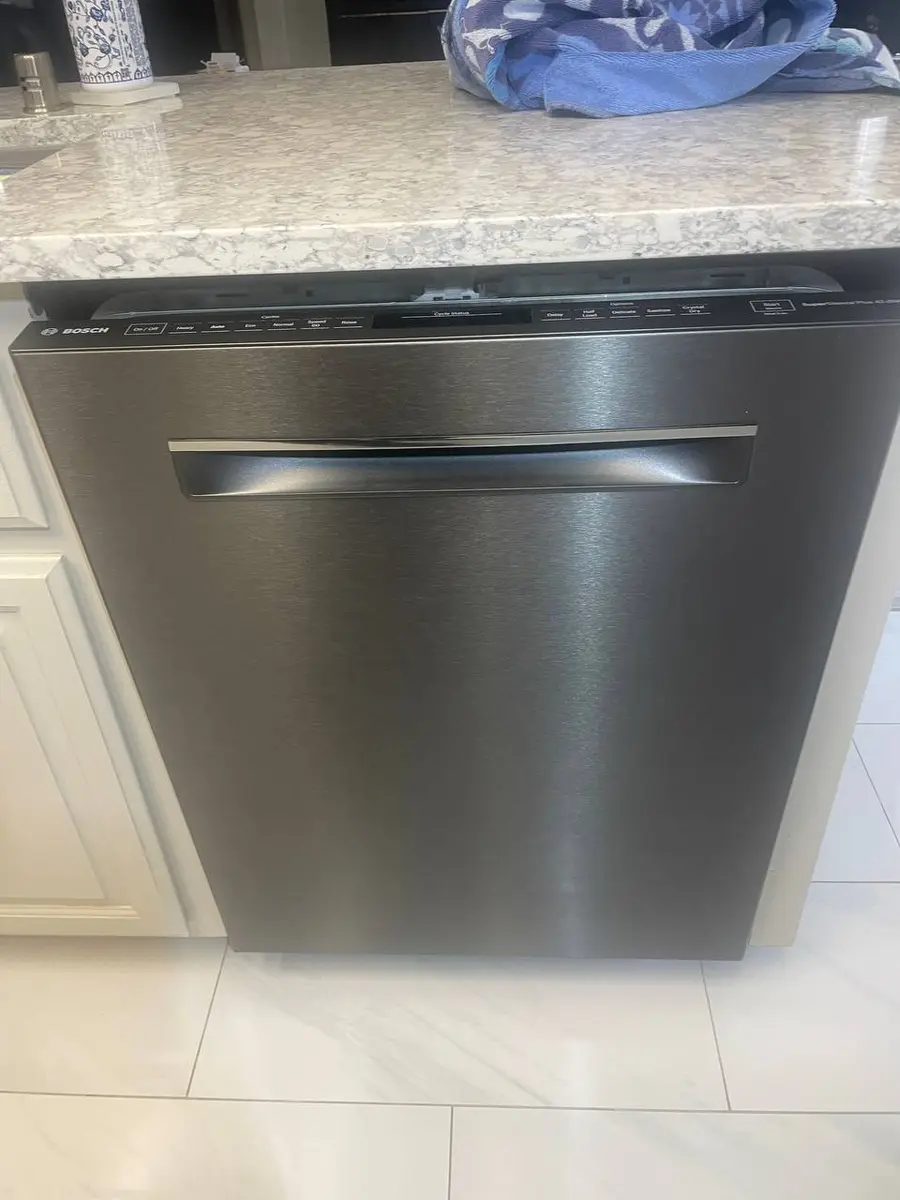
Quick Answer: Why Your Bosch Dishwasher Shakes#
Most likely: the machine is not level. Bosch dishwashers are engineered to run near-silent, so any noticeable vibration is a real fault, and the most common one is uneven leveling — even a two-to-three-millimeter difference between the feet lets the circulation pump's hydraulic force rock the cabinet instead of distributing evenly. After leveling, the usual causes are hardened rubber pump mounting grommets that no longer absorb vibration, a worn spray-arm bearing that makes the arm wobble, and a hard object rattling inside the drain pump. Where the vibration falls in the cycle — wash phase versus drain phase — tells you which.
Likely Causes at a Glance#
| Cause | Likelihood | What to check |
|---|---|---|
| Machine not level | 35% | rocking during pump operation; feet uneven front-to-back or side-to-side |
| Pump mounting grommets degraded | 25% | constant vibration during wash; hardened, cracked rubber grommets |
| Spray-arm bearing worn | 20% | rhythmic wobble matching arm rotation; an arm that spins rough by hand |
| Object in the drain pump | 12% | vibration only during drain, with a rattle from the base |
| Cabinet or countertop resonance | 8% | the counter hums but the machine itself barely vibrates |
Do You Have the Right Tools?
Water pressure gauge ($60), spray arm tester, float switch multimeter ($85), and drain inspection camera. Our technician arrives with $3,000+ in professional tools — your diagnostic is free.
Licensed & Insured · 90-Day Warranty · Same-Day Service
Walking Through the Diagnosis#
Level it first, since that is both the most common cause and the quickest fix. Remove the lower access panel (two Torx T20 screws), set a torpedo level on the tub floor with the racks out, and adjust the threaded feet — clockwise to raise, counterclockwise to lower — leveling front-to-back first and then side-to-side before tightening the lock nuts. Also confirm the anti-tip brackets secure the top of the dishwasher to the underside of the countertop, since an unsecured machine can walk forward and rock over time.
If it is level and the vibration is constant during the wash phase but stops during drain or idle, the circulation pump's rubber mounting grommets have hardened and are passing vibration straight to the frame instead of absorbing it — reached from the base plate, they should be pliable, not cracked, and are replaced from a mounting kit. A rhythmic wobble that matches the spray-arm rotation, once every couple of seconds during wash, points at a worn spray-arm bearing: pull each arm and spin it on a flat surface, and any wobble or roughness means the bearing (BSH 00611317) needs replacing, while a one-sided blocked nozzle can also throw the arm off balance. Vibration that occurs only during the drain phase, with a grinding rattle from the base, is a hard object — glass or a bone fragment — caught in the drain pump impeller; clear it through the twist-off impeller cap. Finally, if the machine itself barely vibrates but the countertop hums, it is cabinet resonance amplifying the normal low-frequency vibration — tighten the anti-tip brackets, add foam tape between the machine and the counter, and secure any loose adjacent panels.
Repair or Replace? The Short Version#
None of this condemns the dishwasher. Leveling and clearing drain debris are free, and pump grommets or a spray-arm bearing are inexpensive parts on a machine that otherwise runs quietly. Nothing here approaches the cost of a new Bosch. Because unchecked vibration loosens fittings and wears the pump bearing further, it is worth leveling and securing the machine early, and if a level machine still shakes during wash, have the pump grommets and spray-arm bearing checked — book a repair.
Safety First — Know the Risks
Live 120V wiring in a wet environment is one of the most dangerous DIY scenarios. Water + electricity = serious shock risk. Our techs are licensed and insured — let them handle the risk.
Licensed & Insured · 90-Day Warranty · Same-Day Service
Frequently Asked Questions#
My Bosch dishwasher vibrates only during the wash — what's wrong?#
Vibration during the wash phase that stops during drain usually means either the machine is not level or the circulation pump's rubber mounting grommets have hardened. Level it first with a torpedo level on the tub floor; if it is level and still vibrates during wash, the pump grommets are passing vibration to the frame and should be replaced.
It only vibrates and rattles during the drain — why?#
Vibration confined to the drain phase, with a rattle from the base, is almost always a hard object — a glass shard or bone fragment — caught in the drain pump impeller. Access the impeller through the twist-off cap in the base and remove the debris; it usually clears both the noise and the shaking.
How do I level a Bosch dishwasher?#
Remove the lower access panel (two Torx T20 screws) and put a level on the tub floor with the racks out. Turn the threaded feet clockwise to raise or counterclockwise to lower, leveling front-to-back then side-to-side, and tighten the lock nuts. Then confirm the anti-tip brackets hold the top to the countertop.
The counter hums but the dishwasher seems fine — is that a fault?#
That is usually cabinet or countertop resonance amplifying the machine's normal quiet vibration rather than a broken part. Make sure the anti-tip brackets secure the top to the counter, add foam tape between the machine and the underside, and tighten any loose adjacent cabinet panels to damp the resonance.
Appliance Repair Technician · 8 years experience
Experienced technician with 8 years specializing in dishwasher repairs and European appliance brands including Bosch and Thermador.