Agitator vs Impeller Washer
Agitator vs Impeller Washer: each has distinct strengths in reliability, repair cost, and longevity. See the detailed comparison below for repair data and our technician recommendation.
The agitator vs impeller debate is the modern version of "top-load vs front-load" — but contained within the top-load category. Traditional top-load washers have a central agitator post that twists clothes through water. Modern HE top-load washers use a low-profile impeller disc at the bottom of the tub that creates water currents. From a repair technician's perspective, these two mechanisms create distinctly different failure patterns.
How Do the Mechanisms Compare?#
Agitator: A tall central post with fins/vanes that extends from the bottom of the tub to above the water line. The base of the agitator connects to the transmission (on belt-drive models) or directly to the motor shaft (on direct-drive models). The upper portion ratchets back and forth on directional "dogs" — small plastic cams that wear out predictably.
Impeller: A flat or slightly conical disc at the bottom of the tub with raised ridges. It sits flush with the tub bottom and rotates in alternating directions. No central post protrudes into the wash space. The impeller connects directly to the motor through a hub.
Do You Have the Right Tools?
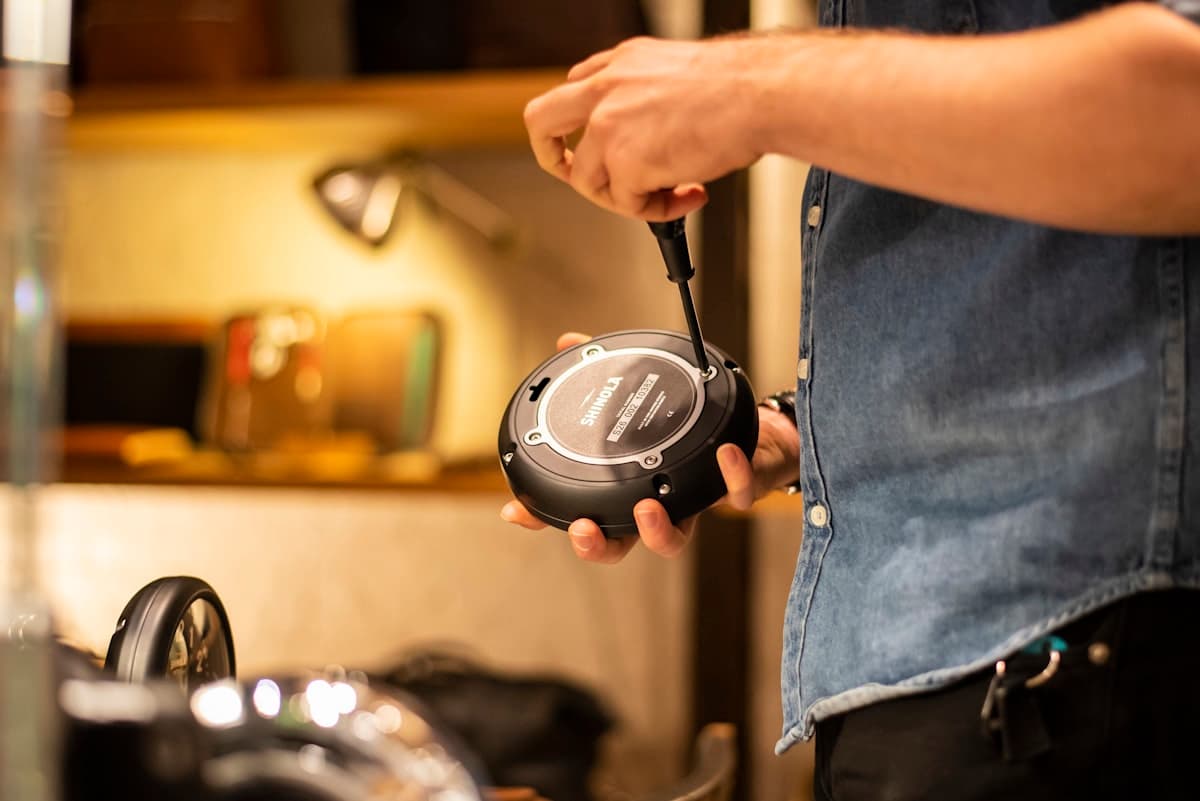
Bearing puller set ($120), drum spider wrench ($85), multimeter ($85), and diagnostic software. Our technician arrives with $3,000+ in professional tools — your diagnostic is free.
Licensed & Insured · 90-Day Warranty · Same-Day Service
How Do Repair Costs Compare?#
| Repair | Agitator Washer | Impeller Washer |
|---|---|---|
| Agitator dogs (ratcheting cams) | Varies | N/A |
| Agitator coupler/bolt | Varies | N/A |
| Impeller disc/hub | N/A | Varies |
| Motor coupler | Varies | Varies by platform |
| Transmission/gearcase | Varies | N/A (most are direct-drive) |
| Suspension springs | Varies | Varies |
| Drain pump | Varies | Varies |
| Lid switch/lock | Varies | Varies |
| Control board | Varies (if electronic) | Varies |
| Clutch assembly | Varies | Varies |
| Balance ring | Rare failure | Varies |
Average repair cost over 10 years: Agitator varies by model. Impeller varies by model.
Agitator Washer: The Repair Technician's Favorite#
Agitator Dogs (The Quick Fix)#
The most common agitator washer repair is the agitator dogs — four small plastic directional couplers inside the top of the agitator. These allow the agitator to ratchet in one direction during the wash stroke. After 3-5 years, the dogs' teeth wear smooth and the upper agitator spins freely in both directions (no ratcheting action = no agitation).
Diagnosis: Grab the top of the agitator and twist. If it spins freely in both directions, the dogs are worn. On a working agitator, it should ratchet freely one way and lock the other.
Repair: Pull the agitator cap (snap-fit or single bolt), pull the fabric softener cup, remove the retaining bolt/clip, lift out the top portion, replace the four dogs (they drop in), reassemble. Total time: 15-20 minutes. Parts cost varies for a 4-pack. Total cost varies by model.
This repair is so common and so inexpensive that it barely registers as a "problem." It is routine maintenance, like changing an air filter.
Transmission (The Big-Ticket Agitator Repair)#
Belt-drive agitator washers (the classic Whirlpool/Kenmore design) use a gearcase that converts motor rotation into reciprocating agitation and spin. When the gearcase fails internally, the washer may agitate but not spin (or vice versa), or produce grinding noises during either cycle.
Gearcase replacement: varies by model. This is the most expensive common agitator repair, but gearcases typically last 10-15 years. Direct-drive agitator models (Whirlpool platform since the 1980s) eliminated the gearcase, using a motor coupler instead — a repair (cost varies by model) when it fails.
Safety First — Know the Risks
High-voltage components and pressurized water lines create flood and shock risk. A single loose fitting can cause thousands in water damage. Our techs are licensed and insured — let them handle the risk.
Licensed & Insured · 90-Day Warranty · Same-Day Service
Impeller Washer: More Electronic, More Complex#
Suspension and Balance Issues#
Impeller washers spin at higher speeds (800-1,100 RPM) than agitator models (600-800 RPM) to extract more water from clothing. This requires a more robust suspension system with electronic load balancing. When the suspension weakens:
- The tub bangs against the cabinet during spin (off-balance detection may reduce spin speed or stop the cycle)
- Error codes related to unbalanced load appear frequently
- The electronic control board attempts to rebalance by redistributing water, adding cycle time
Suspension repair (springs, dampener pads, balance ring): varies by model. Diagnosis requires running the machine through a spin cycle to observe which suspension component is failing — harder to diagnose by visual inspection alone compared to agitator models.
Electronic Controls#
Every impeller washer uses electronic controls (there are no mechanical-timer impeller washers). This means:
- Control board failures are possible (varies by model to replace)
- Pressure transducer failures affect water level sensing - Motor control boards on some platforms are separate from the main board - Diagnostic error codes require code-reading procedures specific to each brand
Agitator washers exist in both mechanical-timer and electronic-control versions. Mechanical-timer agitator washers have no control board to fail — the timer is the control system, and it varies by model and condition to replace.
Impeller Hub Wear#
The impeller disc connects to the motor shaft via a hub (sometimes called a wash plate coupler). Under heavy loads or with heavily soiled items, the hub can strip — the motor turns but the impeller does not. Hub replacement: varies by model. This is the impeller equivalent of agitator dogs, but less frequent and more expensive.
Cleaning Performance: The Practical Difference#
Agitator strength: Heavy soil (work clothes, athletic gear, cloth diapers, muddy items). The agitator physically rubs clothing against itself and the agitator fins, providing mechanical cleaning action beyond what water currents alone achieve.
Impeller strength: Normal household loads, delicates, large items (comforters, blankets). The absence of a central post means more usable tub volume. Water current cleaning is gentler, producing less wear on fabric.
The detergent factor: Impeller washers MUST use HE (High Efficiency) detergent. Regular detergent produces excessive suds in the low-water environment, causing:
- Poor rinsing (detergent residue on clothes)
- Suds locking the drain pump
- Mold and odor from detergent buildup in the tub
- Error codes for excessive suds (F0E2 on Whirlpool, nd or 5d on Samsung)
Using the wrong detergent is the single most common user-caused "failure" on impeller washers. The machine is not broken — the owner used non-HE detergent. But it generates a service call (diagnostic fee applies) that agitator washers rarely trigger.
The Real Cost of DIY
Average DIY attempt: $150-400 in tools you may use once, plus the risk of further damage. Our diagnostic visit costs $0 — we find the problem and give you an honest quote.
Licensed & Insured · 90-Day Warranty · Same-Day Service
Which Lasts Longer?#
| Factor | Agitator | Impeller |
|---|---|---|
| Expected lifespan | 12-18 years | 10-14 years |
| Critical failure age | 10-15 years (gearcase/motor) | 8-12 years (motor/board) |
| Parts availability window | 15-20 years post-discontinuation | 8-12 years |
| Technology stability | Design unchanged for decades | Platform changes every 3-5 years |
Agitator washers benefit from extraordinary design stability. A Whirlpool direct-drive agitator washer from 2005 uses many of the same parts as a 2020 model. Impeller platforms change more frequently — Whirlpool's Cabrio/Bravos impeller platform has gone through three major revisions, each with different motor and control board configurations.
What Do Technicians See in the Field?#
In our service fleet:
- Agitator washers represent 30% of washer calls but only 15% of repair revenue (repairs are cheap and fast)
- Impeller washers represent 25% of calls and 30% of revenue (repairs cost more and take longer)
- Front-load washers represent 45% of calls and 55% of revenue (most expensive to repair)
The agitator washer is the appliance technician's easiest job. The impeller washer is a middle tier. Neither is difficult, but the impeller's electronic components add diagnostic time that the agitator's mechanical simplicity avoids.
Our service data across the [Sacramento](/sacramento/sacramento) and Bay Area markets confirms the agitator vs impeller debate is the modern version of "top-load vs front-load" — but contained within the top-load.
Not sure which type you have or need help with a repair? EasyBear technicians service every washer configuration. Book your diagnostic appointment today and we will handle the rest.
Lead Appliance Repair Technician · 12 years experience
Experienced technician with 12 years specializing in washing machine and dryer repairs across all major brands.