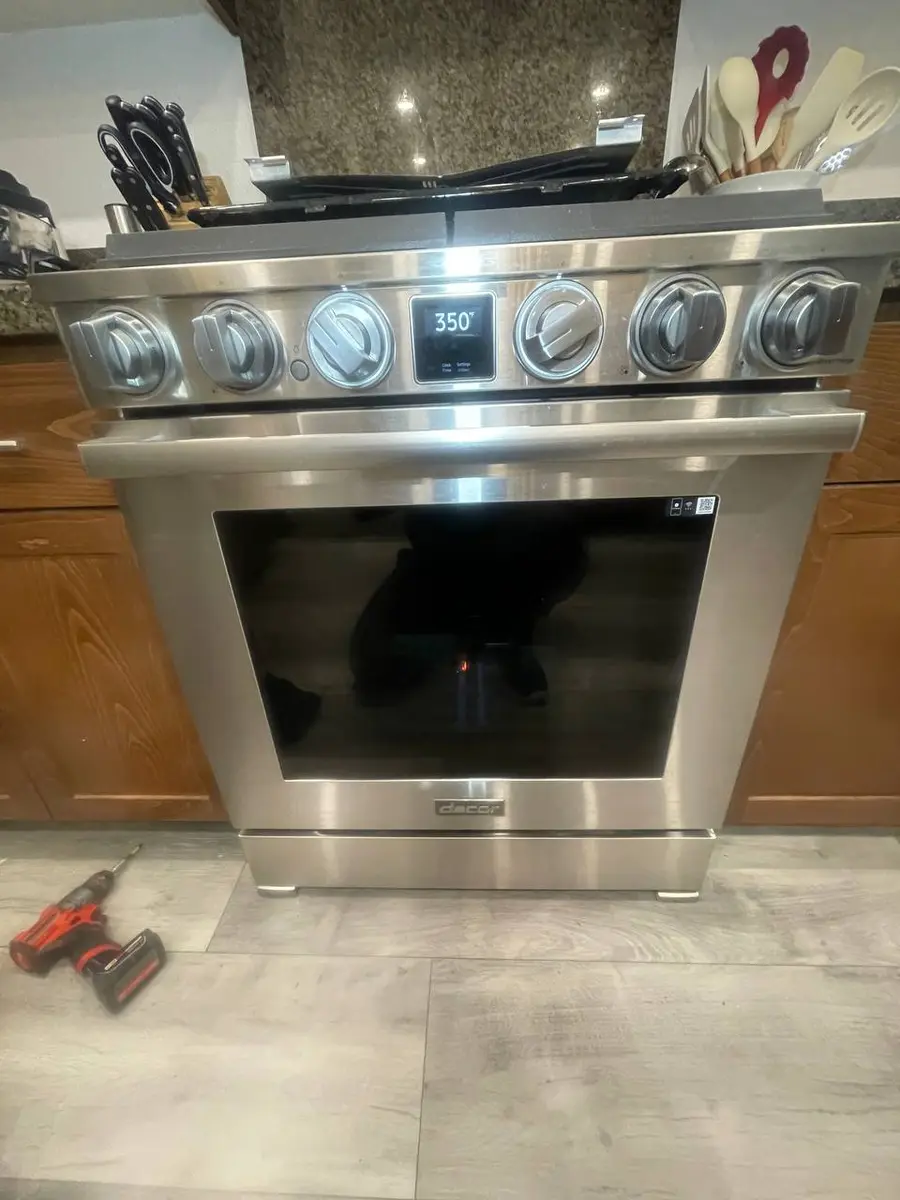
Verdict up front: a Wolf gas oven igniter is almost always worth replacing. It is the most common repair these ranges need, and against the value of a Wolf the part is minor — only a rare, very high quote on an old range brings the 50% rule into play.
The igniter is what lights the oven burner, and on a Wolf it wears out slowly and predictably. Here is the age-and-cost frame, how to tell a weak igniter from a dead one, and why the specific part Wolf uses is worth insisting on.
Igniter verdict by range age#
Find the range's age, then the column matching the quote against a new Wolf. The bands follow the 50% rule, though an igniter rarely reaches the costly end.
| Range age | Under 25% of new | 25 to 50% | Over 50% |
|---|---|---|---|
| Under 5 years | Repair | Repair | Repair |
| 5 to 8 years | Repair | Repair | Repair |
| 8 to 12 years | Repair | Repair | Judge it |
| Over 12 years | Repair | Judge it | Replace |
Boiled down: replace the igniter whenever the job stays under 25% of a new Wolf, judge it in the 25 to 50% band, and only replace the range if a rare high quote clears 50% on an old unit.
Why the igniter fails, and why it is worth fixing#
A Wolf igniter is the most common repair on these ovens because it weakens gradually over a typical eight-to-twelve-year life. As it ages it draws less current, until eventually it cannot pull enough to open the safety gas valve and the oven stops lighting. Because the part is inexpensive against the price of a Wolf range, restoring it is one of the clearest repair decisions there is — you are recovering the oven's core function for a small fraction of replacement.
How to tell a weak igniter from a dead one#
Wolf igniters usually degrade rather than die outright, so watch the timing. If the igniter glows but gas does not light within about ninety seconds, or the oven takes fifteen minutes or more to preheat when the norm is eight to ten, the igniter is weakening even though it still glows visibly. That slow, drawn-out lighting is the tell that it is drawing insufficient amperage — the moment to replace it, before it fails to light at all.
Why the right igniter matters#
Wolf uses silicon carbide, or carborundum, flat igniters rated at roughly 3.2 to 3.6 amps, which is a heavier-duty part than the 2.5-amp igniters in consumer ranges. That rating is not a detail to ignore: a consumer-grade igniter may not draw enough current to open the Wolf gas valve reliably, so always fit a Wolf-specified or equivalent part. Saving a little on a lighter igniter can leave you with the same no-light problem you started with.
What the quote leaves out#
Even a cheap repair has a fuller replacement picture. A new range means delivery, haul-away, and possible cabinet, gas, or electrical work for a different body. Genuine Wolf parts run 10 to 30% above generic equivalents but fit correctly and hold any coverage. Confirm the igniter is the fault first, since a gas valve or wiring issue can imitate it, and get a second quote if the first feels high.
Why you should not wait it out#
A weakening igniter is tempting to ignore while the oven still lights eventually, but that patience carries a real risk. Each time the glowing igniter fails to catch the gas promptly, unburned gas is released into the cavity before ignition, which can produce a small delayed flare when it finally lights. Replacing a fading igniter early removes that hazard and restores fast, reliable lighting, and because the part is inexpensive it is never worth living with a slow-to-light Wolf oven.
Not sure the igniter is the culprit? A professional diagnosis confirms it, checks the gas valve, and fits the correct silicon carbide part for your Wolf.
Appliance Repair Technician · 11 years experience
Experienced technician with 11 years specializing in Frigidaire and Electrolux refrigerator and dryer repair with a focus on safety.