Whirlpool Refrigerator Vibrating or Shaking
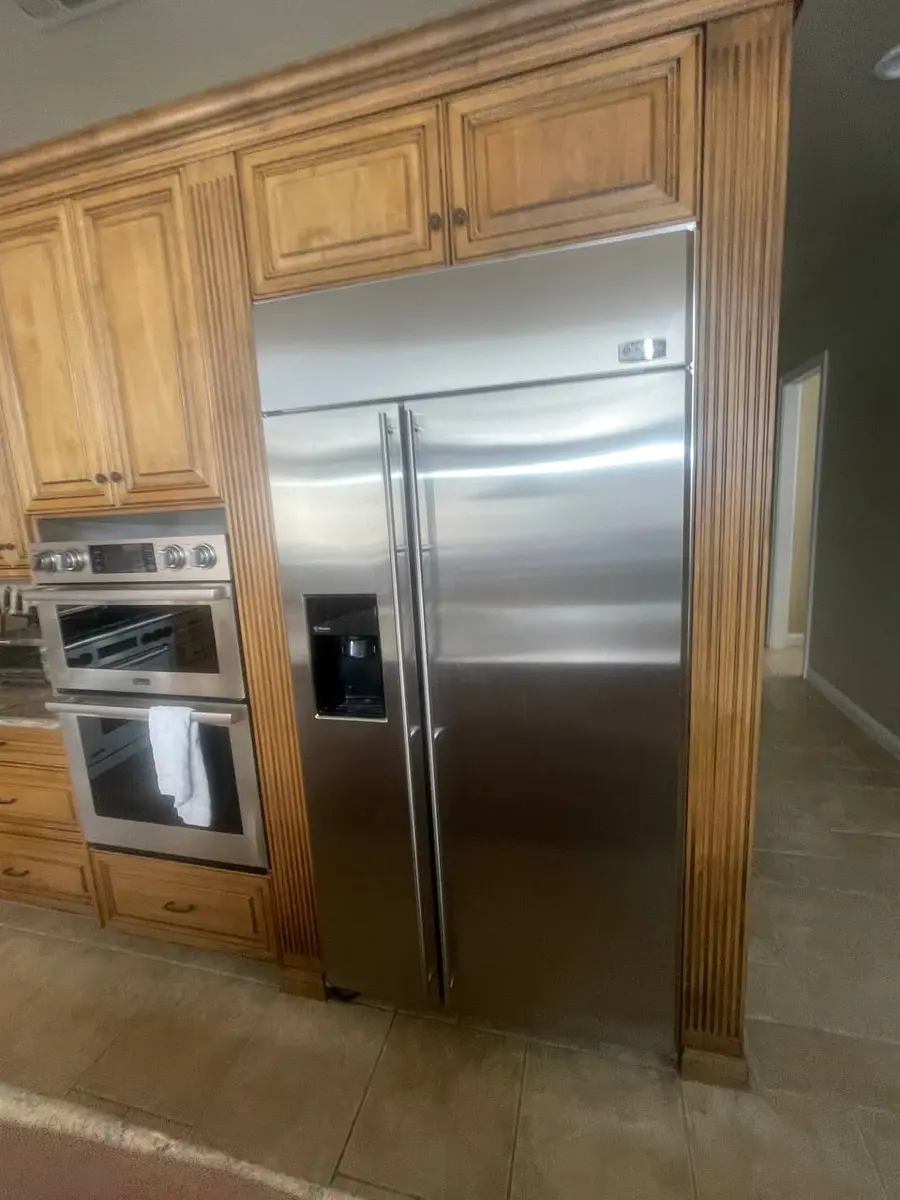
The most common reason a Whirlpool refrigerator vibrates or shakes — about 30% of cases — is that the unit simply isn't level, so the cabinet rocks and amplifies normal compressor and fan vibration. A failing condenser fan motor, items touching the cabinet, worn compressor mounting grommets, a rattling drain pan,…
Most Shaking Starts With Leveling#
A little hum and vibration is normal for any refrigerator, but a noticeable shake or a buzzing rattle usually has a simple mechanical cause. The reassuring part is that the single most common one — leveling — is something you can check and correct in a few minutes.
Ranked Causes on Whirlpool Refrigerators#
| What you notice | Likely cause | Share of cases | Fix path |
|---|---|---|---|
| Whole cabinet rocks or buzzes; worse when running | Refrigerator not level | 30% | Adjust the leveling legs |
| Growing hum or rattle from the back-bottom | Condenser fan motor failing | 20% | Replace the condenser fan motor |
| Buzzing that changes when you touch the cabinet | Items touching the refrigerator | 15% | Move adjacent furniture and items |
| Deep vibration through the floor | Compressor mounting grommets worn | 12% | Replace the compressor grommets |
| Rattle from underneath | Drain pan loose or rattling | 10% | Secure or reseat the drain pan |
| Vibrating buzz from inside, with frost | Evaporator fan icing | 8% | Address the defrost/icing cause |
| Brief buzz on a schedule | Ice-maker water-fill valve | 5% | Service the fill valve if it buzzes |
Leveling tops the list because an unlevel cabinet turns the compressor's normal running vibration into a rock or a buzz. A condenser fan motor going bad hums and rattles from the lower back as its bearing wears. Items touching the cabinet — furniture, a counter, or bottles on top — transmit and amplify vibration, which is why the noise changes when you press on the unit.
Worn compressor grommets let the compressor's vibration reach the cabinet and floor, a rattling drain pan buzzes from underneath, evaporator-fan icing makes an internal vibrating noise, and an ice-maker fill valve can buzz briefly on its schedule.
Do You Have the Right Tools?
Refrigerant gauges ($200+), vacuum pump ($250), leak detector ($150), and EPA-certified recovery equipment. Our technician arrives with $3,000+ in professional tools — your diagnostic is free.
Licensed & Insured · 90-Day Warranty · Same-Day Service
Try Leveling First#
Put a level on top of the refrigerator and check side-to-side and front-to-back. Whirlpool units should sit level or tilted very slightly back, and the front leveling legs adjust with a turn. Correcting the level alone stops a large share of shaking complaints because it removes the rocking that amplifies everything else.
Next, make sure nothing is touching the cabinet — pull it a little away from the wall and adjacent furniture, and clear the top. Press on the cabinet while it runs; if the buzz changes, contact is the culprit. Beyond leveling and clearance, a failing condenser fan, worn grommets, or evaporator-fan icing are internal repairs a technician handles.
Why an Unlevel Fridge Shakes So Much#
It can seem odd that something as basic as leveling causes the most vibration complaints, but the mechanism is straightforward. A refrigerator always produces some vibration — the compressor runs, fans spin, and refrigerant moves — and the cabinet is engineered to sit solidly on all its feet so that energy is absorbed by the floor. When one leg is short or the unit rocks on an uneven floor, that same normal vibration is no longer damped; instead the cabinet has room to move, so it rocks and buzzes and transmits the sound outward. The effect compounds when the cabinet also touches a wall, a counter, or bottles on top, which act like a soundboard. That's why two simple, free adjustments — leveling the feet and creating a little clearance all around — resolve such a large share of "my fridge is shaking" complaints before any part is even considered.
Safety First — Know the Risks
Refrigerant (R-134a/R-600a) requires EPA certification to handle. Improper discharge is a federal violation and health hazard. Our techs are licensed and insured — let them handle the risk.
Licensed & Insured · 90-Day Warranty · Same-Day Service
Getting It Fixed#
Leveling and clearance you can do yourself; a fan or grommet needs service. Book a diagnostic and we'll pinpoint whether it's leveling, a fan, or the compressor mounts and fix the source of the shake.
Lead Appliance Repair Technician · 12 years experience
Experienced technician with 12 years specializing in washing machine and dryer repairs across all major brands.