KitchenAid Refrigerator Not Cooling — Diagnosis & Repair Guide
A KitchenAid refrigerator that stops cooling represents a serious threat to both your food investment and the premium appliance itself. KitchenAid refrigerators — whether you own a KRFF-series French door, a KRMF counter-depth model, or a KBSD built-in — rely on sophisticated temperature management systems like the Preserva Food Care System with its dual independent cooling circuits. When cooling fails, the cause often traces to components unique to these premium units rather than generic refrigerator parts.
This guide covers the specific failure patterns our technicians encounter in KitchenAid refrigerators across the Sacramento and Bay Area region, where kitchen remodels frequently feature KBSD built-in panels that add complexity to every service call.
How KitchenAid's Cooling Architecture Differs
Unlike basic refrigerators with a single evaporator, most KitchenAid models from the last decade use the Preserva Food Care System — two independent cooling systems that separately manage the refrigerator and freezer compartments. This means a cooling failure in the fresh-food section does not necessarily affect the freezer, and vice versa. The ExtendFresh Plus temperature management system adds dedicated fans and precision sensors that maintain tighter temperature tolerances than standard refrigerators.
KitchenAid shares its underlying platform with Whirlpool (same parent company), so internal components often carry W10-prefix part numbers. However, the additional premium features — Platinum Interior lighting arrays, counter-depth configurations with tighter clearances, and panel-ready built-in installations — create unique service challenges.
Do You Have the Right Tools?
Refrigerant gauges ($200+), vacuum pump ($250), leak detector ($150), and EPA-certified recovery equipment. Our technician arrives with $15K+ in professional tools — your diagnostic is free.
Licensed & Insured · 90-Day Warranty · Same-Day Service
Safety Precautions
- Disconnect power at the circuit breaker before any internal inspection. Built-in KBSD models may not have accessible plugs behind the unit.
- Shut off the water supply valve before working near ice maker or water lines.
- On panel-ready built-in models, do not attempt to pull the unit forward without first disconnecting custom cabinet panels — the weight of hardwood panels can damage hinges.
- KitchenAid's PrintShield stainless finish scratches easily. Place protective padding before leaning tools against the exterior.
Most Common Causes (Ranked by Likelihood)
1. Condenser Coils Obstructed (30% of cases)
KitchenAid counter-depth models (KRFC/KRMF series) position the condenser coils in a particularly tight space behind the unit. Because these refrigerators sit nearly flush with cabinetry — the entire point of counter-depth design — airflow around the condenser is already restricted compared to standard-depth units. Dust accumulation of even a quarter-inch can push the compressor into thermal overload.
On KBSD built-in models, the condenser is accessible through the bottom toe-kick grille. Bay Area homes with pets accumulate fur in this grille rapidly, and the confined built-in cavity provides zero passive airflow to compensate.
Diagnosis: Pull the bottom grille (two tabs on KRMF models, three screws on KBSD). Inspect coils with a flashlight. If matted with dust or pet hair, this is likely your cause.
DIY Difficulty: Easy Parts Cost: $0 (cleaning only) Professional Repair Cost: $89-150 (service call + coil cleaning)
Repair Steps:
- Disconnect power at the breaker. On built-in models, locate the dedicated 15A or 20A circuit.
- Remove the toe-kick grille — press release tabs on freestanding models or remove screws on built-ins.
- Use a condenser coil brush (long, narrow bristle brush) to sweep dust from front to back across the coil face.
- Vacuum loose debris with a crevice attachment. On KBSD units, also vacuum the fan blade area.
- Reinstall grille, restore power, and allow 4-6 hours for temperatures to stabilize.
2. Evaporator Fan Motor Failure (25% of cases)
The Preserva Food Care System relies on dedicated evaporator fans in both compartments. When the fresh-food evaporator fan fails, you will notice the freezer remains cold while the refrigerator section warms — a signature symptom of dual-system models. On single-evaporator KitchenAid units (typically older KRFF models), a failed evaporator fan affects both compartments.
Listen for silence behind the rear panel of the fresh-food section. KitchenAid's ExtendFresh fans normally produce a soft, steady hum. If you hear clicking followed by silence, the motor windings are likely failing.
Diagnosis: Open the fresh-food compartment and listen. If the freezer is cold but the fridge is warm, and you cannot hear fan operation from behind the rear panel, the evaporator fan is the likely culprit. Confirm by entering KitchenAid's diagnostic mode: press the door alarm button three times within 10 seconds on most touchscreen models.
DIY Difficulty: Moderate Parts Cost: $35-85 (W10-series motor, same as Whirlpool equivalent) Professional Repair Cost: $150-295
Repair Steps:
- Unplug the refrigerator or kill the breaker.
- Remove the rear panel inside the fresh-food section (typically 4-6 Phillips screws).
- Disconnect the wire harness from the fan motor.
- Remove the fan mounting bracket (2 screws or clips depending on model year).
- Install the new motor, reconnect the harness, and reinstall the rear panel.
- Restore power and verify fan operation by listening for airflow from the upper vents.
3. Damper Control Assembly Stuck Closed (20% of cases)
KitchenAid refrigerators use a motorized damper (air diffuser) to regulate cold air flowing from the freezer evaporator into the fresh-food compartment. On Preserva dual-system models, each compartment has its own damper controlled by independent thermistors. When the damper motor fails or the damper door physically sticks closed — often from ice buildup around its foam seal — cold air cannot reach the refrigerator section.
This failure is especially common after power outages. The damper motor resets to a closed position during power loss, and if the control board does not properly reinitialize, it may remain stuck.
Diagnosis: Remove the upper rear panel inside the fresh-food section and locate the damper assembly (rectangular housing with a small motor). Manually check if the flap moves freely. On models with digital displays, error code dF or a flashing temperature display often indicates damper malfunction.
DIY Difficulty: Moderate to Difficult Parts Cost: $85-210 Professional Repair Cost: $195-420
Repair Steps:
- Disconnect power and empty the upper shelves for access.
- Remove the air diffuser housing cover (usually behind the temperature control panel area).
- Disconnect the damper motor electrical connector.
- Remove mounting screws and extract the damper assembly.
- Install the replacement — ensure the foam seal seats properly against the housing.
- Reconnect, reassemble, and allow 24 hours for temperature equilibrium.
4. Compressor Start Relay Failure (15% of cases)
The compressor start relay on KitchenAid refrigerators is a small device mounted on the side of the compressor. It provides the initial electrical boost to start the compressor motor. When it fails, you may hear a click followed by silence every few minutes as the compressor attempts to start and immediately shuts off on overload.
KitchenAid uses the same compressor platform as Whirlpool, and the start relay (often part number W10613606 or equivalent) is a common wear item after 7-10 years. A burnt smell near the compressor area strongly suggests this component.
Diagnosis: Pull the refrigerator out (carefully on built-in models — you may need to remove the toe-kick and access from below). Unplug the start relay from the compressor side. Shake it gently — if you hear rattling, the internal contacts have broken and it needs replacement.
DIY Difficulty: Easy (if accessible) Parts Cost: $15-45 Professional Repair Cost: $95-195
Repair Steps:
- Disconnect power completely.
- Access the compressor area — bottom rear on freestanding, through toe-kick on built-in.
- Pull the start relay straight off the compressor pins.
- Push the new relay onto the compressor pins in the same orientation.
- Restore power and listen for the compressor to start and run continuously.
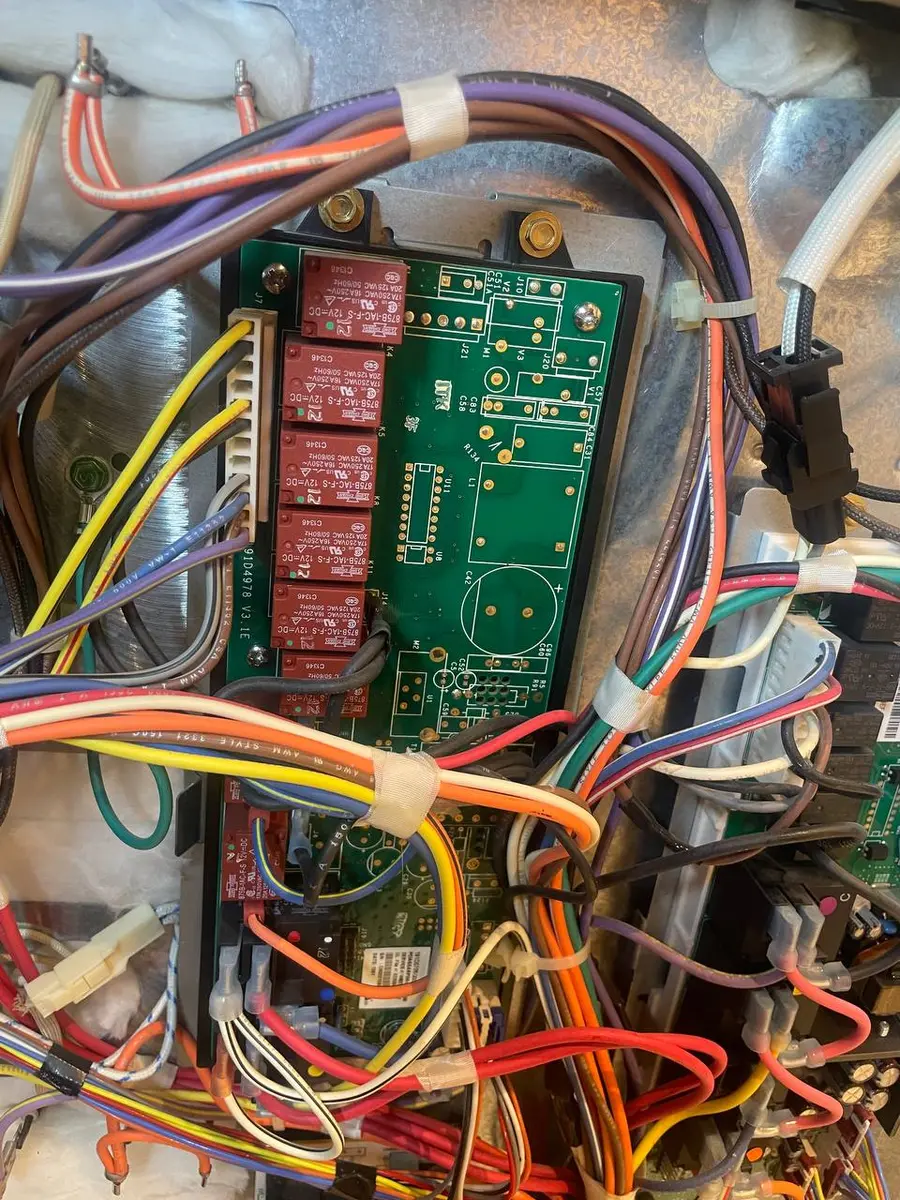
5. Main Control Board Malfunction (10% of cases)
KitchenAid's electronic control boards manage the Preserva system, ExtendFresh fans, defrost cycles, and all temperature regulation. Board failures often present as intermittent cooling — the refrigerator works sometimes but not consistently. Power surges are the primary cause, particularly in older Bay Area homes without whole-house surge protection.
On KRMF and KBSD models, the main control board sits behind the rear access panel at the bottom of the unit. Look for burn marks, swollen capacitors, or corroded solder joints.
DIY Difficulty: Difficult Parts Cost: $150-380 (model-specific board) Professional Repair Cost: $300-550
Safety First — Know the Risks
Refrigerant (R-134a/R-600a) requires EPA certification to handle. Improper discharge is a federal violation and health hazard. Our techs are licensed and insured — let them handle the risk.
Licensed & Insured · 90-Day Warranty · Same-Day Service
Step-by-Step Diagnostic Process
- Check both compartments independently. If the freezer is cold but the fridge is warm, focus on the damper and fresh-food evaporator fan. If both are warm, focus on the compressor, condenser, and control board.
- Listen at the rear base. A running compressor produces a low vibration hum. Silence or clicking means compressor/relay issues.
- Enter diagnostic mode. On most KitchenAid models with digital displays: hold the temperature UP and DOWN buttons simultaneously for 3 seconds, or press door alarm 3x in 10 seconds. The display will show error codes.
- Check the condenser fan (behind the bottom grille). It should spin when the compressor runs. If the compressor runs but this fan does not, replace the condenser fan motor.
- Inspect for frost patterns. Heavy frost on the back wall of the freezer but warm fresh-food section indicates the defrost system is working but air is not transferring — points to damper or fan.
Same-Day Appliance Repair
Fixed or It's Free
$89 → $0 Service Call & Diagnosis — offer ends May 25
DIY vs Professional Repair
| Issue | DIY? | Parts Cost | Professional Cost |
|---|---|---|---|
| Condenser coil cleaning | Yes | $0 | $89-150 |
| Evaporator fan motor | Moderate | $35-85 | $150-295 |
| Damper control assembly | Moderate | $85-210 | $195-420 |
| Start relay | Yes | $15-45 | $95-195 |
| Control board | No | $150-380 | $300-550 |
The Real Cost of DIY
Average DIY attempt: $150-400 in tools you may use once, plus the risk of further damage. Our diagnostic visit costs $0 — we find the problem and give you an honest quote.
Licensed & Insured · 90-Day Warranty · Same-Day Service
KitchenAid-Specific Prevention
- Clean condenser coils every 6 months — critical on counter-depth and built-in models with restricted airflow. Mark your calendar because the flush installation hides the problem until failure.
- Replace the EveryDrop water filter (Filter 4 or 5) on schedule. A clogged filter does not directly cause cooling issues, but the strain on the water system can trigger error codes that put the unit into protective mode.
- Maintain 1/2-inch clearance on sides and top for freestanding models. Built-in KBSD units have engineered ventilation channels — ensure nothing blocks the top grille.
- Install a surge protector rated for refrigerators (minimum 1,000 joules). The sophisticated control boards in KitchenAid units are more vulnerable to surges than basic refrigerators.
- Check door seals quarterly by closing the door on a dollar bill. The Preserva system cannot maintain proper temperatures with even minor seal gaps.
FAQ
Q: My KitchenAid KBSD built-in is not cooling — is it different to repair than a freestanding model?
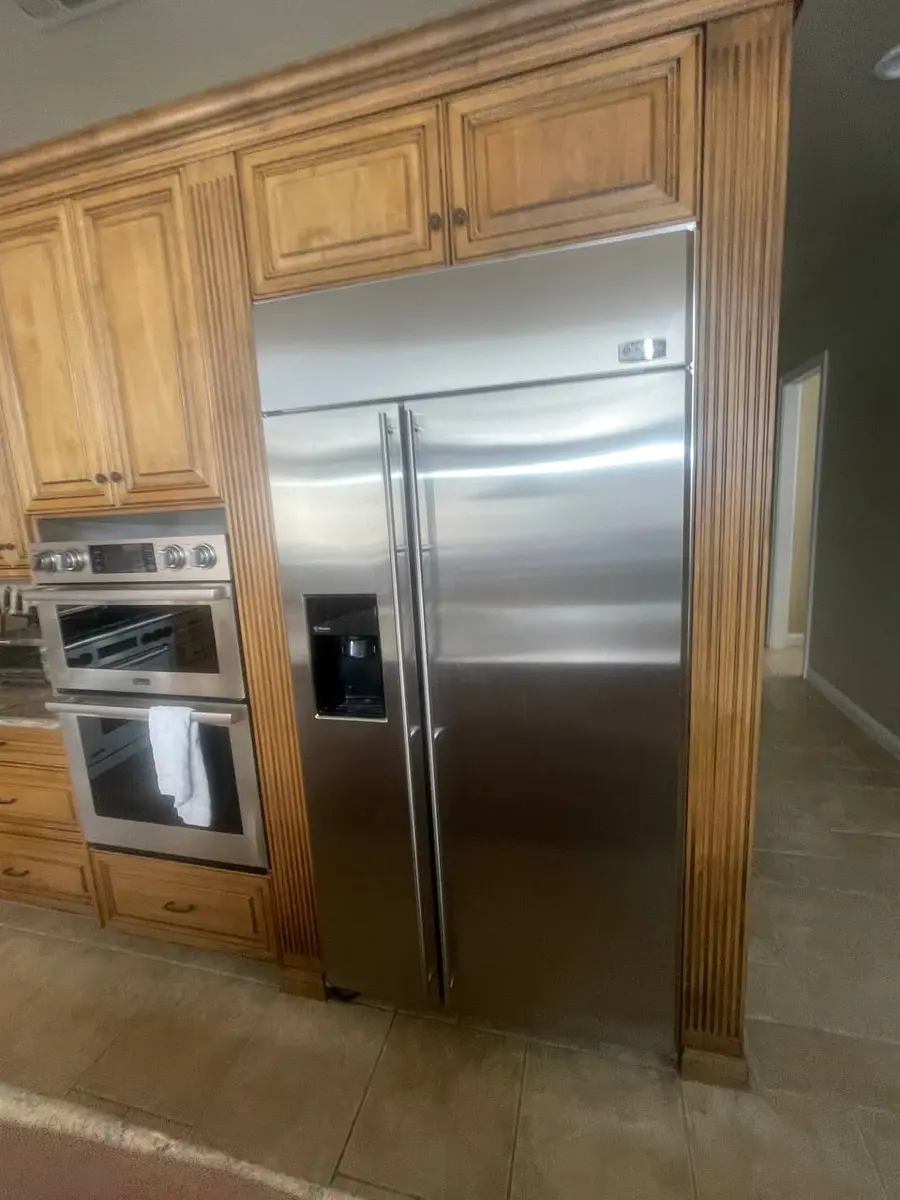
Yes, significantly. Built-in models have separate compressor systems for each compartment, cabinet panel overlays that must be removed for service access, and are flush-mounted in cabinetry making it impossible to pull the unit forward. Service typically requires removing the toe-kick grille and working from below, or removing custom panels to access internal components. Budget 30-50% more for labor on built-in repairs.
Q: Both sides of my KitchenAid refrigerator are warm — what does this mean?
On Preserva dual-system models, if both compartments lose cooling simultaneously, the issue is almost certainly shared infrastructure: the main control board, power supply, or a tripped breaker. On single-system models (older KRFF series), it points to compressor or condenser problems affecting the entire cooling loop.
Q: How much does it cost to fix a KitchenAid refrigerator that is not cooling?
Repairs range from $89 for a simple coil cleaning to $550 for a control board replacement. The most common fix (condenser maintenance + fan replacement) typically runs $150-295 professionally. KitchenAid parts often cross-reference with Whirlpool part numbers at identical pricing.
Q: Is it worth repairing a 10-year-old KitchenAid refrigerator?
Generally yes. KitchenAid refrigerators — particularly the KBSD built-in series — represent a $4,000-$12,000 investment and are designed for 15-20 year lifespans. A $300-500 repair at year 10 is almost always more economical than replacement, especially when factoring in custom panel fabrication costs for built-in models.
Q: My KitchenAid shows error code PO — what does this mean?
PO (Power Outage) means the unit detected a power interruption and is displaying this as a notification, not an error. Press any button to dismiss it. If cooling does not resume within 4-6 hours after dismissing, proceed with the diagnostic steps above.
Need help with your KitchenAid refrigerator? Our technicians service all KitchenAid models including KBSD built-in and KRMF counter-depth units across Sacramento and the Bay Area. Schedule a repair →