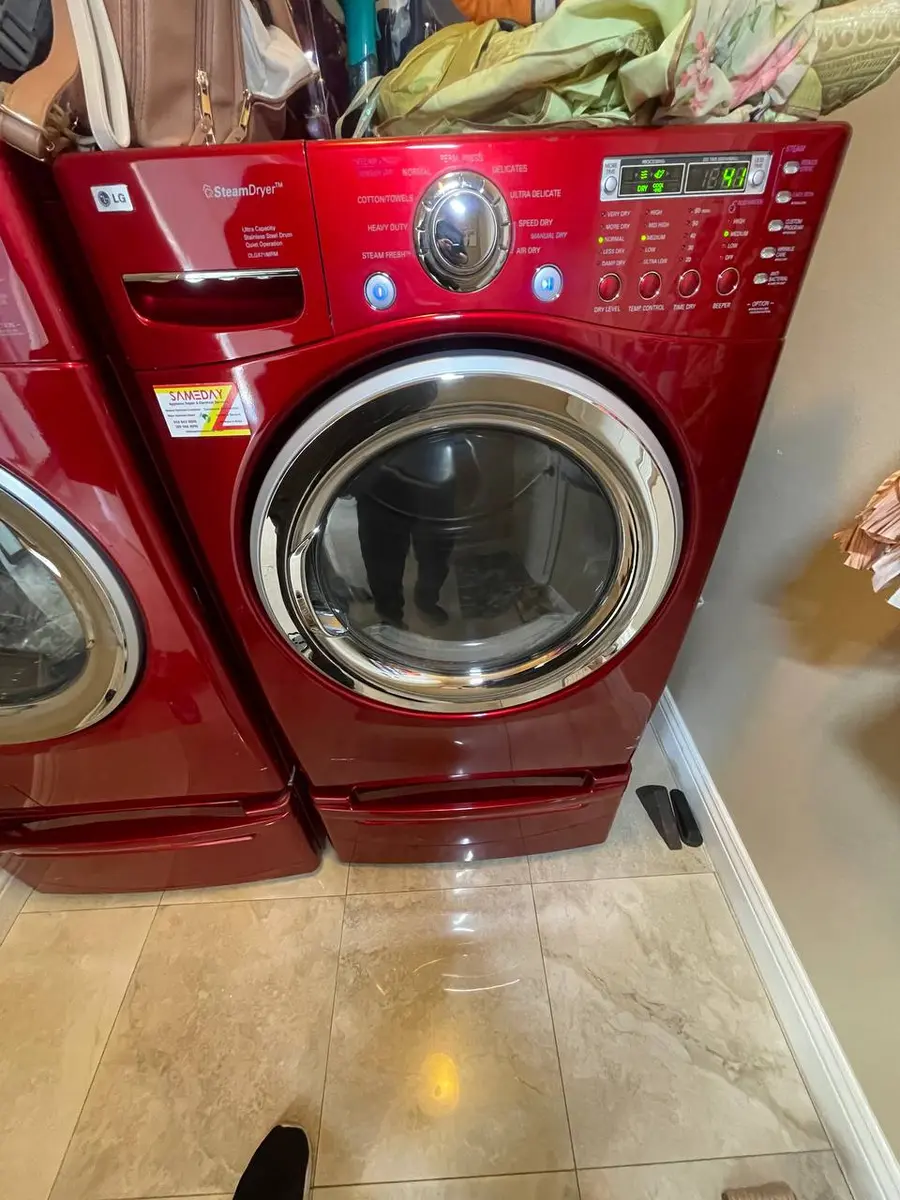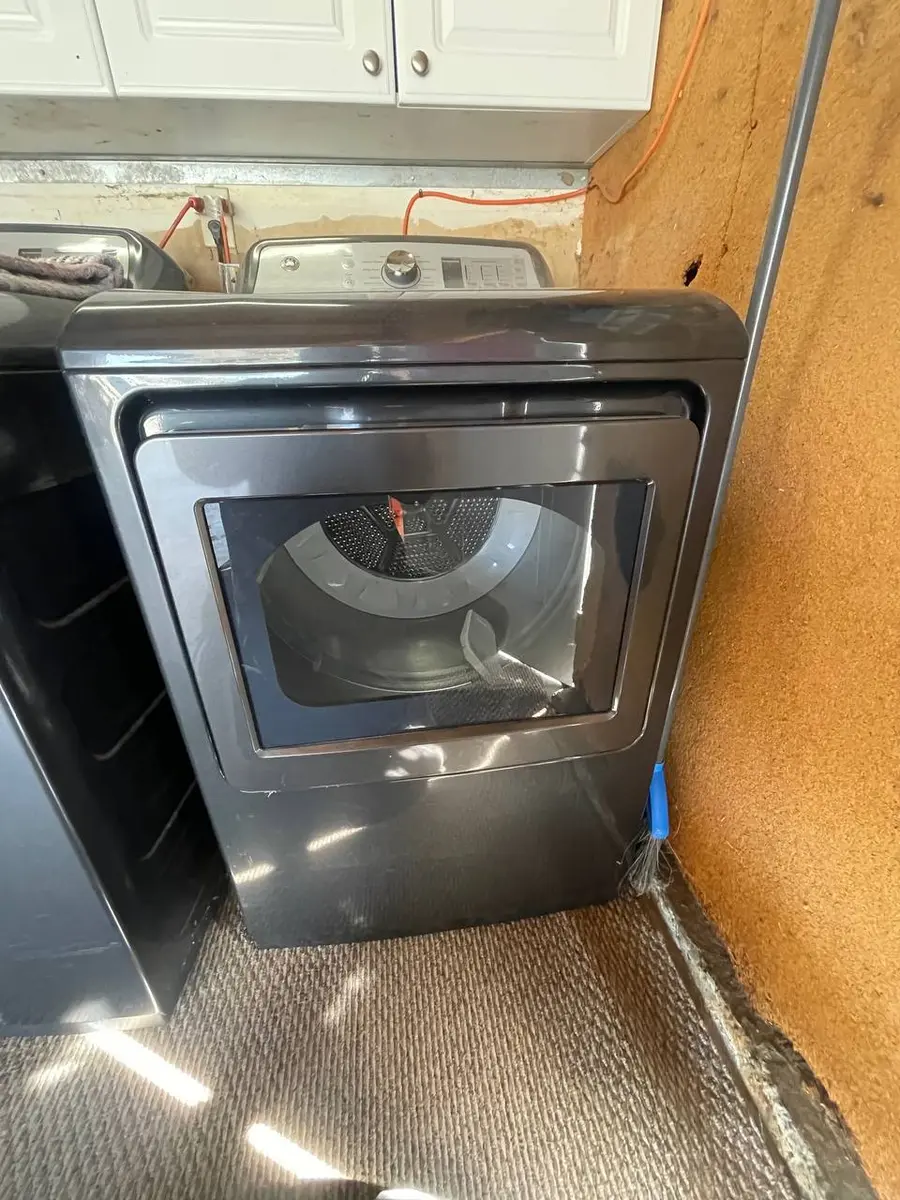
Quick Answer: Why Your Whirlpool Dryer Has Water in It#
Most likely: it depends entirely on which kind of dryer you own. On a standard vented Whirlpool dryer, water pooling in or around the machine is not a drainage problem — it is an airflow problem, where hot, moist exhaust condenses in a cold or restricted vent duct and flows back toward the dryer. On a ventless EcoBoost heat-pump model, which condenses moisture internally, it can be a genuine drainage failure: a collection tank that was not emptied, a stuck float switch, or a failed drain pump. Identify your model type first, because the two fixes have nothing in common.
Likely Causes at a Glance#
| Cause | Likelihood | What to check |
|---|---|---|
| Vent condensation (standard vented) | Most likely | water in the exhaust duct, not a drain fault; crushed, sagging, or cold ducting backing up moisture |
| Collection tank not emptied (EcoBoost) | Common | the removable condensate tank overflowing because it was not emptied after a load |
| Stuck tank float switch (EcoBoost) | Common | mineral deposits jamming the float, so the dryer reads "full" and stops with capacity to spare |
| Drain pump failure (plumbed EcoBoost) | Occasional | tank stays empty but shows "full," or water pools inside and the dryer stops mid-cycle |
| Clogged condenser (EcoBoost) | Occasional | lint on the heat-exchanger fins raising condensate volume; needs periodic cleaning |
Do You Have the Right Tools?
Gas leak detector ($130), thermal fuse tester ($95), belt tension gauge, and vent inspection camera ($180). Our technician arrives with $3,000+ in professional tools — your diagnostic is free.
Licensed & Insured · 90-Day Warranty · Same-Day Service
Walking Through the Diagnosis#
For a standard vented Whirlpool, treat this as a venting job. Disconnect the exhaust duct at the rear and look inside for pooled water, then walk the whole run for crushed, kinked, or sagging flexible sections and confirm the exterior cap flap closes when the dryer is off. Measure total duct length, remembering each 90-degree elbow adds about five feet of equivalent restriction. The fix is to clean the entire path, replace flexible foil duct with rigid four-inch metal, and insulate any run through a cold attic, crawlspace, or exterior wall so the exhaust stops condensing; Whirlpool's four-way venting lets you reconfigure for a shorter path. In diagnostic mode an F4E1 flags restricted airflow and an F4E3 flags excessive exhaust temperature — both consistent with a blocked vent.
For an EcoBoost heat-pump model, the drainage is real. The removable collection tank must be emptied after every load or it overflows; if it was emptied but the dryer still stops reading "full," the float switch is likely stuck from mineral deposits and needs cleaning. Models plumbed to a floor drain use a small drain pump — a failed pump shows up as a tank that stays empty while the "full" indicator displays, water pooling inside, or the cycle stopping partway. And because lint that bypasses the filter builds up on the condenser fins and increases condensate, the heat exchanger needs periodic cleaning to keep the system draining efficiently.
How to Prevent This#
Clean the lint filter after every load, have the vent duct professionally cleaned each year, and confirm the exterior vent flap opens when the dryer runs. On EcoBoost models, empty the collection tank after every cycle and clean the condenser on Whirlpool's schedule so condensate clears properly.
Safety First — Know the Risks
Gas dryers carry carbon monoxide and explosion risk. Even electric dryers involve 240V circuits that can deliver a fatal shock. Our techs are licensed and insured — let them handle the risk.
Licensed & Insured · 90-Day Warranty · Same-Day Service
Repair or Replace? The Short Version#
Clearing a vent or emptying and freeing a tank float costs little or nothing, and a drain pump or a condenser cleaning is an inexpensive service on a dryer worth keeping. The value in diagnosing correctly is avoiding a needless part swap — most "not draining" standard dryers just need the vent cleared. If reworking the exhaust or reaching an EcoBoost drain pump is not for you, our technicians identify the model type and fix the real cause — book a repair.
Frequently Asked Questions#
My standard Whirlpool dryer has water in it — is that a drain problem?#
No. Standard vented Whirlpool dryers have no drain system, so water in or around the machine is exhaust condensing in a restricted or cold vent and running back. Clean the duct, replace flexible foil with rigid metal, and insulate any cold runs — an F4E1 restricted-airflow code confirms the vent is the issue.
How do I connect my EcoBoost dryer to a floor drain?#
EcoBoost heat-pump models can be plumbed to a drain instead of using the collection tank, routing condensate through the built-in drain pump to a standpipe or floor drain per Whirlpool's install instructions. If it is already plumbed and not clearing, suspect the drain pump or a clogged line rather than the tank.
Water in my Whirlpool dryer smells musty — what should I do?#
Musty water usually means condensate has been sitting — a backed-up vent on a standard dryer or a condenser and tank that need cleaning on an EcoBoost. Clear and dry the vent path or clean the heat exchanger and empty the tank, then confirm the exterior flap opens so moist air actually leaves.
What do the F4E1 and F4E3 codes mean?#
On Whirlpool dryers, F4E1 indicates restricted airflow and F4E3 indicates excessive exhaust temperature. Both usually trace back to a blocked or overlong vent that is also causing the condensation, so cleaning and shortening the duct addresses the codes and the water together.
Lead Appliance Repair Technician · 12 years experience
Experienced technician with 12 years specializing in washing machine and dryer repairs across all major brands.