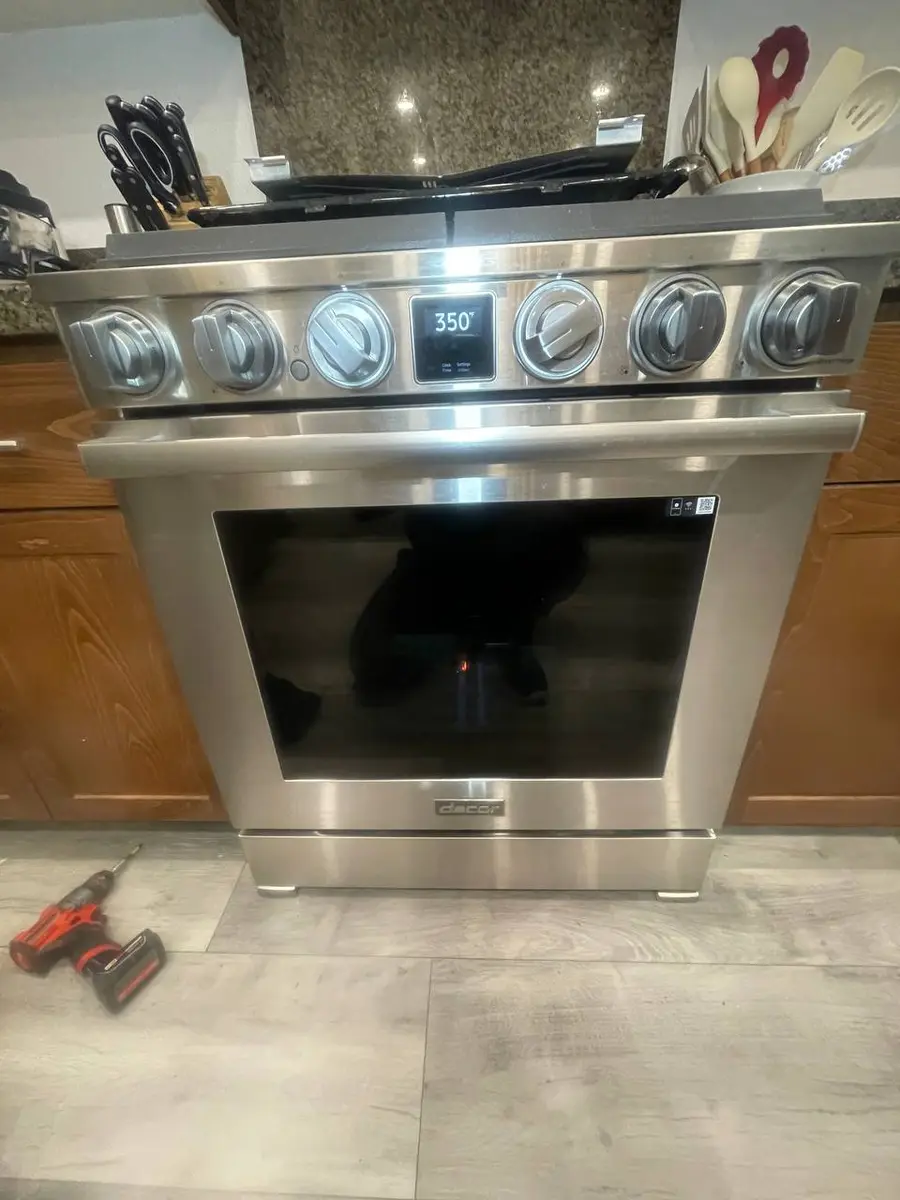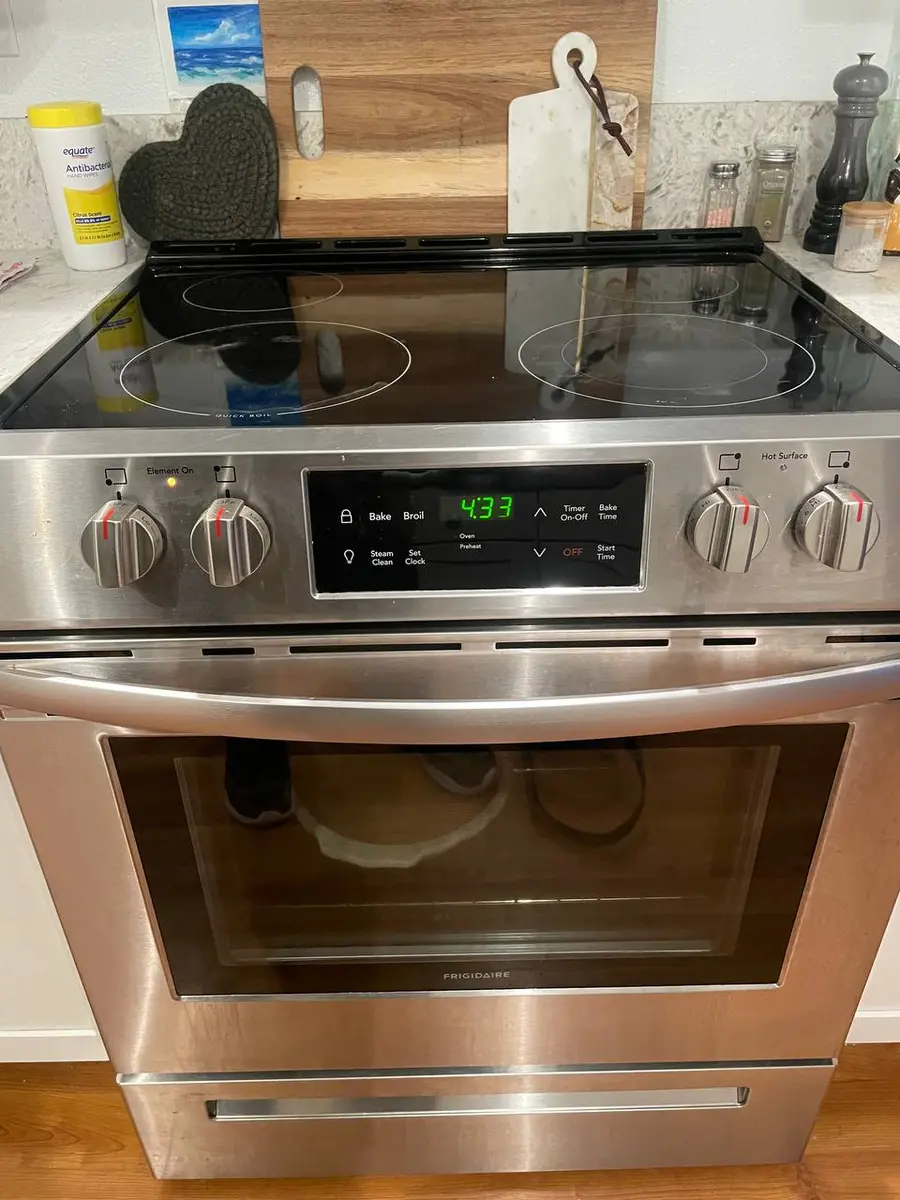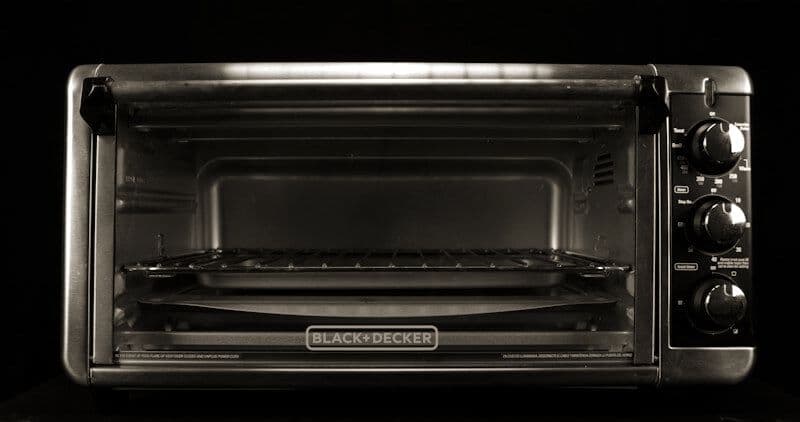
A Samsung oven that bakes at the wrong temperature is nearly always a drifting thermistor — the cavity sensor slowly reading off by 25 to 75°F with no error code to warn you. Behind that come a tired heating element, a leaking door gasket, or a calibration offset that needs resetting. Confirm the error with an oven thermometer before you replace anything.
First, Prove the Oven Is Actually Wrong#
Set-and-guess is not a diagnosis. Hang a standalone oven thermometer in the center of the cavity, set 350°F, let it fully preheat and hold for fifteen minutes, and read the actual temperature. If it lands within about 25°F you may just need a calibration tweak; if it is off by more, or swings wildly, a component has failed. On Wi-Fi models, SmartThings makes this even easier — its temperature history logs target versus actual over time and exposes gradual drift long before anything stops working, and it holds error codes even after the oven display clears them.
Do You Have the Right Tools?
Combustion analyzer ($300), igniter tester ($120), temperature calibrator ($150), and gas pressure manometer. Our technician arrives with $3,000+ in professional tools — your diagnostic is free.
Licensed & Insured · 90-Day Warranty · Same-Day Service
The Closed Loop That Sets Your Temperature#
Every Samsung oven holds temperature with a feedback loop: a thermistor at the rear cavity wall reports the real temperature to the control board as a resistance value, and the board switches the element on and off to hold your target. When a link in that loop drifts, the whole result drifts with it. On electric models the heat comes from a hidden bake element under the floor panel plus a broil element up top; on gas NX models it comes from an igniter that has to draw enough current — around 3.2 to 3.6 amps — to open the safety valve. Flex Duo models add a second element and sensor in the divider, so a zone that bakes wrong while the other is fine points at the divider hardware.
The Causes, Most Likely First#
Thermistor drift or failure (the usual culprit)#
The sensor is the number-one reason a Samsung oven bakes wrong, and its worst failure mode is the quiet one. A healthy Samsung thermistor reads roughly 1,080 to 1,100 ohms at room temperature near 70°F, climbing predictably as it heats. Three things go wrong: it reads open, and the board throws an SE sensor error and refuses to run; it reads shorted, and the board over- or under-heats on a false low resistance; or it simply drifts out of calibration, giving no code at all while the oven bakes consistently 25 to 75°F off. That silent drift is the insidious one — owners keep nudging their set temperature to compensate, never realizing the sensor failed. Unplug the oven, reach the sensor connector at the rear, and meter across the two wires: anything outside about 1,000 to 1,200 ohms at room temperature means replace the sensor.
Heating element or igniter degradation#
An element that is breaking down heats unevenly or weakly, so the oven never reaches or holds its target. On electric models, pull the floor panel and inspect the hidden bake element for breaks, blisters, or a spot glowing brighter than the rest, and confirm with a continuity test — an open element throws E-08. On gas NX models, watch the flat igniter during preheat: it should glow to bright orange-white within about a minute, and if it only reaches a dim orange and the burner never lights, it has weakened below the amperage needed to open the safety valve, which shows up as inconsistent temperatures because it lights some cycles and not others.
Door gasket heat loss#
Samsung ovens seal the cavity with a fiberglass rope gasket that compresses when the door shuts. Years of cycling from room temperature past 450°F in baking — and far higher in self-clean — harden that gasket until it no longer seals. The escaping heat makes the oven overshoot and then chase its target, so you get long preheats, uneven results, and a door and cabinet that run hotter than they should. Feel around the closed door for heat leaks and inspect the gasket for flat, hardened spots; a deteriorated gasket is an inexpensive, high-value replacement.
Control board relay trouble#
The board switches the elements through relays, and a relay that welds closed leaves an element on too long and overheats the cavity — sometimes tripping the E-27 over-temperature shutdown — while a relay failing open underheats. Board faults often travel with display, timer, or Wi-Fi glitches, which helps separate them from a simple sensor problem. Because boards are costly and easy to over-diagnose, confirm the cheaper sensor and gasket first.
Safety First — Know the Risks
Gas ovens involve live gas lines — a loose connection creates explosion and carbon monoxide risk. Electric ovens run on 240V circuits. Our techs are licensed and insured — let them handle the risk.
Licensed & Insured · 90-Day Warranty · Same-Day Service
Let the Symptom Pattern Point the Way#
How the oven is wrong narrows the cause before you pick up a meter. An oven that reads consistently low or high by a fixed amount, every time, is the signature of either a drifted sensor or a calibration offset that slipped — steady error, one direction. An oven that bakes unevenly, browning one side or one rack more than another, points instead at heat distribution: a leaking gasket letting heat escape to one side, a failing element with a cold section, or on convection models a fan that no longer circulates evenly. An oven that overshoots wildly and then can't hold, or trips E-27, points at a relay stuck closed or a shorted sensor feeding the board a false reading. And an oven that throws SE and refuses to run has an open sensor. Match your symptom to one of those buckets and you have already cut the list in half.
Gas Ovens Drift Differently#
On a gas NX oven the temperature story has an extra character: the igniter. Because a weakening igniter draws less current as it ages, it hovers near the threshold that opens the safety valve, lighting reliably one day and hesitating the next. That intermittent lighting reads to you as inconsistent oven temperature — some bakes are fine, others run cold because the burner cycled poorly. If your gas oven's temperature complaint comes and goes rather than sitting at a fixed offset, watch the igniter glow during a preheat before you suspect the sensor, since a lazy igniter mimics a temperature fault while the sensor is perfectly healthy.
The Real Cost of DIY
Average DIY attempt: $150-400 in tools you may use once, plus the risk of further damage. Our diagnostic visit costs $0 — we find the problem and give you an honest quote.
Licensed & Insured · 90-Day Warranty · Same-Day Service
A Sensible Order of Repair#
Work from cheap and common toward expensive and rare. Verify the error with a thermometer. Try the calibration offset if the error is small and steady. Clean the sensor probe of any grease film. Meter the thermistor cold and replace it if it reads out of range. Inspect the gasket for hardened, leaking spots and swap it if it no longer seals. Only after those come up clean should you suspect the control board, which is the costliest part and the easiest to blame wrongly for what was really a drifted sensor. Following that sequence keeps a two-hundred-degree baking complaint from turning into an unnecessary board replacement.
Use the Calibration Offset the Right Way#
Samsung ovens let you trim the temperature with a calibration offset: press and hold Bake until the current offset appears, adjust up or down within roughly a ±35°F range, and save. That is the correct fix for a small, steady error — an oven that reliably bakes 15 or 20°F low. But it is a compensation, not a repair: if you need more than about 35°F of offset to get accurate results, the thermistor has drifted too far and should be replaced rather than masked. And clean the sensor probe yearly, because a grease film on it insulates the tip and slowly pushes your oven back out of calibration.
Related reading: a Samsung oven with little or no heat when baking and a Samsung oven making a loud noise.
Samsung [oven repair](/bay-area/services/oven-repair) across [Sacramento](/sacramento/sacramento) and the Bay Area — sensor, element, and gasket service in one visit. Book a technician.
Senior Appliance Repair Technician · 15 years experience
EPA-certified technician with 15 years of experience specializing in refrigerator and cooling system repairs.