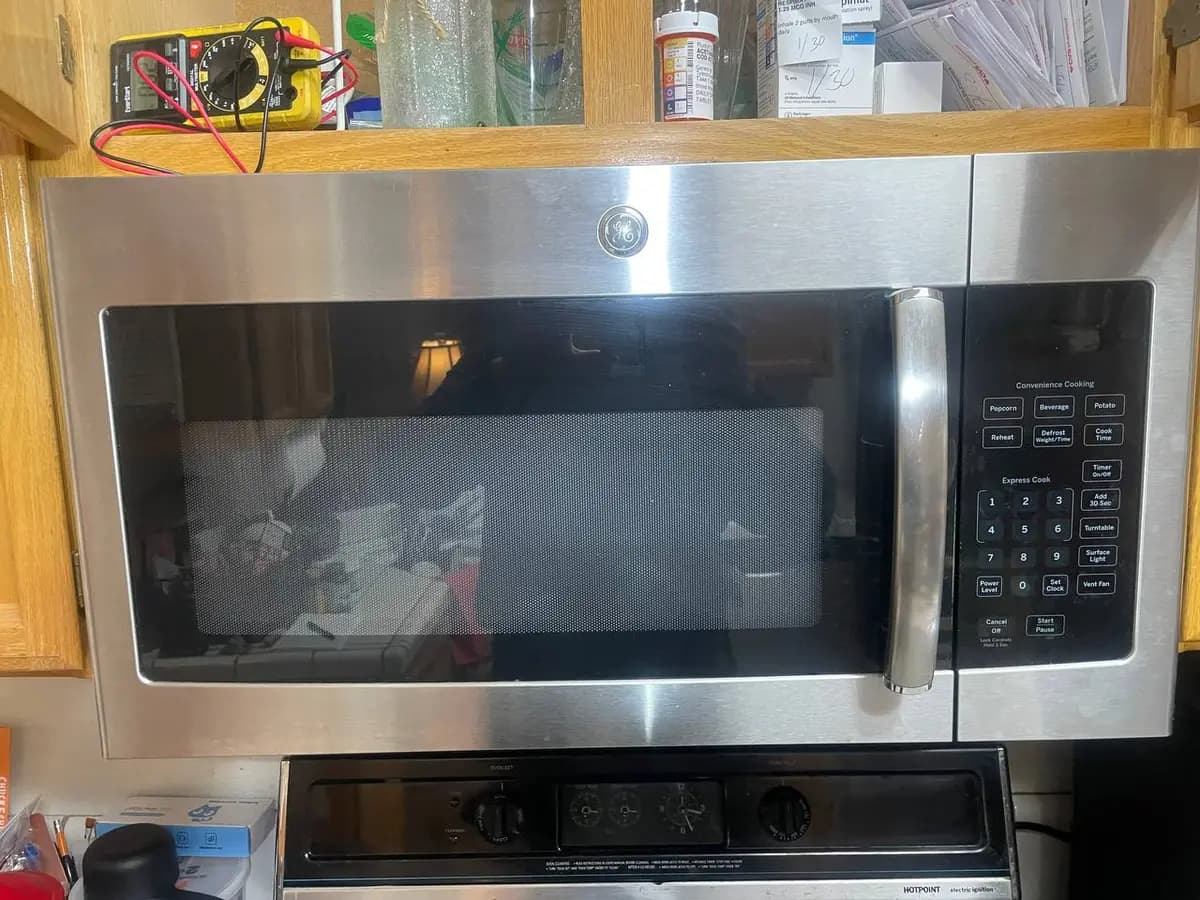
The exhaust fan on a Samsung over-the-range microwave is a dedicated blower motor, separate from the small fan that cools the internals — so an exhaust problem is a ventilation problem, not a cooking one. Start by deciding which you have: a fan that won't run at all, or one that runs but moves no air. The first points at the blower motor or the control-board fan relay; the second points at a grease-clogged blower wheel, a clogged filter, or a stuck damper.
A Quick Safety Note#
You can safely work on the ventilation parts that matter here — the grease filter, the charcoal filter, and the visible blower area — after unplugging the microwave. But the outer cabinet also shields a high-voltage capacitor that holds a dangerous charge even when unplugged, so anything that means removing the cabinet to reach wiring or the control board is a job for a technician with the right discharge tools. Keep your DIY work to the filters, the damper, and the blower wheel unless you are qualified for high-voltage service.
Do You Have the Right Tools?
High-voltage capacitor discharge tool ($90), magnetron tester ($200), microwave leakage detector ($150). Our technician arrives with $3,000+ in professional tools — your diagnostic is free.
Licensed & Insured · 90-Day Warranty · Same-Day Service
First: No Spin, or Spinning With No Airflow?#
This single distinction saves you from chasing the wrong part. Press the vent-fan button through its speed settings and listen and feel. If the blower is silent and still, the fault is electrical — the blower motor, the fan relay on the control board, or the membrane button that commands it. If you can hear the blower spinning but almost no air comes out of the vents above, the motor and its control are fine and the problem is a blockage or a damper: a grease-caked blower wheel, a saturated filter, or a flap that will not open. Confirm which situation you are in before opening anything.
When the Fan Won't Run at All#
Blower Motor Failure#
The exhaust blower is a separate motor from the internal cooling fan, and it can seize from years of grease-laden heat or simply burn out its winding. When it fails, pressing the fan button does nothing at any speed while the rest of the microwave works normally. With the unit unplugged, you can often reach the blower wheel and try to spin it by hand — a wheel that will not turn freely, or turns with a grinding roughness, points to a seized motor or bearing. A motor that spins freely by hand but still will not run on command shifts suspicion to the electrical side.
Control-Board Fan Relay or Button#
The fan runs when the control board closes a relay in response to the vent button, so a worn relay or a failed membrane button leaves the blower dead even though the motor is good. The tell is usually selective: other functions work, or some buttons respond while the fan button does not, or the fan responds intermittently. Over-the-range Samsung models are especially prone to this because cooktop steam rises directly onto the control panel and corrodes the membrane traces and board over time. Because the relay and board sit behind the cabinet near high-voltage parts, this is where diagnosis generally moves to a technician.
Safety First — Know the Risks
Microwave capacitors store lethal voltage (4,000V+) even when unplugged. This is the single most dangerous DIY appliance repair. Our techs are licensed and insured — let them handle the risk.
Licensed & Insured · 90-Day Warranty · Same-Day Service
When the Fan Runs But Moves No Air#
Grease-Clogged Blower Wheel and Filter#
The most common reason a running exhaust fan seems dead is simply grease. The metal mesh grease filters under the microwave load up with cooking grease and choke airflow, and over years grease also cakes onto the blower wheel's vanes, killing its ability to move air. Pop out the grease filters and wash them, and inspect the blower wheel — a wheel packed with hardened grease needs cleaning or replacement. This is the first thing to check whenever the motor clearly runs but nothing comes out of the vents.
Stuck or Reversed Damper#
Over-the-range models that vent outdoors use a damper — a flap that opens under fan pressure to let air out and closes to block drafts. If the damper is painted shut, stuck with grease, or was installed backward, the blower can run at full speed while the air has nowhere to go. Check that the damper flap moves freely and opens when the fan runs; a stuck damper is a common, easily missed cause of "the fan runs but the kitchen still fills with steam."
Recirculating Mode and the Charcoal Filter#
Not every install vents outside. In recirculating mode the microwave pushes air through a charcoal filter and back into the kitchen, and a charcoal filter that has never been changed becomes so clogged that airflow drops to almost nothing even with a healthy blower. If your unit recirculates rather than ducts outdoors, replace the charcoal filter before condemning the motor — it is a cheap part that is easy to forget.
Don't Overlook the Auto-Fan Feature#
Many Samsung over-the-range models include an automatic fan that switches the blower on when a sensor detects heat rising from the cooktop below, protecting the microwave from that heat. If the fan never runs on its own during stovetop cooking but does respond to the manual button, the auto-fan sensor or its logic is the issue rather than the blower itself. Conversely, a fan that runs on its own and will not shut off is that same sensor reading the microwave as too hot — often because the grease filters are so clogged that heat is backing up.
The Real Cost of DIY
Average DIY attempt: $150-400 in tools you may use once, plus the risk of further damage. Our diagnostic visit costs $0 — we find the problem and give you an honest quote.
Licensed & Insured · 90-Day Warranty · Same-Day Service
Vent-Out Versus Recirculate: Know Which You Have#
Which way your microwave is set up changes the whole diagnosis, so confirm it before ordering parts. A vented install ducts air outdoors through the top or the wall behind the unit and relies on the damper flap to open under fan pressure; its failure modes are a stuck damper and, less often, a crushed or disconnected duct. A recirculating install has no duct — it pushes air through a charcoal filter and back into the room — so its airflow depends entirely on that filter staying fresh, and a long-neglected charcoal filter is the single most common reason a recirculating unit seems to have a dead fan. If you are not sure which you have, look above the microwave for a duct connection, or check whether the top vent blows warm air back at you during a run; that alone tells you whether to chase a damper or a charcoal filter.
How to Prevent It#
- Wash the metal grease filters regularly — clogged filters are the leading cause of weak exhaust and of grease reaching the blower wheel.
- Run the exhaust fan while cooking on the cooktop below so grease and steam are pulled out instead of settling on the wheel, damper, and control panel.
- Replace the charcoal filter on schedule if your unit recirculates rather than vents outside.
- Check that the outdoor damper opens freely a couple of times a year.
- Wipe the control panel area so cooktop steam does not corrode the fan button and board.
Don't Void Your Warranty
Opening your appliance yourself may void the manufacturer warranty. Our repair comes with a 90-day guarantee, and we document everything for warranty compliance.
Licensed & Insured · 90-Day Warranty · Same-Day Service
When to Call a Professional#
Cleaning the grease filters, replacing the charcoal filter, freeing the damper, and clearing the blower wheel are all safe DIY steps once the unit is unplugged. Call a technician when the blower motor has seized or burned out, when the fan button and relay need diagnosis behind the cabinet, or when the auto-fan sensor is misbehaving — anything that requires removing the outer cabinet brings you near the high-voltage capacitor and belongs to a qualified technician.
Professional Samsung [microwave repair](/blog/complete-guide-microwave-repair) — diagnosis, parts, and fix in a single visit. [Sacramento](/sacramento/sacramento) and Bay Area coverage. Schedule a visit
Senior Appliance Repair Technician · 15 years experience
EPA-certified technician with 15 years of experience specializing in refrigerator and cooling system repairs.