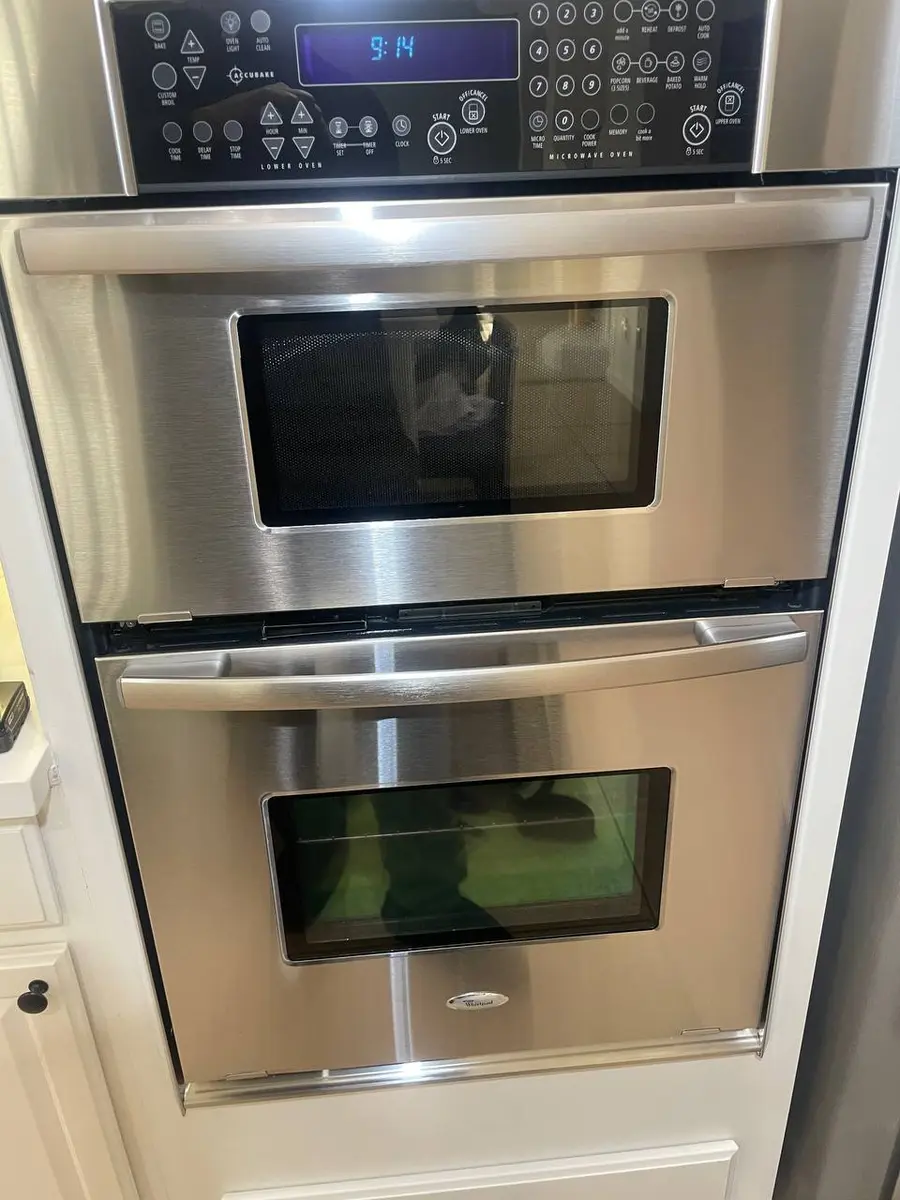
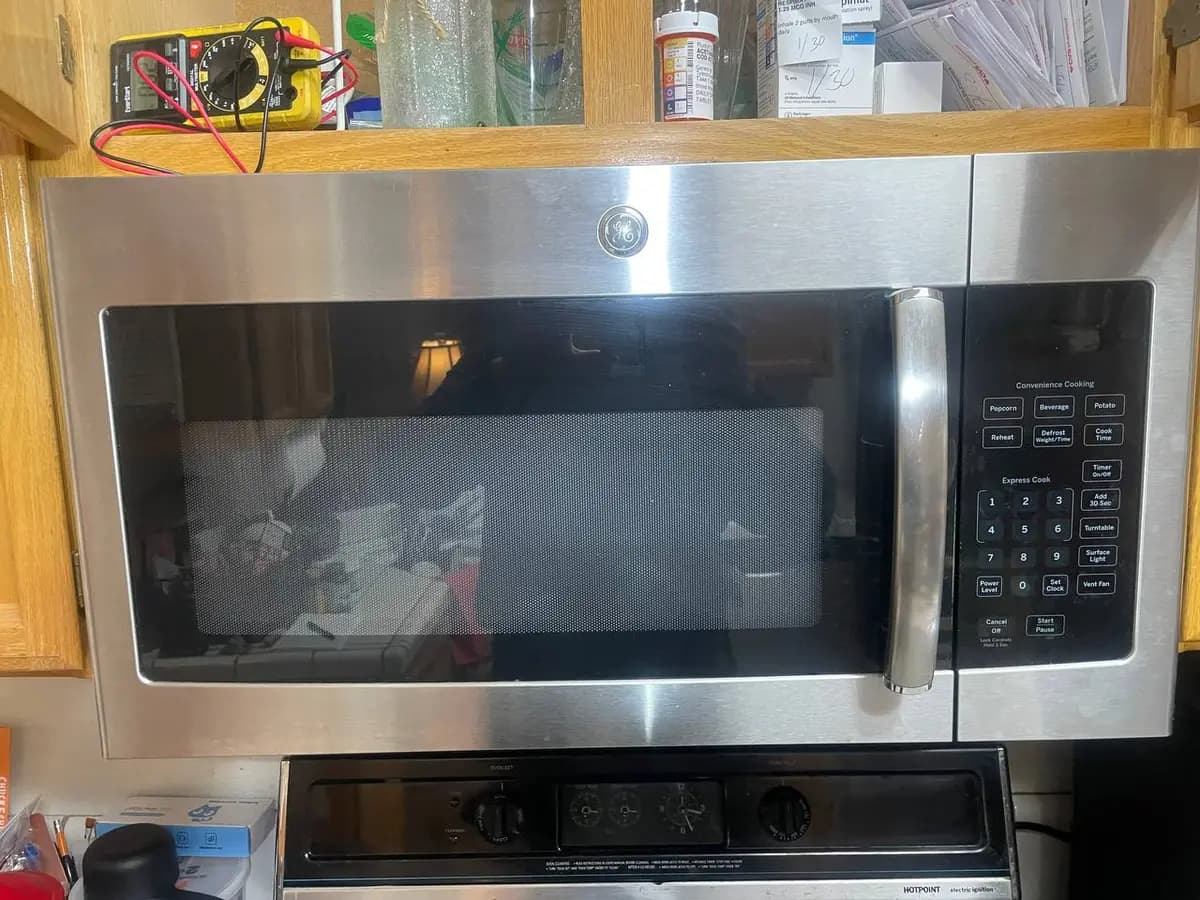
The microwave runs, heats food, but the turntable sits motionless. Without rotation, food heats unevenly — scalding hot on one side, cold on the other. The turntable system is one of the simpler mechanisms in a microwave: a small motor underneath the cavity floor drives a coupler that engages the glass tray. When any piece of this system fails, the turntable stops. The good news is that most turntable repairs are straightforward and affordable.
1. Turntable Motor Failure#
The Problem: The turntable motor is a small, low-torque synchronous motor (typically 3–4 watts) located beneath the cavity floor. It rotates at about 5–6 RPM. These motors are durable but eventually burn out, especially in heavily used microwaves. When the motor fails, you won't hear any humming from below the turntable, and the coupler won't move.
What to Check:
- Remove the glass turntable tray and roller guide ring
- Look at the coupler hub (the protruding piece in the center of the floor) — does it turn at all when the microwave runs?
- If the coupler doesn't move and you hear no motor hum, the motor has failed
- If the coupler moves jerkily or intermittently, the motor is weak but not dead yet
DIY or Pro: Turntable motors cost varies by model and region. On most microwaves, the motor is accessible from underneath the unit by removing the bottom panel (4–6 screws). The motor connects with two wire terminals and mounts with 2–3 screws. This is a manageable DIY repair as long as you unplug the microwave first — no high-voltage components are near the turntable motor.
Typical Cost: varies by model and region with a technician.
Do You Have the Right Tools?
High-voltage capacitor discharge tool ($90), magnetron tester ($200), microwave leakage detector ($150). Our technician arrives with $3,000+ in professional tools — your diagnostic is free.
Licensed & Insured · 90-Day Warranty · Same-Day Service
2. Broken Drive Coupler#
The Problem: The drive coupler is the three-pronged plastic piece that sits on top of the motor shaft and engages the bottom of the glass turntable tray. Over time, the coupler prongs wear down, crack, or snap off. When the coupler can't grip the tray or transfer rotation from the motor, the tray sits still while the motor spins underneath.
What to Check:
- Remove the glass tray and look at the coupler — are all three prongs intact?
- Compare the prong height — worn prongs will be shorter than new ones
- Check if the coupler is seated properly on the motor shaft — it may have slipped off center
- Inspect the matching receptacle on the bottom of the glass tray — it may also be worn
DIY or Pro: Couplers cost varies by model and region and are the easiest microwave repair possible. Pull off the old one, push on the new one. No tools required. If the glass tray's receptacle is also worn, the tray itself may need replacement (varies by model and region for universal trays, varies by model and region for brand-specific).
Typical Cost: varies by model and region DIY; varies by model and region with a technician.
3. Damaged or Dirty Roller Guide Ring#
The Problem: The roller guide ring is the circular ring with small wheels that the glass turntable tray sits on. It distributes the weight of the tray and food evenly, allowing smooth rotation. If the wheels are jammed with food debris, cracked, or if the ring itself is warped, the tray can't turn freely. The motor strains against the resistance and may eventually burn out.
What to Check:
- Remove the glass tray and roller ring. Spin each wheel by hand — they should rotate freely
- Look for food debris packed around the wheel axles
- Check the ring for cracks or warping — plastic rings can deform if heated unevenly
- Clean the cavity floor where the ring rolls — buildup creates friction
DIY or Pro: Clean the roller ring and wheels with warm soapy water. If the ring is damaged, replacement rings cost varies by model and region. Universal roller guides fit most standard microwaves. This is a simple maintenance task.
Typical Cost: $0 for cleaning; $5–$15 for replacement ring.
Safety First — Know the Risks
Microwave capacitors store lethal voltage (4,000V+) even when unplugged. This is the single most dangerous DIY appliance repair. Our techs are licensed and insured — let them handle the risk.
Licensed & Insured · 90-Day Warranty · Same-Day Service
4. Obstruction Under the Turntable#
The Problem: Small food particles, broken pieces of glass tray, or melted debris under the turntable can physically block rotation. A common scenario: a piece of food falls through the gap between the turntable tray and the cavity wall, lands under the tray, and jams the roller ring.
What to Check:
- Remove the glass tray and roller ring
- Inspect the cavity floor for debris, food particles, or any obstruction
- Check the coupler area for buildup that prevents proper engagement
- Look for pieces of broken glass if the tray has been cracked
DIY Fix: Clean the cavity floor thoroughly. Pay attention to the coupler well and the perimeter where the roller ring travels. If the glass tray is chipped or cracked, replace it before the crack propagates and the tray shatters during use.
Typical Cost: $0 for cleaning; $20–$80 for tray replacement if cracked.
5. Control Board Not Sending Signal#
The Problem: On some advanced microwave models, the turntable operation is controlled by the electronic control board. If the board's turntable relay has failed, the motor receives no power even though the board shows the microwave is running. This is rare compared to the mechanical causes above but occurs on higher-end built-in and over-the-range models.
What to Check:
- If you've confirmed the motor works (by applying direct power to it — professional test only), the board may not be sending the signal
- Check if there's a "turntable on/off" button on the control panel — some models allow the user to disable turntable rotation
- Error codes related to the turntable system (brand-specific)
DIY or Pro: Control board replacement is a professional repair. The board handles high-voltage circuits, and improper handling risks electric shock. Board costs vary widely: varies by model and region depending on brand and model.
Typical Cost: varies by model and region with a technician.
The Real Cost of DIY
Average DIY attempt: $150-400 in tools you may use once, plus the risk of further damage. Our diagnostic visit costs $0 — we find the problem and give you an honest quote.
Licensed & Insured · 90-Day Warranty · Same-Day Service
When to Call a Professional#
Start by cleaning the roller guide ring and checking the coupler — both are free, simple fixes. If those are fine, the motor is the next likely cause and is a reasonable DIY repair. If you're uncomfortable removing the bottom panel or if the microwave is a built-in or over-the-range unit (common in Sacramento and Bay Area kitchens), call a technician. Never attempt control board or magnetron-area repairs yourself — the high-voltage capacitor in a microwave retains a lethal charge even when unplugged.
FAQ#
Q: Can I use my microwave if the turntable doesn't spin? A: Yes, but food will heat very unevenly. You'll need to manually rotate the food or container every 30–60 seconds during cooking. Fix the turntable when possible — uneven heating can leave cold spots in food where bacteria survive.
Q: Why does my turntable spin in one direction sometimes and the other direction other times? A: This is normal. Most turntable motors are designed to reverse direction each time the microwave starts. This ensures more even cooking over multiple heating cycles.
Q: My turntable tray cracked. Can I use the microwave without it? A: Not recommended. The glass tray distributes the weight of food containers evenly on the roller guide. Without the tray, containers may fall into the coupler area or block the roller ring. Replace the tray — universal turntable trays cost varies by model and region and fit most standard microwaves.
Q: How do I find the right replacement turntable for my microwave? A: Measure the diameter of your current tray. Common sizes are 10", 12.5", and 14.5". You'll also need to match the coupler type (three-prong is most common). Your microwave's model number (on a label inside the door frame) will get you the exact OEM replacement.
Appliance Repair Technician & Diagnostics Specialist · 10 years experience
Electronics and diagnostics specialist with 10 years of experience in modern smart appliance repair, specializing in LG and Samsung.