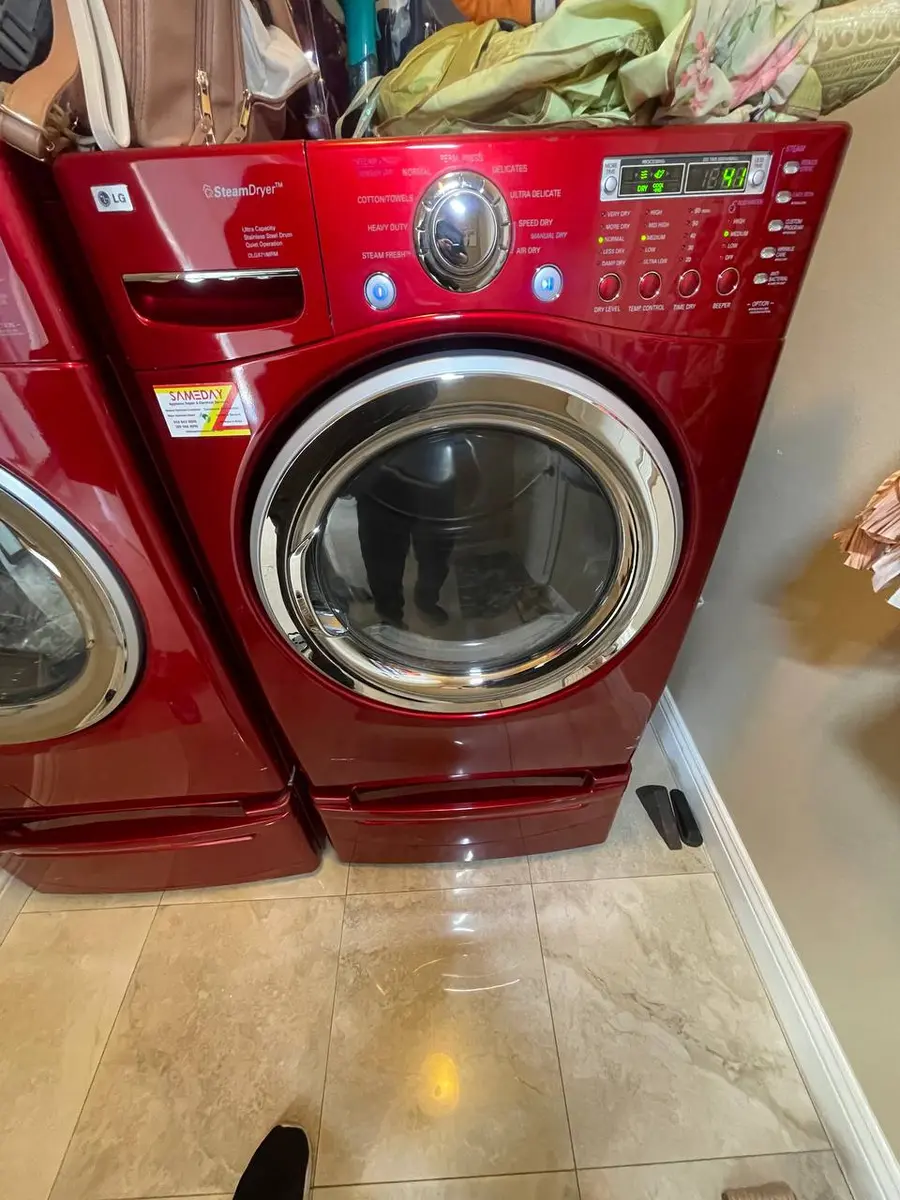
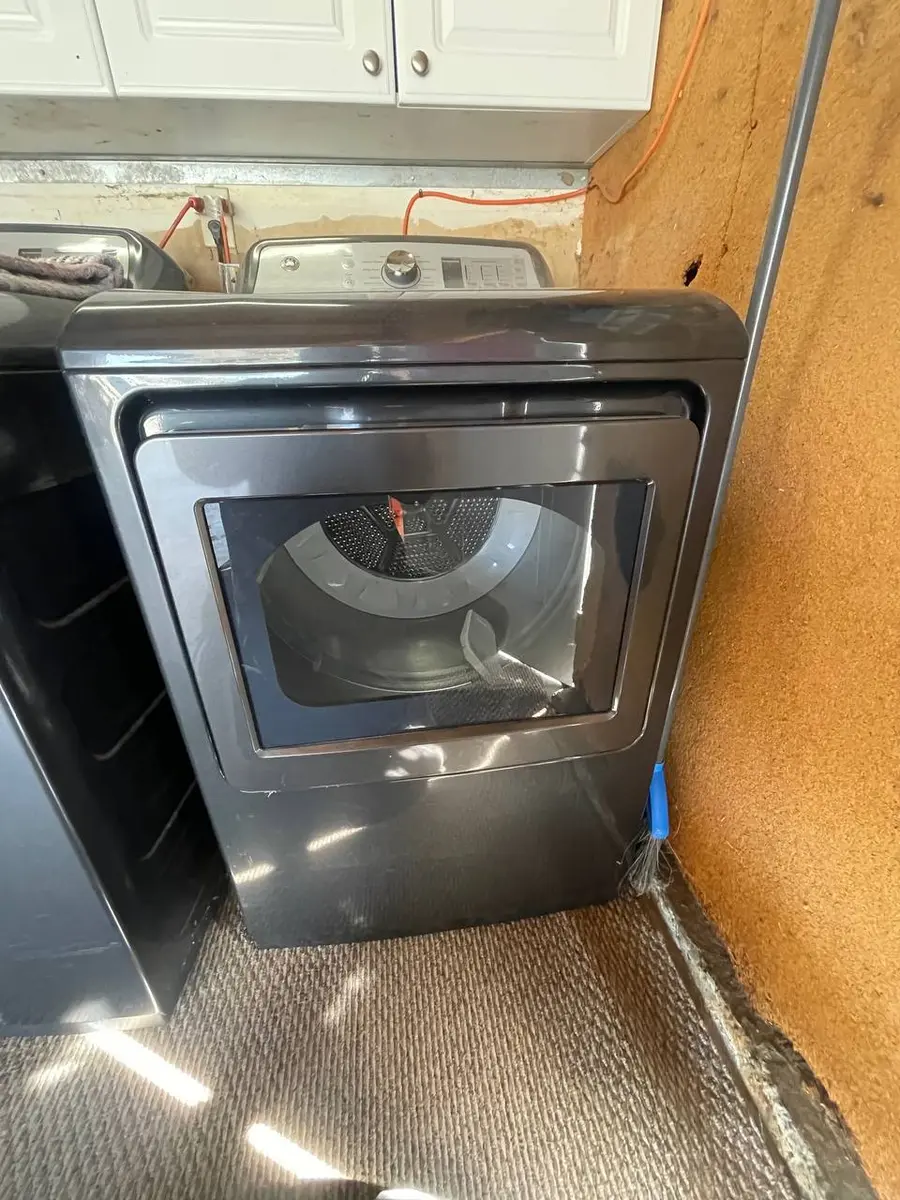
If your Samsung dryer is giving you trouble, the good news is that the cause is usually a known samsung weak point rather than a mystery. Here is what to suspect first, what you can safely check, and what the fix should cost.
The short answer: Samsung Dryer making noise#
Nine times out of ten on Samsung, making noise comes down to idler-pulley bearing squeal rather than the one-size-fits-all list the generic guides push. If that comes back clean, the next thing I look at is rear drum-roller and support-bearing wear. The other brands rarely fail this way, which is what makes it easy to overlook. The table puts this at $100–$350, and which end you hit is a question of parts and access.
The failure modes below are specific to Samsung dryers — they are what set Samsung apart from the generic making noise checklist.
| Likely Samsung-specific cause | How often we see it | Typical repair |
|---|---|---|
| Idler-pulley bearing squeal on Samsung dryers rising with drum speed as belt tension loads it | Most likely | $350 |
| Rear drum-roller and support-bearing wear producing a thump that tracks rotation | Common | $350 |
| Blower wheel loosening or lint-clogged, causing a rattle or roar at the exhaust | Common | $100 |
| Front drum-glide and felt-seal wear letting the drum grind the front panel | Possible | $100 |
| Foreign object trapped in the lint chute or blower housing causing an intermittent clatter | Possible | $100–350 |
Do You Have the Right Tools?
Gas leak detector ($130), thermal fuse tester ($95), belt tension gauge, and vent inspection camera ($180). Our technician arrives with $3,000+ in professional tools — your diagnostic is free.
Licensed & Insured · 90-Day Warranty · Same-Day Service
What you can safely check first#
A little diagnosis at home narrows it fast. Cut the power to the dryer first, then work down this list in order.
- Idler-pulley bearing squeal. On Samsung it is the first thing I confirm before ordering a part, since it is quick to rule in or out.
- Rear drum-roller and support-bearing wear. It is easy to spot once you know it is a weak point here; a worn part usually shows visible wear or play.
- Blower wheel loosening or lint-clogged. It tends to track the fault closely, so it earns an early look before you move on to anything harder to reach.
- Front drum-glide and felt-seal wear. Catching it now saves a needless parts order later, which is where most DIY repairs quietly overspend.
- Foreign object. A quick visual tells you whether it is worn or just loose, and a loose fitting is often a five-minute fix.
- Note your exact model before buying anything — the DVE45R6100W, DVG45R6100W, DVE50R5400V, DVE45T6000W units look alike but are not identical under the panel.
Repair cost and when to call an EasyBear technician#
Why the $100–$350 gap? Because the fixes at each end are worlds apart. Rule out the cheap end first — front drum-glide and felt-seal wear is quick — before assuming the worst-case part. Parts here are rarely the expensive bit — it is the time to reach them that moves the number, which is why guessing is costly. After the safe checks above, if it still acts up, an EasyBear technician can confirm the exact cause in one visit instead of you buying parts on a guess.
Senior Appliance Repair Technician · 15 years experience
EPA-certified technician with 15 years of experience specializing in refrigerator and cooling system repairs.