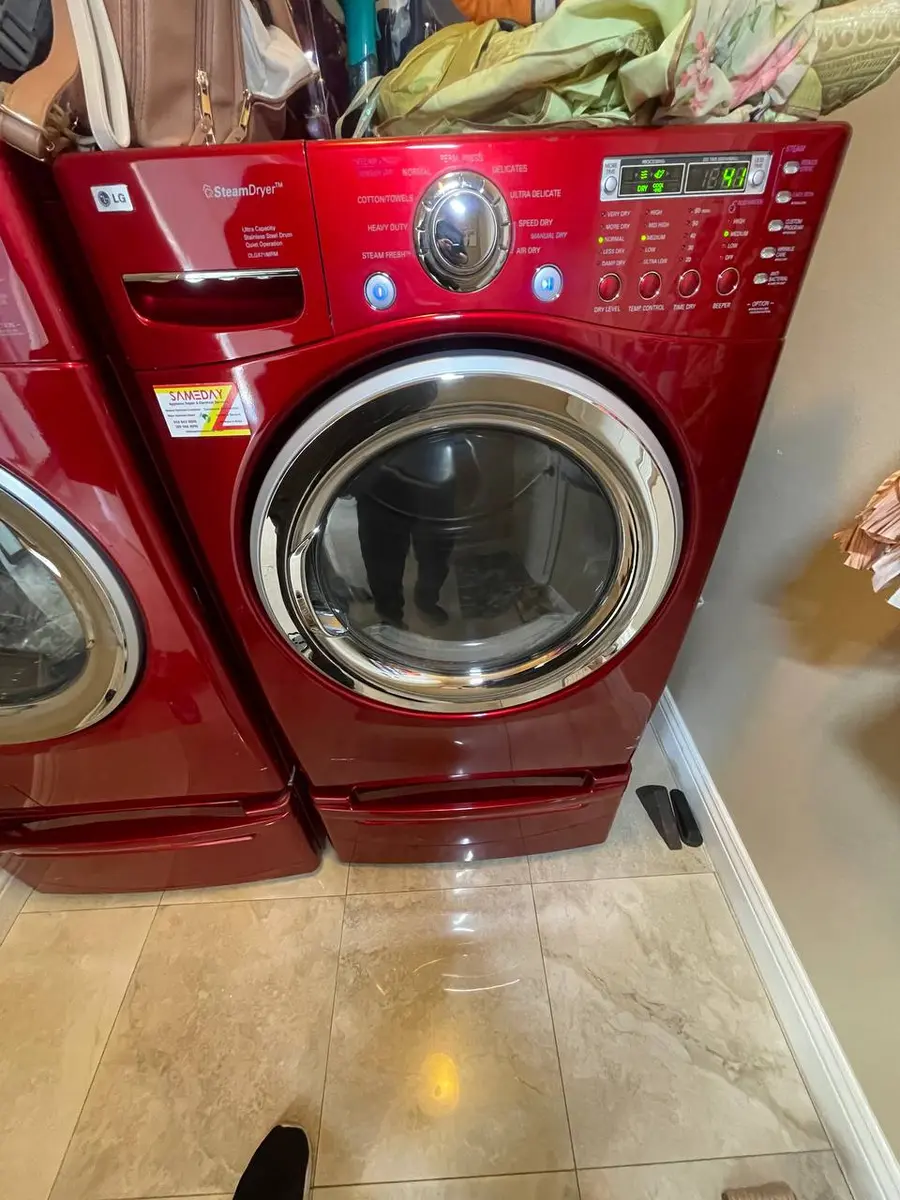
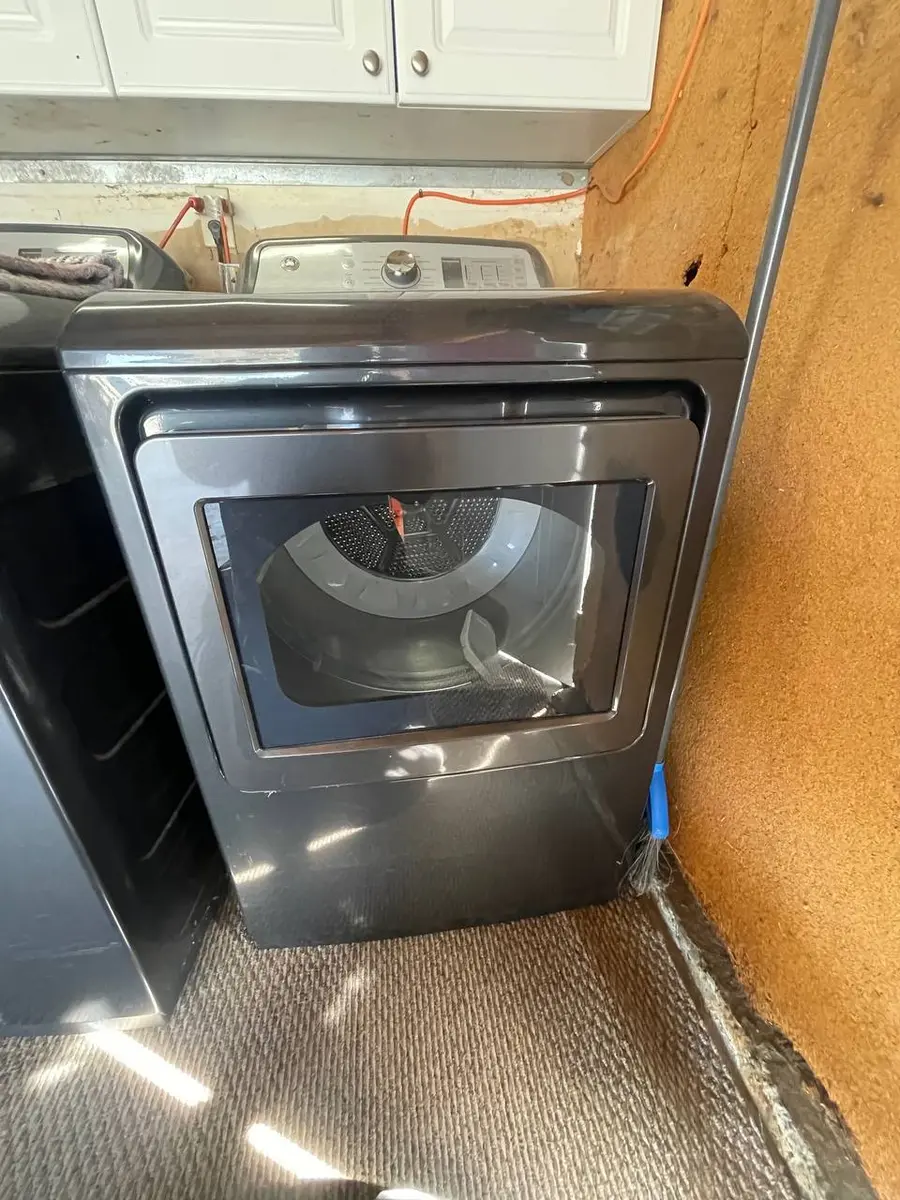
A dryer that suddenly starts making noise is telling you something specific. Unlike other appliances where strange sounds are ambiguous, dryer noises are remarkably diagnostic — each type of sound points to a particular component failure. Squealing, thumping, grinding, and rattling each have distinct causes, and identifying the sound correctly can save you hundreds of dollars by catching a $15 part failure before it cascades into a repair.
High-Pitched Squealing or Squeaking#
The Problem: A high-pitched squeal that starts when the dryer begins tumbling and may worsen as the dryer heats up almost always points to one of three components: the idler pulley bearing, the drum support rollers, or the drive belt. The squeal is caused by friction where there should be smooth rotation.
What to Check:
- Idler pulley: The most common squealing source. The pulley bearing dries out and metal grinds on metal. The squeal is constant and pitch increases with heat as metal expands.
- Drum rollers: Worn roller bearings produce a squeal that has a rhythmic quality — it pulses with each drum rotation (about once per second).
- Drive belt: A glazed or fraying belt slipping on the motor pulley creates an intermittent squeal, often loudest when the dryer first starts.
Parts & Cost:
- Idler pulley: varies by model and region part, varies by model and region total repair
- Roller set: varies by model and region part, varies by model and region total repair
- Belt: varies by model and region part, varies by model and region total repair
- Best practice: replace all three simultaneously since the dryer is already disassembled — total parts cost varies by model and region
Do You Have the Right Tools?
Gas leak detector ($130), thermal fuse tester ($95), belt tension gauge, and vent inspection camera ($180). Our technician arrives with $3,000+ in professional tools — your diagnostic is free.
Licensed & Insured · 90-Day Warranty · Same-Day Service
Rhythmic Thumping#
The Problem: A steady thump-thump-thump synchronized with drum rotation indicates a problem with the drum support system. The most common cause is a flat spot on a drum roller. Like a flat tire on a car, the roller creates a distinct thump each time the flat spot contacts the roller housing.
What to Check:
- Time the thump — if it occurs once per drum rotation (roughly every 1–2 seconds), it's a drum roller
- If the thump occurs faster (multiple times per rotation), a foreign object may be lodged between the drum and the housing
- Open the dryer and check for items trapped in the lint filter housing or between the drum and front panel (coins, buttons, bra underwires)
Parts & Cost:
- Drum roller set: varies by model and region. Replace all rollers even if only one is flat — the others are the same age and will fail soon.
- Foreign object removal: varies by model and region depending on whether you can reach it yourself
Total Repair Cost: varies by model and region with a technician.
Metal-on-Metal Grinding or Scraping#
The Problem: Grinding is the most urgent dryer noise because it means metal is contacting metal somewhere — and that causes progressive damage with every rotation. The two most common sources are worn drum glides (front drum supports) and a damaged drum bearing (rear of drum).
What to Check:
- Drum glides: These Teflon or plastic pads at the front of the drum wear through, exposing the metal drum edge to the metal front panel. Look for dark scoring marks on the inside of the front panel when you open the door.
- Drum bearing: The rear of the drum rides on a center bearing or bearing sleeve. When this wears, you'll hear a loud grinding from the back of the dryer. The drum may also wobble visibly.
- Blower wheel: A cracked or loose blower wheel contacting the housing produces a scraping sound from the rear/bottom of the dryer.
Parts & Cost:
- Drum glide kit: varies by model and region varies by model and region total repair
- Drum bearing: varies by model and region varies by model and region total repair
- Blower wheel: varies by model and region varies by model and region total repair
Safety First — Know the Risks
Gas dryers carry carbon monoxide and explosion risk. Even electric dryers involve 240V circuits that can deliver a fatal shock. Our techs are licensed and insured — let them handle the risk.
Licensed & Insured · 90-Day Warranty · Same-Day Service
Rattling or Vibrating#
The Problem: Rattling is usually the least concerning noise — it often indicates a loose component or leveling issue rather than a worn part. However, persistent rattling can indicate a loose blower wheel, worn motor mounts, or a failing motor bearing.
What to Check:
- Check that the dryer is level on the floor — use a level on top and adjust the front leveling legs
- Ensure the exhaust vent connection at the back is secure and not vibrating against the wall
- Remove items from the dryer top (bottles, boxes, etc.) that may be vibrating
- Look for loose screws on the rear panel or inside the cabinet
Parts & Cost:
- Leveling adjustment: $0
- Motor mount replacement: varies by model and region varies by model and region total repair
- Motor replacement (if bearing is failing): varies by model and region varies by model and region total repair
Clicking or Ticking#
The Problem: A rhythmic clicking from a gas dryer during operation is the igniter cycling — this is normal. But rapid clicking without ignition, or clicking from an electric dryer, indicates a problem. On gas dryers, rapid clicking means the igniter is trying to light the burner but the gas valve solenoids aren't opening. On electric dryers, clicking from the control board area suggests relay chatter from a failing board.
What to Check:
- Gas dryers: Watch through the lower panel vent — does the igniter glow orange then the gas ignite? If the igniter glows but gas doesn't flow, the solenoids are weak.
- Electric dryers: Clicking from behind the control panel suggests relay contacts bouncing. This may indicate a failing control board or a thermostat issue causing rapid cycling.
Parts & Cost:
- Gas valve solenoid set: varies by model and region varies by model and region total repair
- Control board: varies by model and region varies by model and region total repair
The Real Cost of DIY
Average DIY attempt: $150-400 in tools you may use once, plus the risk of further damage. Our diagnostic visit costs $0 — we find the problem and give you an honest quote.
Licensed & Insured · 90-Day Warranty · Same-Day Service
When to Call a Professional#
Squealing and thumping can be investigated DIY by opening the dryer and inspecting components visually. Grinding should be addressed promptly — continued operation causes secondary damage. If you hear grinding, stop using the dryer until a technician can inspect it. Rattling that persists after leveling and tightening loose panels needs professional diagnosis. Bay Area and Sacramento dryer repairs typically run varies by model and region for standard component replacement.
FAQ#
Q: Can I keep using my dryer if it's making noise? A: Squealing and thumping — yes, briefly, but schedule a repair within 1–2 weeks. Grinding — no, stop using the dryer to prevent secondary damage. Rattling — check leveling first; if it persists, have it inspected.
Q: Why does my dryer only make noise with a load? A: Weight matters. Drum rollers and glides support the drum's weight plus the clothing load (20–30 lbs for a full load). Worn components may function adequately under the light drum-only weight but fail under full load stress.
Q: My dryer is new and makes noise. Is that normal? A: A slight humming from the motor is normal. Any squealing, thumping, or grinding on a new dryer indicates a manufacturing defect or installation issue — contact the retailer for warranty service. Also verify that all shipping bolts and transit brackets were removed during installation.
Q: Does the type of flooring affect dryer noise? A: Yes. Dryers on hard surfaces (tile, concrete) transmit vibration more than on wood or rubber. Anti-vibration pads (varies by model and region for a set of four) significantly reduce perceived noise from normal dryer operation — but they won't mask component failure sounds.
Appliance Repair Technician · 11 years experience
Experienced technician with 11 years specializing in Frigidaire and Electrolux refrigerator and dryer repair with a focus on safety.