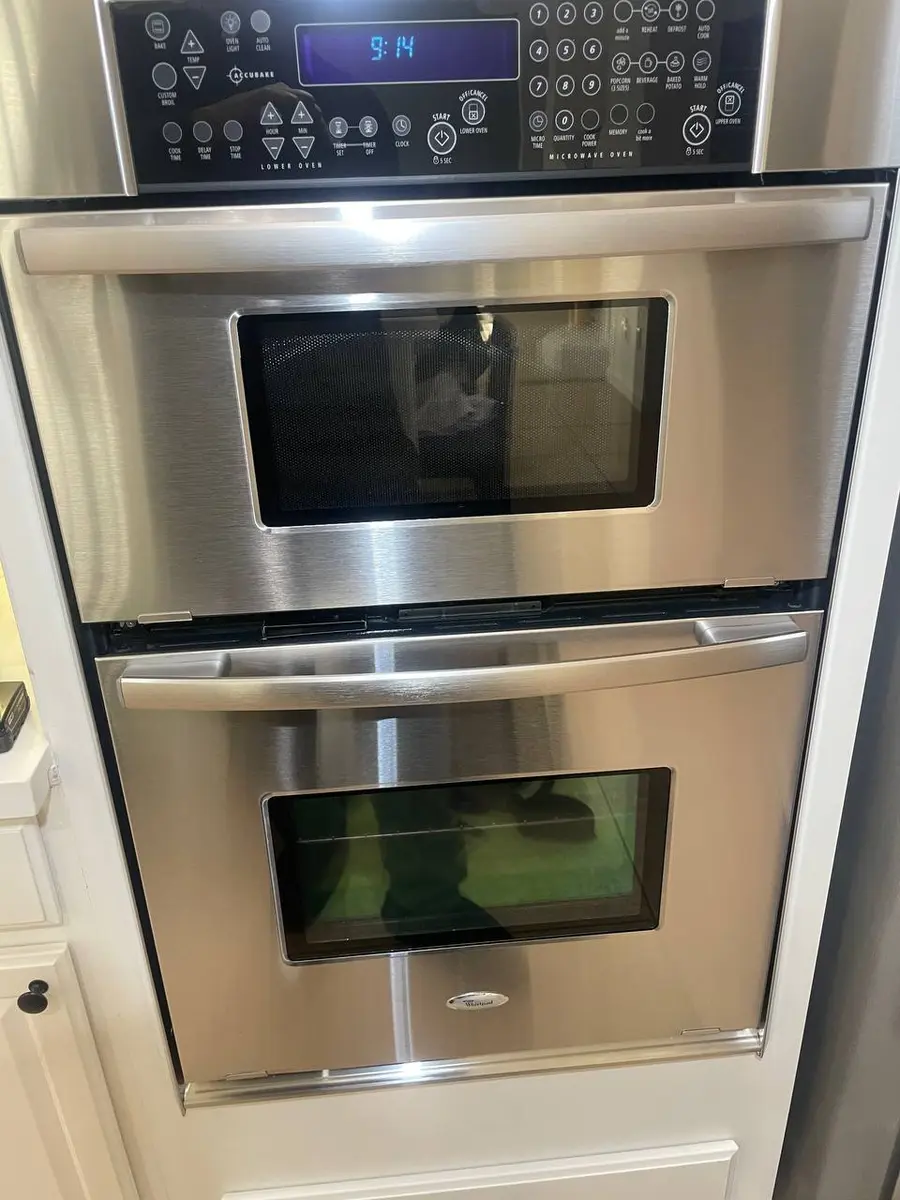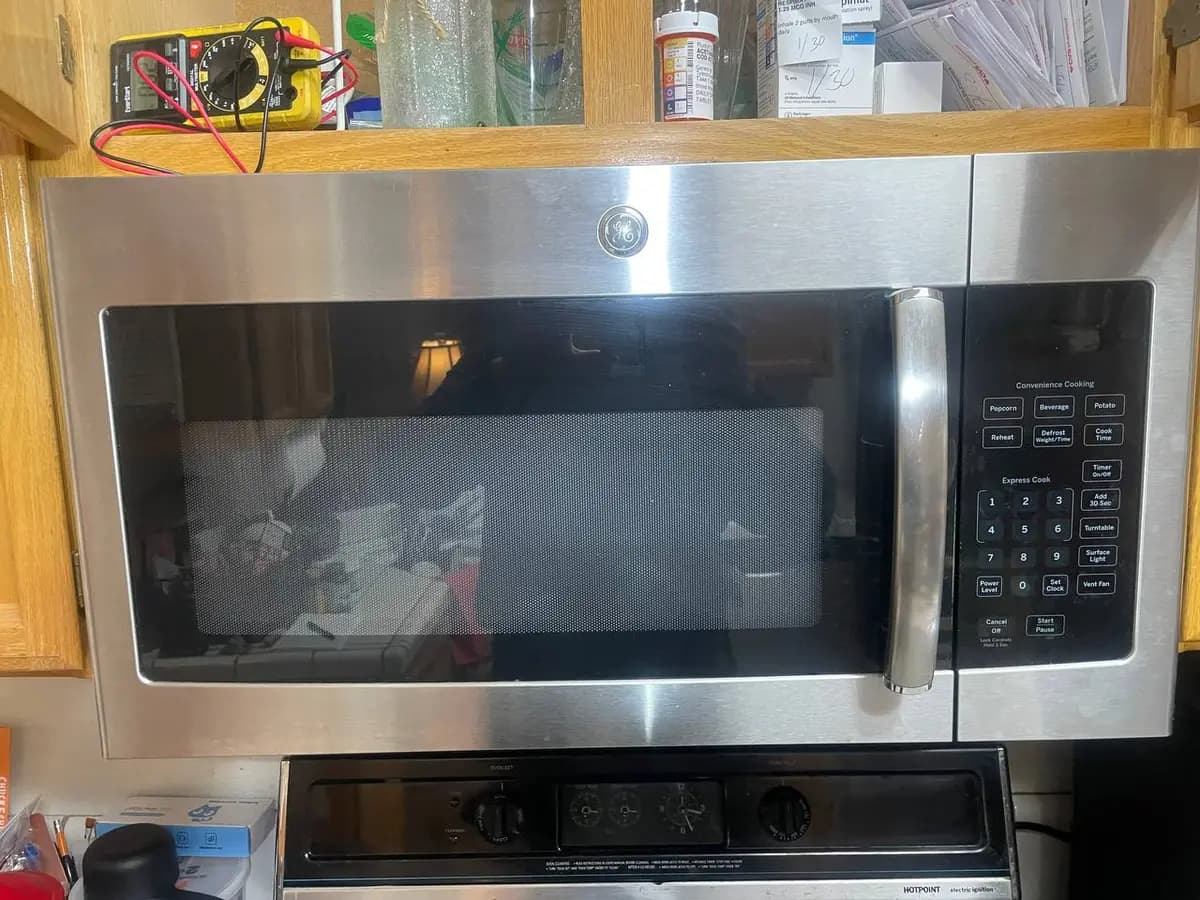
Short answer: a microwave lasts 7 to 12 years on average — premium models reach the top of that band, budget ones the bottom. Steady care shifts the timeline two to four years in your favor.
Every microwave eventually needs a repair; the useful question is what fails, and when. This timeline maps it so you can size up your own unit at a glance.
The Full Failure Timeline#
| Age | Most likely failure | How common |
|---|---|---|
| 0 to 2 years | Manufacturing defects (warranty covers) | Rare |
| 2 to 4 years | Door switches | Very common |
| 3 to 5 years | Turntable motor | Common |
| 4 to 7 years | Diode | Common |
| 4 to 7 years | Capacitor | Common |
| 5 to 9 years | Magnetron | Common |
| 6 to 10 years | Control board | Occasional |
| 7 to 12 years | Transformer | Common |
Do You Have the Right Tools?
High-voltage capacitor discharge tool ($90), magnetron tester ($200), microwave leakage detector ($150). Our technician arrives with $3,000+ in professional tools — your diagnostic is free.
Licensed & Insured · 90-Day Warranty · Same-Day Service
Years 2 to 5: Switches and Motors#
The door switches are the earliest and most common failure, usually at two to four years. They are mechanical parts worn by every open and close, and because they double as a safety interlock, a failed switch shuts the whole oven down — which is why slamming the door is the fastest way to shorten one. The turntable motor follows at three to five years, and it almost always warns you first with noise, a burning smell, or intermittent rotation before it quits for good.
Years 4 to 9: The High-Voltage Parts#
Now the components that actually produce the microwaves enter their window. The diode and capacitor, both at four to seven years, are inexpensive but part of the high-voltage circuit. The magnetron — the heart of the machine — typically fails at five to nine years, and when it does the unit runs but stops heating; its replacement cost often approaches half the price of a new microwave, which is what makes age matter so much on this one repair. These are normal wear items, not signs of a defective unit.
Safety First — Know the Risks
Microwave capacitors store lethal voltage (4,000V+) even when unplugged. This is the single most dangerous DIY appliance repair. Our techs are licensed and insured — let them handle the risk.
Licensed & Insured · 90-Day Warranty · Same-Day Service
Years 5 to 12: Boards and the End#
The control board reaches its window at six to ten years, and like every electronic board it is sensitive to power surges — a surge protector is cheap insurance. The transformer at seven to twelve years is effectively replacement territory: by the time it goes, the unit is old enough that a new microwave is usually the better spend. Past twelve years, any repair is a gamble, since fixing one part often just reveals the next.
Maintenance and the Brand Question#
Simple care moves each window two to four years later, and the two habits that matter most are keeping the vents clear and never running the unit empty, since an empty microwave has nothing to absorb the energy and cooks its own magnetron. On brands, microwaves show the smallest spread of any appliance — GE and Whirlpool track the standard timeline, but door-switch failures are universal across every maker, so your habits matter more than the name on the front.
The Real Cost of DIY
Average DIY attempt: $150-400 in tools you may use once, plus the risk of further damage. Our diagnostic visit costs $0 — we find the problem and give you an honest quote.
Licensed & Insured · 90-Day Warranty · Same-Day Service
Repair or Replace, by Age#
Under four years, almost always repair. From four to eight, repair if the cost stays under half a new unit and this is the first or second major fix. From eight to twelve, limit repairs to simple, inexpensive parts. Past twelve, replace — another failure is likely within a year or two, and newer units run more efficiently.
Should You Even Repair a Microwave?#
Microwaves occupy an unusual spot: they are inexpensive to replace but often costly to repair, which flips the usual math. A door switch or turntable motor on a newer unit is a clear repair — cheap parts, plenty of life left. But once the magnetron, transformer, or control board is involved on a unit past its mid-life, the repair can approach the price of a new one, and a new microwave brings a fresh warranty and better efficiency. The honest answer for many owners is that a five-year-old countertop unit with a bad magnetron is a replacement, not a rebuild. The exception is a high-end built-in or over-the-range model tied into cabinetry, where the installed cost justifies fixing it further into its life.
Microwave running but not heating? Book a diagnostic and find out whether it is a cheap fix or time to replace.
Senior Gas Appliance Specialist · 18 years experience
AGA-certified gas appliance specialist with 18 years of experience in residential and commercial oven, range, and cooktop repairs.