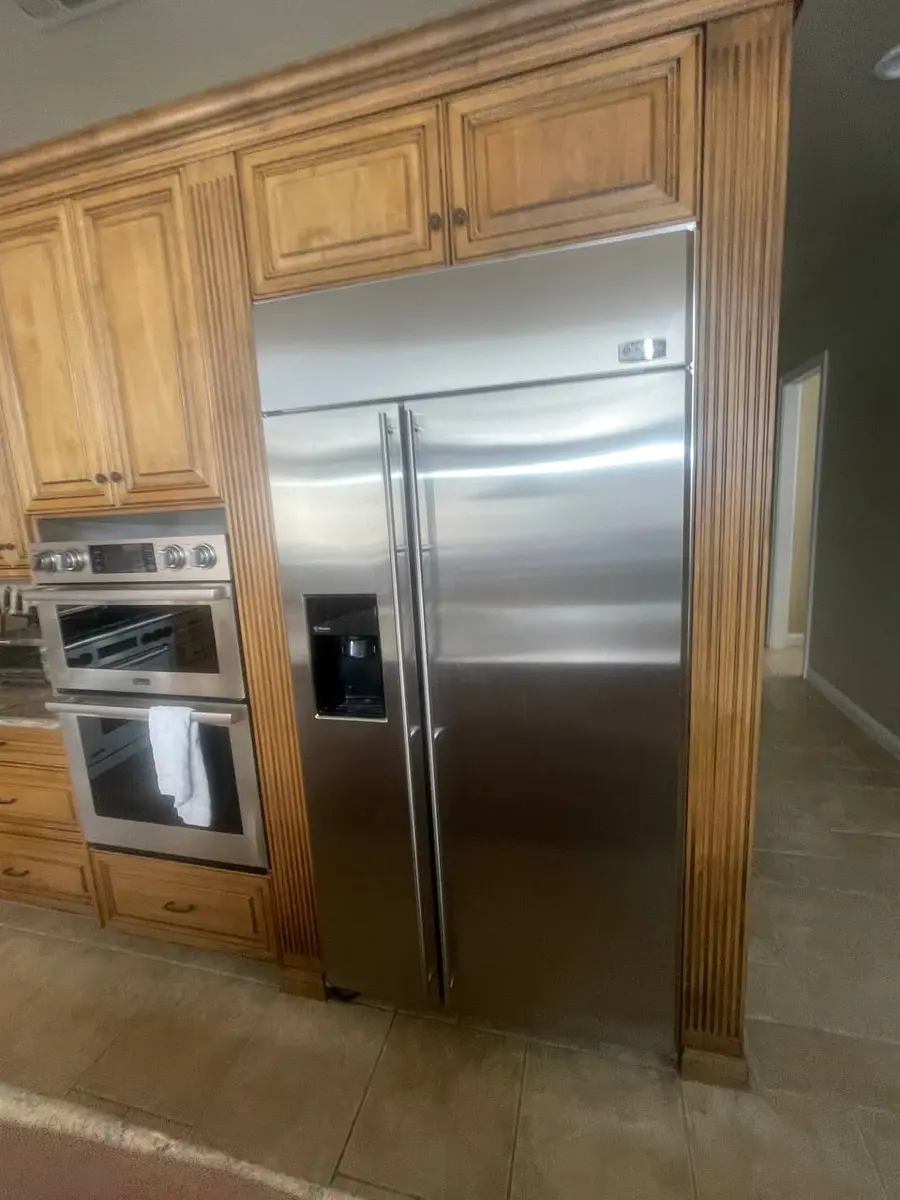
If your Maytag refrigerator still shuts off between cycles but each run now stretches to 45-60 minutes or longer — where it once finished in 20-30 — the compressor is working overtime to make up for lost efficiency somewhere in the system. That is a different problem from a fridge that never cycles off at all. The most common reason is dirty condenser coils, with a tired door gasket a close second.
First, Rule Out Normal Behavior#
Maytag builds its refrigerators around commercial-grade compressors rated for a higher duty cycle than the equivalent Whirlpool units, so they tolerate long runs before anything is truly wrong. Extended cycles are expected under certain conditions:
- Comfortable kitchen (70-75°F): 20-35 minute runs with 15-25 minutes off.
- [Summer heat](/blog/summer-refrigerator-tips) (85-95°F): 35-50 minute runs with only 10-15 minutes off.
- After a big grocery load or a long door-open: a single 45-90 minute pull-down, extended further if PowerCold engages.
- Garage installs during a [Sacramento](/sacramento/sacramento) summer (100°F+): near-constant running is a capacity limit, not a fault.
If your run times sit well above those ranges with no recent loading, work through the causes below.
Do You Have the Right Tools?
Refrigerant gauges ($200+), vacuum pump ($250), leak detector ($150), and EPA-certified recovery equipment. Our technician arrives with $3,000+ in professional tools — your diagnostic is free.
Licensed & Insured · 90-Day Warranty · Same-Day Service
Most Likely Causes, Ranked#
| Cause | How often | DIY difficulty |
|---|---|---|
| Dirty condenser coils | 35% | Easy |
| Weak door gasket | 25% | Easy |
| Partial evaporator frost | 20% | Moderate |
| Slow refrigerant leak | 15% | Not DIY |
| High kitchen temperature | 5% | No repair needed |
1. Dirty condenser coils (35% of cases)#
Coils caked with dust and pet hair cannot shed heat efficiently, so the compressor runs longer each cycle to reach the same setpoint. It is the number-one cause of long-but-not-constant running, and it surfaces most during the spring-to-summer transition, when coils that coped with winter air suddenly cannot keep up. Pull the unit out, remove the lower rear access panel, and brush and vacuum the coils. Watch the run times over the next 48 hours — you should see them drop within a day.
2. A weakening door gasket (25% of cases)#
A gasket that has lost magnetic grip or developed a flat spot lets warm air seep in steadily, with none of the obvious frost or temperature swings of a wide-open door. The compressor simply runs longer to fight the constant heat gain. Run the dollar-bill test at all 8 perimeter points; even one or two weak spots add measurable run time. Maytag's heavier fingerprint-resistant stainless doors load the upper hinge-side contact more over time, and on French-door models a slightly bowed mullion bar leaks air between the two doors.
3. Partial frost on the evaporator (20% of cases)#
Before a defrost system fails outright, frost can build on part of the evaporator and choke airflow enough to lengthen cycles without fully blocking cooling. Less exposed coil means less heat absorbed per minute, so the compressor stays on longer. Open the freezer, pull the rear panel, and look for frost concentrated in one area while the rest stays clear — that patchy pattern is an early defrost fault taking shape.
4. A slow refrigerant leak (15% of cases)#
A gradual loss of charge trims capacity a little at a time, so every cycle removes less heat and has to run longer to compensate. Feel the suction line: it should be cold and sweating, and merely cool points to a low charge. Look for oily residue at the copper joints. Confirming a leak takes professional gauges, but the repair falls under Maytag's 10-year sealed-system warranty.
5. High kitchen temperature (5% of cases)#
Sometimes it is just physics. As the room warms, the gap between the condenser and the surrounding air narrows, and the compressor needs more run time per cycle. Sacramento kitchens routinely climb past 85°F in summer, especially without central air. Measure the room near the fridge; if it reads above 85°F and the unit still reaches setpoint after long runs, no repair is needed — just keep 3-4 inches of clearance behind and above for airflow.
Before You Inspect: Safety#
- Disconnect power before cleaning coils or inspecting fan motors.
- Allow adequate clearance behind the unit during inspection — blocking rear airflow during diagnosis worsens the condition.
Safety First — Know the Risks
Refrigerant (R-134a/R-600a) requires EPA certification to handle. Improper discharge is a federal violation and health hazard. Our techs are licensed and insured — let them handle the risk.
Licensed & Insured · 90-Day Warranty · Same-Day Service
What Long Cycles Cost You#
Every extra 10 minutes of compressor run time per hour adds roughly 15-20% to the fridge's energy use. A Maytag MFI-series model rated at 700 kWh per year that runs 30% longer per cycle can climb to about 900-910 kWh per year. Fixing the root cause pays you back in energy and heads off a more expensive failure later.
Keeping Cycles Short#
- Clean the condenser coils at least twice a year — more often with pets or dust.
- Check the door gaskets annually with the dollar-bill test.
- Keep clearance around the cabinet.
- Time a few cycles under normal conditions so you know your baseline.
Maytag refrigerator still running long after the basics? Our technicians diagnose, source the part, and fix it in one visit across Sacramento and the Bay Area. Schedule a visit.
Lead Appliance Repair Technician · 12 years experience
Experienced technician with 12 years specializing in washing machine and dryer repairs across all major brands.