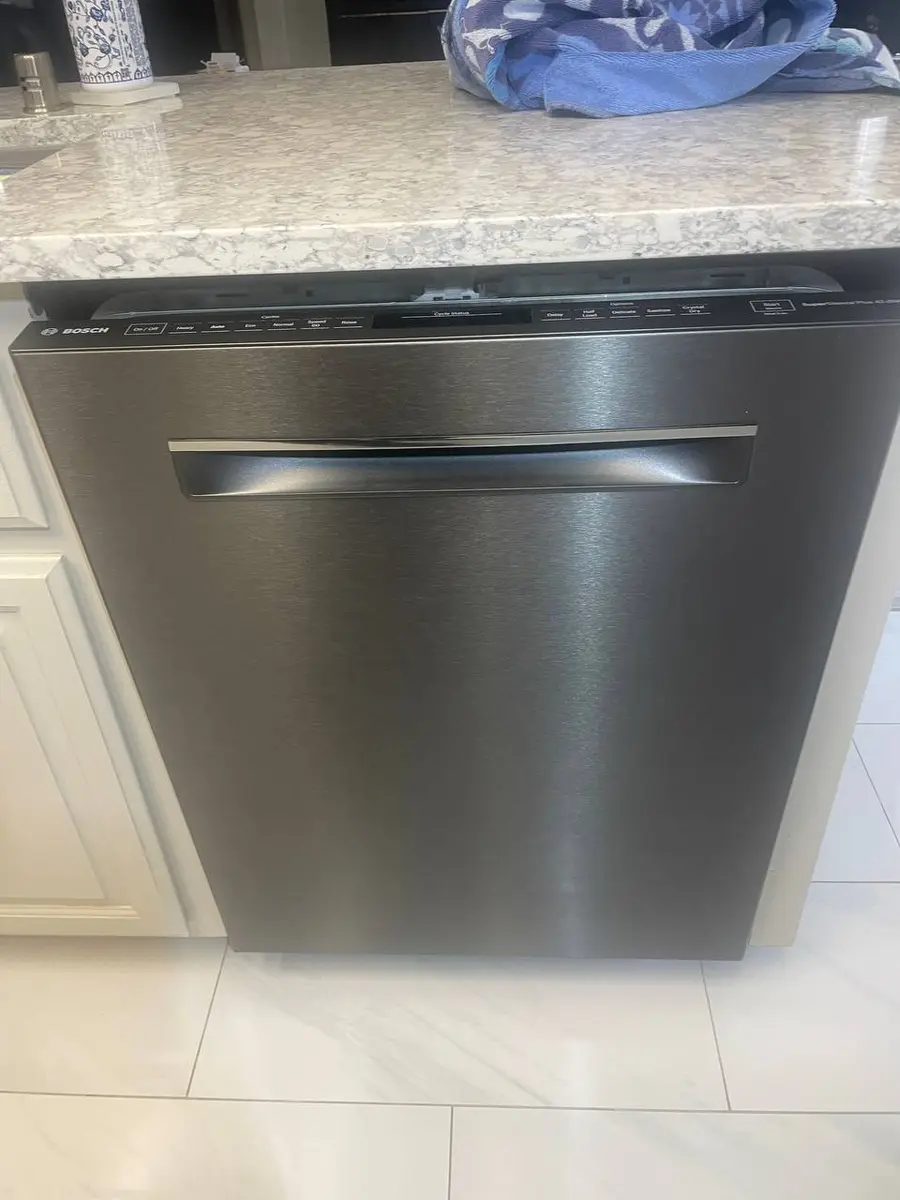
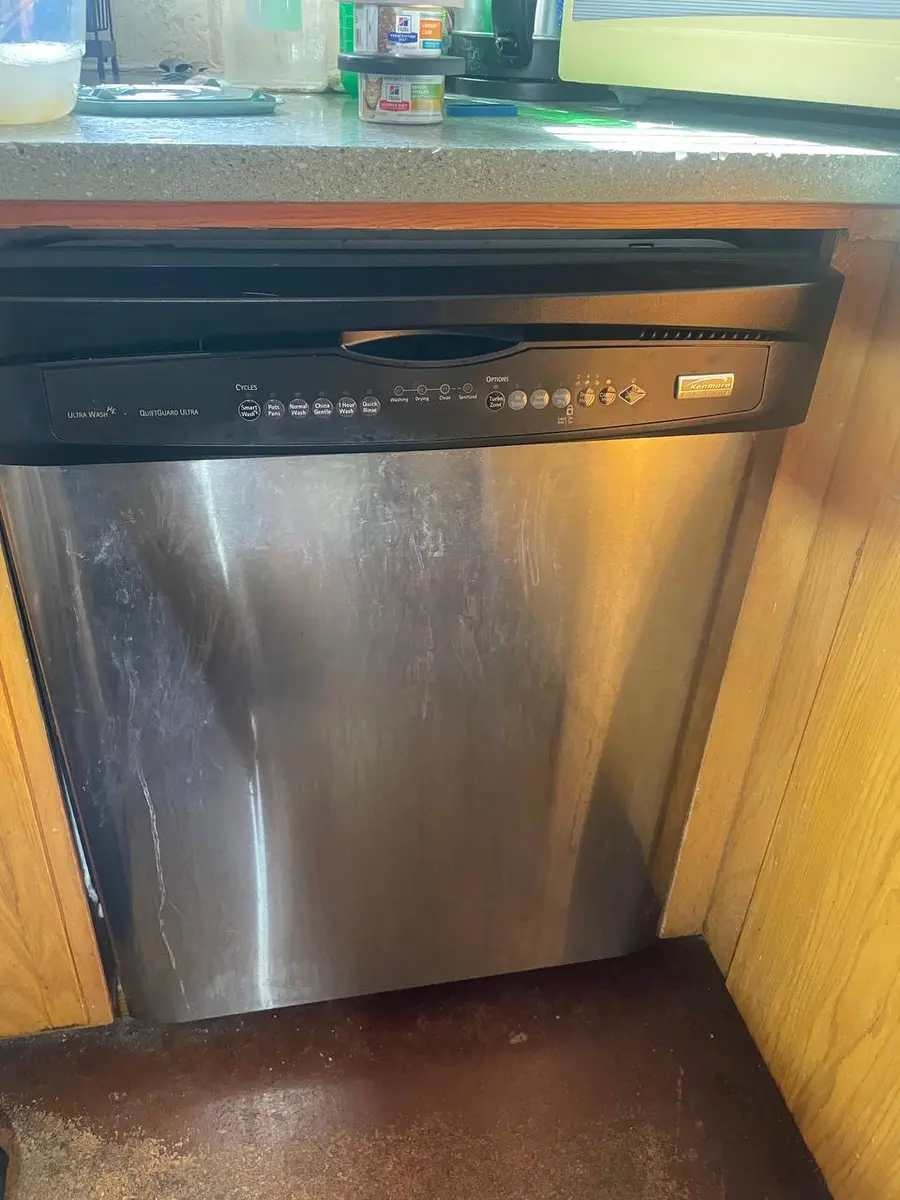
What this Kenmore vs Whirlpool comparison is based on#
This is the closest pair of [dishwasher](/blog/repair-or-replace-dishwasher) records in the comparison set. Both are dominated by the same component, at almost the same share, and every remaining row differs by a few points or less — four of the six are marked as one-report noise.
The evidence is 461 CPSC SaferProducts filings naming a component on a Kenmore dishwasher, made between 2011 and 2025, and 137 doing the same for a Whirlpool, made between 2011 and 2026. The columns are shares of their own totals, which is what allows records of that different a size to be compared at all.
The leading row, twice#
The control board takes 53% of the Kenmore filings and 49% of the Whirlpool ones. In counts that is 246 reports against 67. Both are majorities or near-majorities of their own record, both leave every other component far behind, and the 4-point difference between them is the largest gap anywhere on this page.
That is an unusual sentence to be able to write. In most pairings here the leading component of one record is a minor row in the other, and the widest gap runs to twenty or thirty points. Here the two records are describing the same thing at the same intensity.
The rest of the table, row by row#
The heating element is 6% for Kenmore against 9% for Whirlpool — 29 filings against 12, a 3-point difference. Wiring or the power cord is 7% against 8%, which is 31 filings against 11 and marked as noise. The motor is 5% against 4%, also marked. The thermostat or sensor is 1% in both columns, recorded as no measured difference. The drain pump or hose rounds to nothing on the Kenmore side against 1% on the Whirlpool side.
Six rows, one of which differs by 4 points, one by 3, and four by a point or less. Whatever separates these two brands, the components their reports name is not it.
What an agreement across unequal records is worth#
Kenmore's column has more than three times the filings of Whirlpool's, and they still land in the same place. That is a slightly stronger signal than two similar-sized records agreeing, because the smaller column had ample room to land somewhere else — several other records in this set, built from the same database over the same years, look nothing like either of these.
It is still a statement about reports and not about machines. Neither column has a denominator of units sold or in service, and no public source publishes one, so the shared 53% and 49% cannot become a shared failure rate. The corpus is also weighted toward fire, smoke, burn and melt reports, which shapes both columns identically and is part of why an agreement between them is less surprising than it first appears.
For repair planning the two records collapse into a single expectation. On either machine, a dishwasher that will not start a cycle, has lost its display or behaves erratically at the panel lands where most of the filed reports already are. Nothing else in either column is large enough to plan around.
Kenmore vs Whirlpool dishwashers: what the reports mention#
Both columns are shares of their own corpus, and the corpora differ in size. Kenmore: CPSC SaferProducts incident reports for Kenmore dishwashers, 2011-2025, n=461. Whirlpool: CPSC SaferProducts incident reports for Whirlpool dishwashers, 2011-2026, n=137. A difference no larger than one report on either side is marked "within one-report noise".
| Component mentioned | Kenmore | Whirlpool | Difference |
|---|---|---|---|
| Control Board | 53% (246 of 461) | 49% (67 of 137) | 4 points more often for Kenmore |
| Heating Element | 6% (29 of 461) | 9% (12 of 137) | 3 points more often for Whirlpool |
| Drain Pump or Hose | 0% (2 of 461) | 1% (1 of 137) | 1 point more often for Whirlpool (within one-report noise) |
| Motor | 5% (24 of 461) | 4% (6 of 137) | 1 point more often for Kenmore (within one-report noise) |
| Wiring or Power Cord | 7% (31 of 461) | 8% (11 of 137) | 1 point more often for Whirlpool (within one-report noise) |
| Thermostat or Sensor | 1% (5 of 461) | 1% (2 of 137) | no measured difference (within one-report noise) |
About the corpus: these are CPSC SaferProducts reports — incidents someone chose to report, not units sold — so the shares on this page are shares of the reports and never a failure rate. The corpus is weighted toward safety events: 12,007 of its 20,581 records (58%) are fire, smoke, burn or melt reports, which over-represents the components that burn and under-represents the ones that merely stop working.
Do You Have the Right Tools?
Water pressure gauge ($60), spray arm tester, float switch multimeter ($85), and drain inspection camera. Our technician arrives with $3,000+ in professional tools — your diagnostic is free.
Licensed & Insured · 90-Day Warranty · Same-Day Service
Kenmore dishwashers: the reported component split#
Kenmore dishwashers — every share in this table is a share of: CPSC SaferProducts incident reports for Kenmore dishwashers, 2011-2025, n=461.
| Component mentioned | Share of reports | Reports |
|---|---|---|
| Control Board | 53% | 246 of 461 |
| Wiring or Power Cord | 7% | 31 of 461 |
| Heating Element | 6% | 29 of 461 |
| Motor | 5% | 24 of 461 |
| Thermostat or Sensor | 1% | 5 of 461 |
| Drain Pump or Hose | 0% | 2 of 461 |
Shares of reports, not failure rates — see the corpus note above.
Whirlpool dishwashers: the reported component split#
Whirlpool dishwashers — every share in this table is a share of: CPSC SaferProducts incident reports for Whirlpool dishwashers, 2011-2026, n=137.
| Component mentioned | Share of reports | Reports |
|---|---|---|
| Control Board | 49% | 67 of 137 |
| Heating Element | 9% | 12 of 137 |
| Wiring or Power Cord | 8% | 11 of 137 |
| Motor | 4% | 6 of 137 |
| Thermostat or Sensor | 1% | 2 of 137 |
| Drain Pump or Hose | 1% | 1 of 137 |
Shares of reports, not failure rates — see the corpus note above.
Safety First — Know the Risks
Live 120V wiring in a wet environment is one of the most dangerous DIY scenarios. Water + electricity = serious shock risk. Our techs are licensed and insured — let them handle the risk.
Licensed & Insured · 90-Day Warranty · Same-Day Service
How to use these numbers#
What this comparison can settle: which components the reported incidents of each brand actually concentrate on, for this appliance. What it cannot settle: which brand fails more often. That would need units sold, and no public source states it. Use the component split to plan for the repair each brand is most reported for, not to rank the two.
Senior Appliance Repair Technician · 15 years experience
EPA-certified technician with 15 years of experience specializing in refrigerator and cooling system repairs.