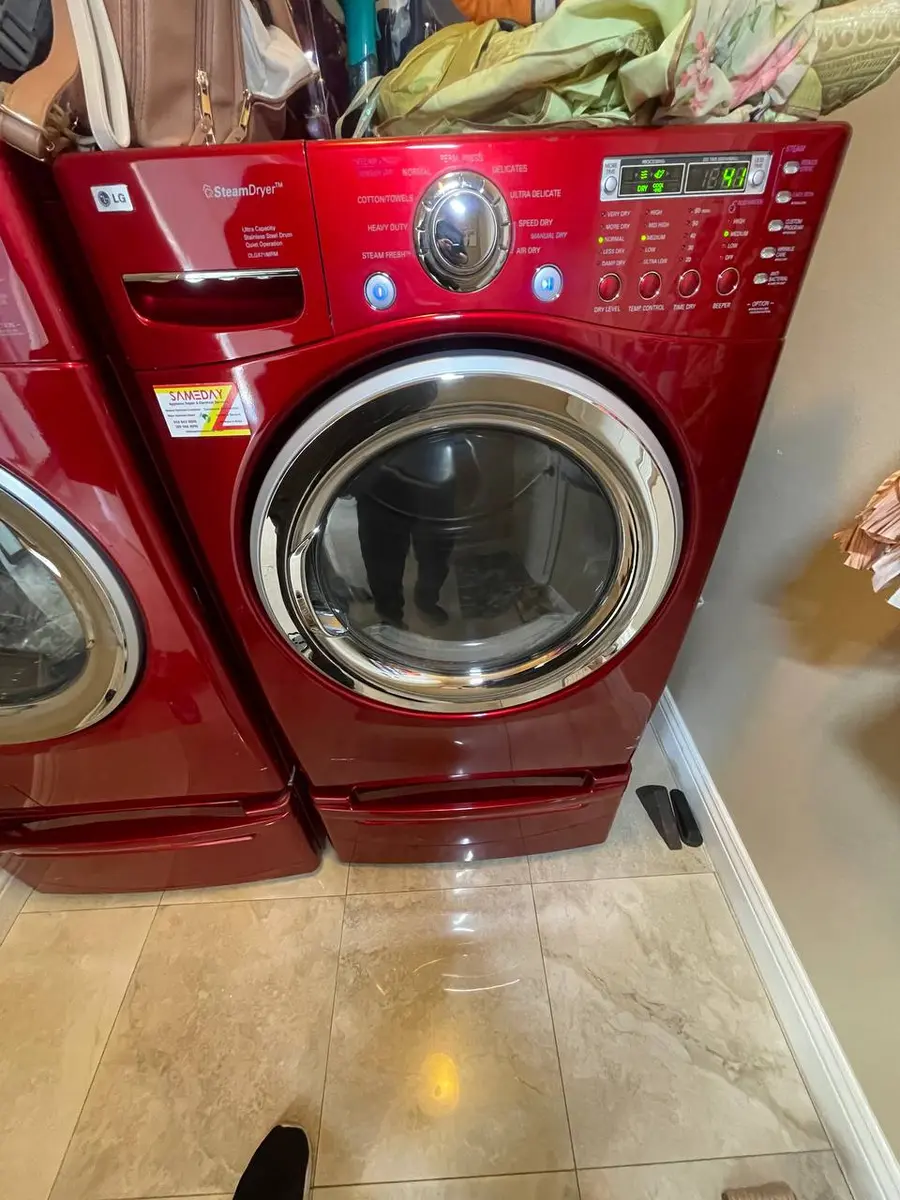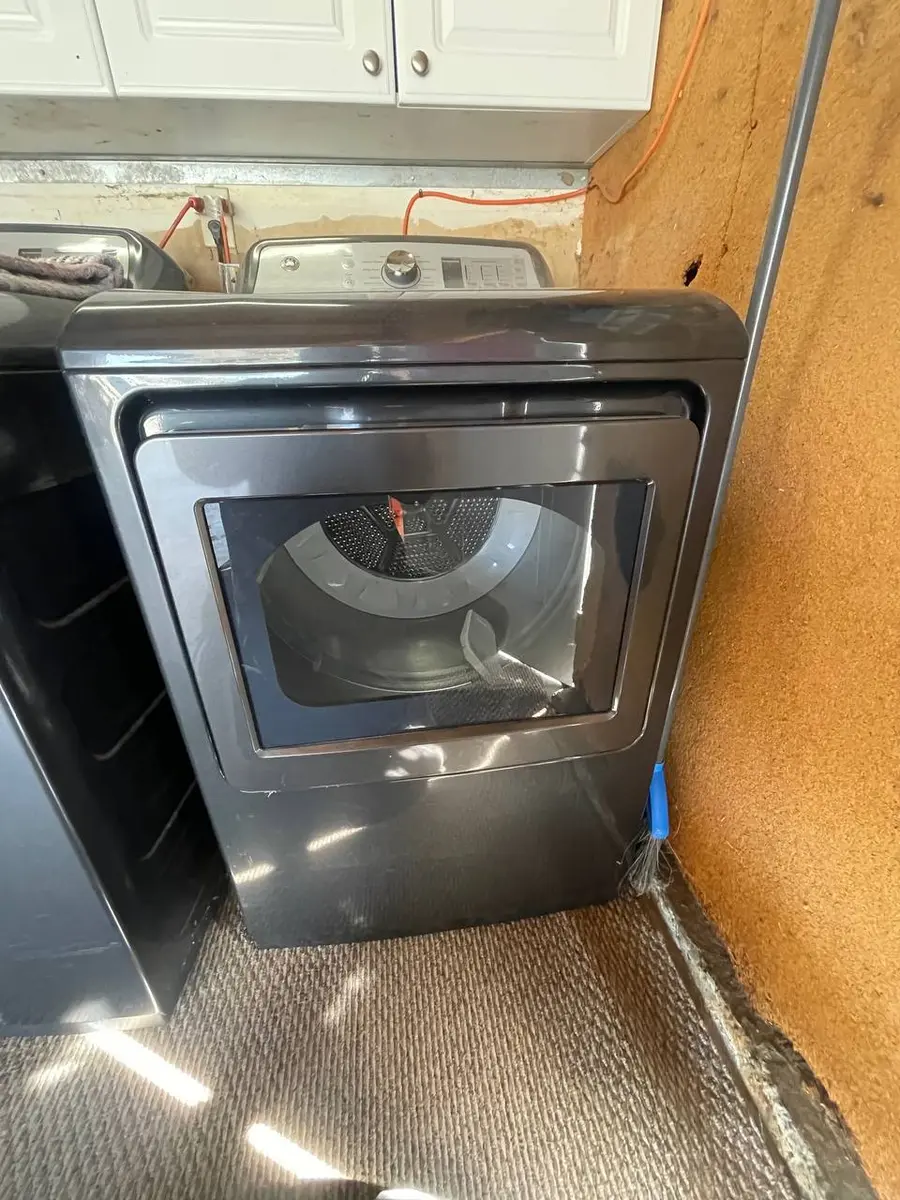
How to Replace the Idler Pulley on an LG Dryer
A screeching LG dryer that still tumbles is almost always a worn idler pulley — the spring-loaded wheel that keeps the drive belt tight. Swapping the whole assembly is an intermediate job of about 40-50 minutes and cures the squeal before a seized pulley snaps the belt.
The idler rides against the back of the drive belt and takes up slack as the belt stretches. Its little bearing spins thousands of times a minute, and when the grease dries out it howls, then grinds, then locks. A locked idler drags the belt across a stationary wheel until the belt frays and breaks, so the smart move is to replace the pulley at the first squeal rather than after a no-tumble breakdown.
Tools for the job#
Keep it simple: a Phillips #2 screwdriver, a 5/16-inch nut driver, a flat-blade screwdriver, and a pair of work gloves. For parts, buy the LG idler pulley assembly with spring and replace it as a complete unit rather than trying to reuse a tired spring on a fresh wheel.
Do You Have the Right Tools?
Gas leak detector ($130), thermal fuse tester ($95), belt tension gauge, and vent inspection camera ($180). Our technician arrives with $3,000+ in professional tools — your diagnostic is free.
Licensed & Insured · 90-Day Warranty · Same-Day Service
Before you reach inside#
Unplug the dryer. The idler spring is under tension — release carefully.
Steps#
- Open up the cabinet. With the machine unplugged, remove the top and front panel screws so you can reach the drum and the belt beneath it. On most LG stacks the lint duct and a couple of harness clips come loose first.
- Release and remove the old assembly. Note how the belt loops around the motor pulley and idler before you disturb anything — a quick phone photo saves guesswork. Push the idler arm to slacken the spring, slip the belt off, then unhook the spring and lift the worn pulley out. Ease the tension off; do not let the arm snap back against your hand.
- Install the new assembly. Seat the fresh idler on its post and reconnect the spring in the same anchor hole so the tension matches the factory geometry. Spin the new wheel by hand to confirm it turns silky and true.
- Route the belt and reset the drum. Wrap the belt around the drum in its original path, then thread it under the idler and around the motor pulley in a figure that pulls the idler toward the motor. Rotate the drum a full turn by hand to make sure the belt tracks in its groove.
- Reassemble and test. Rebuild the front and top, plug in, and run a short air-fluff cycle. The dryer should tumble quietly; any lingering rumble means the belt is off-track or the spring landed in the wrong hole.
- Know the LG idler design. LG uses a single tension arm and spring rather than a separate tensioner, so the pulley and spring are matched — always fit them together, and check the arm pivot for wear while you are in there. If the pivot post is grooved or the arm wobbles side to side, the new wheel will wear at an angle and start howling again within months, so replace or shim a sloppy arm now.
A quick habit while the cabinet is open: wipe the old belt dust out of the base, clear the lint trap housing, and eyeball the drum seals front and rear. A dryer that has been squealing for weeks has often been shedding belt rubber and lint into places that later cause heat or airflow complaints, and thirty seconds of cleanup saves a second tear-down.
Safety First — Know the Risks
Gas dryers carry carbon monoxide and explosion risk. Even electric dryers involve 240V circuits that can deliver a fatal shock. Our techs are licensed and insured — let them handle the risk.
Licensed & Insured · 90-Day Warranty · Same-Day Service
When to call a pro#
If the belt is intact and the new idler still squeals, suspect the drum support rollers or a failing motor bearing, which are deeper tear-downs. Scorching, a burnt-rubber smell, or a motor that hums without turning also point past the idler and are worth a professional look.
Need professional help?#
- dryer repair service
- lg appliance repair
- dryer repair cost guide## Squeal, grind, lock: catch it at the right stage
An idler bearing does not fail suddenly. It goes through three stages, and what the repair costs depends entirely on which one you act at.
The squeal stage. The grease has dried and the bearing is running metal on metal, but the wheel still turns and the belt is still being tensioned properly. The dryer works. This is the cheap stage: one assembly, no other damage, and nothing else to check.
The grind stage. The bearing surfaces have begun to break down, the wheel turns unevenly, and the belt is now being dragged across a wheel that is not keeping up with it. The belt starts wearing on its back face rather than its ribs, which is a wear pattern worth inspecting for — if it is there, the belt goes in with the pulley.
The lock stage. The wheel stops turning. The belt is now sliding across a stationary surface every revolution, and it frays and breaks in short order. At this point the job is a pulley and a belt at minimum, and the dryer has stopped working, usually at the least convenient moment.
The practical point is that the first stage is audible from the next room and lasts weeks. A dryer that has started to squeal is giving notice, and taking that notice is the difference between one part and a breakdown.
Lead Appliance Repair Technician · 12 years experience
Experienced technician with 12 years specializing in washing machine and dryer repairs across all major brands.