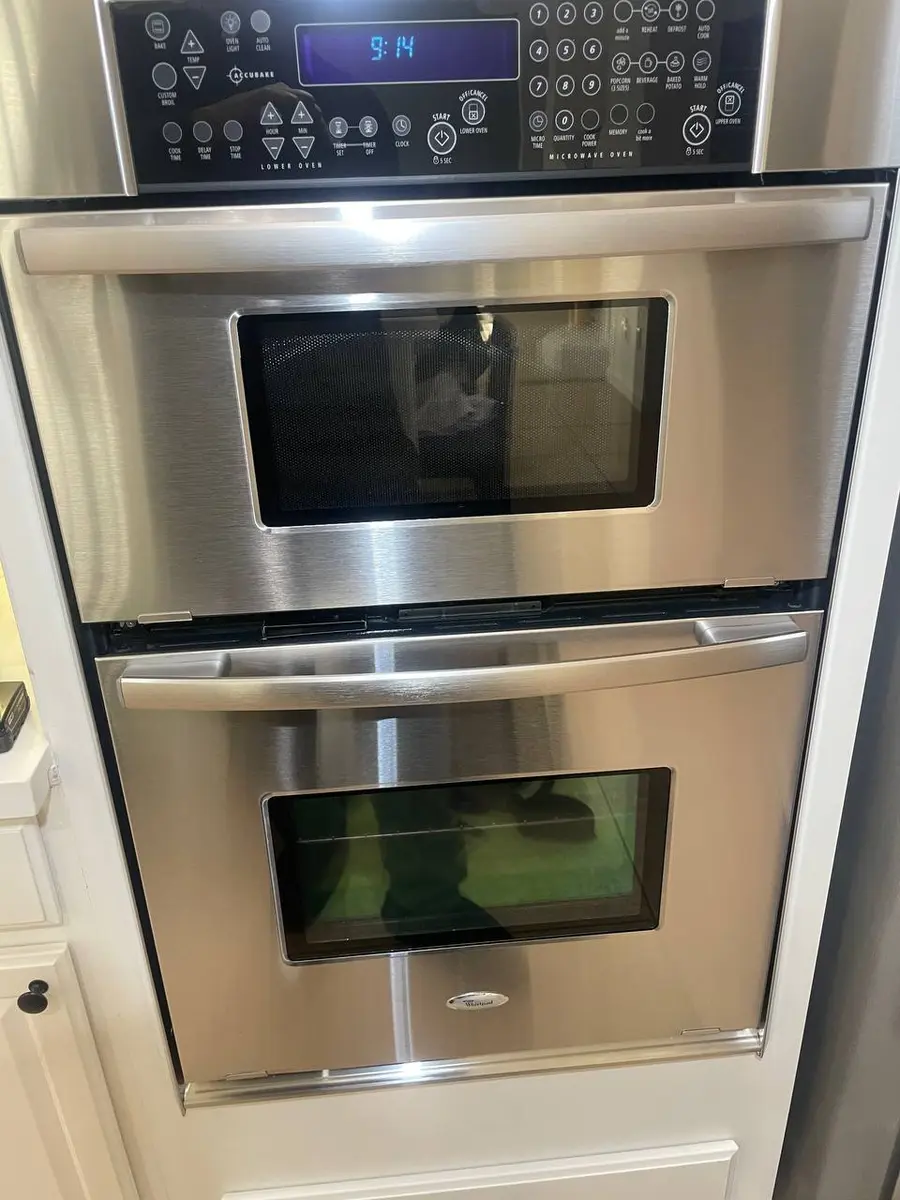
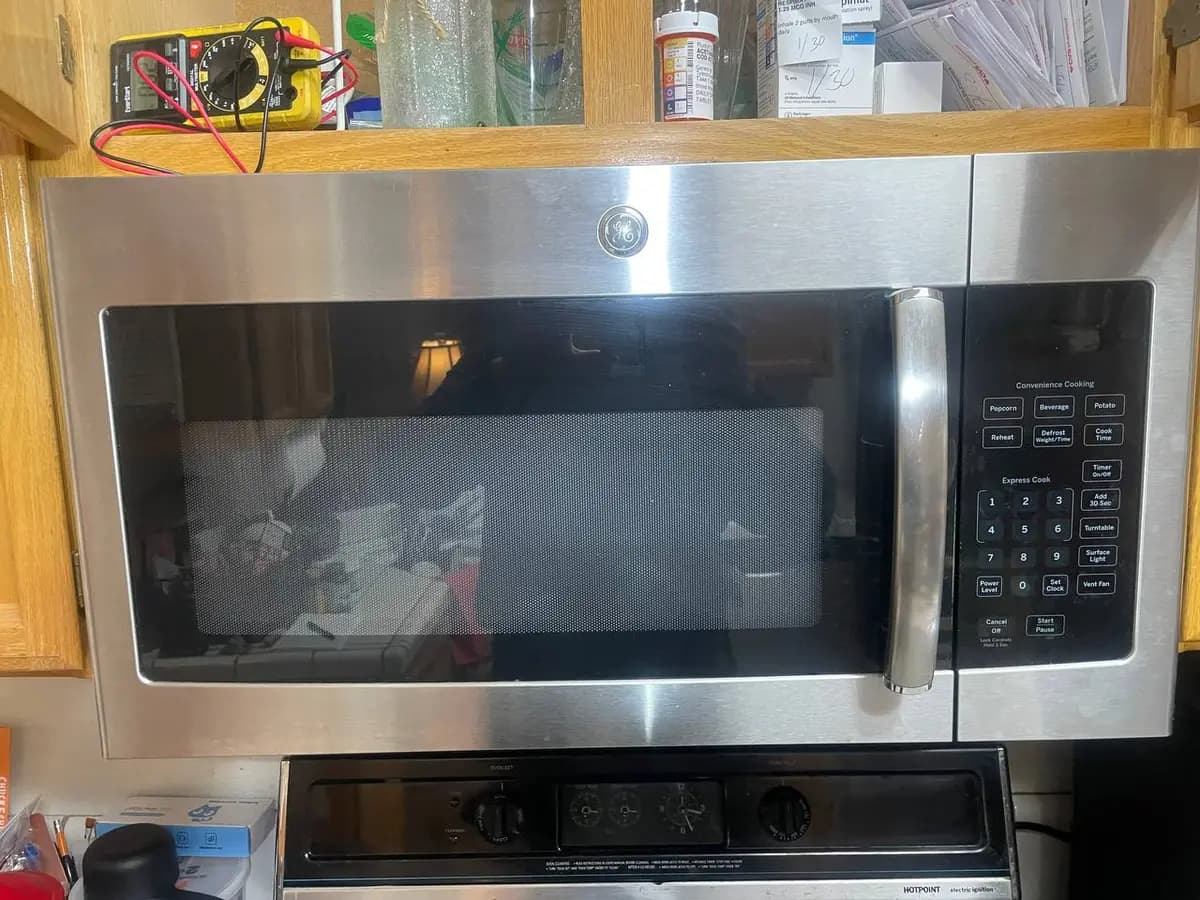
The microwave is the appliance most people replace without a second thought — and for the cheapest countertop models, that instinct is usually right. But the lifespan span is not the answer to the question you actually have, which is what to do about the one in your kitchen this week. Two facts settle that: how old it is, and what it just did. The table below crosses them; the sections after it explain why install type moves the same repair from worth-it to not.
Your microwave's age, crossed with what it just did#
Find the row for how old your microwave is and what it is doing now. The verdict column assumes a countertop unit unless it says otherwise, because that is the one case where the repair price and the replacement price meet.
| How old it is | What it is doing | The call |
|---|---|---|
| Under 3 years | Runs, turntable spins, but nothing gets hot | Magnetron. Check the warranty before anything else — at this age the repair is worth it on any install type, covered or not. |
| Under 3 years | Completely dead, no display, no fan | Usually a door switch or an internal fuse. The cheaper of the two common repairs, and worth doing on any install type. |
| 3 to 7 years | Runs but does not heat | Countertop: replace — a magnetron job at $150–300 meets or beats the price of a new one. Over-the-range or built-in: repair, comfortably. |
| 3 to 7 years | Starts then stops, or the door will not latch | A door switch at $100–200. Worth doing on every install type, including countertop. |
| 7 to 10 years | Runs but does not heat | Countertop: replace. Over-the-range or built-in: repair once — you are inside the band, but only just. |
| 7 to 10 years | Vent fan noisy or weak on an over-the-range unit | Clean the grease filter first. If the fan is genuinely failing, an OTR unit still earns the repair; the install cost is what makes it worth it. |
| Over 10 years | Any internal fault | Replace, whatever the install type. You are past the 7–10 band, and the next failure is close behind this one. |
| Any age | Sparking, a burning smell, or a door that no longer closes square | Stop using it and unplug it. This is the safety case, not the money case — a door that does not seal is the one fault that is never worth living with. |
Denominator: the two repair figures above are the two this guide carries — a magnetron at $150–300 and a door switch at $100–200 — for a standard residential microwave fitted by a shop. Two repairs, not a price survey; a convection-combo, drawer or commercial unit is priced outside them, and any quote for one of those should be read on its own.
Do You Have the Right Tools?
High-voltage capacitor discharge tool ($90), magnetron tester ($200), microwave leakage detector ($150). Our technician arrives with $3,000+ in professional tools — your diagnostic is free.
Licensed & Insured · 90-Day Warranty · Same-Day Service
How Long Does a Microwave Last?#
Microwaves last 7–10 years, the shortest lifespan of any kitchen appliance. What changes the decision when one fails is not the lifespan — it is the install type and the cost of replacing it.
| Type | Typical lifespan | What drives the repair decision |
|---|---|---|
| Countertop | 7–10 yr | cheapest to replace, so repair rarely pays |
| Over-the-range (OTR) | 7–10 yr | vent and fan duty, plus install cost, favor repair |
| Built-in / drawer | 7–10 yr | high install cost makes repair worthwhile |
The lifespan is roughly the same across the board. The difference is that a countertop unit is trivially cheap to swap, while an OTR or built-in carries an installation cost that tilts the math toward fixing what you have.
What Actually Ends a Microwave's Life#
The signature failure is the magnetron — the component that actually generates the microwaves. When it dies, the unit runs but does not heat, and the repair runs $150–300. That single number drives the whole decision:
- On a countertop microwave, a $150–300 magnetron repair often meets or exceeds the price of a new unit, so replacement wins.
- On an OTR or built-in microwave, the same repair is well below the cost of a new unit plus installation, so repair wins.
The other common failure is a door switch at $100–200 — a worthwhile repair on any OTR or built-in unit.
One rule overrides all of the above, and it is not about money. A microwave's internal capacitor holds a lethal charge even when the appliance is unplugged. This is never a DIY repair. Diagnosing or replacing internal components must be left to a technician trained to discharge that capacitor safely.
Safety First — Know the Risks
Microwave capacitors store lethal voltage (4,000V+) even when unplugged. This is the single most dangerous DIY appliance repair. Our techs are licensed and insured — let them handle the risk.
Licensed & Insured · 90-Day Warranty · Same-Day Service
How to Get More Years From Your Microwave#
- Never run it empty. With nothing to absorb the energy, the magnetron cooks itself.
- Use only microwave-safe cookware and avoid metal, which arcs and can damage the interior.
- Keep the interior and door seal clean so the door closes fully and the seals stay intact.
- Do not slam the door. The door switches are a common failure point, and rough handling wears them out faster.
- On an OTR unit, clean the grease filter so the vent fan is not forced to labor.
What to Do at 5, 10, and 15 Years#
Because microwaves are short-lived, "old" arrives sooner here than for other appliances.
| Age | Where it stands | What to do |
|---|---|---|
| ~5 years | mid-life | repair OTR/built-in units; consider replacing a cheap countertop — see is it worth repairing a 5-year-old microwave? |
| ~10 years | end of expected life | replace countertop units; weigh a magnetron repair on built-ins — see the 10-year guide |
| ~15 years | well past expected life | replace-leaning, even for built-ins — see the 15-year guide |
The Real Cost of DIY
Average DIY attempt: $150-400 in tools you may use once, plus the risk of further damage. Our diagnostic visit costs $0 — we find the problem and give you an honest quote.
Licensed & Insured · 90-Day Warranty · Same-Day Service
Repair or Replace: Running the Numbers#
The 50% rule decides microwaves cleanly because of the wide replacement-cost spread. A countertop unit runs $250–600, while OTR and built-in models cost more once installation is included. A $150–300 magnetron repair crosses the 50% line easily on a cheap countertop unit — replace it — but stays well under it on a built-in, where installing a new unit is expensive. For the full framework, see our microwave repair-or-replace guide.
The 2026 backdrop matters less here than for big appliances, but it still applies: tariffs raised prices about 4.3% and parts 5–20%, nudging built-in repairs a little further onto the repair side.
From Our Technicians#
In our California service area a microwave diagnostic and labor charge typically runs $150–350. The guidance we give is blunt: if it is a countertop unit, a no-heat failure usually means it is time for a new one — the repair is not worth it. If it is an over-the-range or built-in unit, a magnetron or door-switch repair is often the smart money because replacing it means paying to install a whole new appliance. And in every case, the capacitor makes this a job for a technician, not a weekend project.
Don't Void Your Warranty
Opening your appliance yourself may void the manufacturer warranty. Our repair comes with a 90-day guarantee, and we document everything for warranty compliance.
Licensed & Insured · 90-Day Warranty · Same-Day Service
Signs Your Microwave Is Near the End#
Some microwave symptoms are simple fixes; others say the unit is done:
- It runs but no longer heats — the hallmark of a failed magnetron.
- Sparking or arcing inside, which can mean a damaged waveguide or interior.
- The door will not latch or the unit runs with the door ajar — a safety-critical fault to service at once.
- The turntable, panel, or light fail together on an aging countertop unit.
- Loud buzzing or a burning smell during operation.
Does Install Type Matter More Than Brand?#
For microwaves, install type drives the decision far more than brand. Every microwave shares the same 7–10-year lifespan and the same signature failure — the magnetron. What changes is the cost of walking away: a countertop unit is so cheap to replace that a $150–300 magnetron repair rarely pays, so you buy a new one. An over-the-range or built-in unit carries installation cost, which tips the same repair firmly onto the repair side. Brand and features matter for cooking performance, but when it comes to repair-or-replace, ask where and how the microwave is installed first. That single question settles most microwave repair-or-replace decisions before the cost of parts even enters the picture.
Is It Worth Your Time?
Microwave repair requires specialized testing of the magnetron, capacitor, diode, and transformer — each requiring specific safety procedures. Our technician diagnoses the issue in about 30 minutes — same-day appointments available.
Licensed & Insured · 90-Day Warranty · Same-Day Service
Frequently Asked Questions#
How long does a microwave last?#
Microwaves last 7–10 years, the shortest lifespan of any kitchen appliance. Countertop, over-the-range, and built-in units all fall in that range — what differs is how the replacement cost shapes the repair decision.
What usually kills a microwave?#
The magnetron, the part that generates the microwaves. When it fails the unit runs but does not heat, and the repair runs $150–300 — enough to total a cheap countertop unit but well worth it on a built-in.
Is it worth repairing a microwave?#
It depends on install type. On a countertop unit ($250–600 to replace), a $150–300 magnetron repair rarely pays. On an over-the-range or built-in unit, where a new one carries installation cost, that same repair is usually worth it.
Can you repair a microwave yourself?#
No. A microwave’s internal capacitor holds a lethal charge even when the appliance is unplugged, so internal diagnosis and repair must be left to a technician trained to discharge it safely. This is never a DIY job.
What shortens a microwave lifespan?#
Running it empty is the fastest way to kill the magnetron, since there is nothing to absorb the energy. Metal cookware that arcs, a slammed door that wears the switches, and a clogged OTR grease filter also shorten its life.
Does the 50% rule apply to microwaves?#
Yes, and it decides the category cleanly. A $150–300 magnetron repair crosses 50% of a $250–600 countertop unit — replace it — but stays well under the installed cost of an over-the-range or built-in model, where repair wins.
How much does a microwave repair cost?#
The two common repairs are a magnetron at $150–300 and a door switch at $100–200. On a countertop unit those costs rival a new microwave, so replacement usually wins; on an over-the-range or built-in unit they are well worth paying.
Are microwave parts more expensive after the tariffs?#
Somewhat — parts rose roughly 5–20% after the 2025 tariffs. For cheap countertop units that only reinforces replacing rather than repairing, while for built-ins the installed cost of a new unit still keeps repair the sensible choice.
Lead Appliance Repair Technician · 12 years experience
Experienced technician with 12 years specializing in washing machine and dryer repairs across all major brands.